REVIEW · KOTOR
Montenegro: Private Cetinje/Dajbabe/Ostrog Monasteries Tour
Book on GetYourGuide →Operated by Tours-Montenegro · Bookable on GetYourGuide
Three monasteries in seven hours can feel like magic.
This private tour strings together Cetinje’s relic rooms, Dajbabe’s rock-carved cave church, and Ostrog’s cliffside pilgrimage—so you get three very different kinds of spirituality in one practical day. I especially like how the stops feel varied: relics on quiet display, prayer carved into stone, then a major pilgrimage site with huge energy.
You’ll also like the setup for an easy day. You’re picked up from Budva, Tivat, or Kotor in an air-conditioned van, and you keep the schedule tight without having to plan driving routes. One possible drawback to consider: the pace is mostly guided by fixed visit times, and the tour isn’t suitable for mobility impairments.
In This Review
- Key things to know before you go
- Why Cetinje, Dajbabe, and Ostrog work better as a trio
- Getting there: pickup, van comfort, and a schedule that stays realistic
- Cetinje Monastery: relics, modest rooms, and cultural importance
- Dajbabe Monastery: a cave church built from a vision
- Ostrog Monastery: cliffside pilgrimage and 900 meters of drama
- Koliba lunch and the sea-view photo break
- Price and value: $471 per group for up to four
- The people factor: what to look for in a guide on this route
- Who should book this monasteries tour (and who should skip it)
- Should you book it? My practical take
- FAQ
- FAQ
- What cities can you be picked up from?
- How long is the tour?
- Is lunch included in the price?
- What monasteries are included?
- What language will the guide speak?
- What do I need to bring?
- Is the tour suitable for people with mobility impairments?
- Are smoking or alcohol allowed during the tour?
Key things to know before you go
- Three distinct monastery styles: relic rooms, a cave church, and a cliffside site
- Private van, not public buses, with pickup and drop-off in your chosen area
- Short, focused visits (roughly 30 to 60 minutes each), so you’ll see the highlights but not linger all day
- Lunch at Koliba is an on-route restaurant stop, but you pay for meals and drinks
- No mobility options for people with impairments, because of stairs and steep areas
- Driver/guide language may vary, with English/Serbian listed and English/Russian mentioned for the guide
Why Cetinje, Dajbabe, and Ostrog work better as a trio
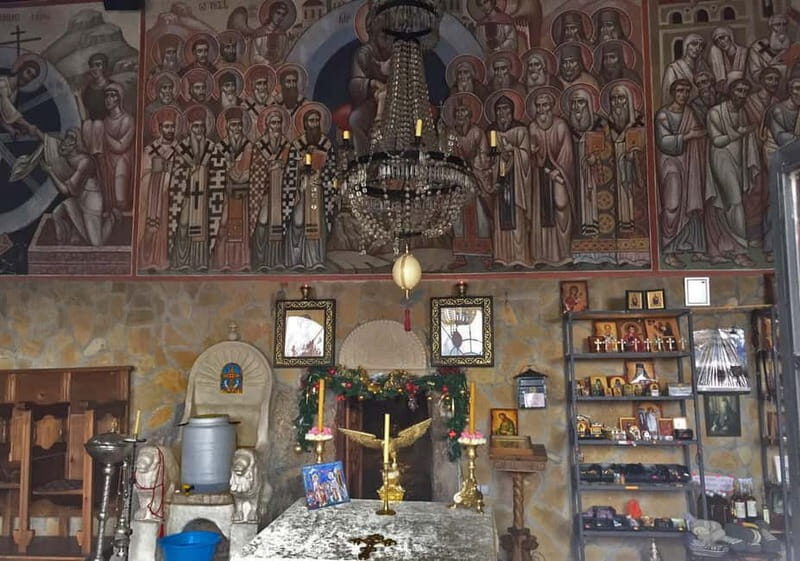
If Montenegro has a spiritual road trip, it’s this one. Cetinje feels like the “mind” of the story—culture, literacy, and learning centered around a monastery that holds Christian treasures. Dajbabe is the “shape” of the story—religion built into nature, literally carved into rock. Ostrog is the “pulse”—the most famous pilgrimage monastery in Montenegro, with relic beliefs and ongoing miracle stories drawing visitors from many places.
What makes the trio worth paying for as a private tour is the sequencing. You start in Cetinje first, then work your way toward Dajbabe near Podgorica, and finish at Ostrog before returning toward the coast. That order keeps the day from turning into one long scramble.
You can also read our reviews of more private tours in Kotor
Getting there: pickup, van comfort, and a schedule that stays realistic
You’re looking at a 7-hour outing built around drive times plus set visits. Pickup is offered from three main bases: Budva, Tivat, or Kotor. The drive to Cetinje is about an hour, then you move on in stages to Dajbabe and Ostrog.
Transport is in an air-conditioned vehicle, and it’s private—so you’re not stuck waiting for strangers or playing the timing game at curb stops. That matters when your visits are time-boxed (for example, Cetinje is about 30 minutes; Dajbabe is also about 30 minutes; Ostrog is about 1 hour). A small group also means the guide can adjust pacing a bit if you’re slow or quick at photos.
A word on comfort: the tour isn’t suitable for people with mobility impairments. Even if the vehicle ride is easy, the monastery areas include steep terrain and places that require foot travel.
Cetinje Monastery: relics, modest rooms, and cultural importance
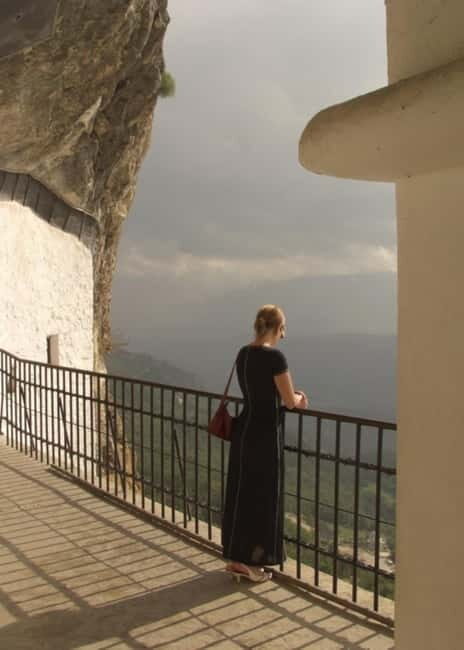
Cetinje Monastery is the kind of place where the setting seems plain until you realize what’s kept inside. You’ll spend around 30 minutes there, and that short window makes sense. The value isn’t in a long museum-style circuit. It’s in the atmosphere of reverence and the focus on what the monastery protects.
This monastery represents an epicenter of culture, literacy, and education in Montenegro. It was rebuilt multiple times after destruction, and after one invasion, its beauty was never fully restored the way people hoped. In other words: it’s not just a pretty building. It’s a survivor.
What really lands, though, is the relic story. The monastery preserves key Christian treasures in modest chambers, including parts associated with the Holy Cross, the hand of John the Baptist, and relics of Saint Peter of Cetinje. You don’t need to be an expert in Christian history to feel the weight of that. If you care about how faith connects to place, Cetinje is the anchor stop.
Practical tip: with only half an hour, decide ahead of time whether you want more time on the relic displays or more time just taking in the space and reading what’s available on-site.
Dajbabe Monastery: a cave church built from a vision
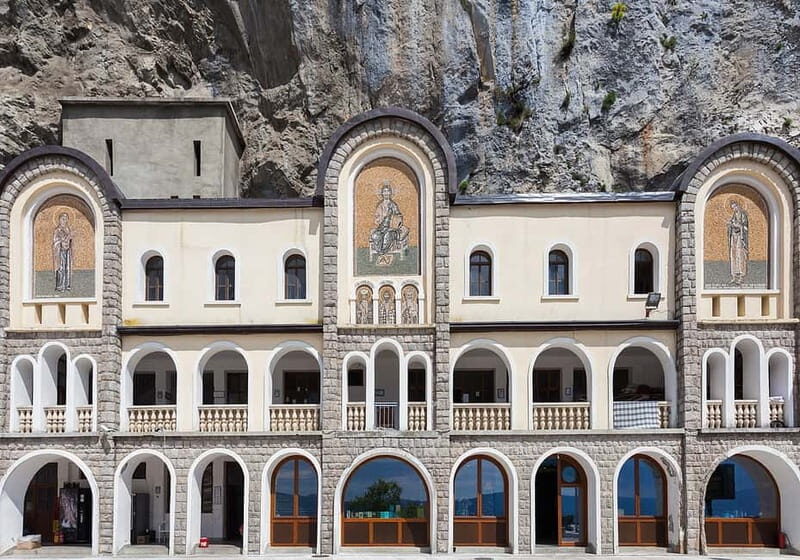
Dajbabe is the “how did they even do that?” stop. You’ll arrive after about 40–45 minutes of driving and spend about 30 minutes exploring the monastery.
The story starts with a miraculous vision connected to a shepherd named Petko. The monastery was built in 1897, dedicated to the Assumption of the Blessed Virgin Mary. Then comes the wow factor: the monastery is carved into the rock. The cave space originally served a purpose for worship, and later the space could be expanded, shaping the church.
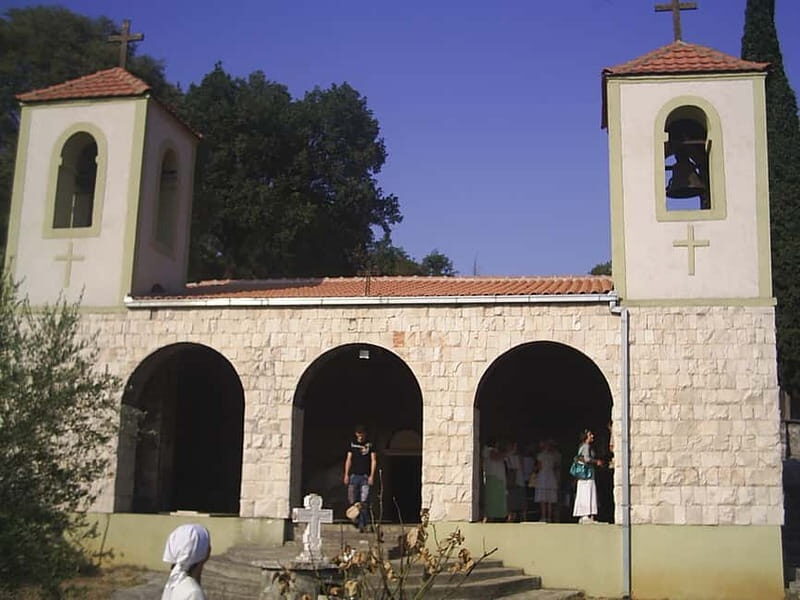
One part is outside the rock: the entrance porch with bell towers. But the main religious space is inside. The way it’s described in the tour notes is that the cave church reflects harmony—between what humans create and what nature already provides. The idea isn’t just “religion in a cave.” It’s that worship here is designed to fit the environment rather than override it.
At the base there’s an inscribed church in the shape of a cross. Inside, relics of Saint Simeon of Dajbap are preserved. If you like architecture that’s tied to belief, Dajbabe hits hard. It’s a rare mix of art, faith, and geology.
Time-management note: 30 minutes is enough for a careful look, but not enough for deep, slow wandering if you like taking your time reading every sign. If you’re the type who pauses a lot for photos, keep the pacing in mind so you don’t miss Ostrog.
Ostrog Monastery: cliffside pilgrimage and 900 meters of drama
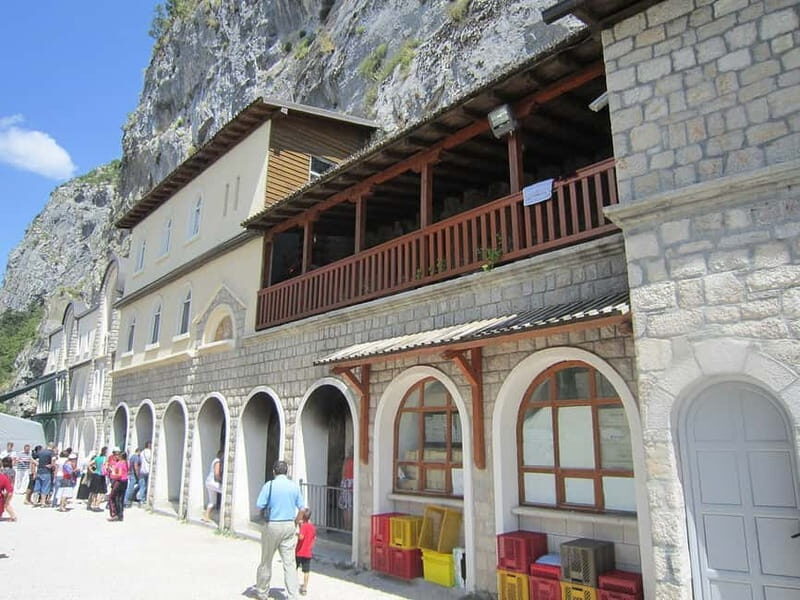
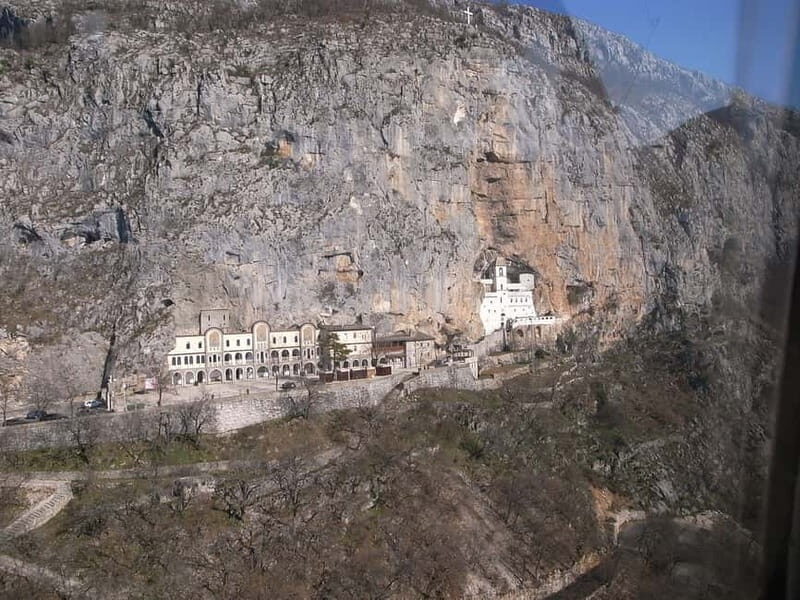
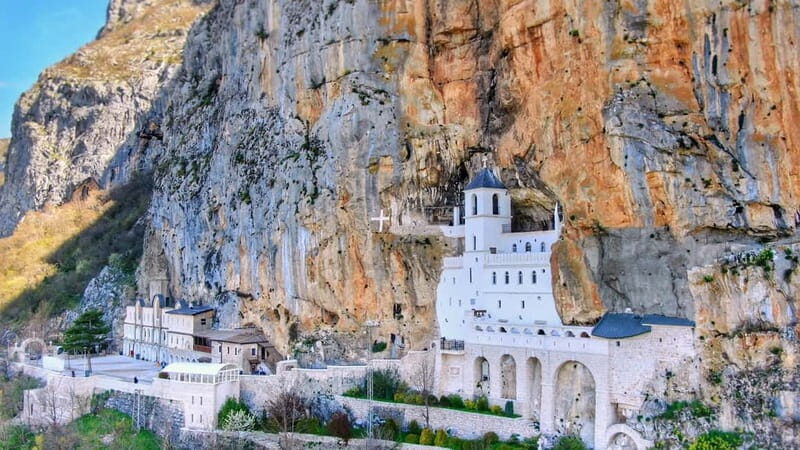
Ostrog is the headline act. It’s dedicated to Saint Vasilij Ostroška, a 17th-century figure whose relics are still said to be here. There’s also a belief that his holy body was found intact seven years after his death. That belief, plus the monastery’s reputation for miracles, is a big reason people come here for pilgrimage.
The monastery is carved into a steep rock at about 900 meters above sea level, which is why even a short visit feels intense. You’ll have around 1 hour at Ostrog, after roughly an hour’s drive from Dajbabe.
You’ll likely notice two things quickly:
1) The site has that “people are here for a reason” energy.
2) The setting makes every prayer and walk feel like it’s part of the mountain itself.
Because your time is limited, use the hour to do two tasks: first, find the main areas for visiting; second, take a few minutes for views and photos from angles that feel comfortable to you. With Ostrog, the surroundings are part of the experience, not an optional extra.
One consideration: the route up and around can be tiring, especially in hot weather. Since the tour isn’t designed for mobility impairments, come prepared for steady walking.
Koliba lunch and the sea-view photo break
When the spiritual walking adds up, you’ll appreciate the break built into the plan. Lunch happens at the Koliba restaurant (about 1 hour), and the tour includes the stop but not your meal cost. That’s normal for private tours, but it’s worth budgeting.
This is your chance to try traditional Montenegrin food. The tour description keeps it simple: you’ll be able to eat local dishes and leave feeling like the day wasn’t only about monasteries.
After lunch, you get a photo break with a view of the sea on the way back. It’s a nice contrast: after hours of rock, relics, and high places, you see water and light.
Practical tip: keep your phone charged and your camera strap ready. The day has a few “this is too good to miss” moments, and the photo break is one of them.
Price and value: $471 per group for up to four
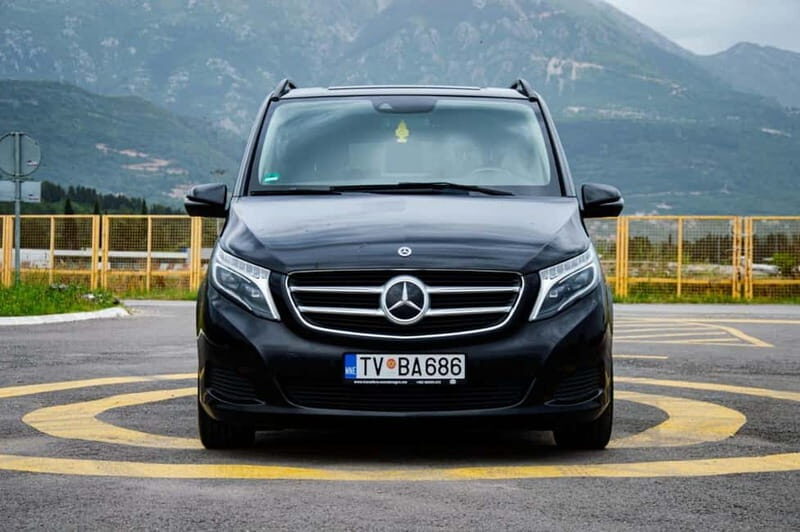
At $471 per group up to 4, you’re paying for privacy, a private driver/guide, and transport between three major sites. This isn’t a cheap day. But it can be good value if your alternative is doing the same route by hiring separate taxis or squeezing the day into less efficient options.
Here’s how I judge the value:
- You’re paying for a single vehicle and one coordinated plan, which saves time and stress.
- The itinerary is built around driving time plus meaningful visits, not just windshield scenery.
- You get pickup and drop-off from your chosen coastal base, which matters when you’re not staying in Cetinje.
If you’re traveling solo or as a couple, the price can still be worthwhile if you strongly prefer private pacing and don’t want to wrestle with schedules. If you’re budget-focused and travel light, you might be able to DIY. But if you hate logistics, this kind of private day trip often feels like money well spent.
Also keep in mind: you’re not paying extra for the van itself during the day, but lunch, drinks, and snacks are not included. Plan to spend a bit at Koliba and keep some cash or card ready for small purchases.
The people factor: what to look for in a guide on this route
The itinerary is fixed, but the guide’s quality can make a big difference—especially on a route where history details matter. The operator lists English/Serbian, and also mentions English or Russian speaking driver/guide. So before departure, it’s smart to confirm the language you’ll get and ask a quick question about what you can expect in terms of explanation at each stop.
One caution from recent experience: there has been at least one report of a guide who didn’t seem well prepared and also an issue with unsafe driving behavior and phone use while driving. I can’t prove how often that happens. But I can tell you what I do: I pay attention the moment we leave the pickup point. If driving feels off, or the guide is distracted in a way that makes you uneasy, it’s okay to voice a concern calmly.
On the flip side, another booking experience rated the tour extremely high and highlighted meeting wonderful people in a private setting. That tells me the format can be great when the guide and group vibe are right.
Who should book this monasteries tour (and who should skip it)

This tour suits you if:
- You want three standout monastery experiences without spending your day planning routes.
- You like architecture and spirituality tied to real places, not just photos.
- You prefer a private van from Budva, Tivat, or Kotor.
It might not suit you if:
- You have mobility concerns. The tour is specifically listed as not suitable for people with mobility impairments.
- You want lots of free time. The visits are time-limited, so you won’t have hours at each site.
- You’re hoping for a long meal included in the price. Lunch is at Koliba, but you pay for what you order.
If you’re the kind of traveler who loves soaking slowly in a place, consider arriving early on your own or pairing this tour with a flexible extra half day in one area. This tour is built for highlights and efficiency.
Should you book it? My practical take
Book it if you’re craving a focused, private route through three of Montenegro’s most important monasteries, and you’re okay with a schedule that moves. The combination of relics at Cetinje, cave-carved worship at Dajbabe, and the dramatic cliff setting of Ostrog is a satisfying arc for a single day.
Skip or reconsider if you need maximum time at each site, have mobility limitations, or you’re sensitive to driving comfort. In that case, ask the operator ahead of time how the language will work and what kind of guide approach you should expect.
If you do go, I’d keep your expectations simple and smart: think of this as a well-paced highlights day. You’ll leave knowing why people come here for pilgrimage and why the buildings matter beyond their walls.
FAQ
FAQ
What cities can you be picked up from?
Pickup is available from Budva, Tivat, and Kotor.
How long is the tour?
The tour lasts about 7 hours.
Is lunch included in the price?
Lunch is not included. You’ll stop at the Koliba restaurant for lunch, but you’ll pay for your meal and drinks.
What monasteries are included?
You visit Cetinje Monastery, Dajbabe Monastery, and Ostrog Monastery.
What language will the guide speak?
English or Russian speaking driver/guide is listed, and English and Serbian are also listed for the live tour guide. Confirm which one you’ll get for your date.
What do I need to bring?
Bring a passport or ID card.
Is the tour suitable for people with mobility impairments?
No, it is not suitable for people with mobility impairments.
Are smoking or alcohol allowed during the tour?
Smoking in the vehicle is not allowed. Alcohol and drugs are also not allowed.