REVIEW · SIBENIK
Sibenik: Guided Evening Walking Tour
Book on GetYourGuide →Operated by Rent a guide · Bookable on GetYourGuide
Šibenik has a second personality at night. On this evening walking tour, you’ll get a real feel for the old town, not just photos. I love how the guide pulls St. James Cathedral and the surrounding streets into a story you can actually follow, and I love the cobblestone calm that makes the historic center feel lived-in.
You’ll wander through historic squares and narrow lanes at a relaxed pace, with stops designed to help you notice details most people miss in daylight. One drawback: there’s no hotel pickup, and the route is on old-city surfaces—bring comfortable shoes. It also isn’t suitable for people with mobility impairments.
This tour is guided in English, German, or Croatian, and the guides bring a warm mix of history and humor. You might meet Irena, Irene, Mariana, or Marilea, all of whom are known for making Šibenik feel personal, not textbook-only—reflected in the consistently high rating.
In This Review
- Key Things You’ll Do and See on This Night Walk
- Why Šibenik Feels Different After Dark
- Meeting at Gat Krka: Start Point, Orange Cap, and Timing
- The 90-Minute Rhythm: Cobblestones, Focus Stops, and Pace
- Hidden Squares and Medieval Details Most People Miss
- King Petar Krešimir and the Big Names Behind Local Identity
- St. Francis, the “Special” Church, and the Details You’re Meant to Notice
- The Theater Story: Lights on a Major Stage
- A Main Square That Isn’t in the City: The Logic Behind It
- Four Wells Cistern: Medieval Water Planning in Plain Sight
- St. John the Baptist: Middle Ages Significance and a Patron-Saint Twist
- St. Krševan: Why It’s the Oldest in Town
- St. Barbara and the 4 Bells: When They Ring
- St. James Cathedral: Stone Architecture and 71 Portraits Around the Apses
- Ending Time: Time to Wander Cafes and Restaurants on Your Own
- Price and Value: Is $45 Worth 90 Minutes?
- Who This Tour Suits Best
- Should You Book This Evening Walk in Šibenik?
- FAQ
- How long is the Šibenik Guided Evening Walking Tour?
- How much does the tour cost?
- Where do I meet my guide?
- What time should I arrive?
- Which languages are available?
- Is hotel pickup or drop-off included?
- Are food and drinks included?
- What should I bring?
- Is the tour suitable for people with mobility impairments?
- Can I cancel and get a refund, and can I pay later?
Key Things You’ll Do and See on This Night Walk
Follow the clues behind King Petar Krešimir’s importance to Šibenik
Spot why St. Francis feels different from other churches in town
Learn the surprising logic (and mystery) behind Šibenik’s main square location
Compare several churches’ roles in the Middle Ages, including St. John the Baptist’s patron change
Walk the story of St. James Cathedral: stone slabs, ribs, and 71 sculptural portraits
Why Šibenik Feels Different After Dark
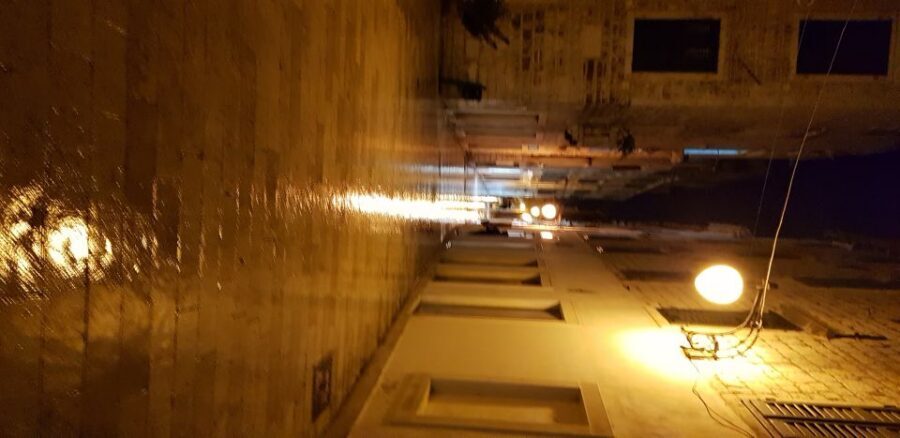
Daytime Šibenik is pretty. Evening Šibenik is sticky with atmosphere. On this tour, the historic center doesn’t feel like a checklist. It feels like a real place where people once moved slowly, watched the sky change, and treated stone like a kind of memory.
What helps is that you’re not just passing by famous stops. You’re learning what to look for: the meaning behind names, the purpose of squares, and the details carved into churches. When the streetlights come on, those details suddenly matter more.
You can also read our reviews of more walking tours in Sibenik

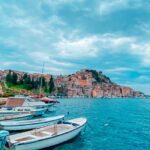
Meeting at Gat Krka: Start Point, Orange Cap, and Timing
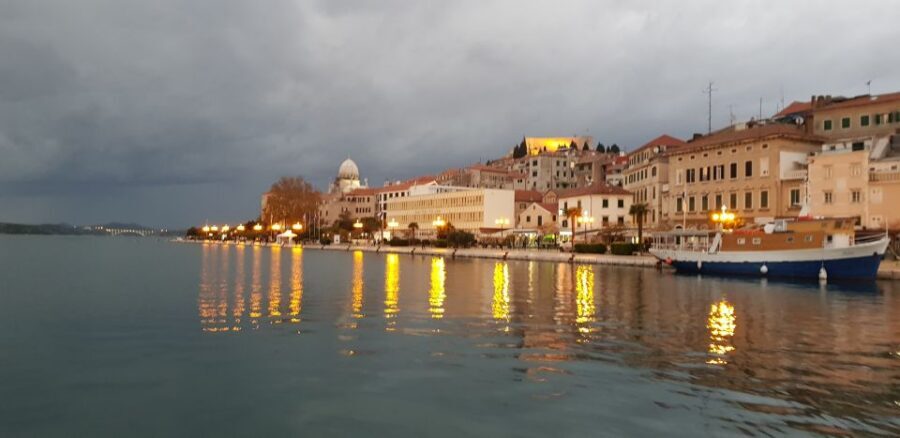
You meet your guide next to the lantern at the gat Krka parking lot. The guide wears an orange cap, and you’ll want to arrive at least 5 minutes early.
That timing detail matters more than it sounds. Evening walks depend on a steady start, and in an old town, the first few minutes set the rhythm. Plan to be on time so you don’t end up rushing into the group while everyone else is already getting oriented.
The 90-Minute Rhythm: Cobblestones, Focus Stops, and Pace
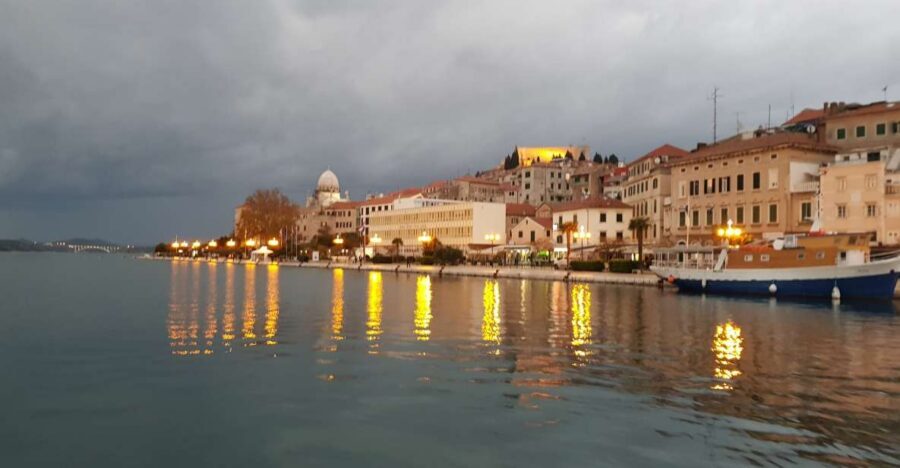
This is a 90-minute guided walking tour. That length is long enough to connect the dots between sites, but short enough that you’re not exhausted before the best parts.
Expect a gentle city-center pace with frequent “stop and look” moments. Because the walk is timed around evening, you’ll often be moving between views, then pausing to hear what each spot meant and how it’s linked to the next one.
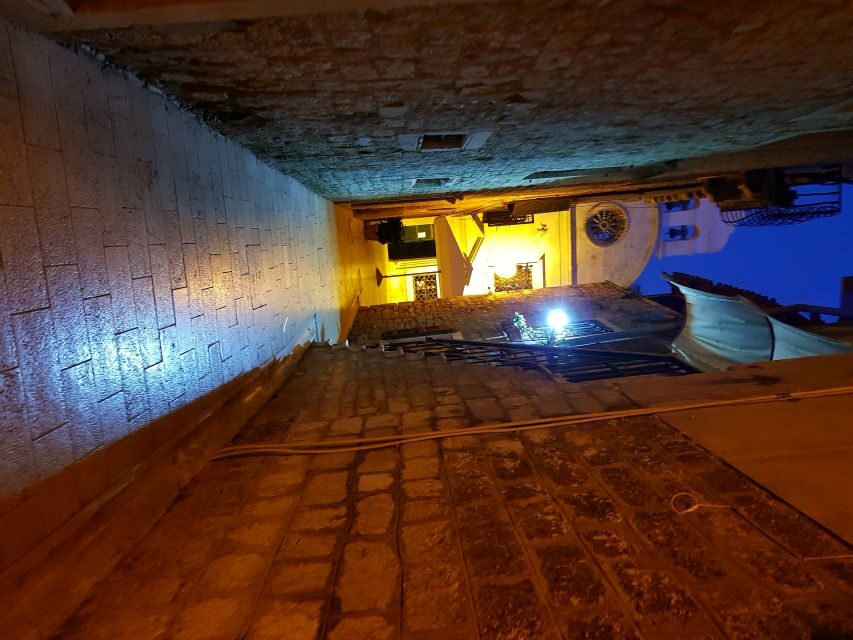
And yes, you’ll be on cobblestones. Old streets don’t care about travel plans. Comfortable shoes are not optional here—they’re the difference between enjoying the evening and thinking only about your feet.
Hidden Squares and Medieval Details Most People Miss
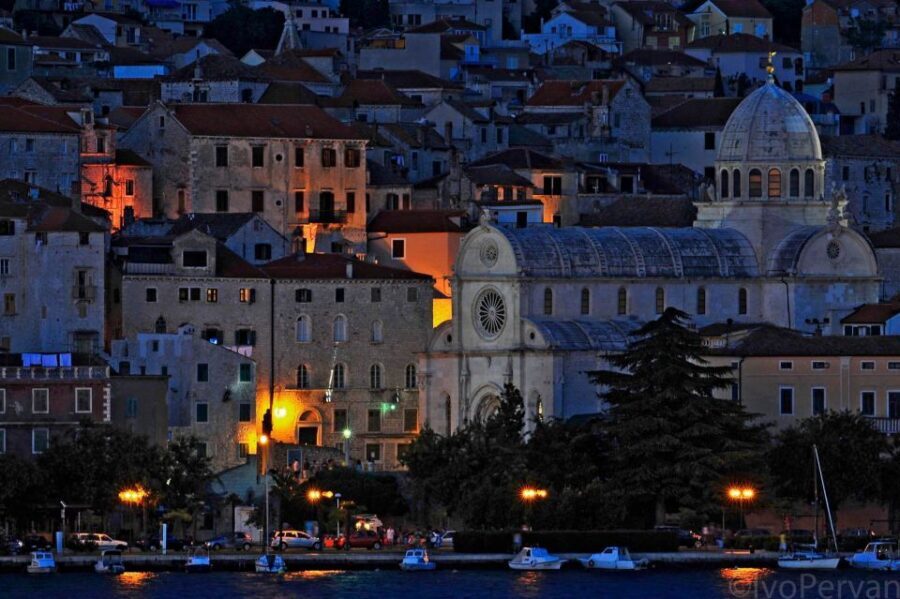
One of the best parts of this tour is the way it teaches you to see. You’re led to less-obvious squares and corners, and the guide points out architectural and historical details you simply wouldn’t catch on your own.
Instead of sounding like a lecture, the storytelling is built around concrete questions:
- Why did this place matter?
- What does that design choice tell you?
- Who were the people connected to it?
- Why do these buildings look the way they do?
That’s the real value. A guide saves you time and gives your eyes a purpose, especially in a town where stonework carries so much meaning.
King Petar Krešimir and the Big Names Behind Local Identity
You’ll hear about King Petar Krešimir and why he’s important to Šibenik and its people. This isn’t just name-dropping. It helps explain how local pride and political history got tied to the city’s identity.
When you learn the “why” behind a figure like this, the city becomes easier to understand. Streets and buildings stop being random stops and start acting like chapters.





St. Francis, the “Special” Church, and the Details You’re Meant to Notice

Another stop is the church of St. Francis, which the tour frames as more special than other churches in town. The guide doesn’t just say it’s unique. They point you toward the specific reasons the building earns attention.
This is where an evening walk pays off. At night, you’re looking closely at shapes, edges, and stone textures—so the guide’s prompts land better than they might in bright midday crowds.
The Theater Story: Lights on a Major Stage
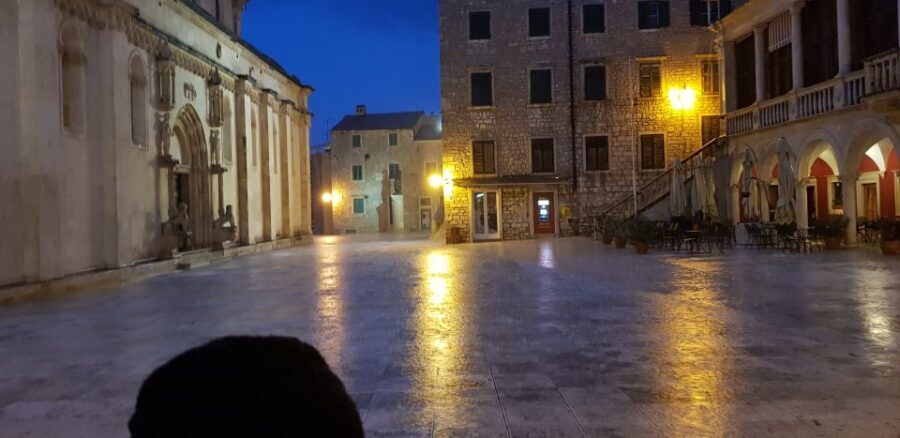
The tour also covers the Croatian National Theater in Šibenik. You’ll learn that once built, it was the largest and most beautiful theater in South Europe. Then the story gets even more interesting: in 1896, the theater got electric lighting as one of the first theaters in the world.
It’s a great contrast against the medieval feel you’ll be hearing about elsewhere. You get the sense that Šibenik kept changing—new tech, new culture, and a city that wasn’t frozen in one era.
A Main Square That Isn’t in the City: The Logic Behind It
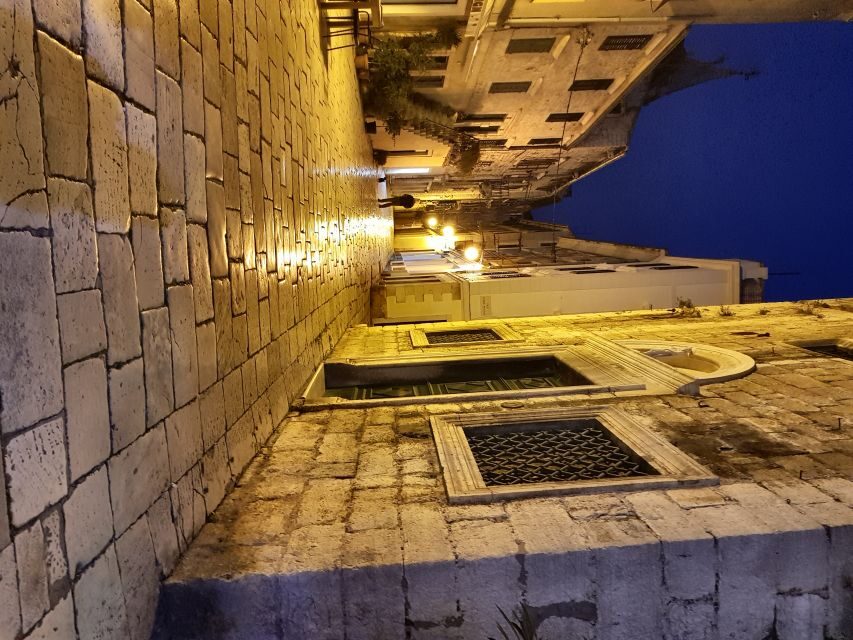
This is one of those “wait, what?” facts that makes the tour memorable. You’ll find out why the main city square is not in the city.
That kind of detail does two helpful things for you. First, it encourages you to stay curious instead of hopping from photo spot to photo spot. Second, it gives you a map in your head—once you understand the odd logic of one place, the rest of the city starts to feel more coherent.
Four Wells Cistern: Medieval Water Planning in Plain Sight
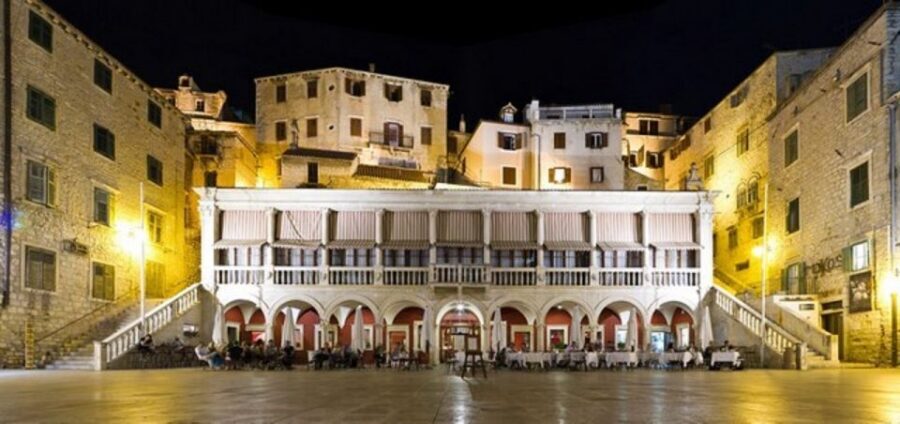
You’ll learn why the public town cistern called Four Wells was built during the Middle Ages. Even if you’re not a “history person,” this stop tends to click because it’s practical.
Water infrastructure is where cities show their intelligence. A cistern tells you where a community stored its future, and the guide explains the bigger picture behind that need.
St. John the Baptist: Middle Ages Significance and a Patron-Saint Twist
The tour includes the church of St. John the Baptist, with a story about its special significance across the Middle Ages and why its patron saint changed.
This is a good example of why a guided walk works here. A building can look like a building until someone tells you what shifted politically or spiritually. Then you start seeing the city as a living timeline.
St. Krševan: Why It’s the Oldest in Town
You’ll hear why St. Krševan is considered the oldest church in Šibenik. The key isn’t just the age—it’s what age signals in a city like this.
Older structures often act like anchors. They help you understand how the city’s spiritual and architectural priorities developed over time, rather than popping up all at once.
St. Barbara and the 4 Bells: When They Ring
The tour covers the church of Saint Barbara, including why it has 4 bells and when those bells ring.
Even with basic knowledge, hearing how bells connect to daily rhythms helps you picture the city as something people experienced, not something people only visited. If you’re the type who likes to travel with your senses turned on—sounds, timing, atmosphere—this stop is for you.
St. James Cathedral: Stone Architecture and 71 Portraits Around the Apses
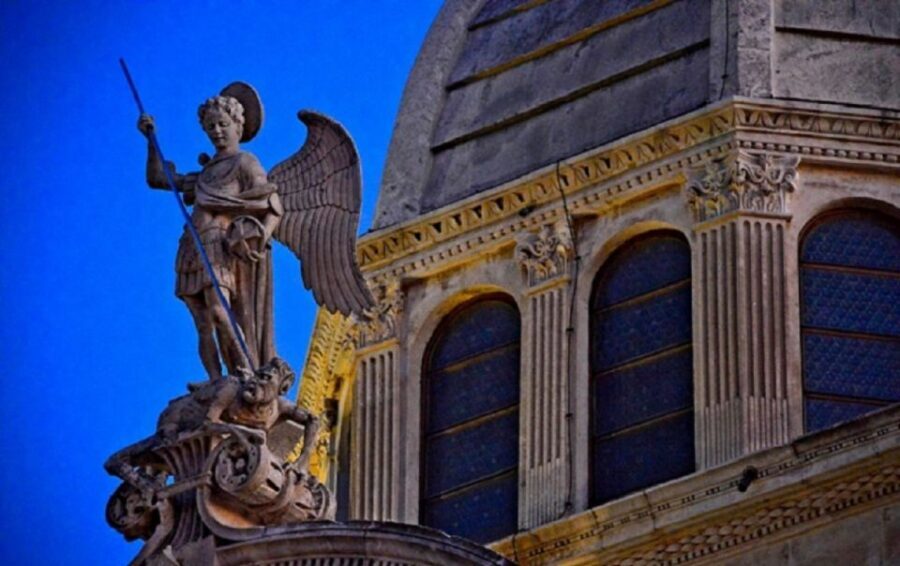
This is the big-ticket architecture stop: St. Jacob’s Cathedral (often referred to in the context of its stonework and European significance).
Here’s what makes it stand out, as the tour explains:
- It is entirely built of stone.
- It’s unique in its brave structure of stone slabs and ribs, with no binding material.
- It’s unique among Renaissance churches in its trefoil front facade.
- It’s unique in the harmony of its architecture and the row of 71 realistic sculptural portraits around the apses.
That’s a lot of technical-sounding detail, but the guide’s job is to translate it into something you can see. In the evening, this kind of architecture becomes easier to understand because shadows sharpen the outlines. The stone stops being background and starts being the message.
If you only visit Šibenik’s highlights on your own, you might miss the “why” behind the design. With the guide’s framing, you’ll leave knowing what you actually witnessed.
Ending Time: Time to Wander Cafes and Restaurants on Your Own
At the end of the tour, you’ll have time to explore on your own, including numerous cafes and restaurants in the area.
This is smart planning. A guided walk gives you context; then you get to make your own choice about food, pacing, and what you want to see next. If you want to return to a stop for a closer look, you’ll know where your favorite moments were.
Price and Value: Is $45 Worth 90 Minutes?
At $45 per person for a 90-minute walking tour, you’re paying for three things that are hard to DIY effectively:
- A guide who knows what matters in this specific city (not just generic old-town talk).
- A route built to connect stories to buildings.
- Evening timing that helps the city feel different, not just darker.
If you’re the kind of traveler who likes to understand what you’re seeing—why the square is odd, why churches changed, why bells matter—then this is a good value. You’re not paying for comfort or shortcuts. You’re paying for meaning, and in Šibenik, meaning is the point.
If you prefer purely self-paced exploring with zero structure, you might feel less value. But even then, a 90-minute guided start can give you a mental map that makes the rest of your time easier.
Who This Tour Suits Best
This works especially well if you:
- Want a fast orientation to Šibenik’s old city without getting lost.
- Like churches and architecture but also want the human stories attached.
- Enjoy evening walking because you prefer atmosphere over crowds.
It’s not a fit if you have mobility impairments, since the tour isn’t listed as suitable for that.
Should You Book This Evening Walk in Šibenik?
If you want Šibenik to feel like a place with a past you can actually understand, I’d book it. The tour’s strongest points are the way it connects local identity, specific architectural features, and practical details—like bells and cistern water storage—into one walkable story.
Also, if you’re short on time, this is a tidy way to see a lot without sprinting. You’ll finish with enough confidence to wander on your own, but you’ll still know what you saw and why it mattered.
FAQ
How long is the Šibenik Guided Evening Walking Tour?
The tour lasts 90 minutes.
How much does the tour cost?
It costs $45 per person.
Where do I meet my guide?
Meet your guide next to the lantern at the gat Krka parking lot. Your guide will be wearing an orange cap.
What time should I arrive?
Arrive at least 5 minutes before the scheduled start time.
Which languages are available?
The tour is offered in English, German, and Croatian.
Is hotel pickup or drop-off included?
No, hotel pickup and drop-off are not included.
Are food and drinks included?
No, food and drinks are not included.
What should I bring?
Wear comfortable shoes for the walking route.
Is the tour suitable for people with mobility impairments?
No, it is not suitable for people with mobility impairments.
Can I cancel and get a refund, and can I pay later?
You can cancel up to 24 hours in advance for a full refund. You can also reserve now and pay later.