REVIEW · SPLIT
Best of Split & Trogir: Private VIP Tour with Local Guide
Book on Viator →Operated by Discovery tours · Bookable on Viator
Split history, handled with smart timing, is the point of this private VIP route through Diocletian’s Palace and UNESCO Trogir. I love the private pace that keeps you from feeling herded, and I love the local guide stories that turn Roman ruins into real places you can actually picture.
The one watch-out is ticket planning. A few stops list admission as free, while others are marked as not included, so your total spend can edge up if you’re expecting everything to be covered.
In This Review
- Key highlights you’ll feel right away
- Why this Split and Trogir VIP tour works for a one-day plan
- Diocletian’s Palace Peristyle: the heart of the imperial layout
- Saint Domnius Cathedral: the rare church that still feels original
- Grgur Ninski Statue: a giant lesson in faith, humor, and wear
- The Temple of Jupiter and Diocletian’s Palace cellars: top “you didn’t know to look there” moments
- Crossing into Trogir: Central Square and the Venetian-style old town mood
- Saint Lawrence Cathedral: Romanesque-Gothic layers in one long building story
- Kamerlengo Fortress: coastal defense with an instant reward view
- Trogir’s Loggia, Town decisions, and Palace Cipiko: civic power in stone
- Price and tickets: is $228.78 per person good value?
- Guides, pace, and crowd-smart navigation
- Who should book this tour, and who might skip it
- Should you book Best of Split & Trogir?
- FAQ
- How long is the Best of Split & Trogir private VIP tour?
- Is this tour private?
- Does the tour offer pickup, and is there a mobile ticket?
- What language is the tour in?
- Which stops are marked as admission ticket free?
- Are any of the stops admission ticket not included?
Key highlights you’ll feel right away
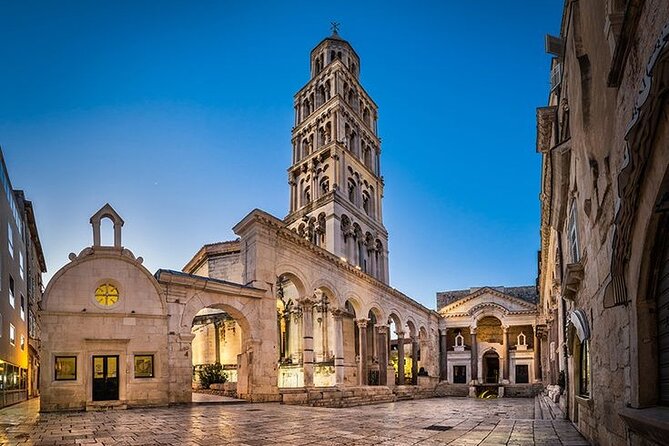
- Diocletian’s Palace Peristyle with entry marked as free, plus an easy introduction to Split’s layout
- Grgur Ninski (Gregory of Nin) statue and the toe-worn-by-faith local luck ritual
- Temple of Jupiter inside the palace complex, built between 295 and 305
- Trogir’s UNESCO old town core, starting at Central Square (John Paul II Square)
- Kamerlengo Fortress viewpoints over the marina and islands during your coastal detour
- English-speaking private guiding with standout names like Kristina and Andrea in recent runs
Why this Split and Trogir VIP tour works for a one-day plan
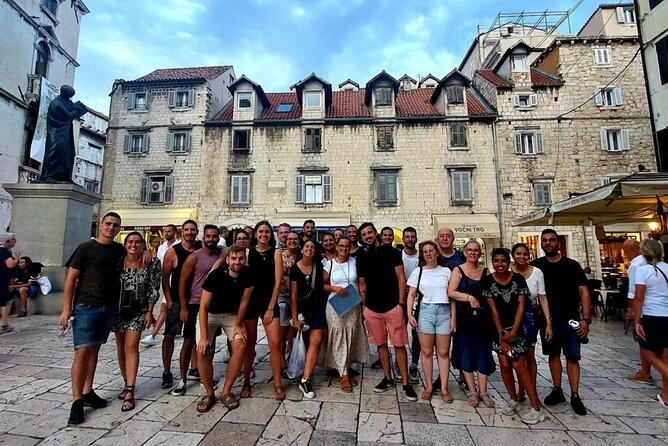
If you want the “wow” of two Dalmatian cities without spending your day in transit maps, this is built for you. The tour runs about 6 hours, with a private group and an English-speaking local guide. You’ll cover the top monuments that most people travel across the Adriatic to see, but in a way that’s meant to keep the time tight and your eyes well-trained.
I also like the practical structure here. The day is broken into focused chunks (most stops are around 15 minutes). That’s useful because Diocletian’s Palace and Trogir can feel like a maze if you wander on your own. A guide helps you choose what to look at first, and what to skip when you’re short on time.
One more value point: pickup is offered and the tour uses a mobile ticket, so you’re not juggling paper confirmations. Add that to the fact that it’s near public transportation, and this feels flexible even if your hotel isn’t right in the center.
You can also read our reviews of more tours and experiences in Split.

Diocletian’s Palace Peristyle: the heart of the imperial layout
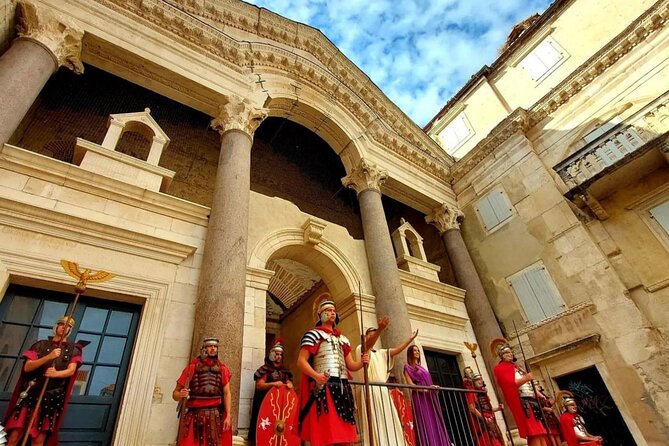
Your day starts in Split’s core with the Peristyle of Diocletian’s Palace. This rectangular open court sits at the crossroads of the palace’s two main roads. In plain terms, it’s the place where the palace stops feeling like “ruins” and starts feeling like a real city grid.
What to look for: the colonnade framing the square and the way the open court functions like a civic “center” instead of a random courtyard. Even if you don’t know Roman architecture, this layout teaches you how Diocletian organized movement—where people would pass through, pause, and eventually connect to the rest of palace life.
This stop is labeled admission ticket free, which is nice for value. It also sets you up for everything after, because once you understand the Peristyle as a crossroads, the rest of the palace’s sites make more sense.
Practical downside: since this is central and iconic, it can be busy. The upside is that you’re starting here early in the day, and a guide can help you read the space fast and keep your photo stops efficient.
Saint Domnius Cathedral: the rare church that still feels original
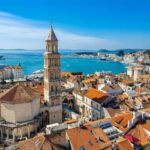
From the Peristyle, you move to Cathedral of Saint Domnius. It’s consecrated at the turn of the 7th century AD, and it’s often described as the oldest Catholic cathedral in the world still in use in its original structure. Even the bell tower is from the 12th century, so you can see how this site kept growing without being fully erased and rebuilt.
What makes this stop worth your time isn’t just age. It’s the sense of continuity. You’re stepping into a church that remained active through centuries, so details you might expect to be gone in other historic cities are still part of daily life.
If you’re a first-timer, focus on the “shape” first: the cathedral’s role within the palace-era complex. If you’re a history nerd, you’ll probably enjoy the idea that the building kept its identity even as layers added around it.
Note: the tour data doesn’t clearly state whether the cathedral entry is free or not. So if you’re trying to budget tightly, it’s smart to double-check what’s included for this specific stop.
Grgur Ninski Statue: a giant lesson in faith, humor, and wear
Next comes the Grgur Ninski Statue, the 8.5-metre (28 ft) monument to Gregory of Nin. The sculptor is Ivan Meštrović, and the statue’s toe is the star of the show.
Here’s the local ritual: people rub the statue’s toe for good luck. The toe is worn smooth and shiny because that habit has been happening for a long time. It’s one of those small traditions that feels very human right beside massive stone history.
What I like about this stop is that it breaks up the Roman/medieval heaviness with something lighter. It gives you a quick, memorable moment you can photograph without feeling like you’re stuck reading a wall of text.
Duration is short (it’s on the tour as about 15 minutes), so don’t expect deep museum-style content. Instead, use it as a reset: get a landmark shot, learn the story, then move on with your brain refreshed.
The Temple of Jupiter and Diocletian’s Palace cellars: top “you didn’t know to look there” moments
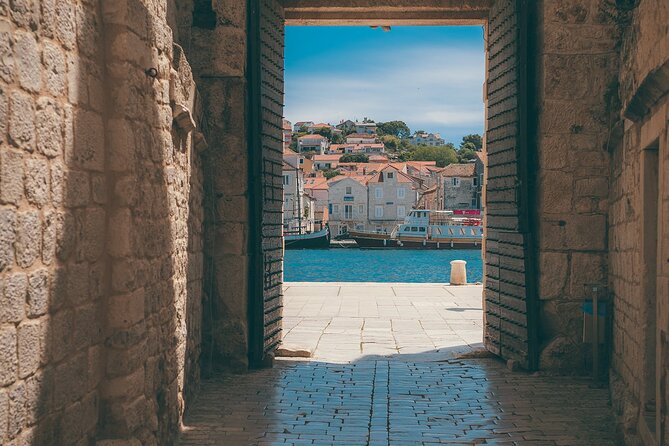
Split’s palace complex holds more than the big open square. The tour includes the Temple of Jupiter (Jupiterov hram), located in the western part of Diocletian’s Palace near the Peristyle. It was built between 295 and 305, during the palace’s construction.
If you’re thinking, So why is a temple still there? you’re already asking the right question. This is a chance to see how Roman religion and politics overlapped physically. You’re not just seeing a stop on a walking map—you’re seeing part of the imperial message made stone and placed where it mattered.
A short but powerful follow-up is the Diocletian Palace Substructures, sometimes called the “basement halls” or cellar areas. This is at the southern end of the palace, in the part of Split known as Stari Grad. The substructures supported the private apartments of Emperor Diocletian above, and they’re described as one of the best preserved ancient complexes of their kind.
What’s special: the feel of scale. You get a sense of how much planning and engineering sits under what visitors see at street level. These are the kinds of spaces that help you understand a palace isn’t one building—it’s a whole system of layers.
Here’s the value consideration: the substructures are marked as admission ticket not included. That doesn’t make the stop less worth it, but it does mean you should be ready for extra costs. If you want to keep your budget tight, this is one of the stops to plan around.


Crossing into Trogir: Central Square and the Venetian-style old town mood
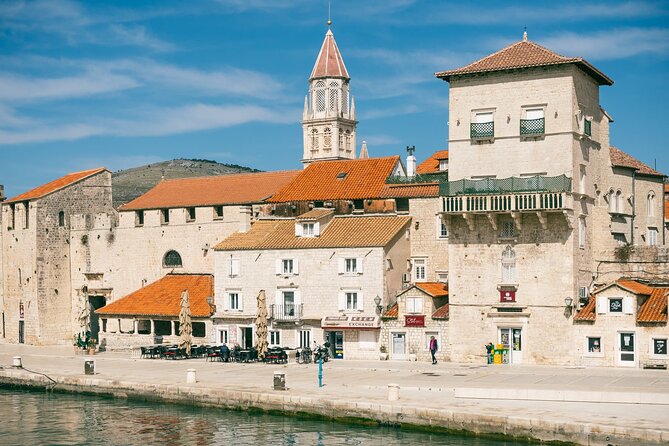
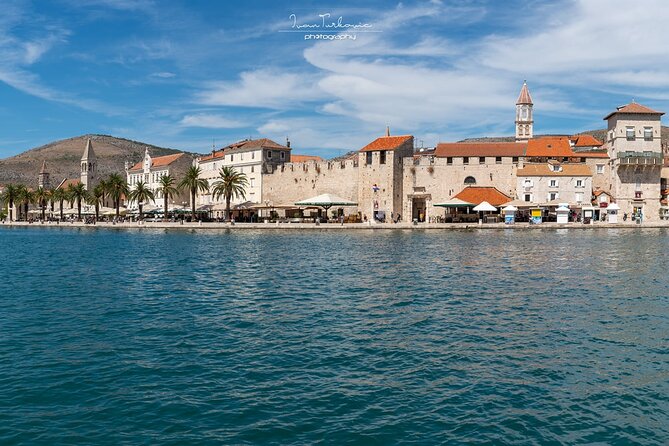
After Split, you shift into Trogir, a port city on the Adriatic in central Dalmatia. Trogir’s old town is included in the UNESCO class of monuments, and you’ll feel it in the way the streets and building styles stick together like a designed setting.
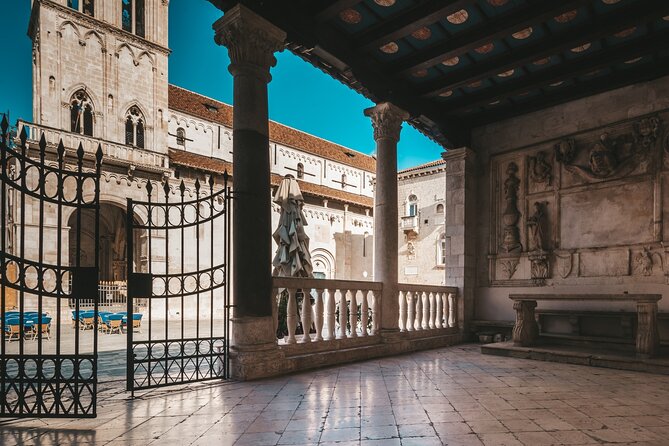
Your first Trogir stop is the Central Square (John Paul II Square). This is the main square, framed by landmark buildings like the Loggia and Clock Tower. The Loggia is opposite the cathedral and once served as a public courtroom. It has six pillars decorated with capitals and two reliefs carved into the wall.
One practical note from the tour info: during summer, nearby coffee bars can block your view of the pillars. So if you come in peak season, you may want to keep your eyes on what you can see clearly—the relief work, especially the Relief of Justice by Nicholas Florentino.
This stop is marked admission ticket free, which helps keep the day smooth. It’s also a great “reset point” where your guide can tie together what you saw in Split with what you’re now seeing in Trogir: Roman core influence, then later Venetian-style civic identity.
Saint Lawrence Cathedral: Romanesque-Gothic layers in one long building story
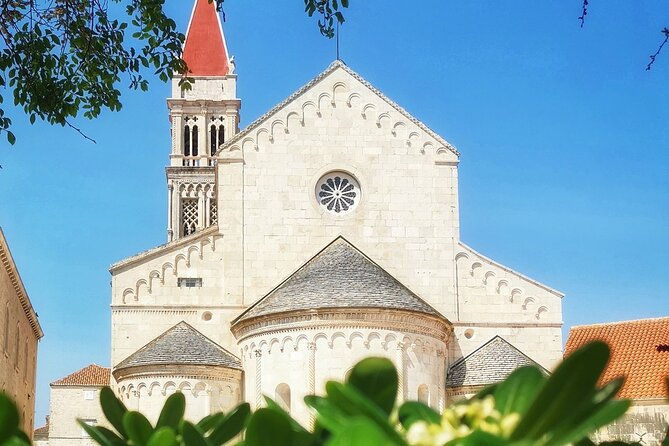
Next up is Saint Lawrence’s Cathedral (Katedrala Sv. Lovre). It’s a triple-naved basilica built in Romanesque-Gothic style, and the construction took place over several centuries. That means the cathedral reflects styles that succeeded one another in Dalmatia.
This is a smart stop for two reasons. First, it gives you a reason to look upward and inward instead of only chasing street-level views. Second, the “built over time” concept helps you understand why Trogir feels cohesive but not identical everywhere—different eras add their handwriting.
The tour data marks this stop as admission ticket not included. So if you’re the kind of traveler who hates paying extra midway through a tour, know this ahead of time and decide how much you want to prioritize interior time versus exterior photos and cathedral forecourt views.
Kamerlengo Fortress: coastal defense with an instant reward view
Then you head to Kula Karmelengo, also called the Kamerlengo Fortress. This is a 15th-century coastal fortress built during Venetian rule to protect Trogir from naval attacks. That “naval protection” purpose matters because it explains the location: coastal visibility was the point.
Today the fortress works as a viewpoint stop. The tour info specifically calls out views over the old town, the marina, and nearby islands. For many people, this is where the tour becomes more than monuments—it turns into scenery.
If you’re sensitive to stairs or uneven ground, this stop may take more physical effort than a courtyard photo spot. But because the tour keeps stops to around 15 minutes, it’s usually manageable.
This is marked admission ticket not included, so again, plan for that if your budget assumes everything is covered.
Trogir’s Loggia, Town decisions, and Palace Cipiko: civic power in stone
Back toward civic spaces, you’ll visit the Town Loggia, described as the public meeting place of medieval Trogir. It’s where important decisions were announced and legal matters discussed. In other words: this wasn’t only for show. It was the stage for self-governance.
Then you’ll see Palace Cipiko (Čipiko Palace), listed as the largest residential palace in Trogir. It’s a Gothic-Renaissance example tied to the influential Čipiko family, showing the wealth and power of Trogir’s noble past.
These are quick stops, each about 15 minutes, and they work best if you let your guide frame them as “how people lived” instead of treating them as background walls. With a good explanation, you can spot why a loggia might look civic and open, while a palace looks more like status and control.
Tickets are marked as admission ticket not included for Palace Cipiko, so this is a good place to ask yourself what you want: more exterior architecture time or more paid interior time. The tour format keeps things flexible, but it does require you to make those calls.
Price and tickets: is $228.78 per person good value?
At $228.78 per person, this is not a budget walking tour. But it’s also not trying to be. For that price, you’re paying for a private VIP format, an English-speaking local guide, and an organized route that connects Split’s palace core with Trogir’s UNESCO old town in about 6 hours.
The value question comes down to two things:
1) How much you’ll benefit from guided order
Diocletian’s Palace can be confusing without context. A guide helps you interpret what you’re seeing quickly, so you spend less time wandering and more time understanding.
2) How much you’ll pay in extra entry tickets
Some sites are marked admission free (Peristyle and Grgur Ninski statue, plus Trogir’s central square and town loggia). Others are marked not included (notably the palace substructures, Saint Lawrence’s Cathedral, Kamerlengo Fortress, and Palace Cipiko). If you were hoping for a tour where every stop is cost-covered, you may find the add-ons change the final math.
In my view, this price makes sense if you want the whole highlights package without spending your day solving logistics. If you’re comfortable buying tickets yourself and navigating alone, you could do some sites independently. But the private guide is what keeps it coherent.
Guides, pace, and crowd-smart navigation
The tour experience really depends on the guide, and recent runs give you a hint of the style you’ll get.
A guide named Andrea was praised for navigating crowds with ease and for guiding people to Trogir first in at least one run. That tells me the operator isn’t only reading a script—they’re thinking about flow and what feels easiest on the ground.
Another guide, Kristina, was praised for being extremely knowledgeable in a way that stayed easy to follow, plus for being sweet and local. The big takeaway from her style is that she includes personal stories that make the traditions feel alive, not like a lecture.
In a private tour, those small differences matter. You can ask questions, take a moment to look closely at a detail, and move on when you’re done.
Who should book this tour, and who might skip it
This tour is a strong fit if:
- you want Split and Trogir in one day without overplanning
- you like Roman and medieval sites with clear explanations
- you prefer a private format so you can set your pace
You might want to skip or choose something else if:
- you hate the idea that some attractions list admission as not included
- you’d rather roam slowly and stop wherever you want without a timed rhythm
- your day is already packed with other ticketed experiences and you want fewer entrances
Also, this tour is listed as suitable for most travelers, and it allows service animals. It’s also noted as being near public transportation, which can be a relief if you’re not using pickup.
Should you book Best of Split & Trogir?
If you want a high-impact day that covers the must-sees in Split and Trogir with the least friction, I’d book it. The route is smart: it gives you an anchor (Peristyle), then moves into standout monuments (St Domnius, Gregory of Nin), then adds depth (Temple of Jupiter and the substructures), and finishes in Trogir with UNESCO-era civic and cathedral highlights plus a fortress view.
Just go in with one clear expectation: you’ll likely pay some additional entry costs because several stops are marked not included. If you budget for that and you value a guide who can steer you through busy areas with confidence, this is a solid use of your time in Dalmatia.
FAQ
How long is the Best of Split & Trogir private VIP tour?
It runs for about 6 hours.
Is this tour private?
Yes. It’s a private tour/activity, meaning only your group participates.
Does the tour offer pickup, and is there a mobile ticket?
Pickup is offered, and you’ll receive a mobile ticket.
What language is the tour in?
The tour is offered in English.
Which stops are marked as admission ticket free?
The Peristyle of Diocletian’s Palace is listed as admission ticket free, the Grgur Ninski Statue is also free, and in Trogir the Central Square and the Town Loggia are listed as free.
Are any of the stops admission ticket not included?
Yes. Diocletian Palace Substructures, Saint Lawrence’s Cathedral, Kula Karmelengo (Kamerlengo Fortress), and Palace Cipiko are marked as admission ticket not included.