REVIEW · PULA
Curiosities and secrets of Pula
Book on Viator →Operated by GUIDEPOLA-tourist guide · Bookable on Viator
Roman stones, underground corridors, and market smells.
This Curiosities and Secrets of Pula walk mixes the big-name Amphitheatre de Pula with smaller, weirder stories that make the city feel alive. Two things I like: the guide focuses on how these places worked (not just what you see), and the pace gives you time to look closely.
You’ll also get the best kind of local stop: Gradska Trznica Pula with Pula food traditions, plus a cheese and espresso tasting on the right timing. One catch to consider is Zerostrasse access: it’s only open in summer (15.06–15.09). Outside those dates, the guide still covers it, but the tunnel visit may not be possible.
In This Review
- Key highlights worth planning for
- A private Pula story walk: arena, tunnels, and market energy
- Meeting at Flavijevska ul. 3 and finishing at Pula Citadel
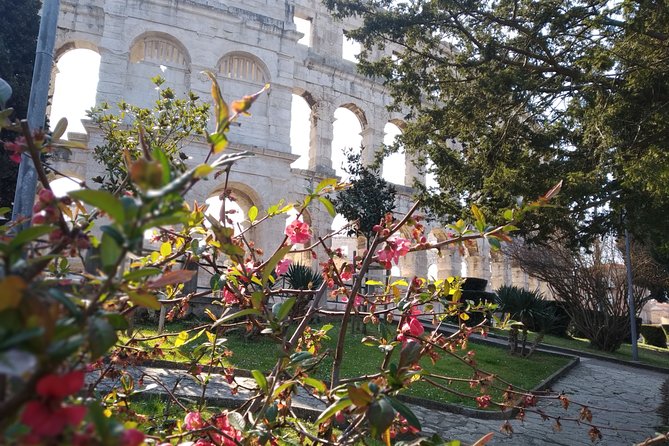
- Stop 1: Amphitheatre de Pula and what Roman ruins were actually for
- Stop 2: Zerostrasse tunnel and the city’s 20th-century layer
- Stop 3: Gradska Trznica Pula market, cheese, and espresso
- Stop 4: Arco dei Sergi, a quick Roman-architecture win
- Stop 5: Kastel (Venetian castle) and the hilltop payoff
- Price and value: $31.94 for guided layers (and tickets you’ll budget)
- Who should book this tour, and who might want something else
- Practical tips: timing, comfort, and getting the most out of each stop
- Should you book Curiosities and Secrets of Pula?
- FAQ
- How long is the Curiosities and Secrets of Pula tour?
- Is the tour in English?
- Is this a private tour?
- What is included in the price?
- Do I need to buy tickets for every stop?
- When is Zerostrasse open?
- Where does the tour start and end?
- How does ticket delivery work?
- What if the weather is bad?
- Can I cancel for a full refund?
Key highlights worth planning for
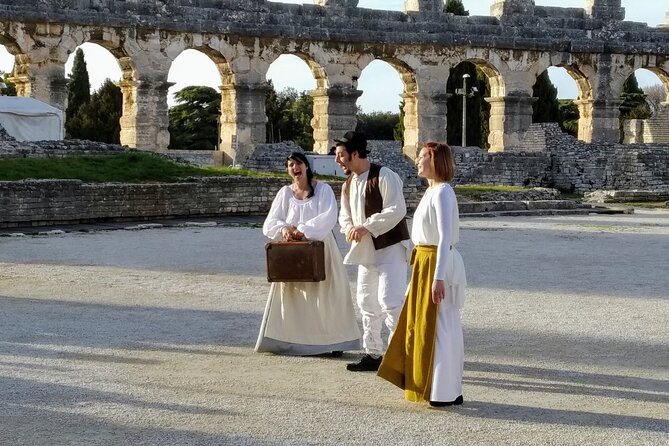
- Amphitheatre de Pula stories: Roman building know-how plus gladiator life and today’s events
- Zerostrasse tunnel (15.06–15.09 only): a 20th-century underground layer of Pula
- Gradska Trznica Pula market timing matters: morning includes the market walk; afternoon the market is closed
- Arco dei Sergi: a short, satisfying Roman-architecture stop with free entry
- Hilltop ending at Pula Citadel: you finish near great views and the naval history museum area
- Private group feel: it’s just your party, with a guide who can respond to your interests
A private Pula story walk: arena, tunnels, and market energy
Pula has that rare trick: it can look like a beach town in the afternoon and a Roman movie set in the morning. This tour leans into the contrast. You move from a major Roman stage to an underground WWII-era-style setting, then to a real local market where food traditions do the talking.
The private format is a big part of the value. You are not stuck with a rushed herd mentality. You can ask questions, and the guide can shift the emphasis—gladiators vs. engineering, tunnels vs. city layers, food traditions vs. quick city orientation. That flexibility is exactly what makes a short 2–3 hour tour feel like more.
Also, the tour is built around a mix of entry levels: some stops need tickets, some are free, and one stop (the market) is included without admissions. That helps you control your day budget.
You can also read our reviews of more tours and experiences in Pula.


Meeting at Flavijevska ul. 3 and finishing at Pula Citadel
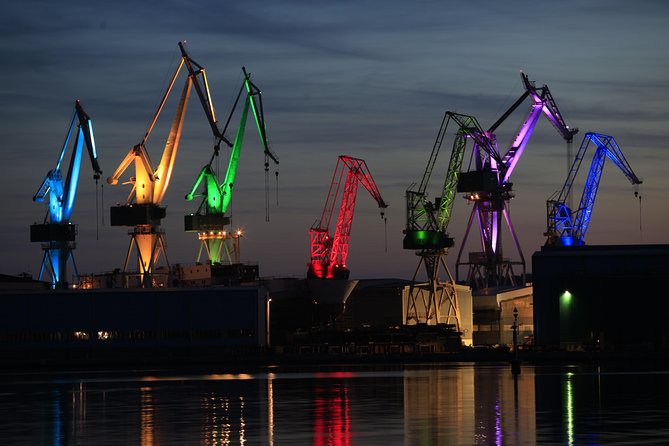
You start at Flavijevska ul. 3, 52100, Pula. You’ll end at Pula Citadel, Gradinski uspon 10, 52100, Pula, near the naval history museum area.
This route works well if you want to see key sights on foot while you still have energy for the rest of the day. It’s also a good choice if you like ending on a viewpoint area, because finishing at the Citadel hill gives you an easy next step: wander the old town, grab lunch, or keep going with your own self-guided exploring.
Practical note: the tour requires good weather. If conditions are poor, you’ll be offered a different date or a full refund. So, keep an eye on the forecast.
Stop 1: Amphitheatre de Pula and what Roman ruins were actually for
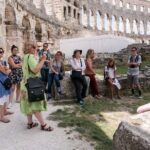
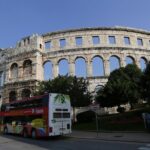
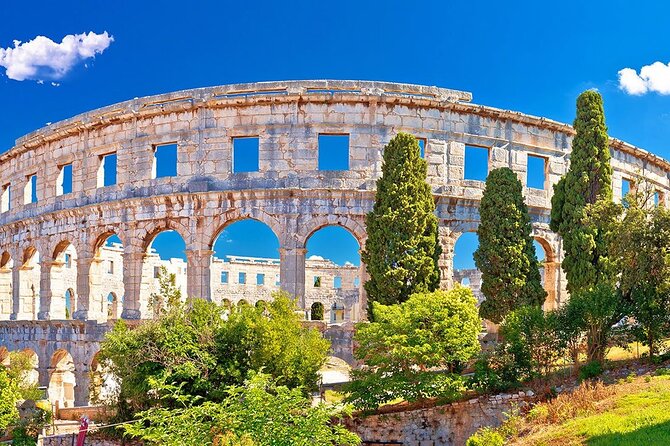
Your first stop is the Amphitheatre de Pula, with about 45 minutes here. Admission tickets are not included, so plan on that extra cost. Still, this is the anchor of the whole experience. It’s the place where Pula’s Roman identity becomes real fast.
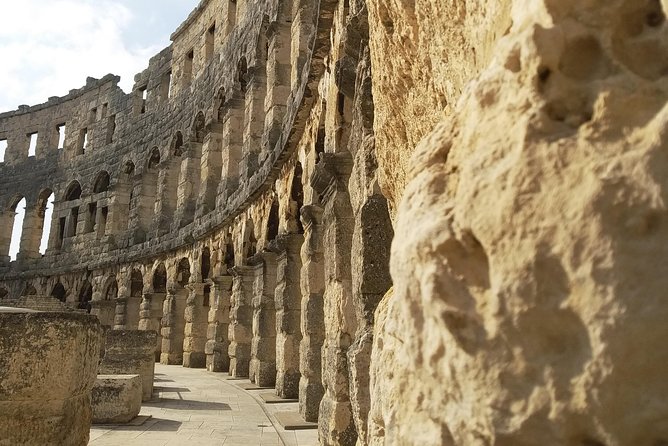
Here’s what makes the stop more than a look-and-take-a-photo moment. The guide explains how monuments like this were built in Roman times—how massive stone work, crowd design, and logistics came together to create a working venue. You’re not just staring at arches and seats. You’re learning why they’re shaped that way and how people would have moved through the space.
And then there’s the gladiator angle. The tour focuses on the life of gladiators, not in a generic way, but in a way that connects to the arena’s purpose: spectacle, training, and the crowd’s expectations. It helps you understand what you’re looking at from the inside out.
Finally, you’ll bring it to the present. The guide notes the kinds of events that are carried out nowadays in Roman venues, which is a smart way to stop the story from freezing in the past.
What to watch for as you look: the seating layout, the scale of the interior space, and any details that show how the building handled crowds. Even if you’re not into ancient architecture, you’ll likely spot patterns that make the arena feel practical rather than only dramatic.
Stop 2: Zerostrasse tunnel and the city’s 20th-century layer
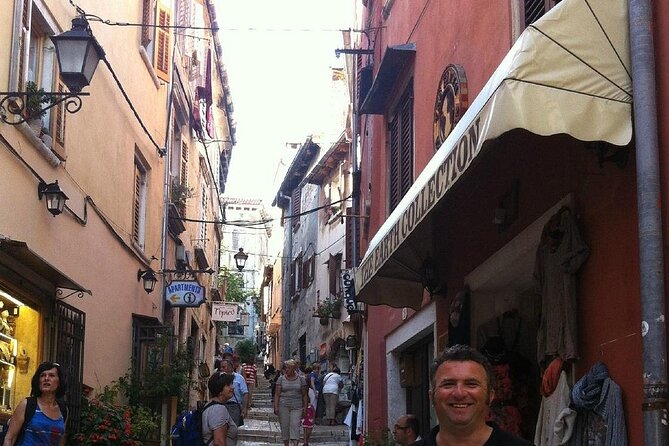
Next is Zerostrasse, a tunnel under the city that hides part of Pula’s 20th-century story. This stop is about 15 minutes and tickets are not included.
The big planning detail is access. Zerostrasse is open only in summer, from 15.06 to 15.09. If you book outside that window, the tour is still designed to cover it: the guide will point out the relevant spots and explain the most significant elements of the area, even if you can’t go inside the tunnel.
That flexibility matters. Too many short tours either cancel a key stop or leave you with a gap. Here, you get the story either way, with the actual tunnel visit being the seasonal variable.
Why this stop is worth it
Roman Pula is easy to understand at a glance. Zerostrasse adds the “how did people live through modern history here?” question. It turns the city into a layered timeline: empire, then modern conflict, then everyday life again.
If you care about the contrast between what’s above ground and what’s buried, this is the part of the day that usually clicks most.
Stop 3: Gradska Trznica Pula market, cheese, and espresso
Stop 3 is Gradska Trznica Pula, your 25-minute market visit. Entry here is free. If your tour runs in the morning, you’ll walk through the fruit and vegetable market and get a guided look at Pula’s food traditions.
If you’re the type who thinks history should be smelled, not just read, this is your moment. The guide talks through traditional recipes and explains the culture around everyday ingredients. Then you get to taste: one of the best cheeses in the area, plus what’s described as the best espresso coffee—creamy, then gone before you can overthink it.
Two practical notes:
- If your tour is in the afternoon, the farmer market is closed, so you won’t get the same market-walk energy.
- The tour includes coffee and/or tea, which helps make the market stop feel complete even if your day is more about stories than full meals.
This stop is also where the tour feels most current. You’re not only learning about old buildings. You’re learning what people still buy and eat now.






Stop 4: Arco dei Sergi, a quick Roman-architecture win
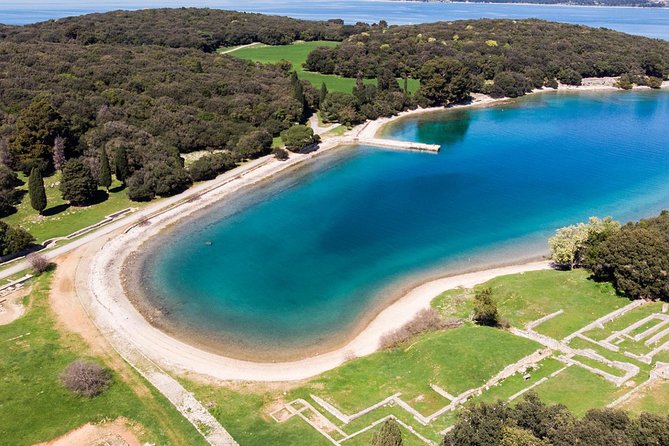
After the market, you get a short break at Arco dei Sergi, the 1st-century arch. This stop is about 5 minutes, and entry is free.
It’s small on time, big on satisfaction. The guide explains why the arch matters in Roman architecture, and you’ll hear it referenced in ancient Roman history sources. This is the kind of stop that works perfectly in a short tour because you leave with one clear takeaway: Roman Pula didn’t build only massive monuments; it also filled the city with smaller architectural statements.
If your feet are tired, this stop is your reward. You get meaning without a long walk.
Stop 5: Kastel (Venetian castle) and the hilltop payoff
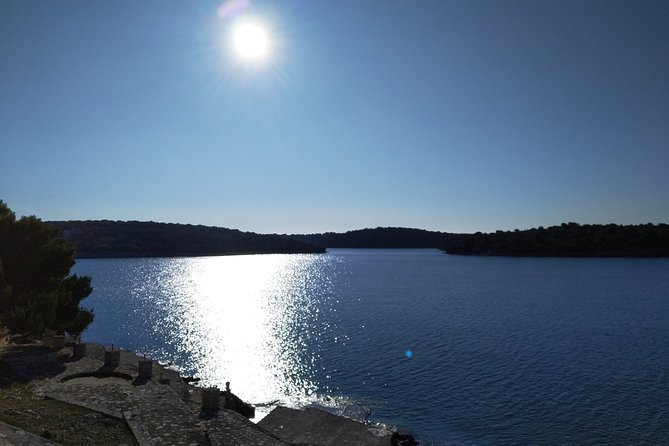
Your final major stop is Kastel, reached from the Forum square area. Plan about 20 minutes here. Admission is not included.
This is your “look around” moment. The tour heads to the Venetian castle area and gives you a wonderful viewpoint over the whole city and its surroundings. It’s also a smart ending: Roman amphitheatre first, then underground modern history, then market life, then you end by looking at how it all fits together on the ground.
Because it’s a castle viewpoint, bring your common-sense sightseeing kit:
- a moment to just stand and orient yourself
- a few photos
- a slow scan of the rooftops and street lines so the earlier stops make sense as parts of a bigger map
End of tour also means you’re close to the Citadel area, so if you want to keep going, you have an obvious next direction.
Price and value: $31.94 for guided layers (and tickets you’ll budget)
At $31.94 per person, this tour is priced like a good “short intro with depth.” The biggest value factor isn’t just the guide—it’s the mix of eras in a compact window. You go from Roman spectacle to a modern tunnel story, then to local market food culture, then finish at a viewpoint.
What’s included:
- Coffee and/or tea
What’s not included:
- Private transportation (so you’re walking)
- Admission tickets for some stops: Amphitheatre de Pula, Zerostrasse, and Kastel
- Some stops are free: Gradska Trznica Pula market visit (and Arco dei Sergi)
So the real budgeting question is simple: do you want to visit the ticketed sites on the same day? If yes, you’ll likely feel the tour is a bargain because you’re getting stories and context wrapped around each place, not just entry time.
One more value perk: confirmation is received within 48 hours, based on availability. And since it’s private—only your group participates—you’re paying for attention, not crowd management.
Who should book this tour, and who might want something else
This works best for you if:
- you like short tours that still feel personal
- you want Roman highlights but also enjoy the modern underlayer
- you’re happy to walk and you want local food culture included
- you want an English guide and clear pacing
It may not be your best fit if:
- you want a long, sit-down museum day (this tour is designed for walking stops and quick context)
- you’re traveling outside the Zerostrasse summer window and really only care about going into the tunnel itself (you’ll still get the explanation, but the tunnel access is seasonal)
The vibe you’re aiming for is curious and practical: you want facts you can use, plus stories that help you read the city as you walk.
Practical tips: timing, comfort, and getting the most out of each stop
A few things will help you enjoy this tour more, even though the route is fairly straightforward.
Wear comfortable shoes. You’ll be moving between several city points, including stairs or uphill segments near the Citadel area. You don’t need hiking gear, but you do need shoes that handle cobbles and uneven ground.
Plan for the weather. The tour requires good weather, and the provider will adjust if conditions are too poor. If you can, pick a day with a forecast that looks stable.
Think about morning vs afternoon. If you can choose, the market experience is more lively in the morning because the fruit and vegetable market is operating then. In the afternoon, the farmer market is closed, so the stop is still guided but with less market action.
Bring a little curiosity. The tour is strongest when you lean into questions like how the arena worked, why tunnels matter, and how food traditions show local identity. The guide’s style—story-focused and ready to tailor the flow—makes it easy to ask.
Should you book Curiosities and Secrets of Pula?
Book it if you want a 2–3 hour private introduction that mixes major Roman sights with the city’s darker modern layer and a real taste of local food culture. It’s especially good value when you’re the kind of person who wants context, not just photos.
Skip it or switch to a different plan if you’re only interested in one type of attraction—either purely Roman archaeology or purely modern interior spaces—because the tour is a balanced mix by design, and some entrances require extra tickets.
My simple decision rule: if you’d enjoy seeing Pula as a timeline you can walk, this tour fits. If you want one long, deep dive into a single site, pick a slower, single-focus option.
FAQ
How long is the Curiosities and Secrets of Pula tour?
It runs for about 2 to 3 hours.
Is the tour in English?
Yes. The tour is offered in English.
Is this a private tour?
Yes. It’s a private tour/activity, and only your group participates.
What is included in the price?
The tour includes coffee and/or tea.
Do I need to buy tickets for every stop?
No. Amphitheatre de Pula, Zerostrasse, and Kastel require admission tickets not included. The market (Gradska Trznica Pula) and Arco dei Sergi are listed as free.
When is Zerostrasse open?
Zerostrasse is open only during the summer period 15.06 to 15.09.
Where does the tour start and end?
It starts at Flavijevska ul. 3, 52100, Pula and ends at Pula Citadel, Gradinski uspon 10, 52100, Pula.
How does ticket delivery work?
You’ll receive a mobile ticket.
What if the weather is bad?
The experience requires good weather. If it’s canceled due to poor weather, you’ll be offered a different date or a full refund.
Can I cancel for a full refund?
Yes. You can cancel up to 24 hours in advance for a full refund.