REVIEW · SIBENIK
Daily or night walking tour through Medieval Šibenik
Book on Viator →Operated by Dario Mikulandra, personal tour guide · Bookable on Viator
Medieval Šibenik rewards slow walking. In about 90 minutes, you’ll trace the city’s stone story—cathedrals, churches, a massive cistern, and even underground spaces—guided by Dario Mikulandra with an easy-to-follow city map. You’re in small-group territory (max 10) and you can go day or night, which changes the mood fast.
What I really like is the focus on construction details, not just names on walls. I also love the way the route connects landmarks you’d otherwise miss, like the Square of the Four Wells and the churches that came from different medieval fraternities.
One possible drawback: if you’re looking for nonstop medieval history and politics, this tour can lean heavier toward religious and architectural stories through the churches, especially around the big cathedral sites.
In This Review
- Quick hits on Medieval Šibenik (Day or Night)
- Day or Night Walking in Medieval Šibenik: What to Expect
- Start at St. Jacob’s Cathedral: Stone Theology and the Juraj Dalmatinac Signature
- Church of St. Barbara: Gothic Details and a Doctor’s 1419 Vow
- Square of the Four Wells and the Medieval Cistern That Held 28,000 Barrels
- Church of St. Ivan: Staircases, Renaissance Windows, and the Turkish Clock
- Church of St. Frane: The Organ from 762 and the Šibenik Prayer
- Church of St. Duha on Dinko Zavorović Square: Fraternities and the Bells of December 17–18
- Medulić Square, Measuring Units, Medici Square, and the Medieval Garden Route
- Price and Logistics: Is $29.79 Good Value for 90 Minutes?
- Who This Tour Fits Best (and Who Might Want a Different Style)
- Should You Book Medieval Šibenik Day or Night?
- FAQ
- Is the tour offered during the day or at night?
- How long does the tour take?
- Is the tour in English?
- Where does the tour start and end?
- What group size should I expect?
- Are service animals allowed?
- Is admission included for the stops?
- Is free cancellation available?
- FAQ
- When do I receive confirmation after booking?
Quick hits on Medieval Šibenik (Day or Night)
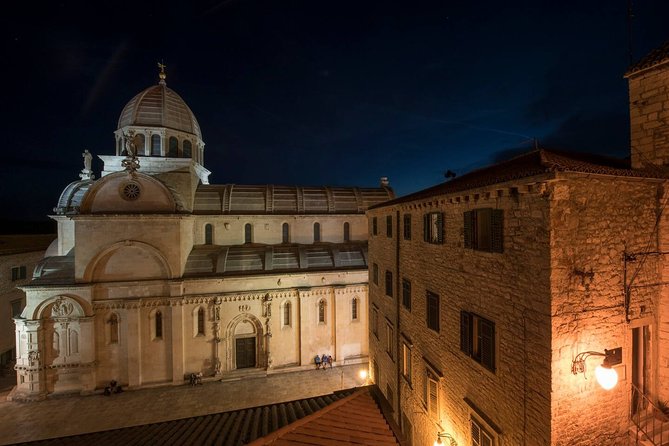
- St. Jacob’s Cathedral: Gothic-Renaissance stone work tied to Juraj Dalmatinac and plenty of curious details
- The four-well cistern: a water system built for drought and siege, with a look at filtration and openings
- St. Barbara: Gothic niche and a sculpture by Bonino from Milan tied to local vows
- St. Ivan’s bell tower puzzles: including a Turkish clock with one hand and iron hoops from the 1600s
- Franciscan St. Frane: organ from 762 and the Šibenik Prayer connected to early Croatian writing
- Stop-and-stare city tech: medieval measurement problems, an electricity milestone, and a stone pet bowl
Day or Night Walking in Medieval Šibenik: What to Expect
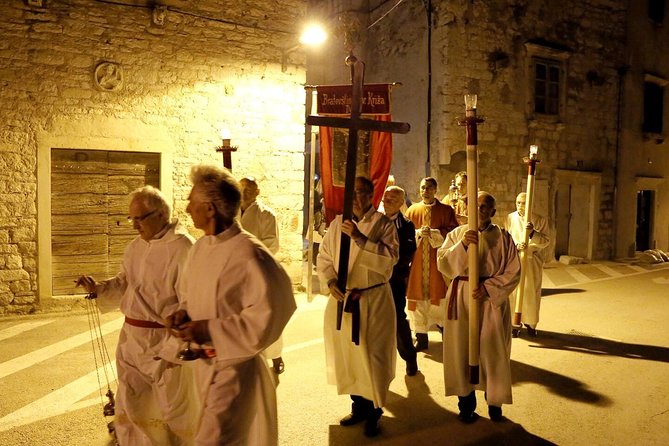
This is a walking tour built for real city sightlines. You’ll cover enough ground to feel like you got the core medieval center, but not so much that your feet file a complaint by minute 15. It runs about 1 hour 30 minutes and is offered in English, with a maximum of 10 people, which helps the guide actually keep the story moving for everyone.
Going at night can make the churches and stone passages feel more dramatic. Going in the day helps you read details on façades and windows without squinting. Either way, you’ll use a Šibenik city map that helps you connect what you see on the walk to what you’ll notice later on your own.
The other practical win: the route includes tunnels, passages, and “holes” in the old city fabric. That matters because Šibenik isn’t just a line of postcard views—it’s a maze of practical medieval design, often shaped by water, defense, and the daily movement of people.
You can also read our reviews of more tours and experiences in Sibenik.

Start at St. Jacob’s Cathedral: Stone Theology and the Juraj Dalmatinac Signature
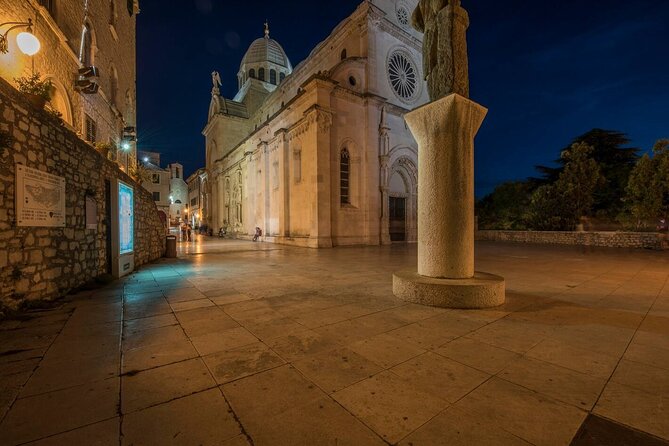
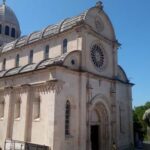
Your tour centers on St. Jacob’s Cathedral, the UNESCO-listed masterpiece that anchors Croatian culture from the 15th and 16th centuries. This is where the guide’s talent shows: you’re not just looking at a famous building, you’re learning how builders thought. Expect a close conversation about what came before the cathedral, how it was designed, and what made the long build time of around 105 years feel normal for the era.
I like that the tour doesn’t treat construction as a boring timeline. You’ll hear how theology links to the building process—basically, how religious ideas shaped the stone choices. Then you get the kind of specifics that make the cathedral stick in your mind: shells built into the cathedral design, a story about the presbytery being stolen with fruit and vegetables, and the presence of many heads carved into the work.
The guide also highlights the hidden signature of Juraj Dalmatinac. That’s the sort of detail that turns a big landmark into something personal and trackable. You’ll come away able to point at features instead of just saying it was beautiful.
One small consideration: this is the longest stop at 30 minutes, so if you’re prone to “fast museum mode,” you’ll want to stay engaged the first time around. If you lean toward architecture and symbolism, this is the moment the tour earns its keep.
Church of St. Barbara: Gothic Details and a Doctor’s 1419 Vow
Next is Church of St. Barbara, a single-nave Gothic building whose construction began around 1400. This stop is short, but it’s packed with pinpointed art and local stories.
Above the main entrance, you’ll see a Gothic niche with a sculpture of St. Nikola, credited to the Italian master Bonino from Milan. On the north wall, there’s also a Gothic window, and the lower section includes a sculptural work tied to a vow made in 1419 by Šibenik doctor Marko.
The really distinctive angle here is the relief showing physicians—an example of medieval relief depiction tied to the eastern Adriatic coast. If you like when everyday people leave records in stone (even in a small way), you’ll probably linger a little after the guide’s explanation.
Square of the Four Wells and the Medieval Cistern That Held 28,000 Barrels

Just a few dozen meters from the cathedral, you reach Trg 4 bunara i srednjevjekovna cisterna, the Square of the Four Wells. This spot works because it explains a medieval problem in a very physical way: frequent droughts and frequent military sieges.
Here’s what makes it more than a nice square: there used to be a public city cistern underneath. It was built by the people of Šibenik, and the construction contract was agreed in 1446, with supervision by Juraj Dalmatinac. The cistern could hold 28,000 barrels of water, and the city introduced a special tax to fund it.
On the surface, you’ll stand on the plateau where four wells allowed water to be pumped. The complex has been renovated in recent years, so it’s pleasant to visit even if underground spaces aren’t your thing.
Down below, you can see what it was like inside the water system: the filtration system and the four openings (crowns) used to take fresh water. There’s also a café and wine bar in the cistern complex, so the history doesn’t feel sealed in a museum case.
If you’re visiting in hotter months, this underground stop also offers a welcome temperature break. If you hate waiting around or standing still for explanations, keep your pacing steady—you’ll still get plenty of visible points to watch while the guide talks.
Church of St. Ivan: Staircases, Renaissance Windows, and the Turkish Clock
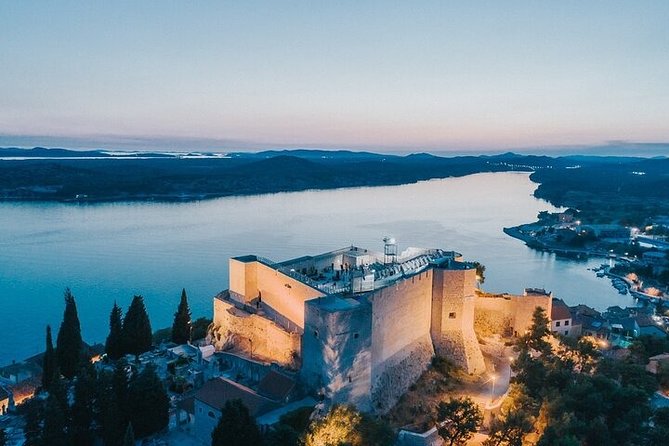
At Crkva sv. Ivana Krstitelja, you’re looking at Gothic-Renaissance layers that show how styles evolved without wiping out the older shell of the city.
The church dates to the 15th century under the name of the church of St. Trinity. Along the south side, there’s a staircase designed by the Šibenik builder Ivan Pribislavić, decorated with bas-relief. The guide points out a Renaissance window by Nicholas of Florence, plus a relief featuring a lamb and a winged angel.
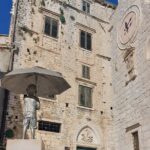
Now for the mystery-meets-practical stuff. At the bell tower, you’ll learn about a Turkish clock with one hand, brought from Drniš after the Turks abandoned it in the 18th century. If you like objects with a history beyond their first job, this is a standout.
You’ll also see another clue on the bell tower window: a Renaissance window decorated with fruits and vegetables, made by Nikola Firentinac. Then the stop turns to function and metal: on the north wall, the guide explains mysterious iron hoops and their purpose from the early 1600s.
This is the kind of stop that makes you stop treating churches like “just worship spaces.” They’re also storage, timing, craftsmanship, and community tech—medieval systems built into stone.





Church of St. Frane: The Organ from 762 and the Šibenik Prayer
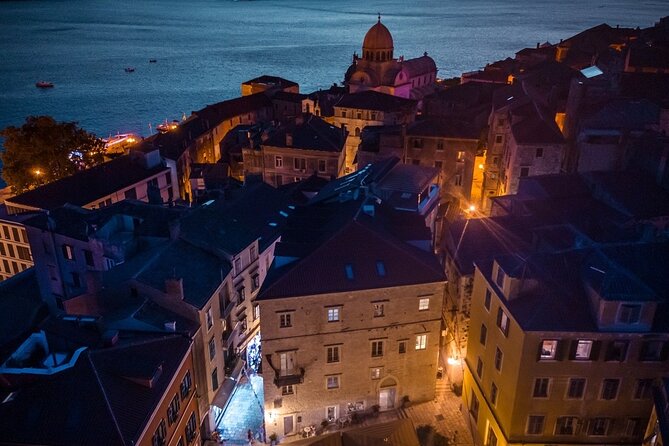
Later on, you’ll reach Church of St. Frane, built in the second half of the 14th century in the southeastern part of the historic center. The church is a spacious single-nave Gothic building, and it’s relatively plain compared to the more ornate stops. That contrast is good. It lets you see the city’s variety instead of chasing only the most decorated façades.
The main entrance has a Gothic stone frame. Inside the chapel of St. Cross, the guide points out an organ from 762, made by Petar Nakić. That’s the sort of detail that makes a building feel alive across centuries.
Next door is the Franciscan architectural complex, including a monastery dating to the 14th century. The monastery library stands out for its collection of 151 incunabula and manuscript codices. You’ll also hear about the Šibenik Prayer, written in Latin around 1375, one of the oldest Croatian linguistic and literary monuments.
There are also city-building leftovers here: remains of the eastern city walls and the Vrančić Palace, connected to the birthplace of Antun and Faust Vrančić. If you’re the type of traveler who enjoys “what’s underneath the surface,” this stop delivers, because it links architecture to texts and to people.
Church of St. Duha on Dinko Zavorović Square: Fraternities and the Bells of December 17–18
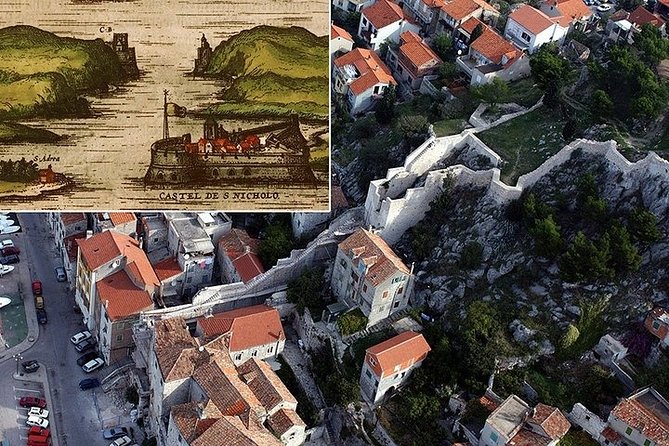
You’ll then move to Crkva Svetog Duha on Dinko Zavorović Square. This church was built in the 17th century, following a project by Antun Nogulović.
This is a short stop, but it has a neat context point: this is the third church at about 100 meters distance, and the three churches were connected to the three most important medieval fraternities. The guide explains what the brothers did in society, and why that mattered.
You’ll also hear about the medieval custom of celebration on the night of December 17–18, when all the bells of Šibenik’s churches ring to announce the arrival of Christmas. It’s a small slice of lived tradition, not a dry date on a calendar.
If you’re traveling in winter, this story might make the city feel extra close to the ground. If you’re visiting at another time, don’t worry—it still helps you understand how the city’s sound and social life were tied together.
Medulić Square, Measuring Units, Medici Square, and the Medieval Garden Route
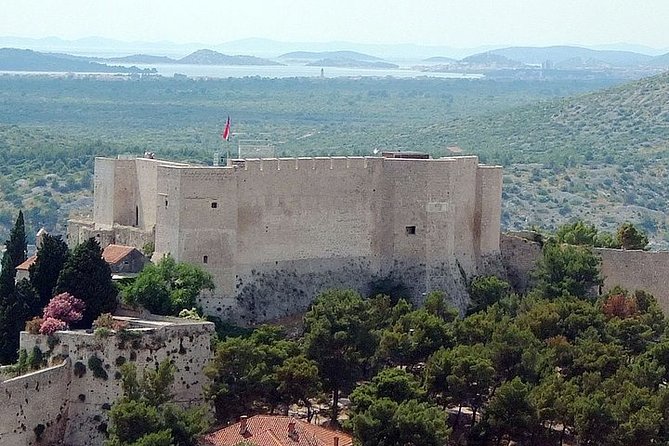
The tour doesn’t stay only in church shadows. You’ll also explore Medulić Square and the surrounding story points that turn daily life into history.
At Medulić Square, the guide connects the area to a medieval trading lodge and then explains a surprisingly human problem: the trouble with measurement in the Middle Ages. You’ll see official measuring units linked to both the Venetian Republic and the city of Šibenik—problems solved with stone rules, because “close enough” doesn’t work when you’re buying and selling.
The walk also takes you toward other nearby square stories. There’s mention of a copy of a lamp at Divnić Palace, tied to 1895, when Šibenik received alternating electricity and lighting from the hydroelectric power plant on the river Krka—a big technological milestone for the city. Nearby, you’ll also spot a stone pet bowl called AMOR D. CANI.
In the highlights, you’ll hear about the history of the Medieval Mediterranean Garden and Medici Square as part of the route. Even with limited time, a good guide uses these stops to show that medieval Šibenik included planned outdoor spaces and named places that shaped movement, not just stone architecture.
This is also where the tour’s map helps. You’ll be walking between mini-landmarks and old passages, so the city map becomes your “mental GPS” for later self-guided wandering. If you want to see tunnels and passages beyond this tour, keep your eyes open when you pass doorways and uneven stone corridors—the guide’s pointing out the system, not just a random surprise.
Price and Logistics: Is $29.79 Good Value for 90 Minutes?
At $29.79 per person, you’re paying for expert guidance, not just entry to a building. The value is strongest because the tour connects multiple sites that are otherwise hard to connect in your head: UNESCO St. James, St. Barbara, the Four Wells cistern, and multiple church stops with distinct architecture and side stories.
The fact that the group cap is 10 matters more than it sounds. Smaller groups usually mean fewer rushed explanations and more time to look at details while the guide is talking.
Duration is about 1 hour 30 minutes, which is a sweet spot for a medieval walking route. You’ll get a coherent narrative without needing a full half-day. If you have limited time in Šibenik, this tour is one of the more efficient ways to get a medieval framework you can build on later.
Who This Tour Fits Best (and Who Might Want a Different Style)
This is a great fit if you enjoy architecture, construction clues, and stories tied to specific features—like Dalmatinac’s signature, the cistern’s engineering, or the Turkish clock’s unusual travel history. It also suits travelers who want an easy way to understand why Šibenik’s medieval center feels connected.
It’s also a strong choice if you like practical travel pacing: short stops, quick context, and enough time at major sights to actually look. The tour is described as having free admission tickets at multiple sites in the stops you’ll visit, so you’re not constantly adding extra costs to your day.
One caveat: the tour can lean more religion-and-church-focused than purely “medieval history” in the broad sense. If your main interest is politics, warfare, or economics, you might still find plenty to enjoy, but you may want to use the time to pay attention to how religious communities and buildings shaped daily life.
Should You Book Medieval Šibenik Day or Night?
I’d book this tour if you want a guided “decoder ring” for Šibenik’s medieval center. The combination of St. Jacob’s Cathedral, the 28,000-barrel cistern story, and the detail-heavy church stops gives you more than a checklist of monuments.
Choose day if you want easier viewing of stone carvings and windows. Choose night if you want atmosphere and you’re comfortable walking on old stone steps. Either way, this is a smart move when you want to leave with city knowledge you can use immediately on your next walk.
FAQ
Is the tour offered during the day or at night?
Yes. It’s described as a daily or night walking tour through Medieval Šibenik.
How long does the tour take?
The duration is about 1 hour 30 minutes.
Is the tour in English?
The tour is offered in English.
Where does the tour start and end?
It starts at Ul. Biskupa Fosca 9, 22000, Šibenik, Croatia, and ends back at the meeting point.
What group size should I expect?
The maximum group size is 10 travelers.
Are service animals allowed?
Yes, service animals are allowed.
Is admission included for the stops?
Admission tickets are listed as free for the stops described in the tour.
Is free cancellation available?
Yes. Free cancellation is available, and you can cancel up to 24 hours in advance for a full refund.
FAQ
When do I receive confirmation after booking?
Confirmation will be received at the time of booking.