REVIEW · BRAC ISLAND
Dalmatian route – Panoramic flight over Brač, Hvar, Šolta & Split from Brač
Book on Viator →Operated by SplitAir · Bookable on Viator
One hour in a small plane can change how you see the Dalmatian coast. This private Brač-to-Hvar panoramic route turns famous landmarks into one continuous aerial story: Zlatni rat near Bol, the clustered islands of Hvar Channel, the cliffy south side of Šolta, and a final sweep over Split. I love how the route is packed with recognizable places without feeling rushed, and I also like that it’s organized as a true group experience (up to 3), not a cattle-call. The main consideration is simple: you need solid weather, since the flight is weather-dependent.
You get a clean “big picture” of central Dalmatia—coastline geometry, islands’ scale, and where towns sit relative to the sea. I’m also a fan of the practical touches: mobile ticket for an easier day, plus bottled water included. The drawback to keep in mind is that transportation to and from the airport isn’t included, so you’ll want a plan for reaching Brač Airport in Gornji Humac.
In This Review
- Key highlights you’ll remember
- From Brač Airport to Zlatni rat near Bol: the route’s opening act
- Hvar from above: Vrboska, Jelsa, Starigrad, and a very famous summer residence
- Hvar City and the observatory view: seeing the island’s center from a new angle
- Crossing the Hvar Channel to Šolta: cliffs on one side, old fishing villages on the other
- Split flyover, then back across the Brač Channel toward Supetar
- Price and group size: when $525 per group actually feels fair
- Communication and day-of ease: the part that makes small tours work
- Who this panoramic flight suits best (and who might skip it)
- Quick planning FAQ
- FAQ
- Where does the Dalmatian route flight start and end?
- How long is the flight?
- What’s included in the price?
- What isn’t included?
- Is this a private tour?
- What ticket format do I receive?
- What happens if the weather is poor?
- How late can I cancel for a full refund?
- Should you book this Dalmatian panoramic flight over Brač, Hvar, Šolta, and Split?
Key highlights you’ll remember
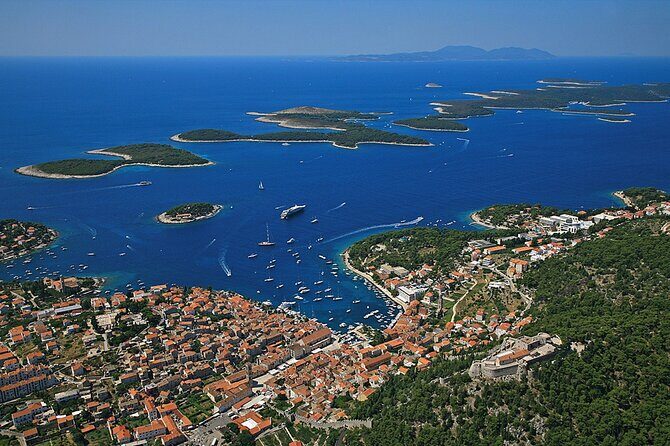
- Zlatni rat near Bol from the air: one of Croatia’s most famous beaches, seen from a new angle
- Vrboska, Jelsa, and Starigrad: a chain of Hvar-side settlements you can stitch together visually
- Tvrdalj by Petar Hektorović: a standout architectural moment with its sea-water fishpool and dovecote tower
- Hvar City and its observatory: city views plus the observatory used for both tourist and scientific purposes
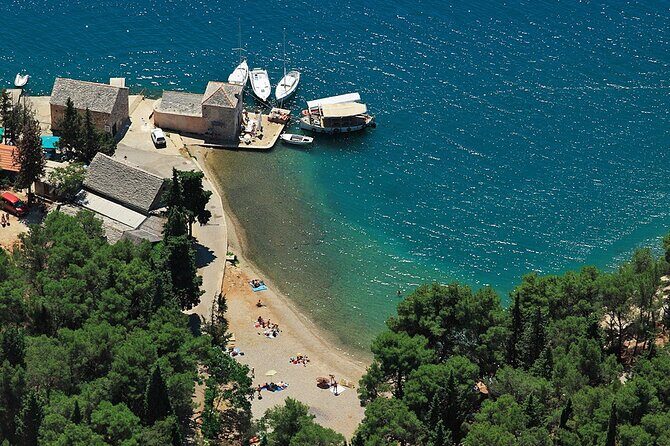
- Šolta’s contrast: high cliffs on the south side, old fishing villages in bays on the north side (including Stomorska)
From Brač Airport to Zlatni rat near Bol: the route’s opening act
Your flight starts at Brač Airport in Gornji Humac, and the day’s tone is set quickly. The first major visual stop is the beach Zlatni rat near Bol—famous for how it looks, and even more impressive when you’re above it. From the air, you can see the way the coast curves and how the sea meets the shoreline. It’s the kind of view that makes you instantly understand why this area has such a loyal fan base.
This is also a smart move for a 1-hour experience. Instead of saving the “wow” for the very end, you get your first big scene early, while you still feel fresh and oriented. If you only have a short window in Croatia and you want maximum visual payoff, that pacing matters.
One practical note: because it’s a fixed-wing air tour, your comfort will depend on your personal tolerance for a short flight. The good news is the time commitment is short—about 1 hour—so it’s not a half-day gamble.
You can also read our reviews of more tours and experiences in Brac Island.

Hvar from above: Vrboska, Jelsa, Starigrad, and a very famous summer residence
After Zlatni rat, the route turns toward the island of Hvar. You don’t just fly over one town—you get a sequence of places that lets you build a mental map. First comes Vrboska, described as one of the most picturesque villages on Hvar. Then you pass over Jelsa and Starigrad. That kind of “stacked” sightseeing is ideal for anyone who likes to connect names to geography fast.
And then comes a visual scene that’s hard to forget: the flight includes a clear view of Tvrdalj, the summer residence of Petar Hektorović. You’ll see details mentioned in the route description—like the sea-water fishpool and a tower with a dovecote. Even if you’re not an architecture person, these kinds of specific elements help the view feel real rather than generic. From above, you can often spot patterns on land that you’d never notice from a road or a harbor.
Why this part is valuable: aerial sightseeing works best when it’s selective. Here, it’s selective in the good way—you get named places and a few distinctive landmarks rather than just “coastline, coastline, coastline.”
Possible consideration: if you’re expecting lots of time on the ground at each town, this isn’t that tour. It’s an airborne panorama. You’re going to get the big visuals, not a walking itinerary.
Hvar City and the observatory view: seeing the island’s center from a new angle

Next, the flight continues to the town of Hvar, the administrative center of the island and described as one of the world-famous tourist destinations. That matters because it tells you the route is not only scenic—it’s also aiming at a geographic and social center.
You also get a built-in reason to pay attention as you approach Hvar City: the view includes an observatory above the city, used for both tourist and scientific purposes. From the air, you can spot how the town sits with respect to surrounding hills and the sea, and that observatory adds a “purpose” to the skyline. It’s not just pretty rooftops—it’s a functional landmark.
If you’re the type of traveler who likes context, this moment helps. You’ll come away with a better sense of how Hvar City relates to the rest of the island, and how the coastline wraps around the settlement.
Crossing the Hvar Channel to Šolta: cliffs on one side, old fishing villages on the other
One of the clever parts of this route is the way it uses the Hvar Channel as a natural viewpoint. When you cross over, you’re not just changing islands—you’re changing scenery style.
The flight moves toward Šolta, described with two distinct coastal identities:
- the south side with high cliffs that flow into the sea
- the north side with old fishing villages located in bays, including Stomorska
Seeing that contrast from the air is the whole point. From land, you can miss how abruptly the coast shifts. In the air, the differences in coastline shape and how bays are carved into the shoreline become obvious fast. Stomorska is singled out as romantic in the route description, so it’s likely one of those moments where you recognize a bay pattern and immediately understand why that place would feel sheltered.
Why you’ll likely like this segment: Šolta doesn’t get as much attention as some nearby islands, so the flight gives you a more “byside” perspective without requiring ferry schedules or long transfers.
Split flyover, then back across the Brač Channel toward Supetar
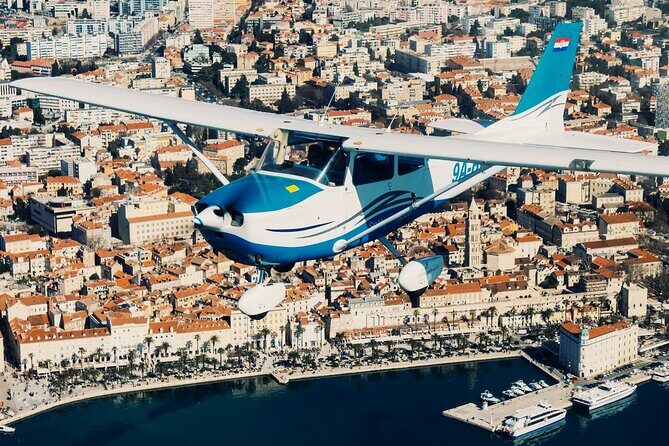
As the route wraps up, you’ll fly over the city of Split and then turn back across the Brač Channel toward Supetar, the administrative center of the island of Brač. This is where you get a satisfying full-circle feeling. You started in Brač, you toured the Hvar world, and then you return with Split as the big anchor.
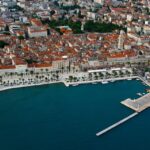
Split from above is useful even if you’ve been there before. You get a quick sense of its waterfront shape and how the city’s mass sits against the surrounding sea. Then Supetar gives you that final geographic “home base” check, so you land back with your bearings straight.
This also helps if you’re planning the rest of your trip. A lot of people struggle to translate island distances into real travel time. An aerial route like this makes the spacing feel real.

Price and group size: when $525 per group actually feels fair
The price is $525.08 per group (up to 3 people), lasting about 1 hour. That’s not cheap on a per-person basis if you travel solo, so this is best valued when you share the cost.
Here’s why it can feel fair:
- it’s a private experience for your group (not mixed passengers)
- it includes all fees and taxes
- it includes bottled water
- you get a timed route with a lot of named places packed into a single flight
Also, it’s worth noting how far ahead people book: on average, this is booked about 48 days in advance. That’s a good sign that the operator’s slots fill up and that weather windows matter. If you’re flexible, great. If you’re on tight dates, don’t procrastinate.
Two costs to remember: transportation to/from the airport isn’t included, and you’ll want to account for time getting to Brač Airport (Gornji Humac).
Communication and day-of ease: the part that makes small tours work
The best private tours feel easy on the day, and this one is set up to do that. The operator behind the experience, Ivan of SplitAir, is known for clear communication and organization—so you know where to meet the pilot and how to handle the short timeline without stress.
That kind of coordination matters more than people think. With a 1-hour flight, you don’t want uncertainty eating into the best part. Clear guidance helps you arrive calmer, focus on the view, and not burn energy on “what happens next.”
Add in the practical detail that you receive a mobile ticket, and the day is built to be simple.
Who this panoramic flight suits best (and who might skip it)
This tour makes the most sense if you:
- want a high-impact, short-format experience
- like aerial perspectives that stitch together multiple towns quickly
- are traveling as a small group (up to 3) and want a shared splurge
- enjoy seeing named landmarks like Tvrdalj and Zlatni rat from an angle most people never get
You might consider skipping it if you:
- need lots of time on the ground (this is a flight, not a walking tour)
- are extremely sensitive to weather changes, since good weather is required
- don’t have an easy way to reach Brač Airport in Gornji Humac (since transfers aren’t included)
Quick planning FAQ
FAQ
Where does the Dalmatian route flight start and end?
It starts at Brač Airport, Gornji Humac (Airport BracGornji Humac 145, 21414, Gornji Humac, Croatia) and ends back at the same meeting point.
How long is the flight?
The flight is listed as about 1 hour.
What’s included in the price?
Included are the fixed-wing air tour, all fees and taxes, and bottled water.
What isn’t included?
Transportation to/from the airport isn’t included.
Is this a private tour?
Yes. This is a private tour/activity, and only your group participates. The group size is up to 3.
What ticket format do I receive?
You receive a mobile ticket.
What happens if the weather is poor?
This experience requires good weather. If it’s canceled due to poor weather, you’ll be offered a different date or a full refund.
How late can I cancel for a full refund?
You can cancel up to 24 hours in advance for a full refund. If you cancel less than 24 hours before the start time, the amount paid isn’t refunded.
Should you book this Dalmatian panoramic flight over Brač, Hvar, Šolta, and Split?
If you’re drawn to big views and like connecting place names to real geography, I’d book it—especially if you can fill a group spot or travel with two friends. The route is compact but packed: Zlatni rat, a run of Hvar settlements, Tvrdalj with its fishpool and dovecote tower, the observatory above Hvar City, then the cliff-and-bay contrast of Šolta, ending with Split and a return toward Supetar.
Just be honest with yourself about weather dependency and airport logistics. If you can get to Brač Airport smoothly and you’re traveling during a period where conditions are likely to cooperate, this is a smart, high-value use of time in the region.