Split feels like a time machine with streetlights. In just 90 minutes, you walk through the Roman core of Diocletian’s Palace and then into the city’s major Christian landmark, the Cathedral of Saint Domnius. It’s a tight route, but it’s built to help you understand why Split looks the way it does today.
I especially like two things: the English-speaking local guide who keeps the story clear and answers questions, and the smart pacing that gives each stop enough time to make sense without dragging. Admission is included for the key sites on the walk, so you spend less time hunting tickets and more time seeing what matters.
One possible drawback: this is still a walk with some stairs, and it runs best in good weather. If you’re sensitive to uneven stone or limited on your feet, you’ll want to plan accordingly.
In This Review
- Key highlights you should care about
- A 90-minute Split walk that actually gives context
- Getting oriented at Obala Lazareta 3
- Stop 1: The Peristyle of Diocletian’s Palace (and why it matters)
- Stop 2: Cathedral of Saint Domnius—Roman mausoleum turned Christian landmark
- Stop 3: Temple of Jupiter—how Romans and Christians reshaped worship
- Price and value: what you’re paying for (and what you’re not)
- Pacing, stairs, and how to make this easy
- The story you’ll carry after the walk
- Who should book this Split walking tour?
- Should you book this tour?
- FAQ
- How long is the Discover Split’s Hidden History guided walking tour?
- How much does the tour cost?
- What language is the tour offered in?
- Where is the meeting point, and where do we end?
- Is admission included for the stops?
- What’s included in the tour price?
- What if the weather is bad or plans change?
Key highlights you should care about
- Small group size (max 15): easier questions and a smoother pace through old-town lanes
- Peristyle time (30 minutes): you’ll understand it as a palace courtyard, not just a pretty square
- Cathedral details (30 minutes): the bell tower plus the treasury, including Glagolitic-script items
- Temple of Jupiter (15 minutes): short stop, big payoff on how Romans and Christians reshaped worship
- Admissions included for the main stops: less hassle and better value per hour
A 90-minute Split walk that actually gives context
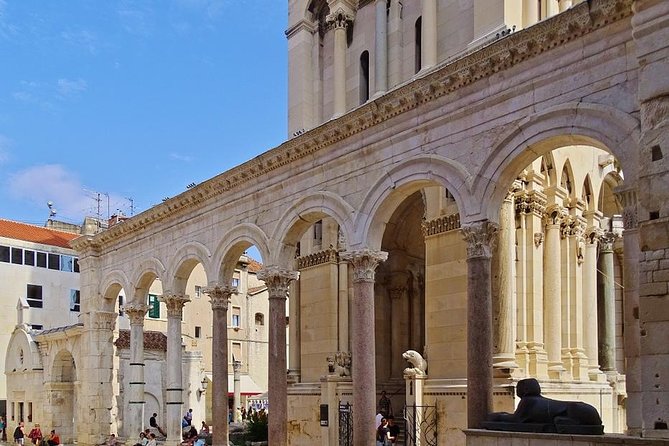
Split is famous for Diocletian’s Palace, but most visits turn into quick photo stops. This tour is designed to do something better: it teaches you how the Roman palace became a living city. In a place where streets, churches, and monuments overlap, context is everything.
The total time is about 1 hour 30 minutes, which is ideal if your day is already packed. You’re not expected to “figure it out” alone in a maze of stone. Instead, you get a guided story while you’re standing in the exact places where the story happened.
The group stays small—up to 15 people—so the guide can keep things moving while still answering individual questions. You’ll also start and finish at the same place, which makes planning simpler: no awkward end-of-tour transfers.
You can also read our reviews of more tours and experiences in Split.


Getting oriented at Obala Lazareta 3
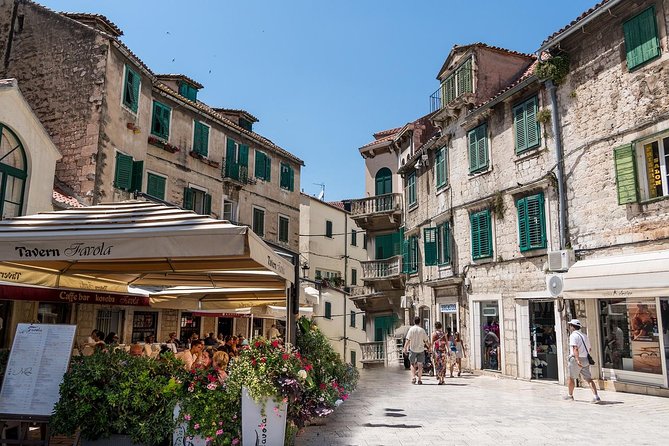
You’ll meet at Obala Lazareta 3 (start time 9:00 am). That matters more than it sounds, because early morning is one of the easiest times to walk the old streets before crowds build up.
From the meeting point, the tour stays focused on central landmarks. By the end, you’re brought right back to where you started, so you can keep exploring Split Old Town on your own without having to reset your bearings.
Stop 1: The Peristyle of Diocletian’s Palace (and why it matters)
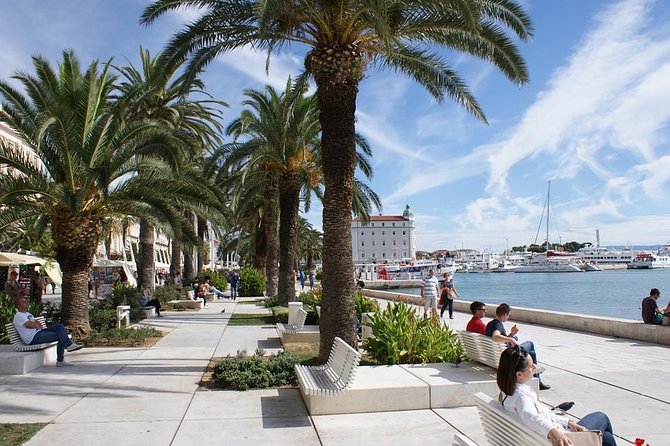
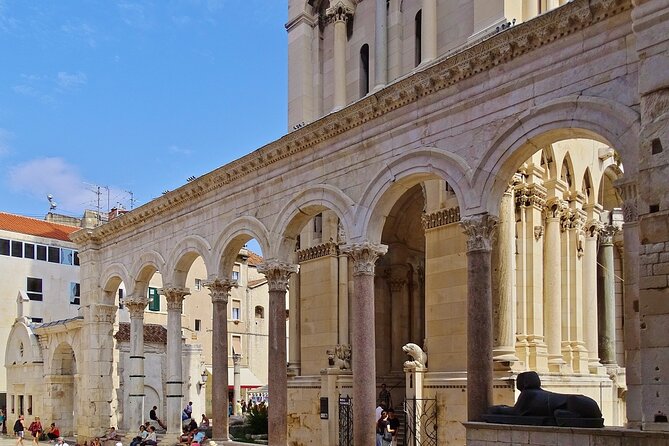
Your first stop is the Peristyle, one of the most important and beloved parts of Diocletian’s Palace. Think of it as the palace’s beating heart. The Peristyle was originally the courtyard of a fortress built by one of the late Roman emperors, so it’s not just an architectural highlight—it’s the emotional center of the entire complex.
Here’s what I like about starting here: it gives you a mental map. Once you understand the Peristyle as a courtyard space, everything else in Split’s old core clicks into place. Later, when you see churches and temples using older Roman structures, you’ll recognize the logic: reuse, adaptation, and layers of power.
This stop runs about 30 minutes, with admission included. That longer timing is helpful, because a place like the Peristyle can look simple from a distance, but up close you start noticing proportions, openings, and how the courtyard functioned as a central hub.
What to watch for: notice how the space feels like a stage set—this was built for status and movement, not just aesthetics. Even if you’re not a Roman-architecture expert, the guide will help you see what people were meant to feel when they entered.
Stop 2: Cathedral of Saint Domnius—Roman mausoleum turned Christian landmark
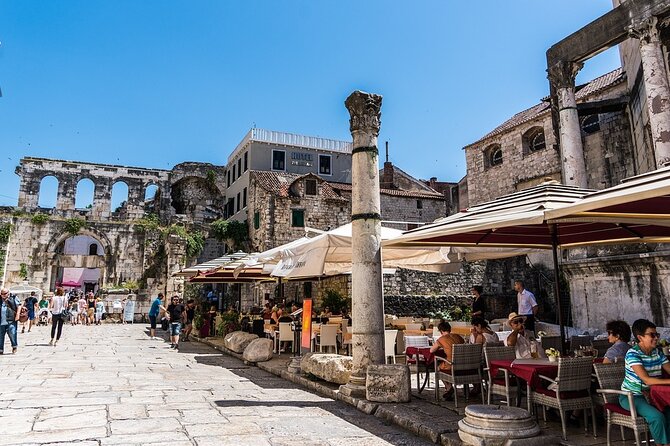
Next is the Cathedral of Saint Domnius, Split’s most popular attraction. This stop is big on meaning: the cathedral was built as a mausoleum for Diocletian, presented as the last famous persecutor of Christians. It’s a powerful irony, and the building holds it in plain sight.
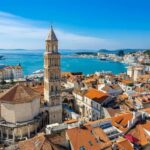
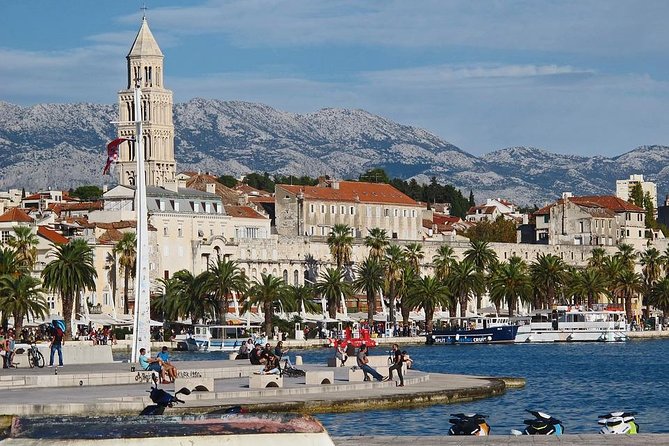
One of the most recognizable parts is the bell tower, which has become an emblem of the city. If you’ve seen Split from a distance, chances are you’ve already noticed that silhouette. On this walk, you get the story behind why it became so symbolic.
Around the exterior, the cathedral still connects to its Roman roots through an original colonnade of 24 columns. That’s the kind of detail that rewards paying attention. It’s not just “a pretty church.” It’s Roman stone geometry still shaping what the city looks like.
You also get time to understand the cathedral’s treasury. The treasury is said to be rich in reliquaries, icons, church robes, illuminated manuscripts, and documents in Glagolitic script. That’s a major clue about why Split has been a crossroads for centuries. Religious objects weren’t only worship items—they were culture carriers too.
This stop lasts about 30 minutes, with admission included. The timing is right: you get enough time to see the tower exterior and then shift into the indoor story without rushing.
Possible drawback to consider: if you don’t like indoor viewing or you’re short on patience for museum-style time, spend your attention wisely. The value here is the explanation—without it, you might just see walls and display cases.
Stop 3: Temple of Jupiter—how Romans and Christians reshaped worship
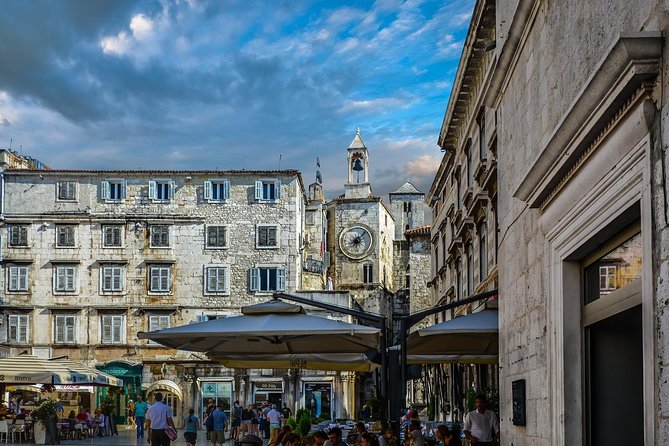
The final main stop is the Temple of Jupiter, constructed in the 3rd century as part of Diocletian’s Palace. It’s considered one of the best-preserved Roman temples in the world, and the guide’s job is to help you connect that preservation to why the temple matters.
This temple is dedicated to Jupiter, the Roman king of gods. The key story is that Diocletian believed he was the reincarnation of Jupiter. That belief shaped the political-religious message of the palace: imperial power linked directly to divine status.
Then the story shifts. Jupiter worship continued until the Roman Empire moved under Christian rule. The result is that you’re standing in a space that belonged to one belief system and then lived through a world where Christianity reshaped public life.
This stop is about 15 minutes with admission included. That might sound short, but it works because by now you’ve built a framework from the Peristyle and the Cathedral. The Jupiter Temple becomes the “last piece of the puzzle” rather than a totally new start.
What to watch for: pay attention to how the temple is framed as part of the palace complex. It isn’t isolated. It’s a component in the bigger machine of Diocletian’s city.




Price and value: what you’re paying for (and what you’re not)
The price is $41.70 per person for roughly 90 minutes. For Split, that’s the range where you’re really buying two things: a certified English-speaking local guide and admission included for the major stops on the walk.
You’re not just paying for someone to lead you from A to B. You’re paying for context while you stand in Roman and Christian spaces that otherwise take effort to interpret. That matters because Split’s architecture is layered; the guide helps you avoid the usual mistake of treating each stop like an independent postcard.
Included items are straightforward: guided walking tour of Split Old Town with a certified English-speaking local guide, plus a mobile ticket. Coffee and/or tea aren’t included, and the tour description also notes that some fees and taxes or optional entrance fees may apply.
Here’s how I’d think about it: if admissions are included for the principal sights you’re visiting, then your biggest “cash variables” are usually snacks and drinks. That keeps the cost predictable during the walk.
Pacing, stairs, and how to make this easy
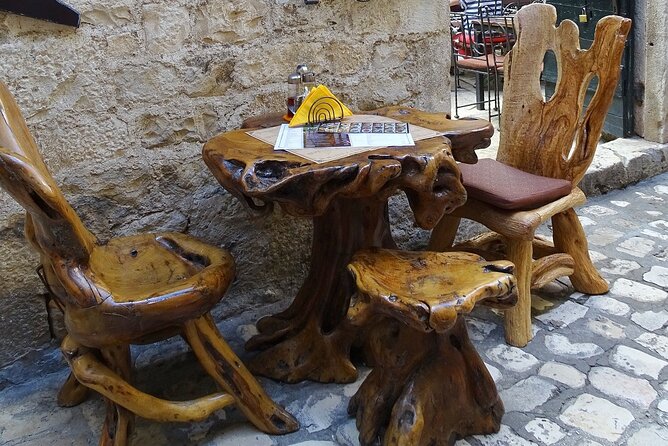
This is a walking tour through old-town stone streets. In the feedback, people noted there are stairs but not many. Still, it’s smart to plan as if there will be some uneven ground and steps, since that’s how old cities work.
Wear shoes you can trust. If you’re traveling with mobility limits, this tour may still be manageable for some people, but the steps are the only “unknown.” The tour is short—about 1.5 hours—so you’re not stuck out there all day, but you do need comfortable footing.
Group size is capped at 15, which helps pacing. In a smaller group, the guide can slow down for questions, and you’re less likely to feel like you’re being dragged.
The story you’ll carry after the walk
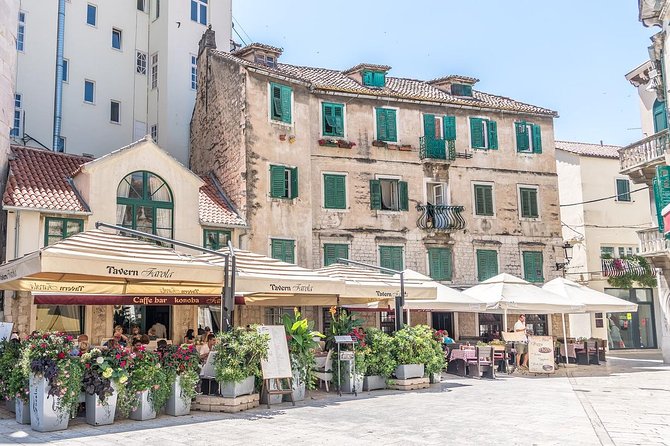
What makes this tour worth doing isn’t the list of monuments. It’s the way they connect.
You start in a palace courtyard setting the tone for Roman authority. Then you move to a cathedral that began as a mausoleum for Diocletian, one of the last major Roman persecutors of Christians. Finally, you end at the Temple of Jupiter, where Roman worship ideals were literally built into the palace world.
By the time you’re done, you’ll be able to look at Split Old Town and recognize what you’re seeing:
- Roman structures that became part of everyday life
- Christian sites that carried forward earlier stone and layout
- A city where power changed form, not just politics
That’s the sort of takeaway that makes the rest of your day in Split easier and more satisfying.
Who should book this Split walking tour?
This tour is a good match if you want a guided introduction to Split’s core landmarks and you like learning while you walk, not after you get home.
It’s especially ideal for:
- First-timers who want orientation fast
- People who like architecture, but also want the human story behind it
- Short-schedule days where you can spare about 90 minutes
It may be less ideal if:
- You have limited mobility and are worried about stairs or uneven stone
- You dislike indoor viewing tied to admissions and treasury-style content
- You’re hoping for a very relaxed, no-footwork stroll
Should you book this tour?
Yes, I think it’s a solid booking—especially if you’re doing Split for the first time. For $41.70, you get a small-group, English-language guide and visits to three major sites that tell a coherent story rather than separate sightseeing stops. Starting at 9:00 am and ending back at Obala Lazareta 3 makes it easy to plug into your day.
My main “don’t skip this” advice: wear good shoes and plan for some steps. If you can handle that, the tour gives you exactly what most visitors need in Split—clarity, not just photos.
FAQ
How long is the Discover Split’s Hidden History guided walking tour?
The tour lasts about 1 hour 30 minutes.
How much does the tour cost?
The price is $41.70 per person.
What language is the tour offered in?
The tour is offered in English, with a certified English-speaking local guide.
Where is the meeting point, and where do we end?
You’ll start at Obala Lazareta 3, 21000, Split, Croatia, and the tour ends back at the same meeting point.
Is admission included for the stops?
Admission ticket is included for the listed stops: the Peristyle, the Cathedral of Saint Domnius, and the Temple of Jupiter.
What’s included in the tour price?
Included features are the certified English-speaking local guide and the guided tour of Split Old Town, along with a mobile ticket.
What if the weather is bad or plans change?
The tour requires good weather. If it’s canceled due to poor weather, you’ll be offered a different date or a full refund. You can cancel up to 24 hours in advance for a full refund.