REVIEW · ZADAR
Discover Zadar privately: Individual guided tour in German
Book on GetYourGuide →Operated by Ivana · Bookable on GetYourGuide
Zadar has a way of sounding different at every step. I love how this private walk strings together the sea organ and the city’s top historical anchors without feeling like a museum checklist, and I also like the human touch from Ivana, who keeps stories clear and fun in German. One thing to consider: it’s still a 2-hour walk, so bring water and wear shoes that handle old stone.
You’ll start right at Porta Nova, then move through the parts of town that locals actually use and remember. The pacing is easy, and the route is built for a “see it, understand it, then enjoy it” rhythm, not a sprint.
In This Review
- Key highlights at a glance
- Porta Nova to the old town: where your 2-hour route starts
- UNESCO city walls and the land gates: history you can walk on
- People’s Square and Renaissance facades: a calmer pause with big architecture
- Saint Simeon legend at Sv. Šime: religion, identity, and local memory
- The oldest street in the world: walking proof of continuity
- Zadar Cathedral and bell tower: standing close to the story
- Roman Forum and St. Donatus: the ancient core of Zadar
- Maraschino and modern Zadar tips: useful, not just decorative
- Waterfront promenade, sea organ, and the sunset viewpoint
- Price and value: $117 for a private group up to 12
- Who this Zadar private German tour is best for
- Should you book this private German tour of Zadar?
- FAQ
- What’s the duration of the Zadar private guided tour?
- How much does the tour cost?
- Where do we meet the guide?
- What language is the tour guide speaking?
- Is this a private tour or shared group?
- Is the tour walking-heavy?
- What sights are included during the tour?
- Are entrance fees, food, or drinks included?
- Is the sea organ and sunset part of the tour?
- Is the tour wheelchair accessible?
Key highlights at a glance
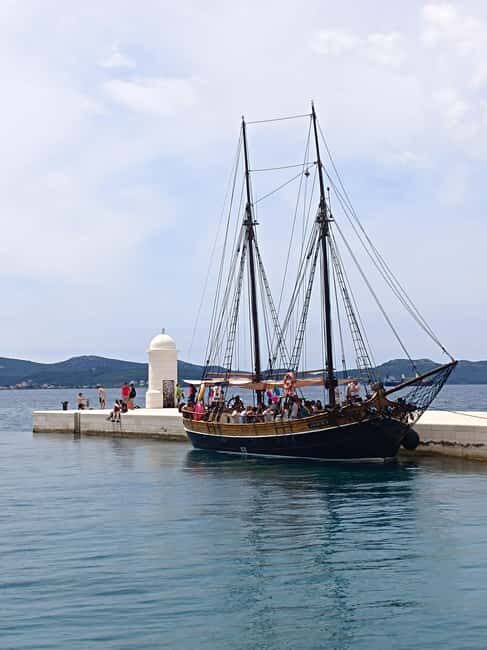
- Sea organ + greeting to the sun: a nature-and-art sound moment at the waterfront
- UNESCO city walls (land gates included): walk the fortifications that shape the old town
- Roman Forum and St. Donatus: the ancient core, with early medieval architecture you can feel
- Cathedral and bell tower area: built history explained in plain language
- Saint Simeon legend and Renaissance People’s Square: stories plus satisfying street-level sightseeing
Porta Nova to the old town: where your 2-hour route starts
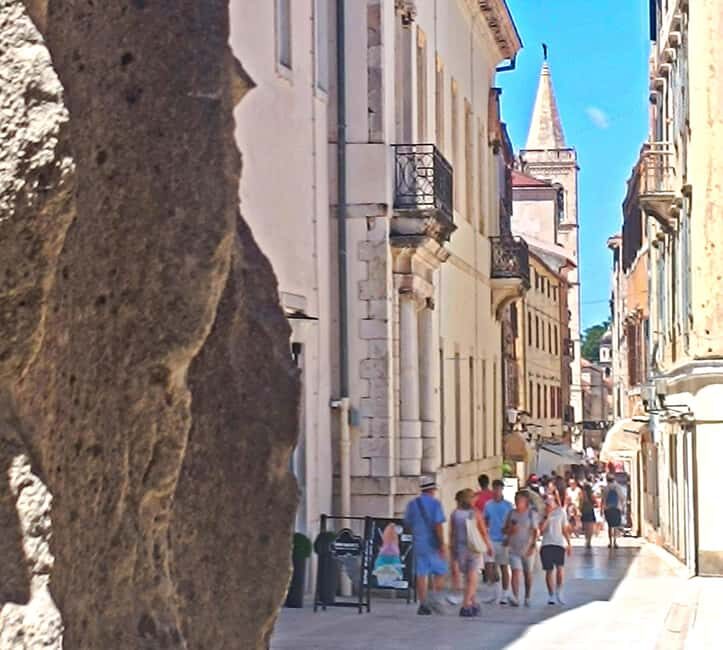
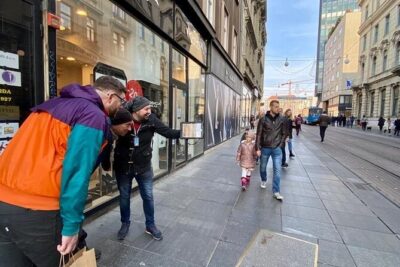
The tour meets in front of the New Gate, Porta Nova, right by the pedestrian bridge entrance into the old town. That matters more than it sounds. Starting at the gate means you’re not fumbling to find your bearings later, and you immediately get the sense that Zadar was designed to protect itself, then slowly grew around those defenses.
From there, you’ll walk at a relaxed pace. There are no strenuous sections promised, but you should expect a solid city stroll for about two hours. If you’re the type who likes to pause, ask questions, and take photos, this timing works well because the plan includes enough stops to make the walking feel earned.
This is also a private group experience, up to 12 people. That size is ideal if you want the tour to stay personal. You’re not competing with a crowd for attention at every corner, and Ivana can steer the pace and explanations to what your group cares about.
You can also read our reviews of more guided tours in Zadar
UNESCO city walls and the land gates: history you can walk on
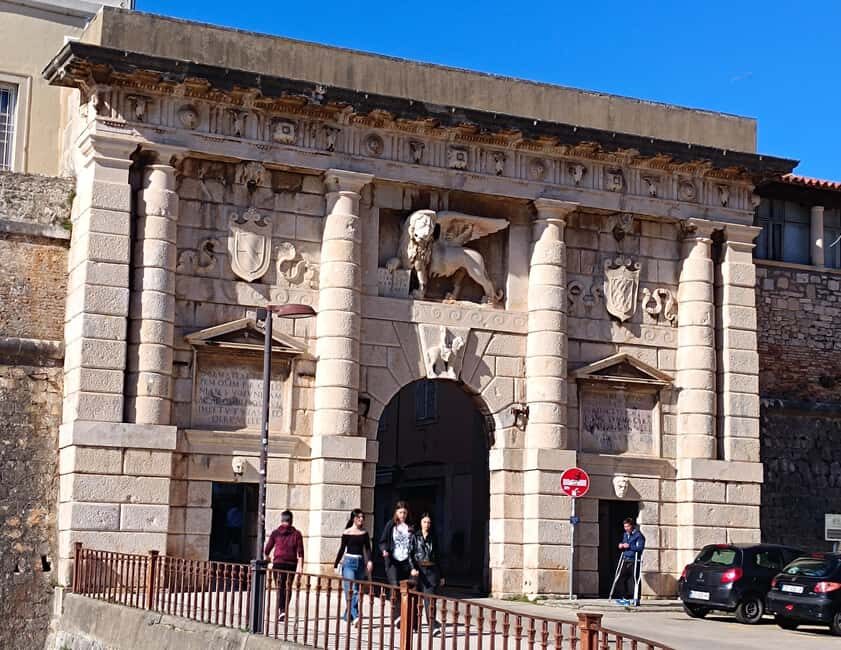
One of my favorite ways to understand a city is to walk its boundaries. Here, you get UNESCO-protected city walls and the land gates, including Kopnena vrata, with stories attached to what you see. Fortifications can feel abstract if you only read a sign. But when you stand on the path and look across the old town edges, you start to grasp why the walls mattered.
You’ll learn how Zadar’s defenses shaped movement and life inside the city. The guide connects the stones to the human side: who would pass through, why certain areas mattered, and how the city evolved with time. If you like history that has consequences, this section delivers. You’ll also get a good “map in your head,” which makes later stops easier to place.
A practical consideration: walls and gates mean uneven surfaces. You don’t need hiking boots, but it’s smart to wear shoes with grip, especially if the weather turns damp.
People’s Square and Renaissance facades: a calmer pause with big architecture
After the fortification story, the tour shifts to People’s Square (Narodni trg). This is where the mood softens. Instead of thinking about defense, you’re looking at Renaissance-era building lines from the 16th century.
I like this stop because it gives you context for how Zadar looked as it gained prosperity and confidence. It’s not just “pretty buildings.” It’s the kind of place where street life and architecture meet, so you can connect what you learned in the walls to the way the city later chose to present itself.
If you’re photographing, this square is a good moment to slow down. The guide’s explanations help you look beyond facades and notice proportions and details that you might otherwise miss.
Saint Simeon legend at Sv. Šime: religion, identity, and local memory
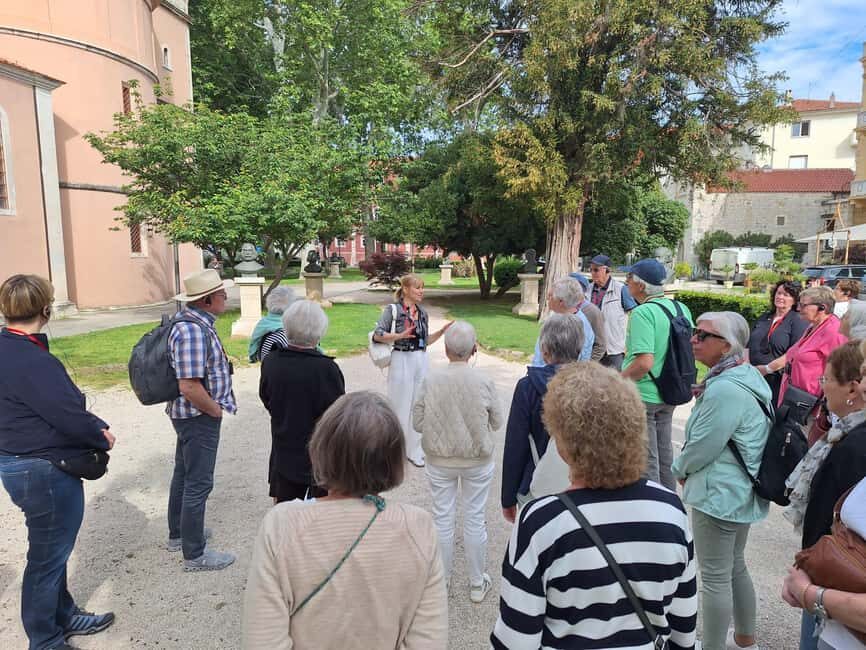
Next comes a legend tied to one of Zadar’s key saints: Saint Simeon (Sv. Šime). This is one of those stops where the value isn’t in a single monument, but in the meaning behind the place. The guide shares why Simeon matters culturally, which turns a named location into something you can actually understand.
In my experience, legends work best when they’re not just recited. Here, the stories come with cultural significance, plus an emphasis on how traditions stick. That’s useful even if you’re not a “religious history” person, because you start seeing Zadar’s identity as something people carried through time.
You’ll also hear about related local storytelling, including themes connected with Benedictine nuns and the gold and silver of Zadar. Even if you don’t catch every detail on the first pass, the overall picture becomes clearer: symbols, faith, and wealth were closely linked in how cities remembered themselves.
The oldest street in the world: walking proof of continuity
Then you’ll stroll through the oldest street in the world, a highlight that sounds bold until you’re actually there. The point isn’t that you should treat it like a magic trick. The point is continuity. You’re moving along a route that has functioned across centuries, and the guide helps you see why that matters.
This segment is especially good if you like “everyday history.” It’s easy to get stuck on big-ticket attractions. This stop reminds you that history also lives in ordinary movement: where people walked, how they navigated, and how the city kept working even as styles and eras changed.
Keep your eyes open for how the street connects to nearby sights. When the route lines up with your mental map from the walls, everything clicks.





Zadar Cathedral and bell tower: standing close to the story
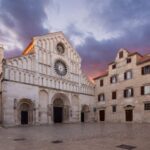
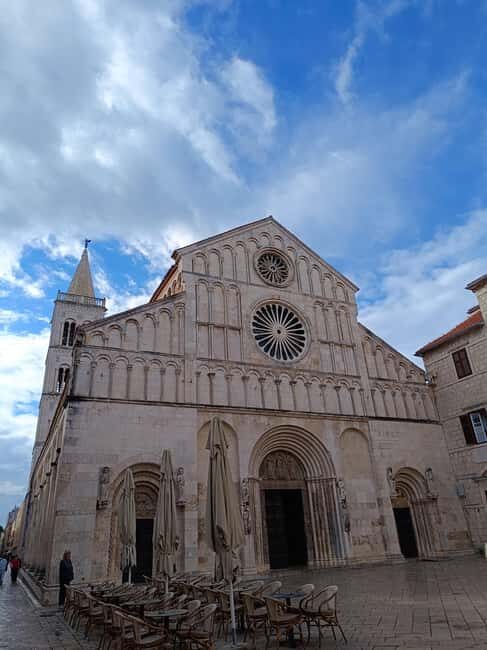
The tour includes the Cathedral and bell tower area, offered as an exterior viewing stop. That can be a drawback for some people who want interior access, but it’s also a benefit. Exterior stops let you focus on massing, design, and placement—how the building relates to the street and the skyline.
The guide shares insights into the building’s history and significance. You’ll get enough detail to understand what you’re looking at, without needing an information overload. Ivana’s German is described as very understandable, and you can feel that in how the explanations are paced to match the walk.
If your group includes people who like architecture, this stop becomes a great anchor. If your group is more photo-focused, it’s still worth it because the cathedral area gives you strong composition from multiple angles.
Roman Forum and St. Donatus: the ancient core of Zadar
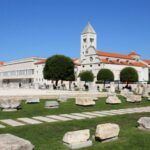
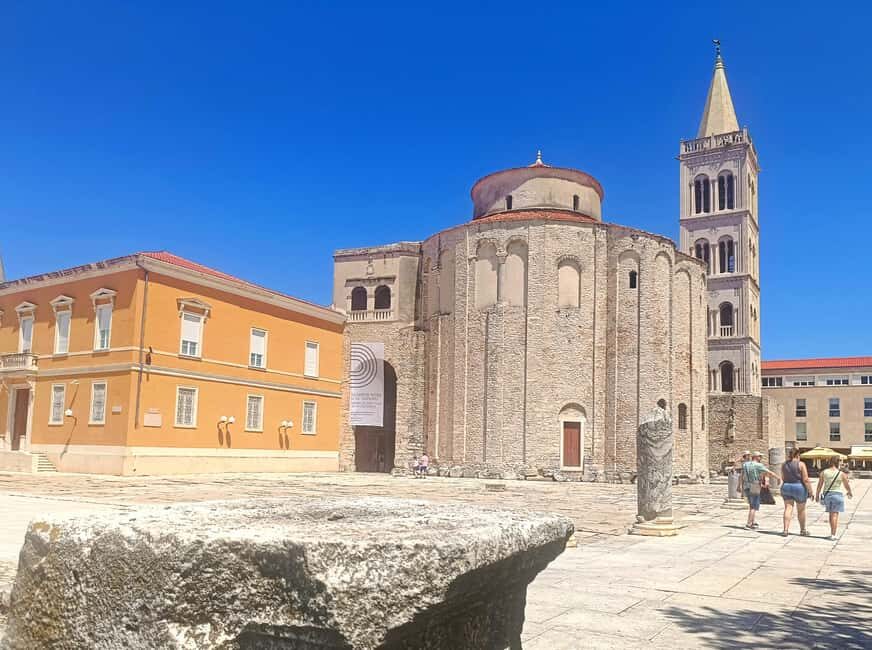
This is the part that often makes people stop talking and just start looking. You visit the Roman Forum and the Church of St. Donatus. In a short 2-hour format, these are the heavy hitters, and they do more than add points on a sightseeing list.
You’ll experience Zadar’s ancient heart, with the Roman road network mentioned as part of the bigger context. That helps you see the city not just as a single era, but as layers: Roman planning, then later Christian and early medieval forms.
St. Donatus (early medieval architecture) is especially striking because it doesn’t feel like a copy of Roman design. It feels like a city reinventing itself while still living in the same geography. The guide’s storytelling makes that connection feel logical, not forced.
One more reason this section is valuable: it balances the waterfront sound experience later. You’re not only ending with something modern and atmospheric. You’re walking through time, from civic Roman spaces to religious architecture, and then to the soundscape outside.
Maraschino and modern Zadar tips: useful, not just decorative
A smart part of this tour is the modern layer. The guide doesn’t just point to monuments and stop. You’ll get practical tips on excursions, restaurants, and shopping—things that help you keep enjoying Zadar after the tour ends.
There’s also the chance to taste the famous Zadar maraschino. Since food and drinks aren’t included in the price, treat this as an optional tasting opportunity rather than a guaranteed included snack. Still, it’s a nice way to connect the city’s culture to a product people here actually associate with home.
This is also where a private format shines. If you tell Ivana what you like—history, photos, local food, or quieter streets—you can get advice that matches your interests and your energy level.
Waterfront promenade, sea organ, and the sunset viewpoint
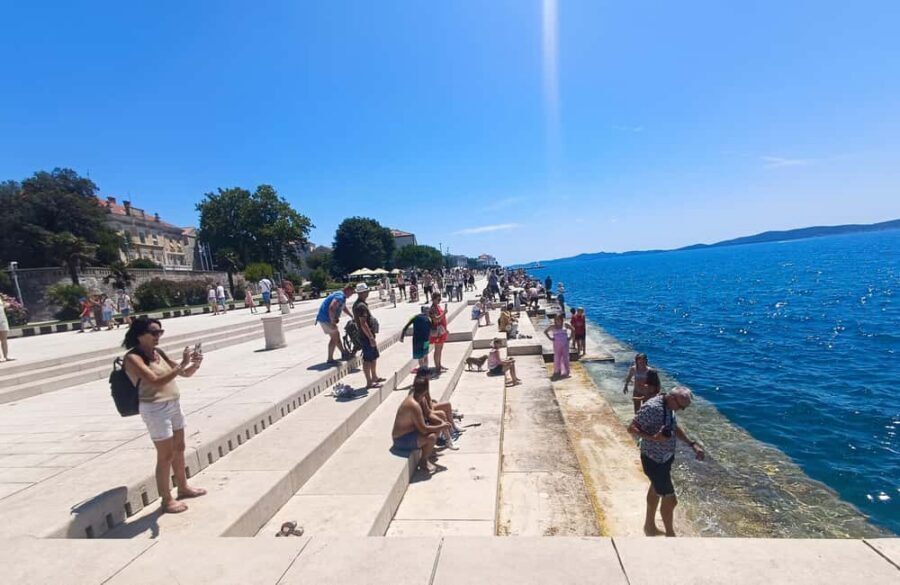
The grand finale is the waterfront promenade and the sea organ, where you can listen to a unique concert played by the waves. This is the kind of sight that doesn’t need a script once you hear it. The guide connects it to the broader identity of Zadar, so it lands as more than a quirky photo stop.
The tour also includes the greeting to the sun as a highlight. Together, sea organ plus greeting to the sun turns the waterfront into a living artwork—one that changes with weather and time. If you care about “why people remember this,” this ending is a strong candidate.
Even if the tour ends during the day, you’ll be guided to a viewpoint for the most beautiful sunset in the world, a place that gets applause every evening. The key value here is the nudge: don’t assume you already know the sunset plan for Zadar. Give it your attention.
Practical note: waterfront air and evening shade can feel cooler, but sun exposure can also be intense earlier. Bring water and adjust what you wear based on the day’s weather.
Price and value: $117 for a private group up to 12
At $117 per group up to 12 people for a private 2-hour tour, this sits in a range that can work well if you’re traveling with friends or family. The biggest value isn’t just the number. It’s that the tour is built to hit major anchors—UNESCO walls, Roman Forum and St. Donatus, cathedral area, and the sea organ—while still keeping the walk relaxed.
Here’s how to judge value for yourself:
- If you want top sights without splitting time across multiple tours, this one-stop structure is efficient.
- If you prefer a guide who can keep German explanations flowing smoothly, the private format helps you avoid getting lost in a larger group pace.
- If you don’t care about guided storytelling and would rather wander on your own, you might feel like this is more structured than needed.
Entrance fees, food, and drinks aren’t included, so plan on small extra costs if you choose to go inside anywhere or if you take up the maraschino tasting.
The guide matters too. In the feedback you can see patterns: Ivana is praised for warmth, enthusiasm, humor, and clear German, plus a pace described as just right. That’s the kind of quality that can turn a “sounds good on paper” tour into something you actually remember.
Who this Zadar private German tour is best for
This fits best if you want a guided walk that covers the essentials in a human way. I’d point you here if:
- You like history, but you also want the explanations to stay lively.
- You’re short on time in Zadar and want a route that covers major eras.
- You’re traveling with a small private group and want flexibility in questions.
- You care about the sea organ and sunset angle, not only monuments.
It’s also wheelchair accessible per the activity details, and the route is described as having no strenuous sections. Still, you’ll want to consider the practical reality of old-town surfaces when deciding on your mobility needs.
If you’re someone who hates any walking at all, this might feel too active for the time. But if you can comfortably handle a two-hour stroll, you should be fine.
Should you book this private German tour of Zadar?
Book it if you want a 2-hour plan that connects Zadar’s big landmarks with the meaning behind them, and if you’d rather hear the stories than read them. The strongest reasons are the pairing of UNESCO walls with Roman and early medieval highlights, plus the ending that delivers the sea organ sound experience and sunset guidance.
Skip it only if you’re determined to spend your day fully unstructured, or if you need long stops and indoor access at each site. This tour is about a smooth guided loop, not a slow museum day.
If you’re arriving in Zadar with limited time and you want the clearest first impression, this private, German-led route is a solid choice.
FAQ
What’s the duration of the Zadar private guided tour?
The tour lasts up to two hours.
How much does the tour cost?
It costs $117 per group (up to 12 people).
Where do we meet the guide?
You meet in front of the New Gate (Porta Nova), at the bridge crossing that leads into the old town.
What language is the tour guide speaking?
The live tour guide speaks German.
Is this a private tour or shared group?
This is a private group tour.
Is the tour walking-heavy?
It includes a two-hour walk with no strenuous sections, but you should be in reasonable shape for that duration.
What sights are included during the tour?
You’ll cover key Zadar highlights such as the UNESCO city walls and land gates, People’s Square, the legend of Saint Simeon, the Cathedral and bell tower area, the Roman Forum, St. Donatus, and the waterfront sea organ area, plus a sunset viewpoint suggestion.
Are entrance fees, food, or drinks included?
No. Entrance fees, food, and drinks are not included in the price.
Is the sea organ and sunset part of the tour?
The sea organ and waterfront promenade are part of the tour finale. You’ll also be taken to a viewpoint for the sunset even if the tour ends earlier in the day.
Is the tour wheelchair accessible?
Yes, the tour is listed as wheelchair accessible.