REVIEW · DUBROVNIK
Dubrovnik By Night Walking Tour
Book on GetYourGuide →Operated by Experience Dubrovnik · Bookable on GetYourGuide
Dubrovnik looks great in daylight. At night, it turns cinematic. I love the cooler streets (less heat, fewer people) and the way the guide connects architecture to real stories of medieval Ragusa. You’ll hit the big sights—Stradun under lights, Luza Square with Orlando’s column, plus the Jesuit Stairs—without feeling rushed. One heads-up: it’s a walking tour, so the cobblestones can feel a bit demanding if your feet get sore easily.
The star here is the timing. After sundown, Dubrovnik’s marble glare softens, street lamps glow, and you get a calm pace to actually take it in. Guides like Anne-Femica (often mentioned with extra GOT talk) and Mikayla (praised for keeping the pace easy and the stories clear) turn the walk into a “how this city worked” lesson, not just a photo stop list.
In This Review
- Key Highlights You’ll Feel on This Walk
- Why Dubrovnik by Night Feels Different Than Daytime
- Meeting at Pile Square: Get Oriented Before You Step In
- Pile Bay and Lovrjenac Stories: Forts, Sea, and Survival
- Stradun Placa Under Street Lights: The Main Street Feels Yours
- Jesuit Stairs: A Short Viewpoint That Changes How You See the City
- Luza Square and Orlando’s Column: Civic Power in Stone
- Old-Town Cathedral: Spot the Medieval Scale at Night
- The Real Value: Stories About Daily Life, Not Just Landmarks
- What To Do With the Rest of Your Evening
- Who This Tour Is Best For
- Should You Book Dubrovnik By Night Walking Tour?
- FAQ
- What’s the duration of the Dubrovnik by Night Walking Tour?
- How much does it cost?
- Where do I meet the guide?
- What language is the tour offered in?
- What are the main sights included?
- Is there a cancellation window?
Key Highlights You’ll Feel on This Walk
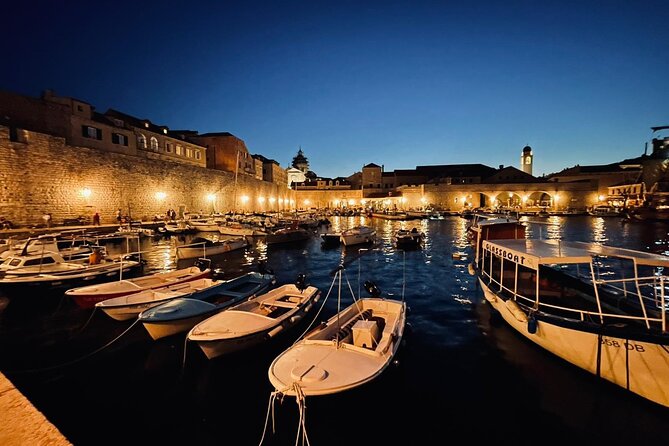
- Pile Bay start: You begin with forts and shoreline stories before the old town takes over the scene.
- Stradun Placa at night: The main street feels wider and calmer when the crowds thin out.
- Jesuit Stairs viewpoints: A quick climb-and-look moment that shows off Dubrovnik’s vertical character.
- Luza Square and Orlando’s column: A central civic landmark with medieval power behind it.
- Old-town cathedral exterior: You’ll clock the style and scale in a way that daylight crowds can drown out.
- Small-group vibe: Some bookings describe groups around four to six people, which makes questions easier.
Why Dubrovnik by Night Feels Different Than Daytime
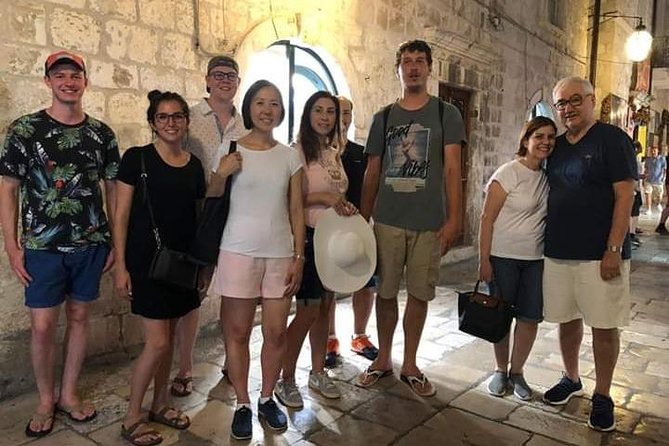
Daytime Dubrovnik can be all glare and crowds. After dark, it flips. I like that you’re seeing the same stone, same streets, same skyline—but under softer lighting and a slower rhythm. The street lamps make details pop in a way that feels almost unfair to your daytime photos.
This tour is also short—about 90 minutes—which matters. You’re not committing to an all-evening marathon just to check off a few spots. It’s a smart intro if you want the city’s “tone” fast, especially if you arrive with jet lag or limited time.
And yes, the tour ties in popular culture for some fans. More than one guide name shows up in the notes with Game of Thrones references at the right moments, so you can enjoy it even if you don’t treat the show like scripture.
You can also read our reviews of more walking tours in Dubrovnik

Meeting at Pile Square: Get Oriented Before You Step In
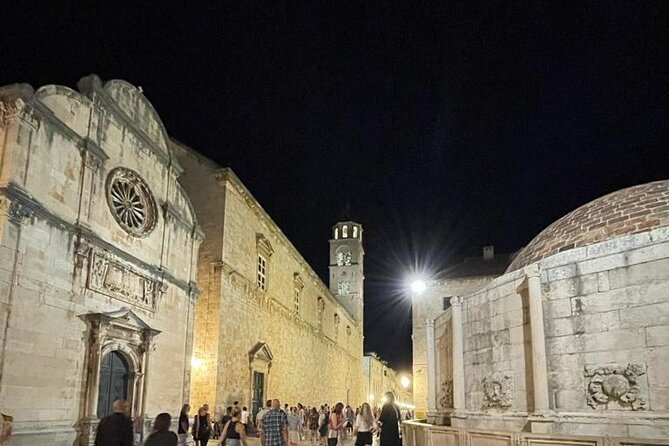
You’ll meet at Pile Square, by the Amerling Fountain, just outside the old town near Dubravka restaurant. Look for the blue umbrella with the local provider logo.
This meeting point is a practical choice. It’s close to the old-town entry and helps you start on the right side of the peninsula, rather than doing a long “pre-walk” just to reach the first story spot. If you’re trying to make the most of your evening, I’d plan to arrive a few minutes early so you can settle in and match your bearings.
Tip that comes up in the notes: if you like to tip at the end, it can help to have cash ready.
Pile Bay and Lovrjenac Stories: Forts, Sea, and Survival
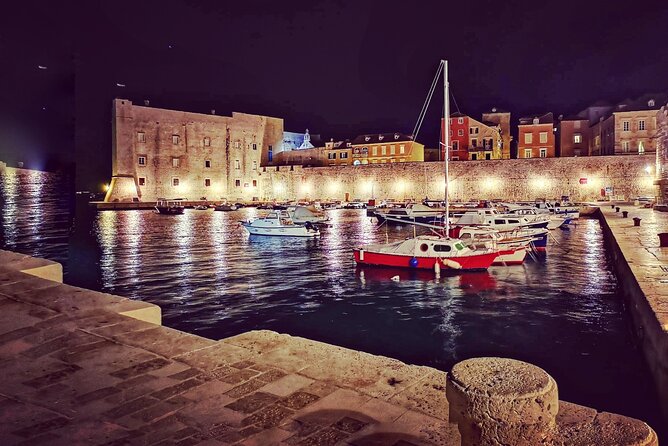
The tour begins where the sea and stone meet at Pile Bay. From there, your guide connects the waterfront to the city’s defensive mindset, including Lovrjenac, which gets framed as one of the key fortifications in this region.
This part works well because it explains the city’s shape. Dubrovnik isn’t random streets stacked up for postcards. It’s a walled, strategic place. Once you understand that, the rest of the walk makes more sense—why people built where they did, why certain streets feel like they’re meant to funnel you, and how the city protected itself when it needed to.
Guides in the notes—like Mikayla and Mihaela—are praised for packing a lot into the 90 minutes without turning it into a lecture. You get historic context, but it’s usually tied to how the city functioned as a lived place.
Stradun Placa Under Street Lights: The Main Street Feels Yours
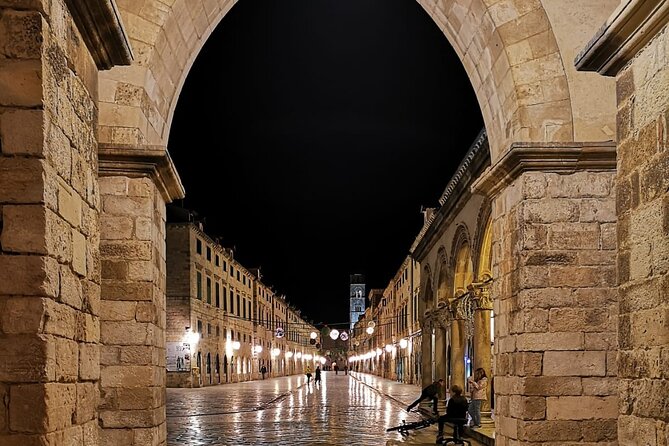
Next comes Stradun Placa, Dubrovnik’s best-known main street and one of the most photogenic stretches in town. Here’s the key difference at night: the street looks dramatic but it doesn’t feel jammed.
I like that Stradun becomes more than “the big street.” Your guide helps you notice the rhythm—where the street opens up, how light reflects on the stone, and which corners tend to carry the city’s meaning. At night, the walk feels like strolling through a set that’s actually real.
You’ll also be nudged into the side streets that join Stradun. That’s where the tour gets useful for your next hours in Dubrovnik. Instead of only seeing the obvious landmarks, you learn where to step off the main flow to find quieter bars and a more relaxed atmosphere.
If you’re traveling in a small group—some bookings mention four to six people—this part is especially fun. You can ask questions and get short answers that actually help you enjoy the rest of your evening.
Jesuit Stairs: A Short Viewpoint That Changes How You See the City
One of the best “wait, that’s gorgeous” moments is the Jesuit Stairs. Even if you don’t know the story behind every stone, the steps do the job: they show Dubrovnik’s vertical character. You see the way the city climbs, the way buildings stack into perspective, and how the walls and rooftops feel connected.
This stop also helps you break the long straight-line feeling of Stradun. After a mostly horizontal walk, the stairs remind you Dubrovnik is built in layers—social layers, architectural layers, and literally vertical ones.
The best practical advice here is simple: take a breath before you start climbing, and pause at the top (or wherever your guide encourages you) before you move on. Those few minutes of looking are what make this feel like more than a tick-box stop.
You can also read our reviews of more evening experiences in Dubrovnik




Luza Square and Orlando’s Column: Civic Power in Stone
Then you’ll reach Luza Square, a focal point of old-town life. The highlight here is Orlando’s column, a landmark that’s hard to ignore once you’re standing in the square.
What I like about this moment is that it’s not just an object to photograph. Your guide frames the column and the square in a way that connects to Dubrovnik’s medieval civic identity—who held authority, how the city organized itself, and why public space mattered.
If you’re a history-buff, this is the area where it all starts clicking. If you’re not, it still works because the square is a natural place to slow down and let the atmosphere land. Night lighting makes Luza Square feel less like a stop and more like a place.
Old-Town Cathedral: Spot the Medieval Scale at Night
Near the end, you’ll observe the medieval cathedral in the old town. It’s one of those structures where daylight is fine—but night gives you contrast. The lighting helps you see mass and form, not just detail. You can better sense scale from a few steps back.
This is also a nice finish because the cathedral area tends to feel like the old town’s “final chapter.” After moving through squares and streets, you get to stand still, look up, and recognize the city’s big-picture design.
The Real Value: Stories About Daily Life, Not Just Landmarks
The official description promises stories of medieval Ragusa nightlife and local behavior, and that’s exactly how this tour earns its strong rating. The best guides in the notes—like Anne-Femica, Petra, and Goran—are praised for balancing history with everyday human context.
That balance shows up in the way the tour flows:
- You learn what people valued and feared.
- You hear how the city’s social life shaped behavior in public spaces.
- You get guide commentary that adapts to the group’s interests.
One booking calls out that the guide can tailor explanations using references tied to participants’ national histories. Another notes first-hand perspective about the 1991 war era. Even when you don’t need those details, it adds weight. Dubrovnik stops feeling like a museum and starts feeling like a city that endured real change.
And if you want practical takeaways: you’ll come away with a better feel for where to walk next, what to look for, and what to ignore.
What To Do With the Rest of Your Evening
A 90-minute walk is a great primer. Once you finish back in the old town, you’re set up to explore with confidence. I’d use this time in two ways:
- Plan your next walk like a local. Start with the quieter side streets your guide mentioned, then circle back toward Stradun for one last pass under the lamps.
- Choose your bar deliberately. If you’re chasing a relaxed atmosphere, aim for those side-street spots rather than the busiest frontage areas.
Also, consider the season. Reviews mention tours around sunset and later evening slots like 8pm being a smart way to avoid heat. If you’re sensitive to warm weather, earlier evening start times can be the sweet spot.
Who This Tour Is Best For
This walk fits best if you:
- Want an easy first introduction to Dubrovnik’s old town
- Like history when it’s told through real places and civic landmarks
- Prefer a slower pace with time for photos
- Have limited hours and want maximum “city sense” per minute
It’s also a good family option, since one review highlights a guide’s playful interaction with children without turning the tour childish. And if you’re a Game of Thrones fan, you’ll likely enjoy how your guide connects the show’s vibe to the city’s streets and mood.
If you hate walking or your mobility is limited, this may not be your favorite format. The itinerary includes steps like the Jesuit Stairs, and the surface is classic Dubrovnik cobblestone.
Should You Book Dubrovnik By Night Walking Tour?
If you’re deciding between “sightseeing on your own” and “having someone interpret the city for you,” I’d lean booking. For $23 per person and 90 minutes, you get a guided route that hits the right mix: waterfront context, the main street under lights, a signature stairway viewpoint, a civic square with Orlando’s column, and a medieval cathedral reference.
Book it if:
- You want a quick, calming orientation after crowds
- You appreciate storytelling tied to streets and landmarks
- You’d like Game of Thrones-style references as a bonus, not a requirement
Skip it if:
- You’re not up for stairs and cobblestones
- You’re only interested in a few photos and prefer a self-guided stroll
FAQ
What’s the duration of the Dubrovnik by Night Walking Tour?
The tour lasts 90 minutes.
How much does it cost?
It costs $23 per person.
Where do I meet the guide?
Meet at Pile Square, by the Amerling Fountain, outside the old town near Dubravka restaurant. Look for the blue umbrella with the local provider logo.
What language is the tour offered in?
The live tour guide speaks English.
What are the main sights included?
You’ll see Pile Bay, walk along Stradun Placa, visit Jesuit Stairs, stop at Luza Square for Orlando’s column, and observe the medieval cathedral in the old town.
Is there a cancellation window?
Yes. The experience offers free cancellation up to 24 hours in advance for a full refund.