REVIEW · DUBROVNIK
Dubrovnik: Old Town Walking Tour
Book on GetYourGuide →Operated by Dubrovnik Walks & Sea Kayaking · Bookable on GetYourGuide
Dubrovnik clicks fast with the right guide. This Old Town walking tour turns the maze of stone into a clear story, with licensed guidance and headset audio that keeps up even in busy spots. I especially like how quickly you get oriented, and how the guide connects what you see to how the Republic of Ragusa became unusually prosperous. One drawback: this is a walk-and-pass experience, so you won’t be going inside churches or museums.
You start at the edge of the action near Pile Gate and move through the key public sites that most people miss when they wander on their own. The pace is set for a 90-minute hit of history without turning into a slog, and the route is wheelchair accessible. Still, plan for sun and crowds, and bring comfy shoes because you’re walking the whole time.
In This Review
- Key things I’d bet on (before you book)
- Entering Dubrovnik with a plan: why this tour works
- Meeting point at Brsalje 8: how to avoid the first-minute panic
- Pile Gate and the Old Town approach: your instant orientation
- Stradun: when you learn what the main street is actually for
- Large Onofrio’s Fountain: public life and engineering in one stop
- Orlando’s Column: laws, authority, and the symbolism you can’t ignore
- Sponza Palace: trade and state power at eye level
- Rector’s Palace: the governance story that makes Dubrovnik feel real
- Gundulićeva poljana and passing the Cathedral: what you see when you know what to ask
- Old Port Dubrovnik: the maritime finale that explains the whole city
- Timing, walking style, and what to bring so it stays pleasant
- Guides you might meet: what their style tends to deliver
- Value for $23: what you actually get
- Who should do this tour, and who might want a different one
- Book it or pass: my practical take
- FAQ
- How long is the Dubrovnik Old Town walking tour?
- Where do I meet the guide, and how do I find Dubrovnik Walks?
- What landmarks does the tour include?
- Does the tour enter churches or museums?
- Are headsets provided?
- Is recording allowed during the tour?
Key things I’d bet on (before you book)
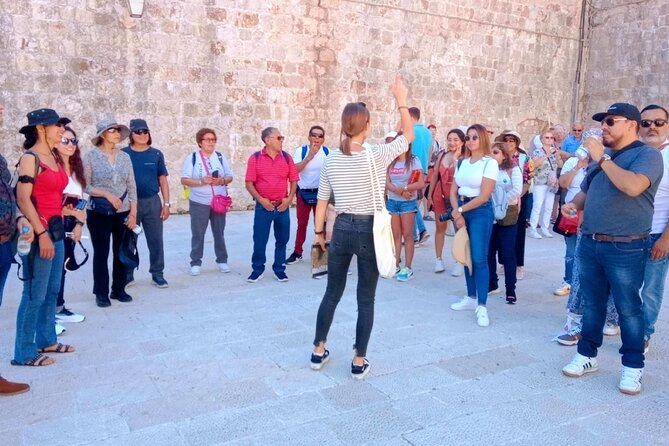
- Headsets help a lot: even with background noise, you can hear the guide clearly.
- The route is built around major landmarks: Onofrio’s Fountain, Orlando’s Column, Sponza, Rector’s Palace, and the Old Port area.
- You get the Republic of Ragusa story in context, not as random dates.
- You’ll mostly view from the outside: the tour focuses on learning at key points rather than interior visits.
- Guides often mix facts with humor and local tips, like what to avoid and what to do next.
- Rain plan shows up fast, including ponchos when weather turns.
Entering Dubrovnik with a plan: why this tour works

Dubrovnik Old Town is beautiful, but it’s also easy to get lost in the photo loop. The value here is that you’re not just staring at walls and windows. You’re learning how the city functioned as one of the historic maritime powers of the Adriatic—and why that matters for what you see today.
The tour’s strength is its focus on public spaces and landmark architecture tied to civic life. That means the story lands where your feet land: gates, main streets, fountains, columns, palaces, and the port edge. You’ll hear over 1,400 years of history in a way that feels like cause-and-effect: trade and governance shaped the city’s layout and its identity.
I also like the practical pacing. People often complain about tours that feel rushed or too slow. Here, the timing feels designed for a first visit: enough stops to get meaning from the sights, without burning your day.
You can also read our reviews of more walking tours in Dubrovnik

Meeting point at Brsalje 8: how to avoid the first-minute panic
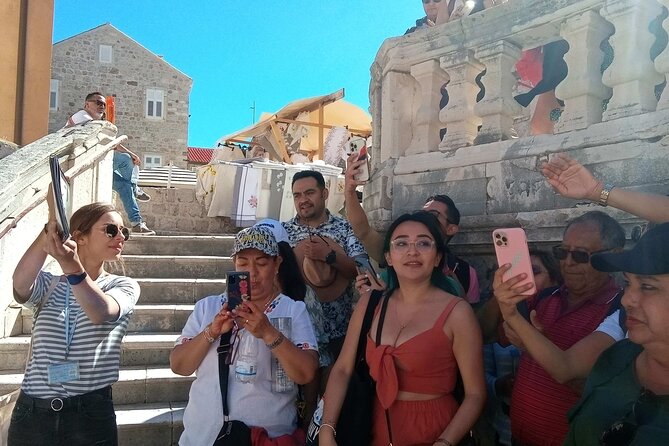
The meeting point is by the Pile local bus stop, at Brsalje 8, with Dubrovnik Walks representatives holding orange umbrellas. Aim to arrive about 10 minutes early so you’re not hunting while your tour is starting.
This matters more than you’d think. The Old Town approach is busy and full of signage, and Dubrovnik Walks keeps the meeting point consistent across tours. Once you find the orange umbrella team, you’re set.
If you’re coming by foot from the harbor side, give yourself extra time. Streets and foot traffic around the approaches can slow you down at the exact moment you don’t want it to.
Pile Gate and the Old Town approach: your instant orientation
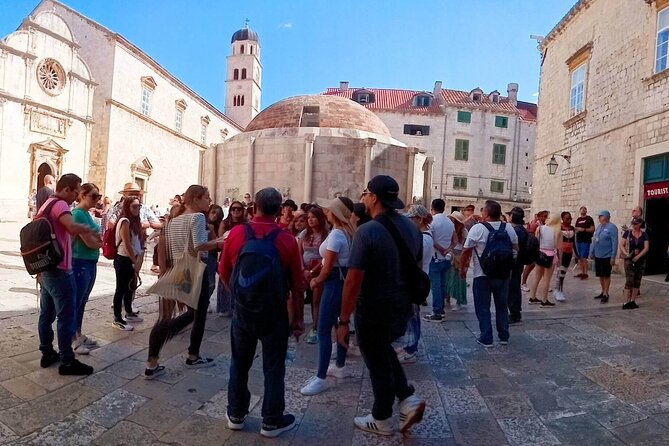
You begin near Pile Gate, the western entrance to the Old Town. From the start, the guide sets up how to read the city like a map. It’s a big help when you’re about to walk through Stradun, the main spine of the Old Town.
At this stage you’ll get an introduction to how Dubrovnik became prosperous and influential. That’s not just trivia. It changes the way you look at buildings. Instead of seeing them as scenery, you start seeing them as part of a living system: defense, trade, and civic authority all show up in plain sight.
The stop-and-start timing is gentle early on, including a short guided segment right at Pile Gate and then movement into the Old Town core. You’ll learn what to look for before the tour hands you more named landmarks.
Stradun: when you learn what the main street is actually for

Stradun is where most people immediately wander, but only a guide explains why it feels important beyond being the prettiest stretch. Here, you get the “why this matters” version: the main street as a civic stage, and the way the city’s prosperity shaped daily public life.
In short, you’ll walk it with eyes that understand function, not just form. That’s what turns the area from a postcard into a place you can picture historically.
Large Onofrio’s Fountain: public life and engineering in one stop
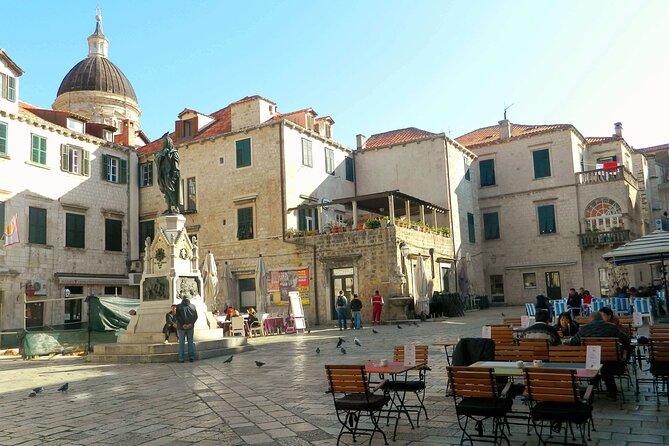
One of the first big landmark moments is Large Onofrio’s Fountain. It’s visually striking, but this stop also helps you understand how public works supported a densely built city.
A fountain isn’t just decoration. In historic cities like Dubrovnik, it’s a piece of the everyday infrastructure that makes urban life possible. When you know that, the fountain becomes part of the city’s practical story, not just a landmark for a quick photo.




Orlando’s Column: laws, authority, and the symbolism you can’t ignore
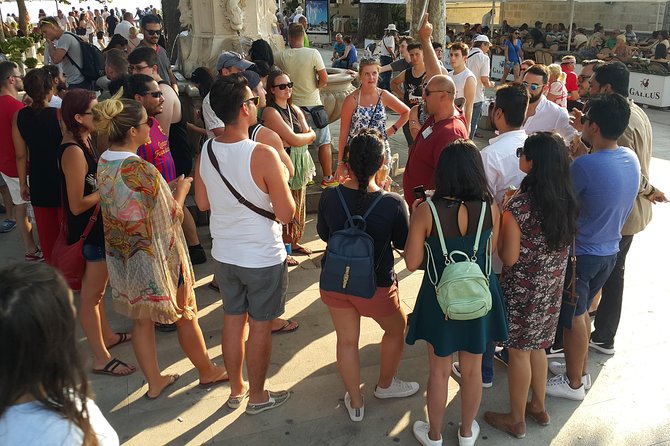
Next is Orlando’s Column. This spot works because it’s a physical reminder of civic authority—visible, central, and meant to be understood.
Even if you don’t speak Croatian history terms, you’ll come away with the idea that the Republic’s identity was built into the public landscape. The column is one of those places where, after the guide explains the context, you stop walking past it like it’s just a statue.
This is also where you get the “storytelling payoff.” Many guides in this operator’s lineup are strong at turning facts into memorable scenes. You’ll likely hear something vivid and easy to repeat later when friends ask, what was Dubrovnik like back then?
Sponza Palace: trade and state power at eye level
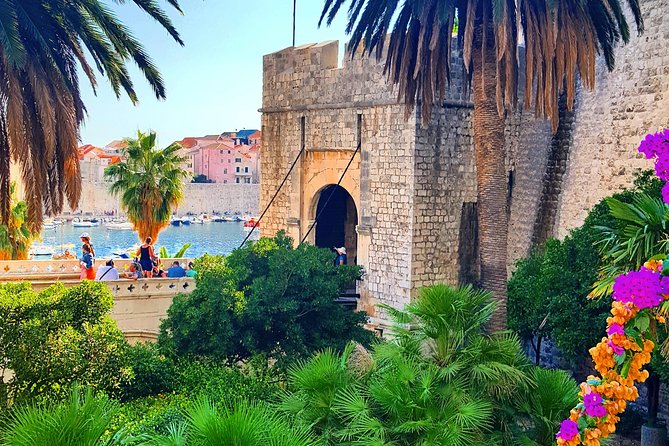
At Sponza Palace, you’ll connect economic life to architecture. This is one of the best stops for understanding Dubrovnik as a maritime republic. Trade brought wealth. Wealth supported institutions. Institutions shaped buildings that still stand today.
What I like about including Sponza in a 90-minute walk is that it prevents the tour from becoming only military or only decorative. You see how money and government lived side by side.
The palace also acts as a visual anchor: after this stop, the rest of the walk starts to feel like one continuous story instead of disconnected highlights.
Rector’s Palace: the governance story that makes Dubrovnik feel real
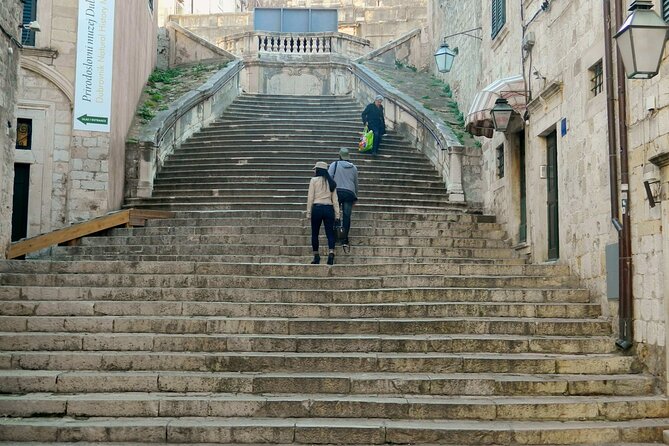
The tour then moves through the area around Rector’s Palace (you pass by). This is where you learn how leadership and civic decisions played out in a city that valued its status and autonomy.
Even when you’re not entering the building, the explanation can change what you notice. You start paying attention to details that point to power: the sense of formality, the way the setting signals administration, and why the city would display its institutions so publicly.
This is also a good moment to ask the guide questions if you have any. If the group pauses for a minute, you can often tailor your follow-up to what you care about most: politics, trade, architecture, or daily life.
Gundulićeva poljana and passing the Cathedral: what you see when you know what to ask
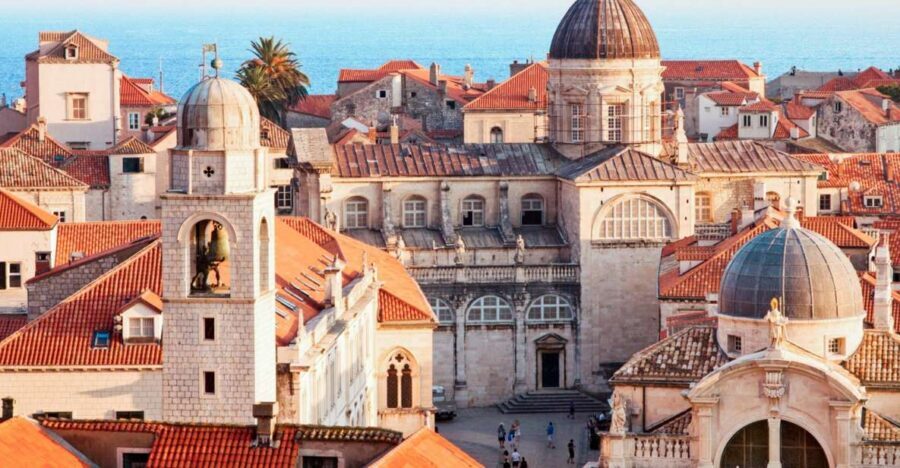
You’ll then reach Gundulićeva poljana and pass by the Dubrovnik Cathedral area without entering. Passing stops can feel less exciting, but in this case it works because it keeps the tour moving while still giving you context.
The idea is simple: you’ll understand why certain religious and civic sites sit where they do in the Old Town. You get the background without turning your day into a museum schedule.
If you’re hoping for an inside look, plan that for another activity later. This tour is built for overview and orientation, not interior viewing.
Old Port Dubrovnik: the maritime finale that explains the whole city
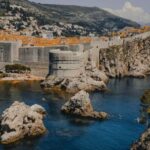
The walk ends near the Old Town port area. That makes sense. Dubrovnik’s story is maritime, and the harbor helps you tie earlier stops to the city’s larger purpose.
By the time you reach the port, the earlier landmarks should feel connected. You’re no longer just collecting photos. You’re seeing a city that organized itself around trade routes, protection, and governance.
This ending spot also helps if you’re deciding what to do next. Many guides share practical recommendations after the tour, including what pairs well with a first visit (like adding the city walls later for sunset views).
Timing, walking style, and what to bring so it stays pleasant
This tour runs 90 minutes and is a walking experience, mostly on flat ground according to guidance style shared in recent feedback. Still, you’re in a dense Old Town, so expect uneven stone and tight corners.
Bring:
- Comfortable shoes (non-negotiable here)
- Water for the walk
- Sunscreen because you’ll spend time outdoors
If rain shows up, don’t panic. At least some guides provide rain ponchos right when you need them, which can save the day and keep the group from getting miserable.
Also note a practical rule: video recording and audio recording aren’t allowed. That keeps the tour clearer and helps your guide manage the group.
Guides you might meet: what their style tends to deliver
You’re working with English-speaking live guides, and the guides vary. Based on recent experiences, names like Antun, Lana, Alex, Branko, Davor, and Goran come up often.
What seems consistent across the team is a mix of:
- clear explanations that fit the 90-minute format
- humor alongside history
- room for questions
- practical local advice, like where to eat or what to avoid
The headset system also makes a noticeable difference. Even in louder spots, people often report they can still follow the guide without craning their neck.
If you want maximum value, show up curious. The tour works best when you let your guide turn what you’re seeing into a story, and when you ask at least one question that matters to you.
Value for $23: what you actually get
At around $23 per person, the real value is not just that it’s affordable. It’s that you get three things that help on a first visit:
- A licensed local guide who can connect the big-name landmarks to how Dubrovnik operated.
- Headsets that make the history listenable in a crowded Old Town.
- A high-impact route that hits the civic, economic, and maritime beats of the city without making you spend hours.
If you’re spending a limited number of days in Dubrovnik, this is a good way to get your bearings fast and prevent your photos from becoming a blur of unrelated sights.
Who should do this tour, and who might want a different one
You’ll likely love this if you:
- want a first-pass overview of Old Town that helps everything else make sense
- care about how cities work—trade, governance, and civic identity
- prefer learning from a guide rather than trying to self-navigate every building
You might pick something else if you:
- mainly want church interiors or museum time. This tour is structured around landmarks from the outside and passes, not inside visits.
- hate walking in crowds, even if the route is manageable and accessible.
The fact that it’s wheelchair accessible is a plus. You can plan your day knowing you won’t have to skip the Old Town story just because of mobility.
Book it or pass: my practical take
I’d book this tour if it’s your first time in Dubrovnik Old Town and you want the “why” behind the beauty. It’s a smart buy because the guide-led route plus headset clarity turns 90 minutes into real context—so your later wandering makes sense.
If you already know Dubrovnik’s history and you’re mostly after interior views, you might feel limited by the outside-focused format. But for most visitors, starting with this walk is the easiest way to make Dubrovnik click.
If you can, do it early in your stay. Then you can spend the rest of your time choosing what to revisit with better questions in mind.
FAQ
How long is the Dubrovnik Old Town walking tour?
The tour lasts 90 minutes.
Where do I meet the guide, and how do I find Dubrovnik Walks?
Meet at Dubrovnik Walks, Brsalje 8, by the Pile local bus stop. Look for representatives holding orange umbrellas.
What landmarks does the tour include?
You’ll see major Old Town points such as Pile Gate, Stradun, Large Onofrio’s Fountain, Orlando’s Column, Sponza Palace, Rector’s Palace (pass by), Gundulićeva poljana (stop), Dubrovnik Cathedral (pass by), and the Old Port Dubrovnik area.
Does the tour enter churches or museums?
No. The tour does not include entering churches or museums.
Are headsets provided?
Yes. The tour includes headset devices so you can hear the guide clearly.
Is recording allowed during the tour?
No. Video recording and audio recording are not allowed.