REVIEW · DUBROVNIK
Old Town Secrets Walking Tour
Book on Viator →Operated by Majic Walk Tour Dubrovnik · Bookable on Viator
One gate starts the whole Dubrovnik story. This Old Town Secrets Walking Tour takes you through the core landmarks of Dubrovnik’s Old Town and links them to the city’s real shocks and surprises—siege damage, rule by power centers, and the myths that grew around everyday buildings. I love the small-group feel (up to 10, so you’re not shouting over a crowd) and I also love how the guide keeps connecting the dots between where you stand and what the city was fighting for.
At about an hour, it’s fast and focused. If you want long pauses for photos and slow wandering, you may feel a little rushed—especially in the busiest stretches like Stradun.
In This Review
- Key points worth knowing before you go
- Meeting Amerling Fountain and Getting Oriented Fast
- Pile Gate: Fortifications, Siege Damage, and the 1990s Story
- Stradun’s Main Street: St. Saviour’s, the Monastery Pharmacy, and Onofrio’s Fountain
- Luza Square: Government Power, Rivalry Stories, and the Sponza Details
- Rector’s Palace: Power Center, Prison, Treasury, and Rule-by-Story
- Dubrovnik Cathedral: Mary, Statues, Richard the Lionheart, and Local Origins
- Price and Value: Is $239.65 a Smart Move?
- Pacing, Heat, and How to Plan Your Day Around It
- Should You Book the Old Town Secrets Walking Tour?
- FAQ
- How long is the Old Town Secrets Walking Tour?
- Where does the tour start and where does it end?
- What is the group size limit?
- Is the tour offered in English?
- Are there admission tickets at the stops?
- What is the cancellation policy?
Key points worth knowing before you go
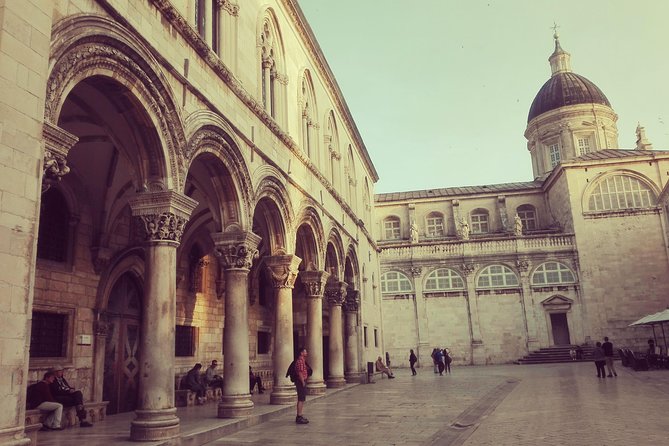
- Up to 10 people, private-style attention that keeps questions from getting lost
- Short stop-and-story format (about 1 hour total) that works well when the Old Town is packed
- Fortifications + modern history at Pile Gate, including a siege damage map and Croatian Independence War context
- Architecture with a plot, from church details to Luza Square’s government buildings
- Cathedral stop built around contradictions, including Mary symbolism and the stories tied to Richard the Lionheart
- English language tour with a mobile ticket for an easy check-in
Meeting Amerling Fountain and Getting Oriented Fast
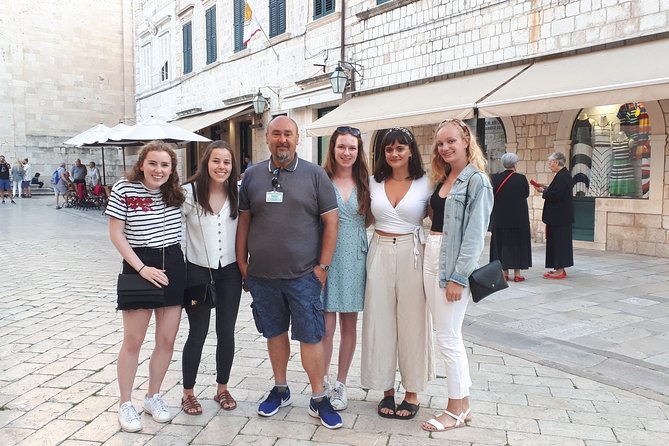
The walk starts at Amerling Fountain on Ul. Svetog Đurđa, and it ends on Stradun, the main spine of Dubrovnik’s Old Town. That’s a smart setup. You begin at a recognizable landmark, then you progressively work your way through the places that shape how you’ll later read the city on your own.
The total time is about 1 hour, and the format is essentially a sequence of short pauses with a story attached. That matters because Dubrovnik’s Old Town can be tiring: steep sights, heavy crowds, and heat that ramps up quickly. A tight route helps you get value without turning your day into a full-on walking marathon.
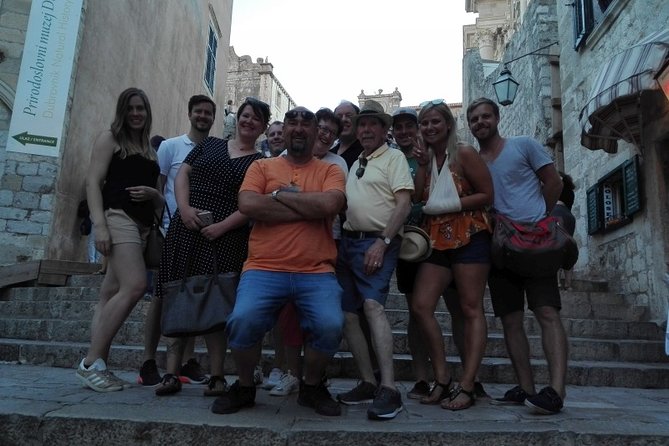
This is also designed for small groups, with a maximum of 10 people. I like that because it changes the vibe. You can ask follow-up questions, and the guide can actually tailor the pacing to what your group is most curious about. If you’re the type who likes understanding why a place matters (not just what it looks like), this structure fits you well.
Finally, you’ll use a mobile ticket, and the meeting area is in a central spot near public transportation, which is practical when you’re juggling ferries, buses, or a second plan after the walk.
You can also read our reviews of more tours and experiences in Dubrovnik.



Pile Gate: Fortifications, Siege Damage, and the 1990s Story
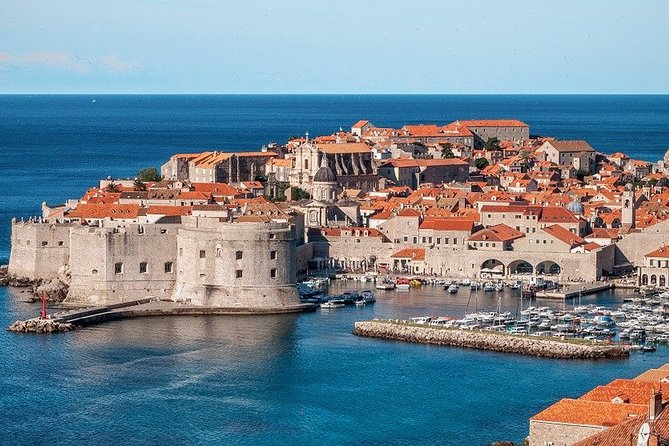
Your first stop is Pile Gate, the main entrance area to the Old Town. It’s not just an atmospheric starting point. It’s where you get the city’s defensive mindset in a single breath—because Pile Gate is literally part of the story of how Dubrovnik kept itself standing.
The guide focuses on Dubrovnik’s defence capabilities, with the big framing idea that it’s among the most heavily fortified cities in Europe. That sets the tone for the rest of the walk. Suddenly, the thick walls and gate layout aren’t decorative—they’re strategy.
Then comes the part many people remember because it’s specific and grounded: you’ll look at a map showing damage done to the Old Town during the siege in the 1990s, and you’ll hear a few words about the Croatian Independence War. That context is valuable because it prevents the Old Town from feeling like a museum piece. You understand that the city’s survival story isn’t only medieval; it’s also modern.
The only real drawback here is timing and emotion. Pile Gate can hit hard, and it’s also close to high-traffic areas where the noise level can rise. If you want quiet reflection, you might need a moment to step aside when you get your bearings.
Stradun’s Main Street: St. Saviour’s, the Monastery Pharmacy, and Onofrio’s Fountain
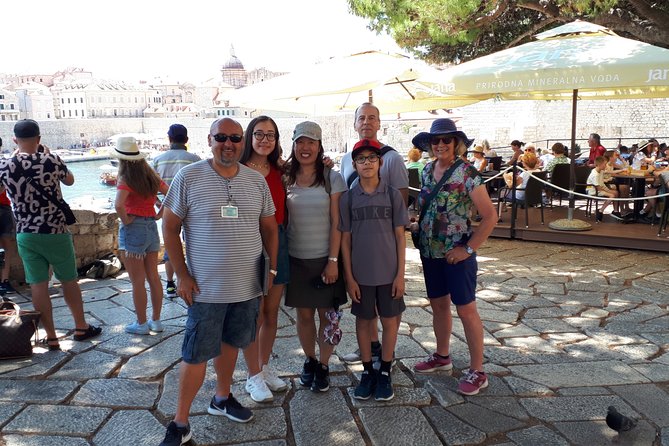
From Pile Gate you move onto Stradun, Dubrovnik’s main street, where the guide turns architecture into a guided reading. This part feels different from a typical Old Town stroll because the stops are chosen to explain how the city worked—spiritually, socially, and practically.
You’ll hear stories connected to major landmarks such as the St. Saviour’s church, the Franciscan monastery, and Onofrio’s fountain. One detail I love is the emphasis on the Franciscan monastery with one of the oldest working pharmacies in the world. Even if you don’t have a medical-history obsession (I don’t always), this is the kind of fact that makes the building feel alive. It’s not just stone and arches; it’s a reminder that people in this city relied on knowledge and routine.
The stop also highlights how medieval engineering shows up in everyday sight lines. Onofrio’s fountain gets positioned as more than a photo moment, so you can start noticing the logic behind it.
A small consideration: Stradun is often crowded. With a group of up to 10, it’s still manageable, but you may share the space with buses, day-trippers, and people stopping suddenly for selfies. The walk is short here—about 15 minutes—so the pacing won’t drag, but you’ll want to keep your eyes up for the guide’s timing cues.
Luza Square: Government Power, Rivalry Stories, and the Sponza Details
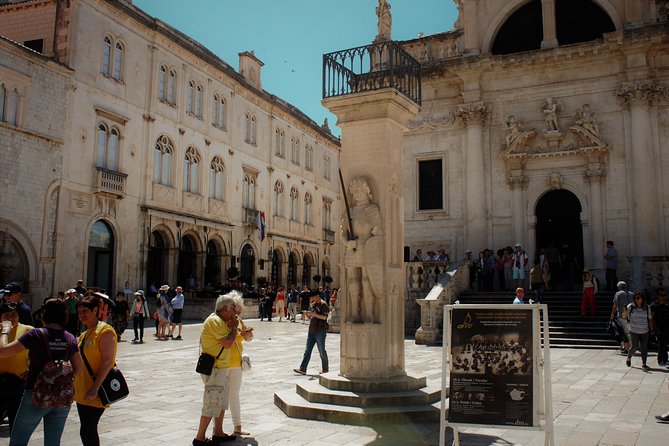
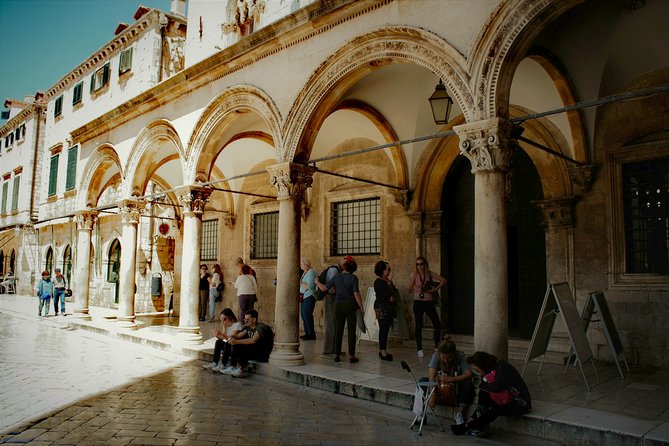
Next is Luža Square, and this stop is where Dubrovnik starts to feel like a living political stage rather than a postcard. You’ll learn that the square was a witness to major events across the city’s history and remains the center of Dubrovnik’s government.
What I find useful is that the guide points out a cluster of major architecture in a way that helps you remember it. You’ll focus on buildings such as Sponza Palace, the Clock Tower, St. Blasius Church, and the Old Parlament Building. Those names can blur together if you visit alone, but the guide gives them roles in the bigger picture.
You’ll also hear stories that lean into human behavior—rivalry, the idea of monuments to bribery, and other city legends tied to power and competition. Even when the stories are surprising, the value is how they explain what people feared, wanted, or tried to control.
The square is also a practical pause. It’s open and easier to reposition, compared with narrow lanes. On the downside, because it’s central and open-air, it can be hotter and windier depending on the season. If you’re sensitive to heat, try to schedule the walk earlier in the day.
You’ll spend about 15 minutes here, so consider it a smart “orientation plus explanation” stop, not a full sit-down.
Rector’s Palace: Power Center, Prison, Treasury, and Rule-by-Story
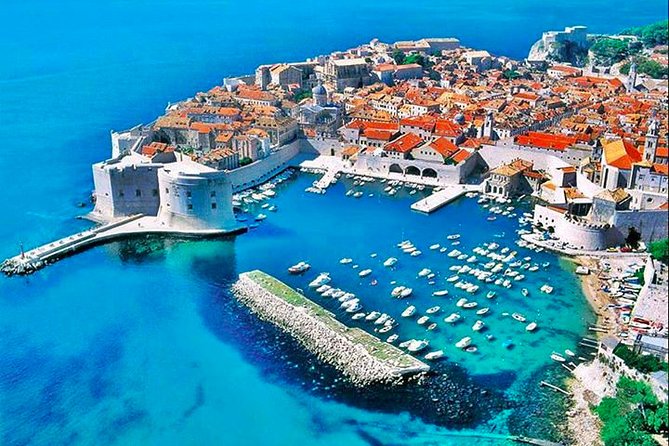
If Dubrovnik were a play, the Rector’s Palace would be one of the sets behind the curtain. This stop covers how the building functioned as a center of power, with roles that also included a prison and a treasury. That mix of functions changes how you look at the architecture. It stops being purely decorative and becomes operational—administration, punishment, and money all in one place.
The guide also ties in an unusual flavor: you’ll hear about an unexpected or “ridiculous” inception story and an “unlikely system of governing.” I’m keeping it general on purpose because the point isn’t the exact punchline—it’s the method. The guide uses these odd stories to help you remember how government and civic life worked here.
This is about 10 minutes, which is just enough time to get the key idea without overwhelming you. If you love governance history, you’ll probably want to spend more time after the tour. If you don’t, you’ll still walk away understanding why this palace mattered, even if you later forget the building’s every detail.





Dubrovnik Cathedral: Mary, Statues, Richard the Lionheart, and Local Origins
Your final landmark focus is The Cathedral of the Assumption of the Virgin Mary. This stop is built around contrasts, and I like that approach because it prevents the cathedral from feeling like a standard “pretty church” stop.
The guide frames it with the central irony: it’s dedicated to Mary, yet there are many statues none of which is Mary. That’s the kind of detail that makes you slow down and actually look, instead of just scanning for the biggest photo angle.
Then you’ll hear about priceless items still kept within its walls, described with an unlikely purpose. The cathedral also connects to stories involving Richard the Lionheart and secrets of Dubrovnik’s origins. Those themes matter because they show how this city’s identity gets layered through folklore, trade-era politics, and the way reputations spread.
One practical note: cathedrals can be cool inside compared to the street, but they also can be crowded. Keep an eye on the guide’s timing so you don’t get separated. The stop is about 10 minutes, so think of it as a guided entrance into the cathedral’s story, not a long museum-style visit.
Price and Value: Is $239.65 a Smart Move?
The price is $239.65 per group, with a maximum group size of up to 10. That’s the key to understanding value here. This isn’t priced like a per-person ticket that punishes groups. Instead, it’s capped per group, so your real cost per person drops fast if you’re traveling with friends or a small family.
If you’re one or two people, it can still be a solid choice because you’re essentially buying focus and clarity for a short time—especially if you want a route that hits the most meaningful Old Town nodes rather than bouncing randomly between sights. If you’re a bigger group (4–10), this becomes more of a bargain because you’re paying for one guide experience that everyone can share.
Also, the tour includes admission tickets marked as free at the stops listed. Even if you later decide to return to any of these sites, having a guide-led order helps you choose where you want extra time. I treat that as part of the value: you learn which stops deserve your free-roam attention afterward.
One more practical plus: the tour is offered daily, and it tends to get booked about 6 days in advance on average. If your dates are tight, don’t wait until the last minute—Dubrovnik plans can fill up quickly once cruise crowds and summer schedules overlap.
Pacing, Heat, and How to Plan Your Day Around It
This walk is built for efficiency: about 1 hour total with multiple short stops. That means you should plan it as an early anchor or a mid-day story reset—something that gives you context so you can explore on your own later.
If you go during hot weather, consider that Luza Square and Stradun are more exposed than some back lanes. You’ll likely move in short bursts, but you’ll still feel the sun during parts of the walk. I like doing it earlier, when the light is nicer and the crowds are more manageable.
What to wear: comfortable shoes. Old Town surfaces can be uneven, and you’ll be stopping, turning, and looking up at architecture. If your plan includes another long sightseeing stretch after, this tour can actually help you conserve energy because it gives you a mental map. You’ll know what you’re looking at instead of guessing.
Finally, if you’re traveling with a service animal, this activity allows service animals. And it’s described as suitable for most travelers, with the meeting point near public transportation, which makes it easier to fit into a real travel day.
Should You Book the Old Town Secrets Walking Tour?
Book it if you want Dubrovnik’s Old Town to make sense quickly. This tour is built for people who like context: fortifications that connect to modern history, a main street with stories tied to specific architecture, and a cathedral stop that uses contradictions to get you looking closely.
I’d skip it only if your idea of sightseeing is slow roaming with long breaks at every stop. The route is short on purpose, and the guide keeps it moving so you see the “why” behind the “what” without burning your whole day.
If you’re sharing the cost with a group, this gets even easier to justify. And if you’d rather ask questions than just read plaques on your own, this small-group format gives you a better conversation experience—especially with guides like Davor, who explain complex history in a way that keeps you following the thread.
Overall: this is one of those tours that pays off even after it ends, because you’ll walk through Dubrovnik afterward with clearer eyes.
FAQ
How long is the Old Town Secrets Walking Tour?
It’s about 1 hour (approx.).
Where does the tour start and where does it end?
It starts at Amerling Fountain (Ul. Svetog Đurđa, 20000, Dubrovnik) and ends on Stradun (20000, Dubrovnik).
What is the group size limit?
The tour is limited to a maximum of 10 people per booking.
Is the tour offered in English?
Yes, the tour is offered in English.
Are there admission tickets at the stops?
Admission tickets are listed as free for the stops described in the itinerary.
What is the cancellation policy?
You can cancel for a full refund if you cancel up to 24 hours in advance. If you cancel less than 24 hours before the start time, the amount paid is not refunded.