REVIEW · DUBROVNIK
Dubrovnik Food and Drink Walking Tour with a Local Guide
Book on Viator →Operated by FABULA RAGUSEA · Bookable on Viator
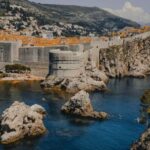
Wine and history, served on foot. Dubrovnik’s Old Town is dramatic enough on its own, but this small-group walk connects the landmarks to what people actually ate and drank here, stop by stop.
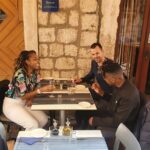
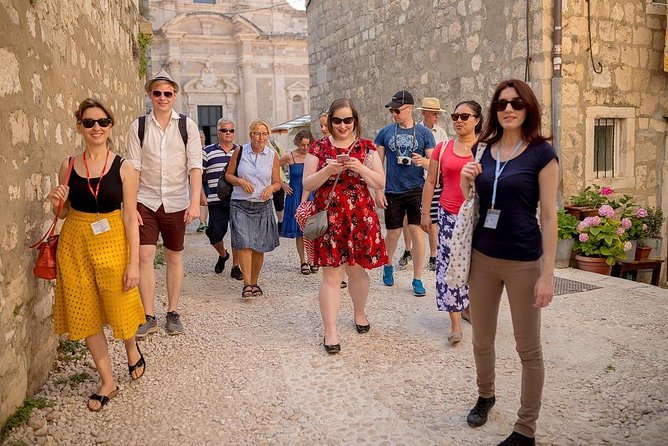
I especially like that food and drinks are built into the price, so you’re not doing the awkward math mid-meal. The other thing I love is the small group size (max 12), which makes it easier to ask questions while you’re moving through the streets.
One possible drawback: you’ll be on your feet for about 3 hours, and parts of the experience include standing close to sights while the guide explains what you’re seeing—so comfy shoes matter.
In This Review
- Key highlights to look for
- What $175.35 buys you in Dubrovnik’s Old Town
- The tastings: what you’ll likely eat and drink
- Starting at Ploča Gate area: Onofrio’s Large Fountain and why it matters
- Ruđer Bošković Square and Rector’s Palace: history you can actually feel
- Saint Blaise, Stradun, and Orlando Column: the city’s main street as a stage
- Gundulićeva Poljana Market and Sponza Palace: where trade and daily life intersect
- Porat Dubrovnik, the Cathedral, and the Orthodox Annunciation Church
- The Bell Tower and the finish: looking back while you taste the last course
- How the route feels: pace, group size, and real comfort tips
- Who should book this Dubrovnik food and drink walk
- Should you book it?
- FAQ
- FAQ
- How long is the Dubrovnik food and drink walking tour?
- What’s included with the price?
- Is the tour in English?
- Do they have vegetarian options?
- Is there a vegan option?
- What group size should I expect?
Key highlights to look for
- Food and drinks included at multiple stops, including wine and a final liqueur
- Old Town walking flow that ties monuments to everyday life
- Regional dishes like creamy barley with Adriatic shrimps and Pag cheese
- A true local guide experience with history mixed into the route
- Small group atmosphere so you can chat without shouting
- Vegetarian option available, but no vegan option
What $175.35 buys you in Dubrovnik’s Old Town
At $175.35 per person for an ~3-hour walking tour, this isn’t a bargain snack crawl. But it can feel fair once you look at what’s included: multiple tasting moments, coffee and/or tea, bottled water at several points, and alcohol spread across the experience—plus a local guide and a structured route through some of Dubrovnik’s most recognizable spaces.
Here’s the big value idea: you’re paying for context as much as calories. Instead of just eating and moving on, the guide helps you understand why certain places matter, how Dubrovnik’s maritime republic shaped daily life, and what locals tended to lean on—like preserved foods, seafood, and ingredients that travel well.
Also, there are no surprise upcharges for the tastings themselves. That matters in a city where you’ll see plenty of menus priced like you’re buying a souvenir.
You can also read our reviews of more tours and experiences in Dubrovnik.
The tastings: what you’ll likely eat and drink
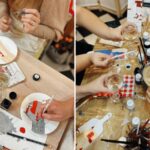
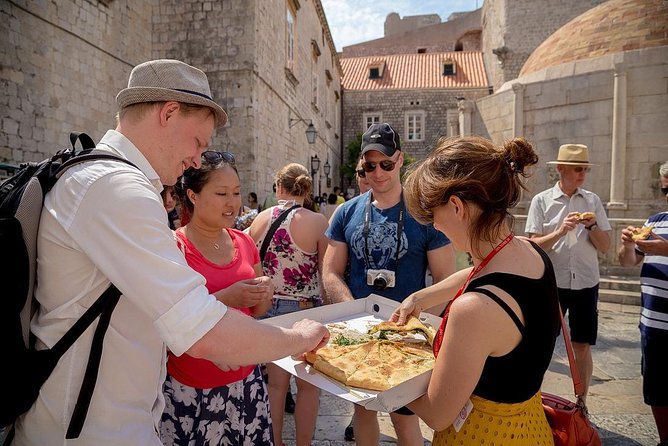
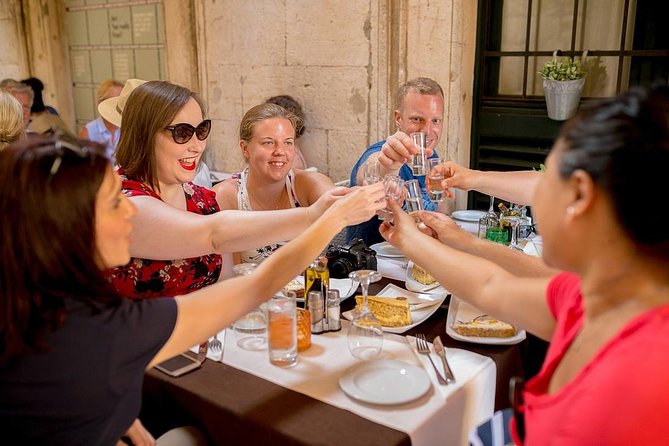
The menu rotates, but the tour includes a starter, two main courses, and dessert, each paired with drinks. You can expect wine at multiple stops, water at several points, and a final liqueur with dessert.
Food highlights described for this experience include:
- Starter: Kopun salad, served with seasonal fresh veggies and fruits
- Main: Creamy barley with Adriatic shrimps, served with cheese from the island of Pag
- Dessert: Dubrovnik carob cake with wild bitter orange jam
On top of that, the inclusions list a charcuterie board at the first tasting point, and then the two main-course tastings at subsequent points, finishing with dessert plus a glass of wine and a liqueur.
If you’re a wine person, this is also laid out in a sensible way: you’re not just handed a glass once. The pairing shows up across the walk, not only at the end. And if you’d rather go easy, coffee and/or tea and bottled water are part of the plan too.
Diet notes you should take seriously before you book:
- Vegetarian option is available (tell them when you book)
- Vegan option is not available, so don’t plan on vegan substitutions
- If you have allergies or specific dietary needs, you’ll want to mention them at booking time so the group can handle it
Starting at Ploča Gate area: Onofrio’s Large Fountain and why it matters
You meet at Poljana Paska Miličevića (20000 Dubrovnik), and the walk kicks off with a major landmark: Onofrio’s Large Fountain near Pile Gate.
This is more than a photo stop. The fountain was constructed in 1438 by Italian engineer Onofrio della Cava as part of Dubrovnik’s water supply system, pulling water from a spring more than 7 miles away. It’s also a reminder that Dubrovnik’s stone “beauty” is supported by real infrastructure—water systems, engineering, and repair work.
A fun practical moment here: the fountain still serves as a functional public water source. When you’re about to walk for hours in Old Town stone streets, a cool drink helps. And since this is also a meeting point for the tour, you get a natural start to the day’s rhythm.
You’ll also hit your first tasting early in the route, with a starter charcuterie board paired with drinks. Doing food right at the beginning helps you settle into the group pace.
Ruđer Bošković Square and Rector’s Palace: history you can actually feel
Next comes Ruđer Bošković Square, also known as Poljana R. Boškovića, a central public space in Dubrovnik’s UNESCO-protected core. It’s named for Ruđer Bošković, a towering figure tied to the city—physicist, astronomer, mathematician, philosopher, diplomat, poet, theologian, and Jesuit priest. The point isn’t that you need to remember every title. It’s that this square represents how Dubrovnik produced serious thinkers, not just sailors and merchants.
Right after that you’ll move into the orbit of Rector’s Palace, once the seat of the Rector of the Republic of Ragusa. This is the Gothic-Renaissance building that helps explain how Dubrovnik became a maritime power—and why the city’s layout feels built for governance, trade, and control.
This part of the walk works well for readers who like connections:
- the public squares feel designed for gatherings
- the palace signals how leadership operated
- and the tastings keep you anchored while the guide explains what you’re looking at
One note on pacing: you’ll probably hear some history while standing in busy pedestrian space. If you hate standing for long explanations, plan to treat this as a “walk with stories” tour, not a “sit and sip” experience.
Saint Blaise, Stradun, and Orlando Column: the city’s main street as a stage
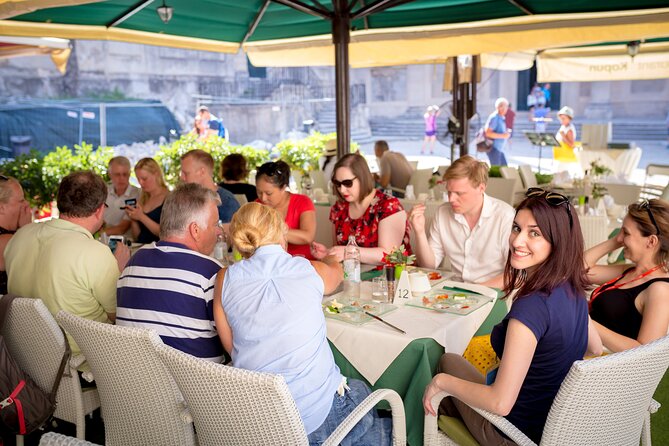
Then you reach Church of Saint Blaise, dedicated to Dubrovnik’s patron saint, Sveti Vlaho. The church is Baroque, and it’s one of the city’s most cherished religious landmarks. Even if you’re not a church person, the guide’s explanation usually makes the saint feel tied to local identity—not just architecture.
From there you’ll walk along Stradun (also called Placa), Dubrovnik’s main pedestrian street. It runs about 300 meters and connects Pile Gate to Ploče Gate. You’ll understand quickly why locals call it the lifeline: it’s the central corridor where people move, trade, celebrate, and show off the city.
Two stops help you “read” Stradun like a map:
- Orlando Column (Roland’s Column): erected in 1418, with a statue of medieval knight Orlando/Roland. It wasn’t only decoration—traditionally, it served as a public announcement site, symbol of justice, and even a unit of measurement reference for cloth sellers.
- The route also keeps showing you how monuments, commerce, and public life interlock.
At this stretch, expect a real Old Town sensation: tight walls, lots of people, and the feeling that every corner used to be part of everyday life. The trade-off is that on busy days, you’ll want to stay patient when crowds slow the group down.
Gundulićeva Poljana Market and Sponza Palace: where trade and daily life intersect
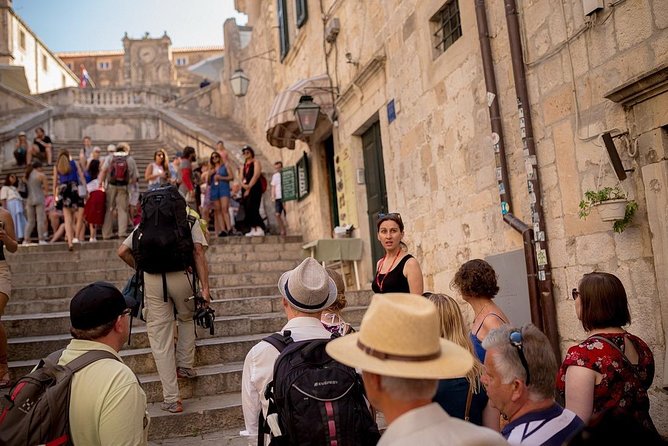
Next you’ll pass Gundulićeva Poljana Market, an open-air market in Gundulić Square named after poet Ivan Gundulić. The key detail here is timing: it turns into a bustling market in the morning. Even if you’re not visiting during peak market hours, the square helps you imagine how food, produce, and goods circulated through the Old Town.
Then comes Sponza Palace, called Divona in Croatian, located near the end of Stradun close to the city bell tower. It’s one of Dubrovnik’s most beautiful and historically significant buildings.
This stop is useful because it connects the dots:
- Old Town buildings aren’t only “pretty”
- they show how a trading republic processed business in public view
- and the guide’s stories help you understand why Dubrovnik’s center feels so official and so busy, even when it’s calm
Porat Dubrovnik, the Cathedral, and the Orthodox Annunciation Church
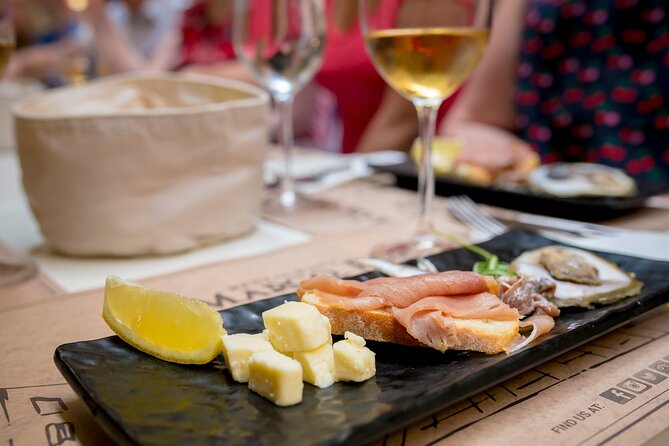
The walk continues toward Porat Dubrovnik, also called the Old Port or City Harbor area. This is Dubrovnik’s maritime story in physical form. It links this place—often called the Pearl of the Adriatic—to trade routes across the Mediterranean and beyond. If you’re thinking about seafood and wine, this is the part that explains why those ingredients matter. They weren’t just tastes. They were survival tools and economic signatures.
After that, you’ll reach The Cathedral of the Assumption of the Virgin Mary, a Baroque structure and one of the city’s iconic landmarks. It’s a big visual statement, but the guide’s job is to tie it back to how the city’s wealth and identity shaped major religious architecture.
Then there’s a contrast that I think many visitors appreciate: the Orthodox Church of the Annunciation (Serbian Orthodox Church). It’s noted for a blend of Byzantine and Southern Adriatic influences. This helps you see Dubrovnik as a crossroads, not a single closed cultural box.
The Bell Tower and the finish: looking back while you taste the last course
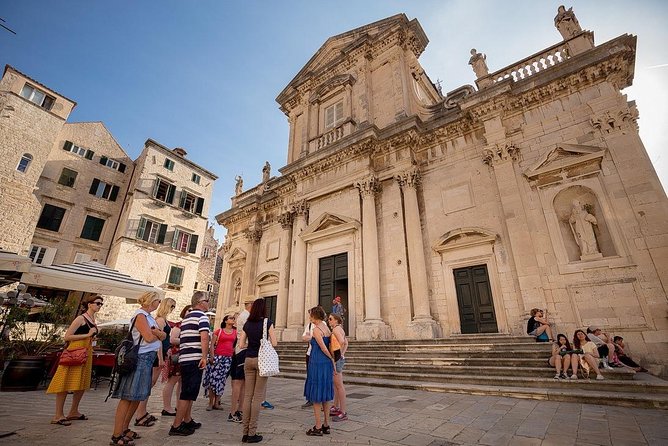
Finally, the route heads toward the Bell Tower, a landmark at the eastern end of Stradun. It’s 31 meters high and was originally built in 1444. The structure was reconstructed in 1928 after the original began to lean dangerously.
This ending area is a good moment to slow down mentally. You’ve seen water engineering, governance buildings, trade-focused architecture, and multiple religious styles. Now the bell tower gives you a “time and authority” vibe—the city’s signal tower, literally.
And food-wise, this is where the tour typically closes with dessert: Dubrovnik carob cake with wild bitter orange jam, plus the included final pairing. The inclusions also list a liqueur with dessert, which is a classic way to end a walk-heavy evening.
How the route feels: pace, group size, and real comfort tips
This works best as an early-to-mid afternoon activity when you still have energy to walk, but you’re ready to let someone else manage the spacing and timing.
Because the group limit is 12, you’ll usually get:
- easier conversation without shouting
- better chances to ask questions mid-route
- less stop-and-start chaos than bigger tours
Still, it’s an Old Town: expect narrow streets, crowding at major sights, and some standing while the guide gives context. If you’re sensitive to that, wear shoes you trust and bring a light layer even if the forecast looks sunny—stone streets can feel cooler in the shade.
Also, since alcohol is included across multiple tasting points, I suggest you treat this like a relaxed tasting tour, not a race to pack in more activities right afterward. You’ll likely want dinner later, not immediately.
Who should book this Dubrovnik food and drink walk
This tour is a strong fit if you want:
- a history-meets-food experience rather than just a list of restaurants
- a structured way to learn the Old Town layout fast (Stradun, key squares, major landmarks)
- wine pairings and multiple tastings without the planning stress
- a small-group vibe where you can talk with your guide and other people
It may not be your best choice if you prefer:
- only tiny samples and lots of variety in super small bites
- mostly sitting down
- a vegan menu (not available here)
Should you book it?
Yes, I’d book it—especially if you’re visiting Dubrovnik for the first time and want your bearings fast. The best part is that it connects the city’s big names—Onofrio’s Fountain, Stradun, Sponza, the Cathedral—with what you’re actually eating and drinking. That makes your photos and your memories feel linked, not random.
I’d skip it only if you know you hate standing while someone narrates a bunch of context, or if you need vegan-only options. If you’re vegetarian and you mention it at booking, you’ll be in much better shape.
FAQ
FAQ
How long is the Dubrovnik food and drink walking tour?
It runs about 3 hours.
What’s included with the price?
You get a local guide, a small-group walking tour, snacks across multiple stops (including a starter, two main courses, and dessert), coffee and/or tea, bottled water at several stops, and alcoholic beverages including wine and a local liqueur. The tastings are included in the tour price.
Is the tour in English?
Yes, it’s offered in English.
Do they have vegetarian options?
Yes. A vegetarian option is available, and you should advise the team at the time of booking.
Is there a vegan option?
No. A vegan option is not available, so it isn’t recommended for vegans.
What group size should I expect?
The tour has a maximum of 12 travelers, and at least 2 people are required per booking.