REVIEW · DUBROVNIK
Dubrovnik Old Town Private Walking Tour
Book on Viator →Operated by Experience Dubrovnik · Bookable on Viator
Dubrovnik’s Old Town feels like a maze. This private walking tour turns that maze into an easy route, with a licensed English guide who helps you spot the big landmarks fast. You’ll cover the highlights that sit inside the City Walls, plus the calmer side streets that make the whole place feel real.
What I like most is the focus on “see it, understand it” pacing—so you get context without feeling rushed. Another win is how often guides weave in memorable details, from filming stories to the early-1990s war era, while still keeping you moving. One thing to consider: admission is not the same at every stop, and Rector’s Palace is listed as not included, so you may need a little extra budget there.
In This Review
- Key highlights to look for
- Why this 90-minute private walk works in Dubrovnik
- Pile Gate and the city map: your orientation shortcut
- Stradun: the main street you’ll use as your reference line
- Franciscan Church and Monastery: faith, community, and a pharmacy stop
- Luza Square, St Blaise, and Sponza Palace in wartime context
- Rector’s Palace: the “most beautiful building” moment—and what not to expect
- Cathedral of the Assumption: art, treasury, and a larger-scale church visit
- Prijeko Street: quieter lanes and local life
- How the best guides change the whole experience
- Timing choices, shade, and how to plan your photos
- Cost and value: what you’re paying for (and what you still may add)
- Who should book this, and who might want longer time
- Should you book the Dubrovnik Old Town private walking tour?
- FAQ
- What is the duration of the Dubrovnik Old Town Private Walking Tour?
- Where does the tour start and end?
- Is this tour private?
- Is the tour offered in English?
- What’s the price per person?
- What admission fees are included or not included?
- Does the tour include private transportation?
- What are the meeting-point practical details?
- Do I need a ticket on my phone?
- What happens if the weather is bad?
Key highlights to look for
- Private, licensed guide who helps you navigate narrow lanes and make quick sense of the walled layout
- Photo support throughout the walk, so you’re not stuck fumbling with your phone at the worst spots
- City Walls highlights and major stops in a tight 1.5-hour route
- Luza Square and Sponza Palace wartime stories that add weight to the architecture
- Cathedral of the Assumption visit (with admission included) plus treasury and paintings
- Prijeko Street detour for calmer streets with local life
Why this 90-minute private walk works in Dubrovnik
Dubrovnik’s Old Town is beautiful, but it’s also tightly packed and easy to feel lost. The smartest part of this tour is that it’s built like a guided circuit: you start at Pile Gate, get a quick orientation, then hit the core sights while you still have fresh energy.
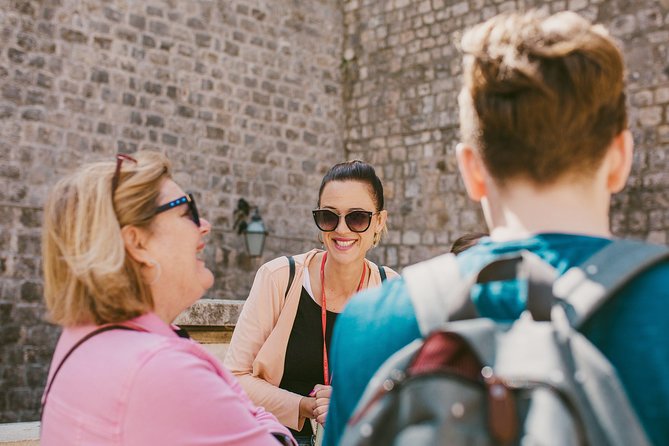
Because it’s private, you’re not trapped in a group shuffle. You can ask questions, stop for photos, and adjust the tempo if your legs are not thrilled about 1.5 hours of old-stone steps and steep little gradients. In the reviews, guides like Michaela, Daniela, Tony, Petra, and Roko get praised for staying friendly and keeping things moving without feeling like a lecture.
One more practical benefit: the tour is offered at different times, so you can aim for the moment that fits your day. If you’re arriving in the morning, this tour helps you “learn the map” before the crowds peak.
You can also read our reviews of more tours and experiences in Dubrovnik.



Pile Gate and the city map: your orientation shortcut
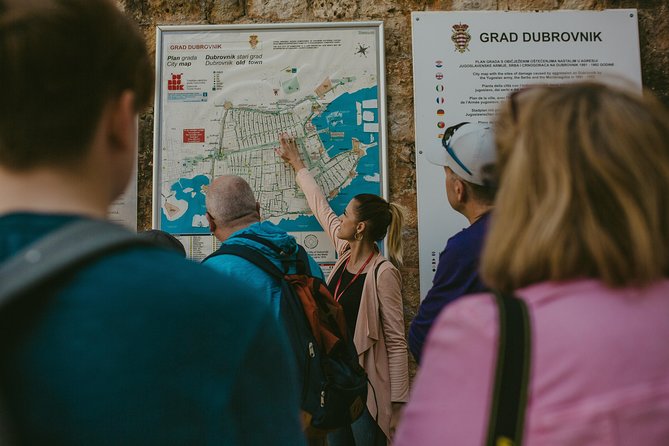
You begin at Brsalje ul. 2 and enter the old town from Pile Gate. The guide stops at the city map right near the entrance, which matters more than it sounds. Dubrovnik’s layout can be confusing at first—walls, gates, and tight streets all funnel you in different directions. That map moment helps you understand the structure early, so the rest of the walk feels logical instead of random.
Pile Gate also sets the tone: you’re stepping into the walled world right away, not walking past a “tourist strip” first. It’s a clean start point, and it makes it easier to pick your own next moves once the tour ends.
Stradun: the main street you’ll use as your reference line
Next comes Stradun, Dubrovnik’s main promenade-style street. Your guide gives a short overview of the history of old Ragusa, which is useful because it changes how you read what you’re seeing. Without that context, the stone streets can feel like a backdrop. With it, you start noticing the layers—trade, civic power, and the city’s role across centuries.
This stop is also where your guide can help you get your bearings for later. Stradun is one of the easiest streets to return to, so once you know where it sits, you’ll navigate faster for the rest of your visit. The tour timing here is short—about 15 minutes—so you’re not stuck standing in the busiest stretch for too long.
Franciscan Church and Monastery: faith, community, and a pharmacy stop
The tour then moves to the Franciscan Church and Monastery area. One detail worth paying attention to: there’s mention of one of the oldest pharmacies in Europe located on the main street of the old town. Even if you don’t go deep into it, knowing it’s there gives you something specific to connect to as you walk—this isn’t only churches and palaces; it’s also everyday civic life and care.
In practice, this kind of stop is where a good guide shines: they explain how the Franciscans came to Dubrovnik and what role they played during medieval times. It’s the sort of information that makes a building feel less like a photo and more like a story you can carry with you.
Luza Square, St Blaise, and Sponza Palace in wartime context

Luza Square is the heart of the old town scene. From here, you’ll see major power-symbol buildings and churches that anchored the city’s identity. The tour includes a visit to the church of Dubrovnik’s patron, St. Blaise, and it also brings in Sponza Palace—with a story tied to the 1991 war.
This stop is valuable because it bridges eras. Medieval Dubrovnik isn’t just a museum theme. You learn how modern events shaped the city’s survival and independence, and that gives weight to the architecture. If you’ve been watching Dubrovnik through film versions, this is where the real world shows up.
Admission at this stop is listed as included, which is helpful in a tour with several different entry rules across sites. It also keeps your schedule from getting snagged by deciding on tickets mid-walk.


Rector’s Palace: the “most beautiful building” moment—and what not to expect
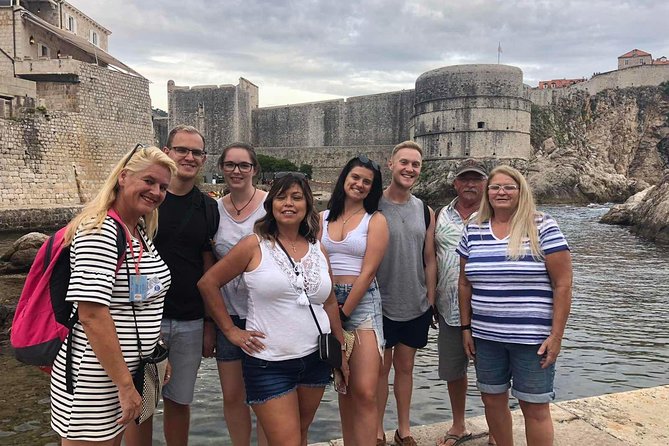
The next highlight is Rector’s Palace, described as the most beautiful building in the old town. The tour focuses on the building and the medieval politics connected to it, but admission is listed as not included.
That means two things for your planning:
- You’ll get the storytelling and the visual pointers, but you may still need your own ticket if you want to go inside.
- The timing here is tight, so don’t expect a long stop at every corner.
Even if you end up passing on an internal visit, the exterior-and-explanation approach can still pay off. It helps you understand what civic authority looked like in stone—why certain details mattered, who would have visited, and how power was displayed.
Cathedral of the Assumption: art, treasury, and a larger-scale church visit
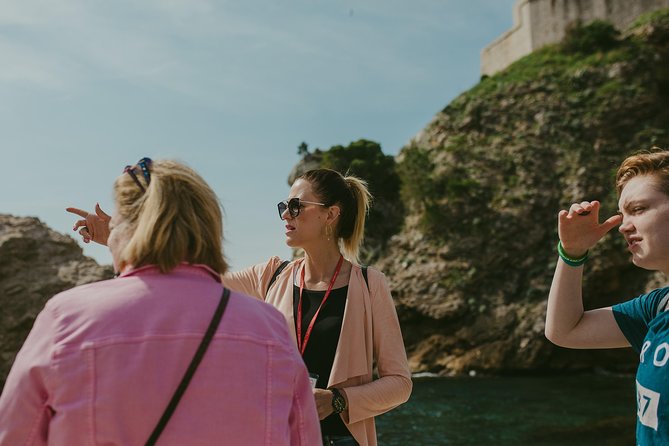
Now you hit The Cathedral of the Assumption of the Virgin Mary, described as the biggest church in Dubrovnik. This stop is longer—about 15 minutes—and admission is listed as included.
Inside, you’ll be connected to the cathedral’s collections: paintings and a treasury. That combination is a good match for a short tour. It gives you one “big interior” experience without turning the day into a museum marathon.
This is also a nice contrast to the narrower lanes. The old town can be tight and busy, but a cathedral visit naturally feels like a step into a different tempo.
Prijeko Street: quieter lanes and local life

The final neighborhood stop is Prijeko Street, which is where Dubrovnik starts to feel less like a set and more like a living town. Your guide keeps the focus on the side streets—often less crowded and filled with local people.
This part of the tour runs about 20 minutes, which is generous for a “wrap-up” stop. It gives you time to slow down, look around, and let the city’s everyday feel sink in. If you’re trying to choose where to wander after the tour, this is where you’ll discover lanes that don’t look like they’re on every same-photo checklist.
How the best guides change the whole experience
Private tours succeed or fail based on the guide, and this one has a track record of strong performance. Names that keep appearing across guide examples include Michaela, Matea, Mateo (spelling varies in notes), Daniela, Tony, Drazen, Petra, Lim, Ivana, and Roko—and the common thread is how they balance history with real conversation.
Here’s what that usually looks like in a walk like this:
- They keep the pace steady so you don’t end up stretched across the old town like a scavenger hunt.
- They answer questions patiently, including the “extra” ones—film locations, daily life inside the walls, and how modern events reshaped the city.
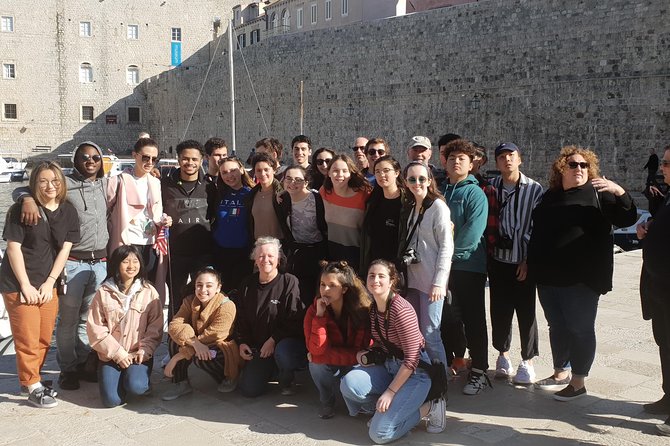
- They can tailor the tour for different groups. In the notes you’ll see examples of guides working well with teenagers and also accommodating elderly in-laws, which is exactly what you want for a private 90-minute format.
- They help with practical decisions. One guide example included pointing guests toward Buza Bar after the tour, which is the kind of advice that saves time later.
Also, expect some photo-friendly guidance. Your guide can help you take photos during the walk, which sounds basic until you’re standing in a narrow alley where a wrong angle turns your “once in Dubrovnik” photo into a crowded blur.
Timing choices, shade, and how to plan your photos
The tour offers several start times, and you should use that flexibility. Dubrovnik can get hot, especially in the middle of the day, and the old town is not built for long waits in sun. The guides are praised for keeping guests comfortable—finding shade when possible and adjusting the flow so you’re not suffering for the perfect shot.
My practical suggestion: treat this as your orientation block. After the tour, you’ll want energy to return to a few favorites. If you do this too late in the day, you might lose the ability to follow up.
Cost and value: what you’re paying for (and what you still may add)
The price is listed at $108.61 per person for about 1 hour 30 minutes, and it’s a private experience with a licensed professional guide. Taxes and all fees are included.
That pricing makes sense if you value:
- Personal pacing and question time
- A route that prevents wasted hours getting lost
- On-the-spot interpretation at multiple key monuments
Now for the “don’t get surprised” part: admission rules vary by stop.
- Free admission at Pile Gate, Stradun, and the Franciscan Church/Monastery stop (as listed)
- Included admission at Luza Square (church of St. Blaise and Sponza Palace mentioned there) and at the Cathedral
- Not included admission at Rector’s Palace
So your true out-of-pocket cost beyond the tour price may depend on whether you want to go inside Rector’s Palace during the tour window. If you’re okay focusing on exterior views and the guide’s explanations, the “not included” part may barely matter.
Who should book this, and who might want longer time
This tour is a strong fit if you want:
- A fast way to learn Dubrovnik’s layout inside the walls
- A guided overview of the main highlights without spending half a day on transport or planning
- A guide who can make the city feel connected—history plus modern context—without bogging you down
It’s also great if you’re traveling as a small group or with family, because private routing helps keep everyone involved. In the notes, guides were able to keep teenagers interested while also guiding older visitors.
If you know you want to linger for long museum-style visits, or you’re planning to do both the interior sites and a deep wall walk, you might pair this with another longer-focused activity. This one is about clarity and first impressions, not marathon time inside every building.
Should you book the Dubrovnik Old Town private walking tour?
Yes—book it if you want the fastest route to understanding Dubrovnik. The structure is efficient: start at Pile Gate, walk Stradun, hit the major landmarks (Luza, Rector’s Palace, the Cathedral), then finish with Prijeko Street for a calmer feel. That’s a smart arc for a short stay.
Skip it or adjust expectations if you’re the type who wants to spend long stretches inside every monument. Rector’s Palace admission isn’t included, and even with a guide’s help, 90 minutes is still 90 minutes. In that case, treat this as your orientation and then plan additional independent time where you feel the strongest pull.
FAQ
What is the duration of the Dubrovnik Old Town Private Walking Tour?
It runs for about 1 hour 30 minutes.
Where does the tour start and end?
It starts at Brsalje ul. 2, 20000, Dubrovnik, Croatia. It ends back at the meeting point.
Is this tour private?
Yes. Only your group participates.
Is the tour offered in English?
Yes, it’s offered in English.
What’s the price per person?
The listed price is $108.61 per person.
What admission fees are included or not included?
Admission is listed as free for Pile Gate, Stradun, and the Franciscan Church and Monastery. Luza Square is listed as included, and the Cathedral is listed as included. Rector’s Palace is listed as not included.
Does the tour include private transportation?
No. Private transportation is not included.
What are the meeting-point practical details?
The meeting point is near public transportation, and service animals are allowed.
Do I need a ticket on my phone?
You get a mobile ticket.
What happens if the weather is bad?
The experience requires good weather. If it’s canceled due to poor weather, you’ll be offered a different date or a full refund.