REVIEW · DUBROVNIK
Dubrovnik: Private Guided Walking Tour
Book on GetYourGuide →Operated by Peggy · Bookable on GetYourGuide
Dubrovnik’s old streets hit harder when you know why. This private walking tour packs the big story of the city into about 75 minutes, starting at Pile Gate and moving through the Old Town’s key religious sites. I particularly like how the walk ties landmarks to events, like the city walls’ role in protection and the way the 1991–1995 war is explained with a map. I also like the pace of a small, private group format that leaves room for questions. The main drawback to plan for: entrance tickets aren’t included, so if you want to go inside any stops, you may pay extra.
If you want a guided orientation fast, this works. You’ll see the Old Town, get pointed toward what matters most, and hear how Dubrovnik was founded, rebuilt after the 1667 earthquake, and marked by later destruction. Just know the tour guide languages are Croatian and German, so if you need another language, double-check before you book.
In This Review
- Key highlights you’ll care about
- Starting at Pile Gate: the orientation that saves you time
- The 2-kilometer walls: what you can actually take in on a short walk
- 1991–1995 on a city map: history you can picture, not just recite
- The 1667 earthquake and Baroque Dubrovnik you can spot today
- Franciscan Monastery and the oldest pharmacy: a culture stop with real flavor
- How Saint Ignace fits Dubrovnik’s mix of faith and rebuilding
- Ending at the Cathedral: the Old Town’s central anchor
- Private group value: $197 for up to 4, and why the format matters
- Practical planning tips for your Dubrovnik walk
- Should you book this Private Guided Walking Tour?
- FAQ
- How long is the Dubrovnik private guided walking tour?
- Where do I meet the guide?
- How much does the tour cost?
- What languages are available for the live guide?
- Are entrance tickets included?
- Is hotel or port pickup available?
Key highlights you’ll care about
- Start at Pile Gate so you immediately understand where the Old Town begins
- Old Town walls in plain view (the walls are about 2 kilometers long) and still in use today
- 1991–1995 story on a city map so you can picture what residents endured
- 1667 earthquake → Baroque rebuild explained in a way you can spot on the streets
- Franciscan Monastery + one of Europe’s oldest pharmacies for a hands-on culture stop
- Finish at Dubrovnik Cathedral in the center of the Old Town
Starting at Pile Gate: the orientation that saves you time
Most Dubrovnik visits start with the walls and photos. This one starts where it makes sense: at Pile Gate, right in front of the Old Town. That matters, because the Old Town can feel like a maze until someone gives you a mental map. Within the first minutes, you’re not just walking forward—you’re learning where things sit and why this walled city was designed the way it was.
Your guide will help you connect the city’s layout to its story. You’ll learn when and how Dubrovnik was founded, then you move into the Old Town with that background in your head. It’s a small thing, but it changes how you read every alley: you start noticing sightlines, entries, and the logic behind the fortifications.
Another thing I like here is the structure. A 75-minute tour doesn’t try to cover everything. Instead, it points you to the key moments you’d otherwise miss if you were only sightseeing on your own.
You can also read our reviews of more walking tours in Dubrovnik
The 2-kilometer walls: what you can actually take in on a short walk
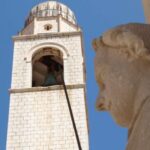
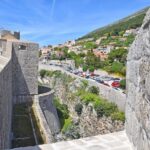
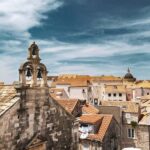
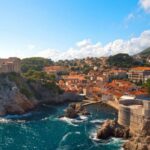
Dubrovnik’s walls are famous, and for good reason. They’re about 2 kilometers long, and they still protect the city today. On this tour, you’ll enter the Old Town and get to admire the walls as part of the overall route. You’re not stuck reading a plaque; you’re looking at the real thing while the guide puts context around it.
Here’s what you’ll get from a wall-focused explanation: walls aren’t just a backdrop. They shaped how people lived, how the city functioned, and how it responded to danger. In a city where so much has been damaged and rebuilt over time, the walls also act like a clue. They help you understand why Dubrovnik fought to remain itself.
Because you’re only in the Old Town for around an hour-plus, you should treat this as an introduction, not a full wall circuit. If you’re planning to do a longer wall walk later, this guided pass is still useful. It helps you know what sections you’ll want to return to and photograph properly.
1991–1995 on a city map: history you can picture, not just recite
One of the most important parts of the tour is how it handles the war years: 1991 to 1995. Instead of making this a vague story, your guide uses a city map to show where damage happened and what it meant for residents.
That’s the value. Dubrovnik can be easy to romanticize—stone, sea views, postcard angles. But a city’s survival is tied to real destruction and repair, and this map-based approach keeps it grounded. You’ll see how much destruction and damage was created by the last war, and you’ll get the sense that the buildings you’re standing near are not just old—they’re marked.
I also appreciate that your guide doesn’t treat this as a side note. The tour’s route and stop choices support the story. You’re not just hearing dates; you’re walking through the setting where those events matter.
If you’re the type who prefers light, carefree sightseeing, this section may feel heavy. But if you want to understand Dubrovnik beyond the surface, it’s one of the best reasons to book a guided tour.
The 1667 earthquake and Baroque Dubrovnik you can spot today
After war comes rebuilding, and this tour puts rebuilding on your radar twice: first with the 1667 earthquake, then with how the city rose again in Baroque style.
You’ll hear the story of the earthquake’s impact and the decision to rebuild. That’s not just trivia. It gives you a framework for what you’re seeing now. Baroque architecture often signals itself through certain details and dramatic design choices, and when someone explains the why, you’re more likely to notice the how while walking.
This part of the tour is great for people who want their photos to have meaning. You’ll start looking at façades, churches, and the “feel” of the street plan differently. Instead of thinking, That’s pretty, you’ll think, That’s how the city chose to return.
Even if you don’t become an architecture buff, the earthquake story still works. It’s a reminder that Dubrovnik’s beauty isn’t accidental—it’s maintained through repair and resilience.
Franciscan Monastery and the oldest pharmacy: a culture stop with real flavor
Religious sites can sometimes feel like museum copies—nice, but distant. Not this one. The tour includes the Franciscan Monastery, where you can see one of the oldest pharmacies in Europe. It’s a fascinating shift from “big history” into daily-life history: medicine, care, and knowledge.
Why it works on a walking tour: it’s compact and memorable. You’re not jumping between far-flung areas. You’re moving through the Old Town and then hitting a stop that feels specific and human. A pharmacy also changes the mood. It makes you think about what people relied on before modern healthcare—and how a city’s institutions supported community life.
You’ll also visit the church dedicated to Saint Ignace of Loyola, the founder of the Society of Jesus. That detail matters because it ties the religious landscape to broader European religious history. Even if you don’t know the full background, the guide helps you connect the dedication to what you’re seeing.
One practical thing: because entrance tickets aren’t included, you may want to decide ahead of time whether you’re okay paying extra for interiors. If you’re mainly here for the story and the exterior architecture, you’ll still get a lot out of the walk.
You can also read our reviews of more guided tours in Dubrovnik


How Saint Ignace fits Dubrovnik’s mix of faith and rebuilding
Dubrovnik’s Old Town is stacked with layers: foundation stories, fortifications, disasters, and the rebuilding afterward. The church dedicated to Saint Ignace of Loyola adds another layer to that mix—faith alongside the city’s long pattern of response to change.
I like this stop because it helps you see the tour isn’t only about fortresses and catastrophes. It’s also about institutions that shaped people’s lives. When the guide connects the church dedication to the Society of Jesus, it puts that building into a wider context without turning the walk into a lecture.
If you’re someone who enjoys spiritual art and architecture but wants a guide to keep it from becoming dry, this is the kind of stop that can do that job. The surrounding area also tends to feel quieter than the main photo spots, which makes it easier to actually take in what you’re seeing.
Ending at the Cathedral: the Old Town’s central anchor
The tour finishes at Dubrovnik Cathedral, described as the most important church in the city, located right in the center of the Old Town. This is a smart way to end, because by the time you reach the cathedral you’ve heard enough context to understand why this spot is the “center” of attention.
Even if you’re not a dedicated church-goer, cathedral stops usually deliver one key benefit: they help you reset your bearings. You’ve been moving along walls, through story-heavy sections, and into specific religious landmarks. When you arrive at the cathedral, the city feels organized again.
It’s also a good finish point for your next steps. After 75 minutes, you’re not exhausted. You’ve learned what matters, and you still have time to explore independently or grab a bite nearby—especially because a guide may share tips along the way. One guide who has led this tour, Gaby, has previously recommended a restaurant, and that kind of practical suggestion can make your afternoon easier.
Private group value: $197 for up to 4, and why the format matters
This tour costs $197 per group for up to 4 people, and it lasts 75 minutes. On paper, that’s a short window. In practice, it can be a smart buy if you’re traveling with a small group or a family and want a guide who can adapt.
Here’s why I think this private format is good value: Dubrovnik’s Old Town is walkable, but it’s also crowded at times, and it’s easy to spend an hour just finding your way. A private guide gets you through the key narrative points efficiently. If you split the group cost across up to four people, the per-person cost becomes much easier to justify than a strict per-person tour.
Also, private doesn’t just mean comfort. It means you can ask questions. Multiple guides connected to this tour—like Helena, Jelena, Gaby, and Peggy—have been described as friendly and well prepared, with time to answer what you want to know. When you’re dealing with heavy topics like war damage and earthquake rebuilding, having a guide who can answer follow-ups can make the difference between hearing a story and understanding it.
One more practical note: the tour is offered with live guides in Croatian and German. If you speak either of those, great. If you don’t, it might be worth considering another option so you don’t lose the nuance.
Practical planning tips for your Dubrovnik walk
A few details will help you get the most out of this kind of Old Town tour.
Bring comfortable shoes. You’ll be walking in the Old Town, with stone streets that can feel uneven. If your plan includes cathedral time and monastery stops, you’ll want footwear that can handle a steady walking pace.
Decide how you feel about extra costs for interiors. Entrance tickets aren’t included. That doesn’t mean you’ll be blocked from seeing everything, but it does mean you may face additional fees if you want to step inside certain spaces.
Use the 75 minutes wisely. This isn’t a marathon. It’s a focused orientation with key stops. If you want deeper time in museums or you’re determined to do a long wall walk afterward, treat this as the “learn the story” phase, then go back for what you want most.
Ask about pickup if it’s helpful. Pickup from your hotel or port is available on request. If you’re short on mobility between your arrival point and Pile Gate, that small service can reduce stress.
Go with your questions ready. The tour’s format works best when you ask what you actually care about: how the city was founded, what the walls meant, how rebuilding changed the look, or what Baroque style means in real buildings. A guide can tailor answers when you’re not just drifting along.
Should you book this Private Guided Walking Tour?
I’d book it if you want a fast, story-driven Dubrovnik orientation that includes the hard parts, not just the postcard views. The itinerary hits key landmarks—Pile Gate, the walls, the Franciscan Monastery and pharmacy area, Saint Ignace of Loyola, and the cathedral—without stretching you thin. And the private up-to-4 setup tends to make the experience feel personal, with real time for questions.
I’d think twice if you need English narration, because the listed guide languages are Croatian and German. Also, if you strongly prefer a fully unguided day with only exterior sightseeing and no extra admissions, the entrance-ticket gap may feel annoying.
If you want to walk through Dubrovnik with your eyes open—understanding why the city looks the way it does and how it survived—this is a solid choice.
FAQ
How long is the Dubrovnik private guided walking tour?
The tour lasts 75 minutes.
Where do I meet the guide?
Meet at Pile Gate, directly in front of the Old Town of Dubrovnik.
How much does the tour cost?
It’s $197 per group, with the group size up to 4 people.
What languages are available for the live guide?
The live guide is available in Croatian and German.
Are entrance tickets included?
No. Entrance tickets are not included.
Is hotel or port pickup available?
Yes, pickup from your hotel or the port is available on request.