REVIEW · DUBROVNIK
Dubrovnik private walking tour & Srđ mountain panorama
Book on Viator →Operated by Ragusa Boat Charter & Tours · Bookable on Viator
Dubrovnik looks different from every angle. This private Srđ-to-Old-Town route strings together big views, classic streets, and specific sights with an art-minded guide like Martina. I especially love the way the tour starts with the mountain panorama, then drops you right into the Old Town streets for an easy flow. I also like that it stays private for up to 6 people, so questions don’t get lost. One thing to consider: a few key sights may require your Dubrovnik Pass (EUR 35 each person for attraction numbers 6, 13, and 20), and the walking includes some steps up from street level.
In a couple of hours, you get a guided route through the main highlights without feeling like you’re sprinting. You also get a licensed English-speaking guide and air-conditioned driving between the viewpoints, which matters when the heat shows up. If the weather turns, the experience can be rescheduled or refunded, so plan for flexibility.
In This Review
- Key points at a glance
- Why this Srđ-to-Old-Town plan works so well
- Mount Srđ: the best first photo you’ll take in Dubrovnik
- Gradac Park and Pile Bay: quick viewpoints that set your bearings
- Entering Old Town through the main city gate
- Onofrio’s Large Fountain: the story behind one of the iconic stops
- Franciscan Church and Monastery: a working pharmacy angle
- Stradun and Široka ulica: the main street, and the one wide side street
- Jesuit Stairs and St. Ignatius: stairs, photos, and why the Jesuits mattered
- Dubrovnik Cathedral and the Republic-era power buildings
- St. Blaise, Judioska Street, and the monastic pause
- Revelin Fortress terrace: wrap up with Old Port and Lokrum
- Price and ticket value: what $295.73 per group really means
- Who should book this tour (and who might want a different option)
- Should you book Dubrovnik private walking tour & Srđ mountain panorama?
- FAQ
- How much does the tour cost?
- How long is the Dubrovnik private walking tour & Srđ mountain panorama?
- Is pickup offered from my hotel?
- Where is the meeting point and where does the tour end?
- Is this tour private?
- What language is the guide?
- What admissions are not included?
Key points at a glance
- Srđ mountain panorama first, so you get the big picture before Old Town gets busy
- Private group up to 6, which makes the storytelling and photo stops feel personal
- Onofrio Fountain + Franciscan monastery pharmacy story, with practical context as you walk
- Landmarks tied to Dubrovnik Republic and Jesuit influence, including St. Ignatius and Rector’s Palace
- Views from Revelin Fortress terrace, with Old Port and Lokrum in the frame
- Dubrovnik Pass may be needed for specific attraction numbers (budget EUR 35 per person each)
Why this Srđ-to-Old-Town plan works so well
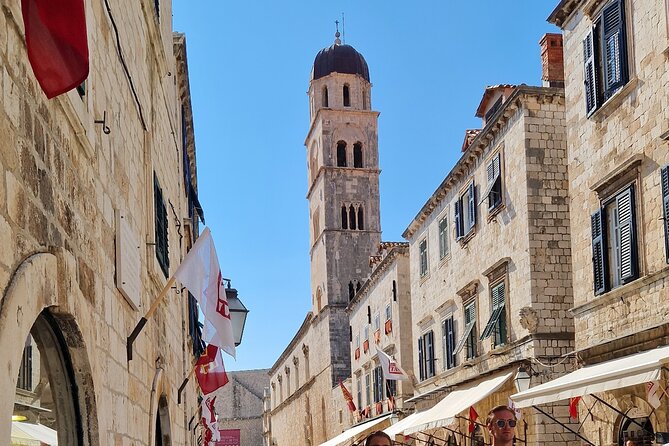
This tour is built around a smart order. You start up on Mount Srđ, where the city suddenly makes sense as a whole. Then you descend into Old Town and walk the human-scale streets, where details like fountains, churches, and palace façades become readable.
For me, the biggest value is how the guide connects the stops. You’re not just ticking off famous spots. You’re hearing why they matter, and that makes the walk feel less like a checklist and more like a guided story of the place.
The private size also helps. With a group capped at 6, you can pause for photos, ask follow-ups, and move at a pace that fits your knees.
You can also read our reviews of more tours and experiences in Dubrovnik.
Mount Srđ: the best first photo you’ll take in Dubrovnik
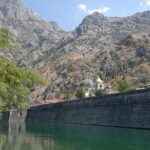
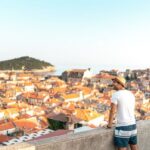
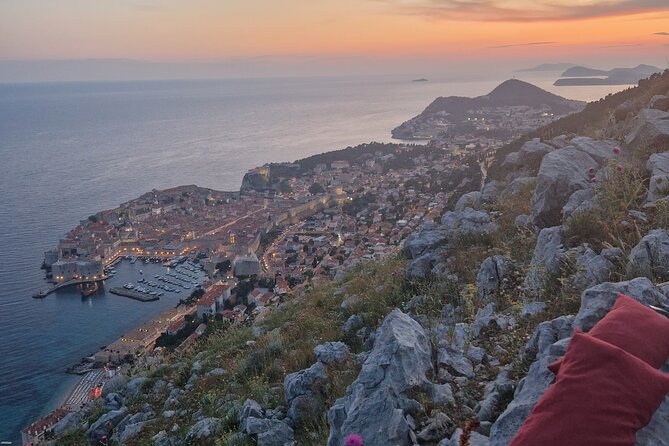
The experience begins with a driver guide picking you up from your preferred spot in Dubrovnik. Then you head by car up to Srđ mountain for the big view over Dubrovnik.
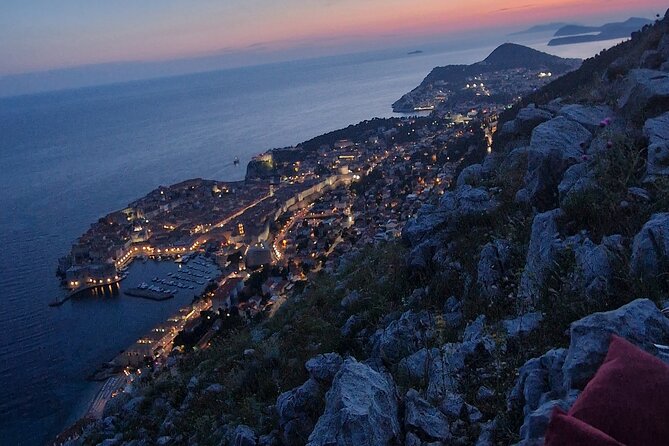
This first stop sets the tone. Even if you’ve seen photos already, seeing the Old Town’s position, the harbor edges, and the surrounding shape from high above makes everything that follows click faster. You don’t have to work to imagine the map in your head—the view hands you the context.
Timing is generous for a short tour (about an hour at the viewpoint). The mountain stop also includes admission ticket free, which helps you keep the day simple.
Practical note: bring something light for breezes up high. Even if the lower streets feel warm, the elevation can change the comfort level quickly.
Gradac Park and Pile Bay: quick viewpoints that set your bearings
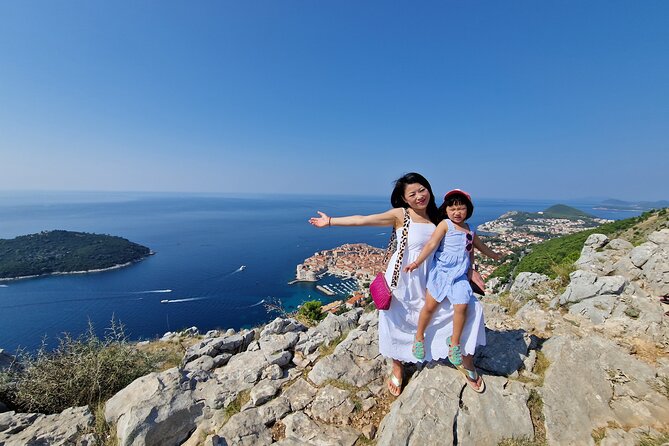
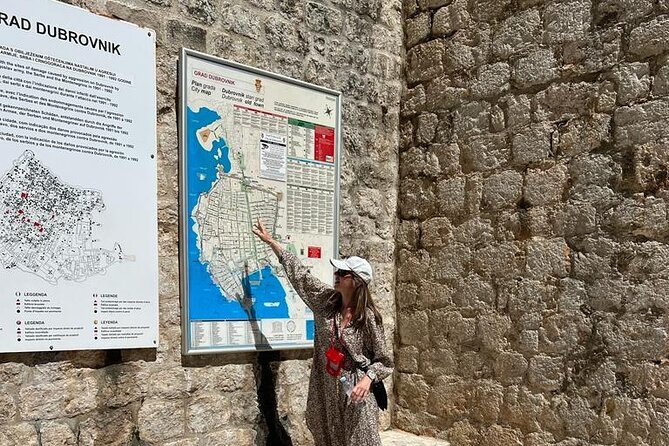
After Srđ, you hop out for Gradac Park, where you get another Dubrovnik viewpoint and listen to the city’s history. This is the kind of stop that feels short, but it helps you build a mental route: where the Old Town sits, where the harbor is, and how the city’s layers connect.
Then you move down toward Pile and the bay. You stroll through the streets down to Pile bay for a brief moment of atmosphere before entering the Old Town.
If you’ve ever arrived in Old Town and felt instantly disoriented, this part helps. You’re not walking in blind. You’re stepping into a place you understand a little better right from the start.
Entering Old Town through the main city gate
Once you’ve got the view and a bit of street orientation, you enter Old Town through the main city gate. This shift—from open panorama to tight historic streets—feels immediate.
You also get the “right” kind of guidance here: instead of drifting toward random photo angles, you’re guided from major landmark to major landmark along the busiest, most recognizable axes.
This is where the tour’s structure matters most. The time at each stop is short, but the path stays coherent, so you feel like you’re moving through a curated route rather than bouncing between targets.
Onofrio’s Large Fountain: the story behind one of the iconic stops
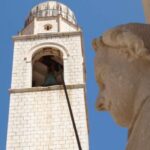
Next up is Onofrio’s Large Fountain. You get a couple of minutes right in front of the fountain to learn its story and how Dubrovnik Old Town was constructed.
This is a great pause for two reasons. First, a fountain is one of those features you notice in photos, but you might not understand without context. Second, it gives you a moment to slow down before the walk accelerates through streets and churches.
The admission ticket is free for this stop, so you don’t have to make a decision about tickets before you even settle into the Old Town rhythm.
Franciscan Church and Monastery: a working pharmacy angle
The tour then heads to the Franciscan Church and Monastery. You’ll hear about one of the oldest working pharmacies in Europe run by the Franciscan monastery, and you’ll also get a sense of what awaits in the monastery museum.
Here’s the key trade-off: the admission ticket for this stop is not included. So while the tour gives you the context, you may need to plan for whatever entry costs you encounter on-site or through the Dubrovnik Pass (the Pass has specific attraction numbers you may want).
If you like religious sites that connect to everyday history, this stop is a strong match. It’s not only about architecture. It’s about how that monastery role has continued into modern life.
Stradun and Široka ulica: the main street, and the one wide side street
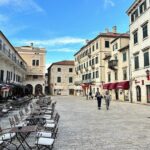
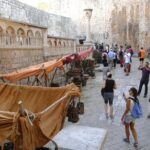
From there, you walk Stradun, Dubrovnik’s main street. You get a short moment there while your guide explains what locals and visitors enjoy most about it.
Then you move to Široka ulica, described as the only wide side street in the Old Town. That’s a fun detail because it makes you look at street design as a kind of history lesson. When you understand why one street is different, the geometry of Old Town stops feeling random.
These short stops are ideal if your legs get tired. You still get placed in the most recognizable parts of the city, without needing long museum time.
Jesuit Stairs and St. Ignatius: stairs, photos, and why the Jesuits mattered
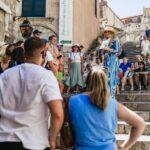
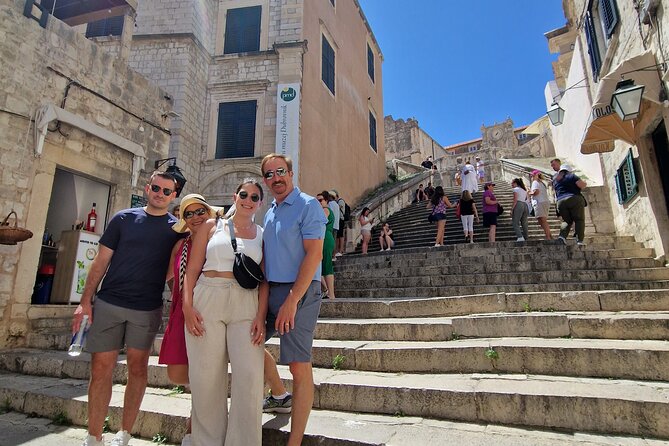
Next comes Jesuit Stairs, one of the most famous photo points in Old Town. You’ll get a brief stop to take in the view from the angle everyone recognizes, and you’ll also learn what the guide wants you to notice as you’re there.
After the stairs, you reach the Church of St. Ignatius, where the focus shifts to the importance of the Jesuit order in Dubrovnik. The visit is short, but it’s pointed: it’s about how religious orders helped shape the city, not just admiring a façade.
This part is great when you want your Old Town time to feel structured and story-driven. It also gives you a natural rhythm: a climb for photos, then a church stop that gives the climb meaning.
Dubrovnik Cathedral and the Republic-era power buildings
The tour brings you to the Cathedral of the Assumption of the Virgin Mary, where you can enter and spend time with one of the greatest paintings connected to Dubrovnik by Tiziano Veccelio.
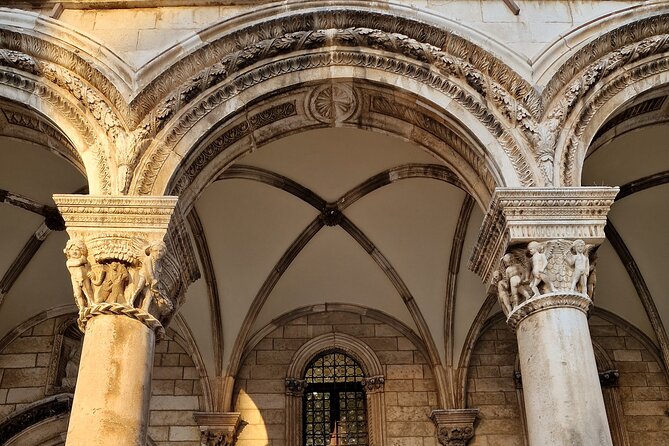
Then you continue to Rector’s Palace, learning about Dubrovnik Republic government while looking at one of the most beautiful buildings in Old Town. Admission ticket is listed as not included here, so again, you’ll want to be ready for separate entry costs if you choose to go inside.
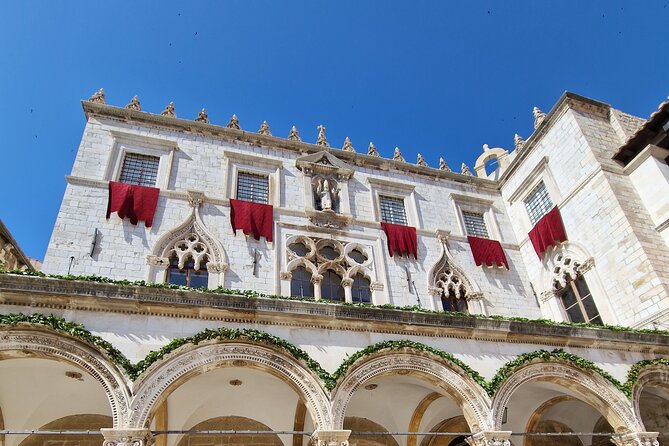
After that, you head toward Sponza Palace in Luža square, with time to visit. The route keeps tying architectural stops to political or civic life, which is exactly what I look for on guided walking tours—buildings that explain the city’s organization.
You also get Orlando Column, described as the only public sculpture from the time of the Dubrovnik Republic. That’s a very specific fact, and it’s the kind of detail that makes you see the square differently.
St. Blaise, Judioska Street, and the monastic pause
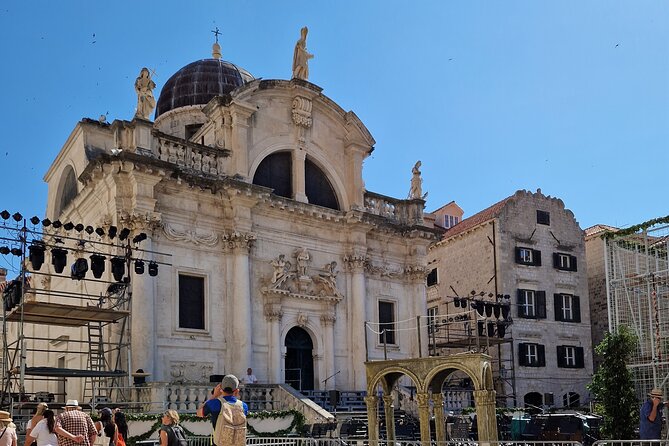
The tour pauses at Church of Saint Blaise, where you learn about Dubrovnik’s patron saint.
Then you take a turn through Judioska street near one of Europe’s oldest synagogues. Even if you don’t go inside, this is useful context for understanding how different communities shaped the Old Town over time.
Next is Dominican Monastery, another stop where you learn about monastery life and how the construction works. Admission is not included, so treat this as a guided interpretation stop rather than a guaranteed interior visit unless you plan ahead.
If you’re the type who likes to stop and notice how buildings functioned—who lived where, what roles monasteries played—these monastery moments can be the most rewarding parts of the walk.
Revelin Fortress terrace: wrap up with Old Port and Lokrum
To end, you continue to Revelin Fortress for a terrace viewpoint. Here you get another strong perspective, including views of the Old Port and Lokrum island.
This is a perfect closing move. Instead of finishing in a dead-end alley, you end with open space and a broader view, which helps your brain stitch together everything you saw earlier—from Srđ down to the main street.
The stop is about 10 minutes, so you get that final photo moment without dragging the tour longer than it needs to be.
Price and ticket value: what $295.73 per group really means
At $295.73 per group (up to 6 people), this tour can be a solid value if you’re traveling with companions. If you fill the group capacity, you’re effectively paying around $50 per person for a private guided route plus air-conditioned transport.
The included parts are practical: a licensed guide, an air-conditioned vehicle, and pickup options. You also get mobile ticketing, which makes arrival smoother.
Where value can shift is admissions. The experience lists that certain attractions tied to the Dubrovnik Pass may cost EUR 35 per person each for attraction numbers 6, 13, and 20. That doesn’t mean you’ll automatically pay for everything, but it does mean you should decide in advance which interior stops you care about most.
My advice: treat the tour as a great guided walk that gives meaning to the sights, not as a guarantee of every single ticketed interior. If you’re comfortable with that, you’ll get excellent value for your time.
Who should book this tour (and who might want a different option)
This one fits best if you want a guided Old Town route with built-in viewpoints. You’ll get the mountain start, the major street walk, the standout photo points, and a terrace finish—so you don’t spend your time figuring out logistics.
It also works well for people who like art and religious landmark context. One highlight from the experience is the guide’s art-historian style—Martina’s approach is designed to help you look at Old Town like it’s a living set of clues, not just a backdrop for photos.
If you hate stairs or you need lots of long breaks, you should think carefully. The route includes Jesuit Stairs, and the pacing is focused on multiple stops with short durations.
Also, this experience requires good weather. If conditions are poor, you may be offered another date or a full refund, so don’t book it if you know your schedule is rigid and weather is unpredictable for you.
Should you book Dubrovnik private walking tour & Srđ mountain panorama?
Yes, if you want a private guide, a smart viewpoint-first order, and a walk that keeps explaining what you’re seeing as you go. The format is ideal for first-time visitors who want the highlights without feeling overwhelmed, and it’s also good for repeat visitors who’d like a more interpretation-heavy route.
Before you book, check two things: whether you care about the ticketed sights that may require the Dubrovnik Pass, and whether you’re comfortable with stairs and a fast-moving sequence of stops.
If those boxes match your style, this is the kind of Dubrovnik day that feels like it makes the city stick.
FAQ
How much does the tour cost?
The price is $295.73 per group, for up to 6 people.
How long is the Dubrovnik private walking tour & Srđ mountain panorama?
It runs about 2 to 3 hours.
Is pickup offered from my hotel?
Yes. Pickup is offered from your hotel or private accommodation in Dubrovnik, or you can meet at Amerling Fountain near the Pile Gate.
Where is the meeting point and where does the tour end?
The meeting point is Amerling Fountain, Ul. Svetog Đurđa, 20000 Dubrovnik. The activity ends back at the meeting point.
Is this tour private?
Yes. It is a private tour/activity, and only your group participates.
What language is the guide?
The tour is offered in English.
What admissions are not included?
The tour notes that some attractions may require the Dubrovnik Pass. Specifically, EUR 35 each person is listed for attraction numbers 6, 13, and 20. Certain stop admissions are also listed as not included, such as the Franciscan Church and Monastery, Rector’s Palace, and Dominican Monastery.