REVIEW · DUBROVNIK
Dubrovnik walking history tour
Book on Viator →Operated by INtours Dubrovnik · Bookable on Viator
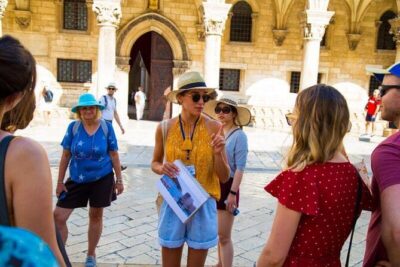
A walking tour that makes Dubrovnik make sense. This route ties together the Republic of Dubrovnik’s power and daily life through iconic stops like Onofrio’s Fountain and the licensed tour guide telling the stories in clear English.
I especially like how you get both big landmark moments and the real-world detail of how the city worked—then you pause for water and photos. The second highlight for me is the combination of Rector’s and Sponza Palace with the Cathedral of the Assumption after the 1667 earthquake, so you see governance and rebuilding in the same walk.
One drawback to plan for: if you want to walk the City Walls, that ticket is not included (35 € per person), so factor in the extra cost and time.
In This Review
- Key things to know before you go
- Why this Dubrovnik walk starts at Pile Gate (and why you’ll care)
- Sponza Palace and Rector’s Palace: government you can see
- Onofrio’s Fountain and the 12 km aqueduct: water as a story, not a detail
- Franciscan Monastery and the feel of the medieval core
- Orlando’s Column: the freedom marker you’ll remember
- Cathedral of the Assumption: rebuilding after 1667 in baroque form
- How long it takes, how big the group is, and how not to feel rushed
- Price and value: what $33.61 really covers
- Meeting point and logistics: simple start, clear end
- When plans go sideways: the one risk to accept
- Who should book this Dubrovnik walking history tour
- Should you book it? My straight answer
- FAQ
- How long is the Dubrovnik walking history tour?
- What is the price per person?
- Where do we meet, and when does it end?
- Is the tour in English?
- What’s included in the ticket price?
- Are City Walls tickets included?
- How many people are in a group?
- Is there a mobile ticket?
- What are the cancellation rules?
Key things to know before you go
- Pile Gate start keeps you oriented fast in Old Town.
- Sponza Palace + Rector’s Palace connect Dubrovnik’s public life to its ruling class.
- Onofrio’s Fountain links an everyday need (water) to the city’s 12 km aqueduct system.
- Orlando’s Column and the freedom theme give you a simple way to remember the Republic’s identity.
- Cathedral of the Assumption adds the 1667 earthquake and baroque rebuilding story without getting lost in details.
Why this Dubrovnik walk starts at Pile Gate (and why you’ll care)
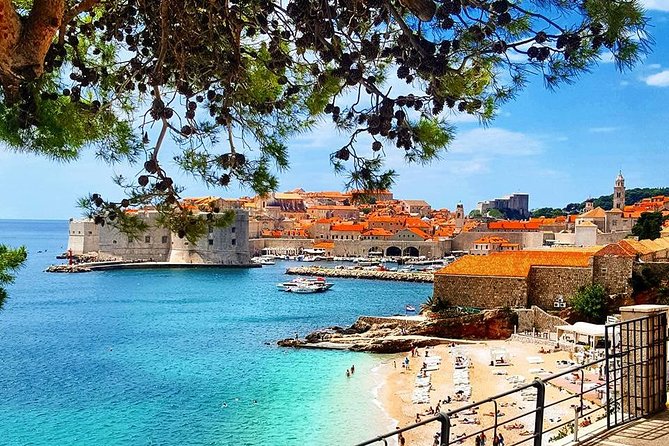
Old Town in Dubrovnik can feel like a maze when you’re only following walls and signage. Starting at Pile Gate helps because it’s the main entry point—so your first few minutes are about getting your bearings, not chasing directions.
From there, the route moves at a human pace through central civic sites. You’re not just collecting photos; you’re building a mental map of how Dubrovnik organized itself—who ran the city, where people gathered, and what monuments were meant to communicate power.
You can also read our reviews of more tours and experiences in Dubrovnik.


Sponza Palace and Rector’s Palace: government you can see
Two of the tour’s core stops are the Sponza Palace and the Rector’s Palace area. This matters because these aren’t random pretty buildings. They’re the kind of sites where Dubrovnik’s public life happened, so the history sticks better when you stand in front of the stone that made it real.
What I like about this pairing is that it gives you contrast. One moment you’re looking at a landmark tied to the city’s administrative world; the next, you’re in another major civic space tied to leadership and the Republic’s identity. Even if you don’t consider yourself a museum person, the guide’s storytelling style helps you connect what you see with why it was built and what it signaled.
Onofrio’s Fountain and the 12 km aqueduct: water as a story, not a detail
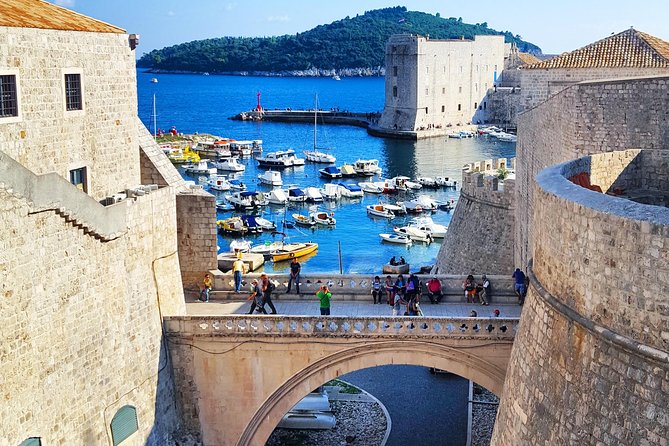
Next comes Onofrio’s Fountain, one of Dubrovnik’s most memorable “pause and look closer” spots. The fountain is tied to a 15th-century water system, fed by the end of a 12 km aqueduct that supplied the city.
This is more than a refresh break. It’s a smart way to understand how a city functioned day-to-day—especially in a place where supplies and planning mattered. When you hear how the water got there, the fountain stops being just a landmark and becomes evidence of organization and engineering.
Practical bonus: you’ll have a moment to refresh and drink water during the walk. That can make a real difference in Dubrovnik’s summer heat, when shade and hydration can disappear faster than you expect.
Franciscan Monastery and the feel of the medieval core
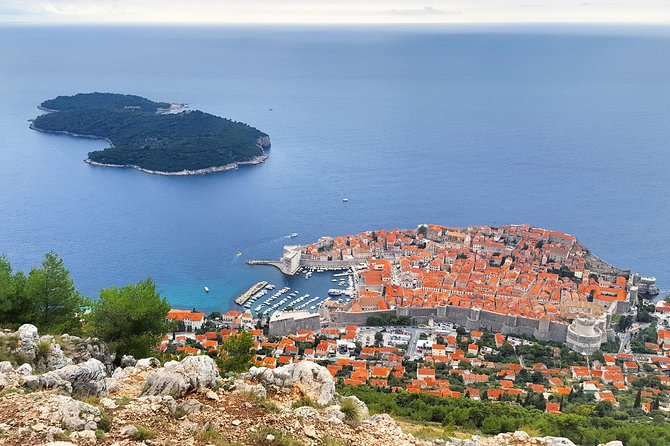
The walk also includes the Franciscan Monastery area. Monasteries in Old Town aren’t only about architecture—they’re cues about the city’s rhythm: learning, faith, and community life all coexisting alongside commerce and politics.
This stop helps balance the itinerary. After civic palaces and public symbolism, the monastery adds a calmer atmosphere to the route. It’s the kind of contrast that makes the whole tour feel like a guided stroll through how the city lived, not just an exam of monuments.
Orlando’s Column: the freedom marker you’ll remember
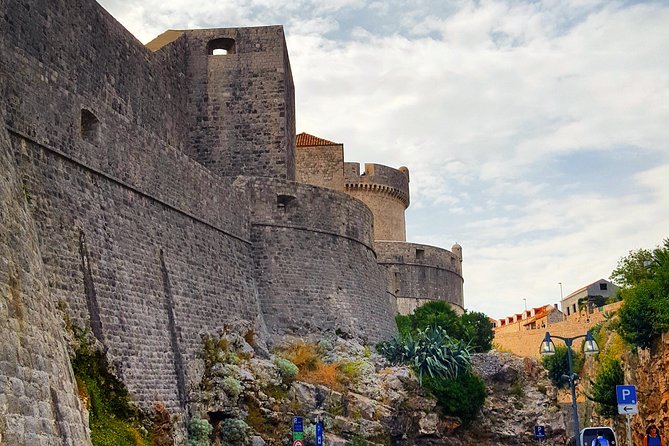
One of the most distinctive moments is Orlando’s Column, described as a monument connected to the city’s freedom. That’s a helpful frame while you walk, because it gives you a theme you can carry from stop to stop.
The column works as a quick “anchor” in your mind. When you later look at Dubrovnik’s street views and facades, you’ll be able to recall what that freedom symbolism was meant to represent—so the city reads a little differently on your self-guided time afterward.




Cathedral of the Assumption: rebuilding after 1667 in baroque form
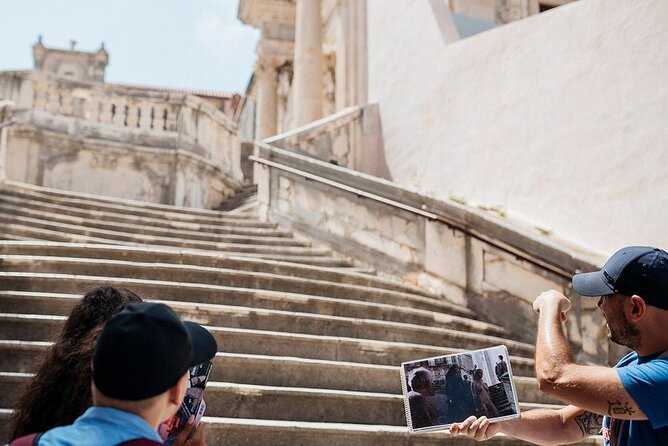
The tour ends with one of the strongest historical context points: the Cathedral of the Assumption. You’ll learn it’s a baroque church built after the devastating 1667 earthquake.
This matters because it tells you Dubrovnik didn’t just preserve history—it also rebuilt and reshaped it. Standing in front of the cathedral, you get a concrete sense of how tragedy and recovery can change what a city becomes. The baroque style also helps you see the post-earthquake era as a design choice, not just a date in a textbook.
How long it takes, how big the group is, and how not to feel rushed
This is an easy commitment: about 1.5 hours on foot. It’s long enough to cover several major sites, but short enough that you’re unlikely to feel trapped in a slow moving schedule.
The group size is capped at 30 people, which is usually a good middle ground. You’ll have enough people to keep the energy lively, while still getting a guide who can actually move the tour along without endless waiting.
If you like photos, this pace tends to work well because you’re stopping frequently for key points. The best tactic is simple: use the guide’s pauses to take pictures, then step slightly to the side so you can hear the explanation without blocking others.
Price and value: what $33.61 really covers
At $33.61 per person for roughly 90 minutes, the value comes from what’s included: an English-speaking licensed tour guide. In a place like Dubrovnik, that can be the difference between “I saw buildings” and “I understood why they mattered.”
Also note what you’re not getting: City Walls tickets are excluded and cost 35 € per person. That’s important for your planning. If you want the classic Dubrovnik experience of walking the walls, you’ll need to budget for that separately.
Here’s the practical way I’d look at it: this tour pays off if you want clarity and context first. Then, if you decide the walls are worth it for you, you’ll know what you’re looking at when you rise above Old Town.
Meeting point and logistics: simple start, clear end
You’ll meet at Art Go’denBrsalje ul. 1, 20000, Dubrovnik, Croatia. The tour starts from the Pile Gate area and returns back to the same meeting point.
You get a mobile ticket, which is convenient when you’re juggling walking routes and spotty phone storage. Confirmation is received at booking time, and the activity is listed as near public transportation.
Service animals are allowed, and most people can participate. That combination makes it a low-stress option if you’re looking for a guided “starter course” to understand the city.
When plans go sideways: the one risk to accept
No city tour is immune to emergencies. There was at least one instance where a tour didn’t go ahead because the guide became sick on the way to the meeting point due to extreme heat, and the payment was refunded in full.
So here’s my advice: if you’re relying on this tour for a tight wall schedule afterward, keep your afternoon flexible. Dubrovnik is beautiful, but it can be unforgiving when the weather turns.
Who should book this Dubrovnik walking history tour
This is a good fit if you want:
- A guided route through Old Town landmarks without needing to research each site first
- Clear connections between the Republic of Dubrovnik, civic identity, and key monuments
- Time-efficient sightseeing—1.5 hours is manageable even on a packed day
It’s also a solid choice if you care about the “how it worked” side of history, like the aqueduct and water supply story tied to Onofrio’s Fountain.
Should you book it? My straight answer
Book it if you want your first Dubrovnik walk to come with context, and you like history that explains what you’re standing in front of. The combination of Sponza Palace, Rector’s Palace, Onofrio’s Fountain, Orlando’s Column, and the Cathedral of the Assumption gives you a lot of meaning per minute.
Skip or rethink it if you’re only chasing the city walls experience and don’t want to add another €35 per person later. Also, if your schedule is extremely rigid, leave some slack—the walking tour can be affected by real-life health issues, just like any outdoor activity.
If you’re aiming for value, plan it as your “orientation + stories” tour. Then build the rest of your day around what you learned.
FAQ
How long is the Dubrovnik walking history tour?
It lasts about 1 hour 30 minutes.
What is the price per person?
The price is $33.61 per person.
Where do we meet, and when does it end?
You meet at Art Go’denBrsalje ul. 1, 20000, Dubrovnik, Croatia, and the tour ends back at the same meeting point.
Is the tour in English?
Yes, it’s offered in English.
What’s included in the ticket price?
A licensed tour guide is included.
Are City Walls tickets included?
No. City Walls and other facilities are not included, and City Walls tickets cost 35 € per person.
How many people are in a group?
The tour has a maximum of 30 travelers.
Is there a mobile ticket?
Yes, the tour provides a mobile ticket.
What are the cancellation rules?
You can cancel for a full refund if you cancel at least 24 hours before the experience’s start time. If you cancel less than 24 hours before, the amount paid is not refunded.