REVIEW · DUBROVNIK
Dubrovnik: Walls and Wars Walking Tour
Book on GetYourGuide →Operated by Dubrovnik Walks & Sea Kayaking · Bookable on GetYourGuide
Dubrovnik’s walls tell the story in stone. On this 2-hour walk, I like how you see why this port republic survived by mixing politics, engineering, and nerve, all while staying right on the fortifications. You’ll follow a licensed, Ministry of Tourism approved guide along the city walls route with big views and real context for what you’re looking at.
Two things I especially like: first, the tour is built for hearing and staying together. Headsets are provided, so guides like Davor, Goran, Andreja, and others can keep talking even when you’re moving fast on narrow stretches. Second, you get panoramic payoff from the walls—Old Town and the harbor look like they’re spread out for you, not hidden behind postcard angles.
One consideration: this is a stairs-and-exposure experience. If you’re sensitive to heights or you’re not up for steep climbs, skip it—this route may not be suitable for you, and there’s limited shade.
In This Review
- Key Takeaways Before You Go
- City Walls in Two Hours: What You’ll Actually Get
- Meeting Point at Brsalje 8 (Orange Umbrella) and a Clean Start
- The Licensed Guide Angle: Why Headsets Matter on the Walls
- Revelin Fortress, Minceta Tower, and Lovrijenac Fortress on One Walk
- The Views Aren’t an Afterthought: Old Town and Harbor From the Walls
- Walls and Wars: How the Story Connects Medieval Defense to Modern Survival
- How the Price Really Works: Tour Fee Plus Mandatory Wall Tickets
- Pace, Steps, Heat, and Who Should Rethink This Tour
- What to Bring (and What to Skip)
- Weather and Group Size: Small Things That Change the Day
- Should You Book Dubrovnik’s Walls and Wars Walking Tour?
- FAQ
- How long is the Dubrovnik Walls and Wars walking tour?
- What’s included in the $29 per person price?
- Are the Dubrovnik City Walls entry tickets included?
- Where do I meet the tour?
- Where does the tour end?
- Is the tour guided in English?
- What should I bring for the walk?
- Is this tour suitable for people with mobility impairments or wheelchair users?
- Are baby strollers allowed?
- Can I record video during the tour?
Key Takeaways Before You Go
- Ministry-approved licensed guide: you’re not just walking a loop; you’re getting the “why” behind the stone.
- Headsets included: makes the walking history easier to follow, even in wind.
- Big landmarks, tight time: Revelin Fortress, Minceta Tower, and Lovrijenac Fortress fit into a very workable 2 hours.
- Views from the fortifications: Old Town and the port come into focus as you climb.
- Budget for the wall ticket: your $29 covers the guide, not the required City Walls entry ticket.
City Walls in Two Hours: What You’ll Actually Get
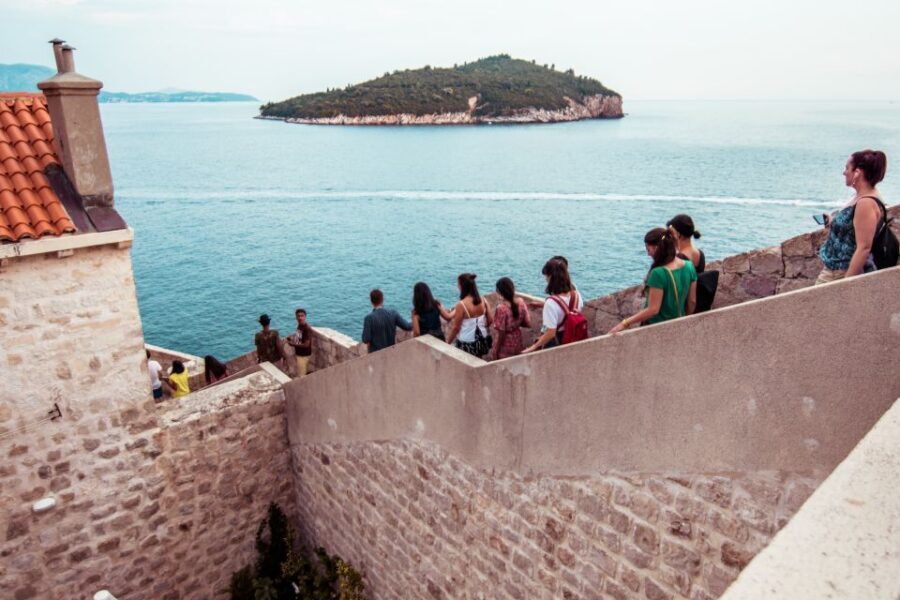
This tour is for people who want more than scenic walking. Yes, you’ll be on the walls. But the real win is the narration: how Dubrovnik’s leaders and their defenses worked as one system, especially when bigger powers kept circling the port.
In two hours, the guide helps you connect what you see—towers, forts, walls—with what it meant for daily life and survival. That turns the visit from I stood here to I understand what this place was built to do.
You can also read our reviews of more walking tours in Dubrovnik


Meeting Point at Brsalje 8 (Orange Umbrella) and a Clean Start
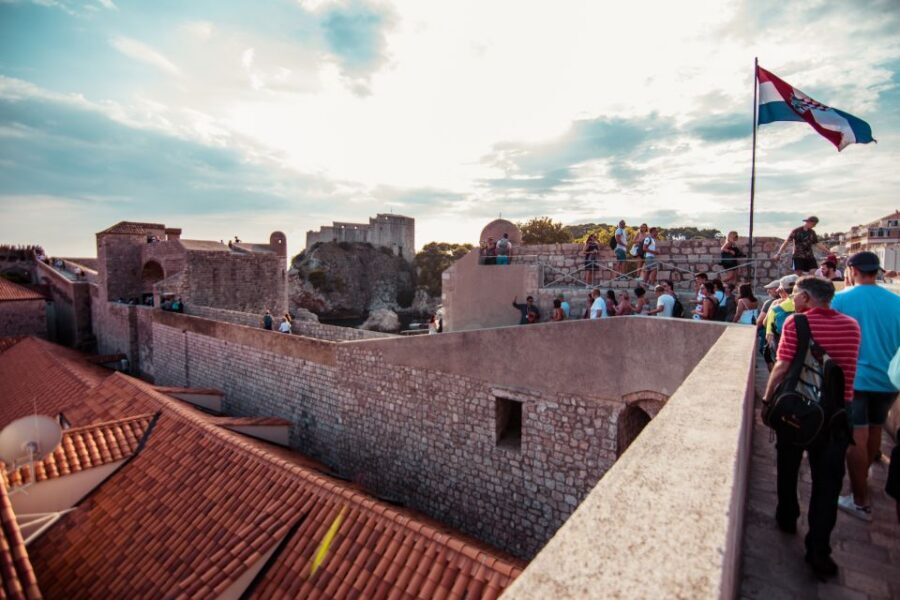
You’ll meet at Dubrovnik Walks at Brsalje 8, near the Pile local bus stop. Look for the reps holding orange umbrellas. Once you’re there, the start is straightforward: get your headset, meet the guide, and move out before the walls fill up.
Ending near the Old Town port keeps things logical. Instead of dragging you back across the same streets, you finish in an area that makes it easy to continue your day through Old Town.
The Licensed Guide Angle: Why Headsets Matter on the Walls
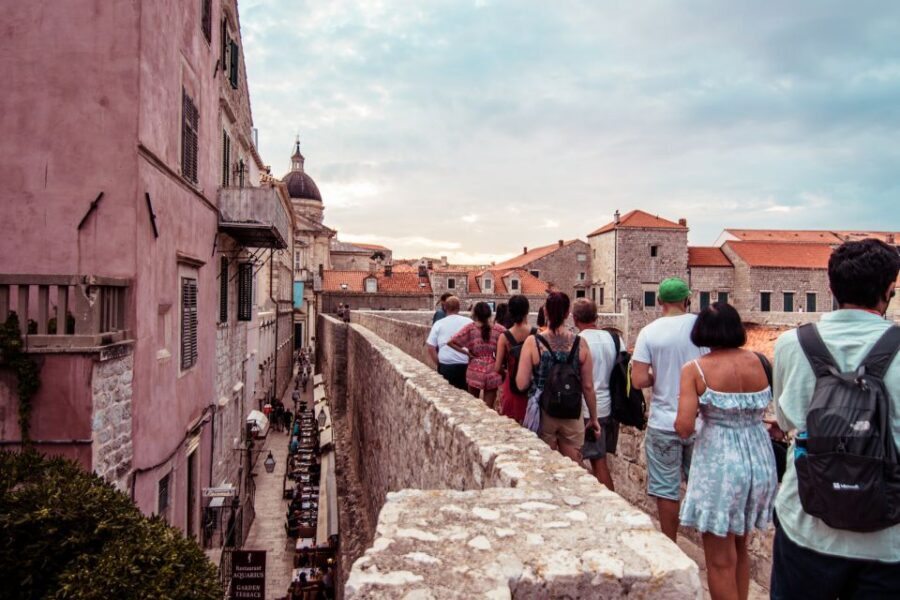
City walls tours can turn into a line you’re trying to hear. Here, the tour provides headset devices so you can keep up with the guide without craning your neck or falling behind.
The best part is how that changes the experience. When you hear explanations clearly, you start recognizing patterns in the fortifications—why certain sections feel tighter, why some points are strategically important, and how the city’s defensive logic connects across different structures.
If you’re in a bigger group, there’s a practical thing to know: when people spread out, headset reception can get worse. If you care about staying fully in sync, stay close to the group cluster your guide forms.
Revelin Fortress, Minceta Tower, and Lovrijenac Fortress on One Walk
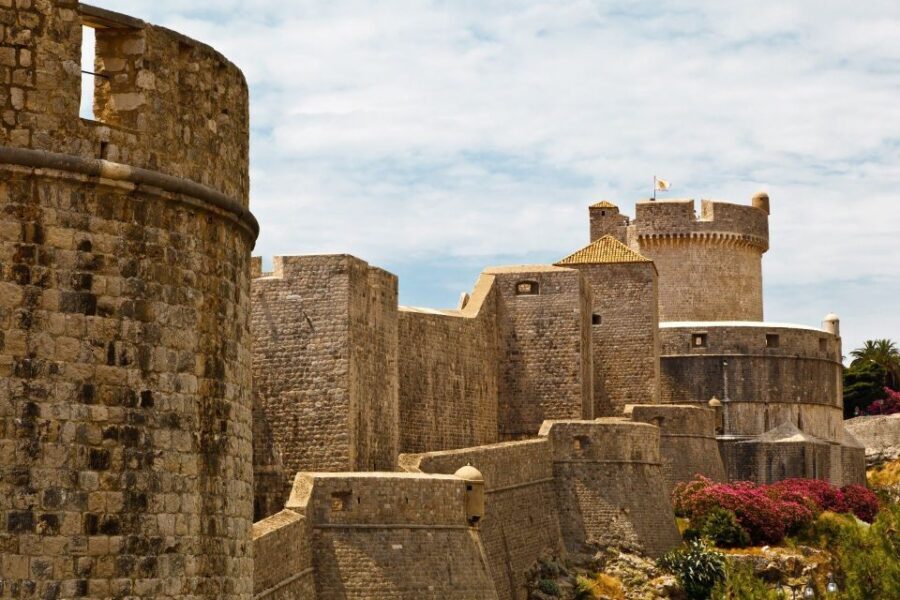
This tour is structured around major defensive and political landmarks. You’ll visit points tied to the protection of Dubrovnik’s people and prosperity, and your guide explains what each structure was for.
Revelin Fortress is part of the story of defense at key entry areas. The takeaway is simple: Dubrovnik didn’t rely on one wall. It relied on layered protection—multiple “chokes” and obstacles meant to slow, frustrate, and control attackers.
Minceta Tower is a classic high point. As you climb, you start to understand why towers matter: they give defenders sightlines and control. Even if you’re not a “military history” person, the guide’s explanations help you read the walls like a plan, not like scenery.
Lovrijenac Fortress adds another layer. It’s tied to safeguarding the city and shaping how power was defended. The walls stop being a long promenade and start looking like a carefully designed machine.
One reason this works so well in two hours is that the guide points out what to notice as you pass it. You’re not just moving from stop to stop—you’re learning what each stop means in context.
The Views Aren’t an Afterthought: Old Town and Harbor From the Walls

Yes, you’ll see Dubrovnik from above. But what you’re getting isn’t only the classic postcard view. As you move along the fortifications, the harbor and Old Town open in segments, and that changes how you understand the city’s geography.
Expect sweeping angles over rooftops and the port area. You’ll also get clear sight lines that make it easier to grasp why a coastal city like this had to think like a fortress, not like a normal town.
And because the route involves ascending stairs, it’s best to treat the views as the reward for the climb. You’ll feel the payoff more if you pace yourself instead of racing to the next viewpoint.




Walls and Wars: How the Story Connects Medieval Defense to Modern Survival
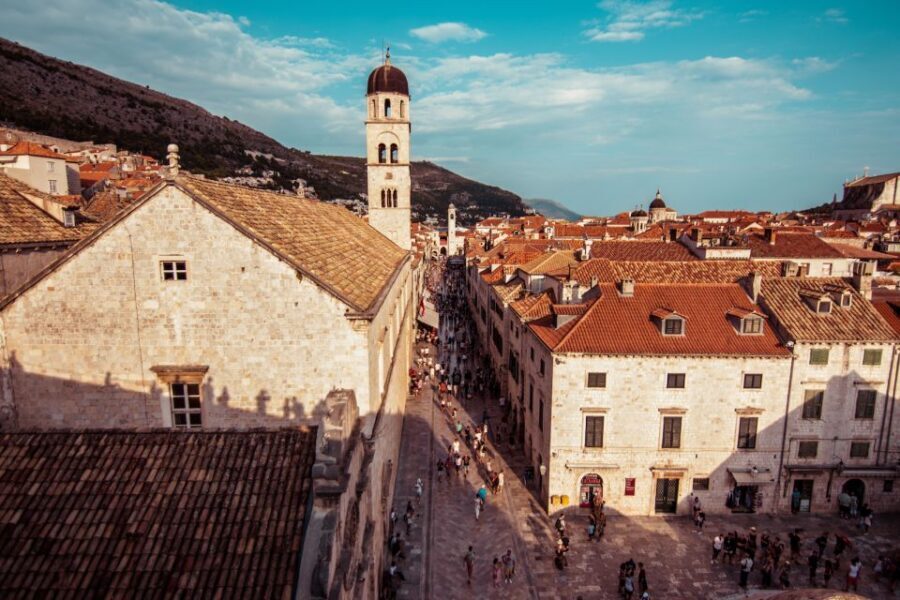
Dubrovnik’s walls weren’t built once and then retired. This is a city that’s been shaped by threats, shifting power, and the need for survival. Your guide connects diplomatic leadership with defensive engineering—showing how decisions in the council room and choices on the walls mattered.
A big reason I think this tour lands is that many guides bring lived perspective. For example, some guides (like Davor and others mentioned in guides’ backgrounds) explain the Croatian War of Independence and how it felt on the ground. That doesn’t replace the older fortification story—it gives it weight.
So even if you’re mainly here for UNESCO-era walls, you leave with a clearer sense of endurance: the same stone structures that protected a republic centuries ago also symbolize a later fight for autonomy.
Also worth noting: you’ll hear how Dubrovnik’s survival helped earn its UNESCO World Heritage status in 1979, and why the fortifications are central to that recognition.
How the Price Really Works: Tour Fee Plus Mandatory Wall Tickets

The tour price is $29 per person, and it covers the guide, the guided city walls walking tour, and headset devices. The catch is important: the Dubrovnik City Walls entry ticket is not included.
The City Walls ticket is mandatory and costs €40 per adult and €15 per child aged 7–18. You can purchase it at the entrance, in advance, or with a Dubrovnik Pass.
So what’s the value? The math is really about time and understanding. The walls ticket buys access to the fortifications. The tour buys interpretation: what you’re looking at, why it’s arranged that way, and how it ties to both old threats and more recent history.
Many people find that paying the ticket anyway feels expensive—so having a guided layer makes the overall spend feel more purposeful. If you’re the type who likes walking and learning instead of just photographing, the guide component becomes the best part of your money.
Pace, Steps, Heat, and Who Should Rethink This Tour

This is a two-hour walk that involves steep climbing. Even if you’re generally fit, you should plan for a lot of steps. One useful detail from real experiences: expect around 1,150 steps, and in summer conditions there can be little shade.
That’s why the tour has clear “not for everyone” limits. It may not be suitable for:
- pregnant travelers
- people with mobility impairments or wheelchair users
- people with heart problems
- anyone afraid of heights or with vertigo
- people with respiratory issues
- people over 80 years
- people with low fitness
Also, the walls are exposed. Wind can make it feel cooler, but it doesn’t reduce the effort of climbing. Rain can make the route slippery too, so good shoes matter.
If you’re unsure, be honest with yourself: can you comfortably handle stairs and a long uphill stretch without frequent breaks? If not, consider a different Dubrovnik Old Town option that keeps you closer to ground level.
What to Bring (and What to Skip)
Bring:
- comfortable shoes
- a hat
- water
- a credit card (useful for the walls ticket if you need to pay that way)
Not allowed:
- baby strollers
- video recording
That may sound minor, but it affects comfort. You’ll be moving steadily and sticking to the tour pace, so skip anything bulky that slows your group flow.
Weather and Group Size: Small Things That Change the Day
Dubrovnik weather is changeable. Some guides have handled windy or rainy conditions well, keeping the tour fun and informative. Just know the walls are exposed, so plan for the elements, not just the itinerary.
Group size can matter more than people think. Headsets help a lot, but if the group stretches out, reception can fade. The easiest fix is to stay where your guide is focusing the group, and don’t lag far behind on the narrow bits.
Should You Book Dubrovnik’s Walls and Wars Walking Tour?
Book it if:
- you want fortification history with modern context
- you like guides who explain the why behind the sights
- you’re comfortable with stairs and exposed walking
- you want the walls experience without having to guess what you’re seeing
Skip it if:
- stairs and heights make you uneasy
- heat and limited shade will likely wear you down
- you need mobility support or wheelchair access
- you’re hoping for a relaxed, minimal-effort walk
If you can do the climb, I think this is one of the best ways to turn Dubrovnik’s walls into a story you actually understand. The views are the payoff—but the guide is what makes it stick.
FAQ
How long is the Dubrovnik Walls and Wars walking tour?
The tour lasts about 2 hours.
What’s included in the $29 per person price?
The price includes the guide, a city walls walking tour, and headset devices so you can hear the guide better.
Are the Dubrovnik City Walls entry tickets included?
No. City Walls entry tickets are not included in the tour price. The ticket costs €40 per adult and €15 per child aged 7–18.
Where do I meet the tour?
Meet at Dubrovnik Walks, Brsalje 8, Dubrovnik. The meeting point is by the Pile local bus stop. Look for representatives holding orange umbrellas.
Where does the tour end?
The tour ends near the Old Town port.
Is the tour guided in English?
Yes, the tour is offered in English.
What should I bring for the walk?
Bring comfortable shoes, a hat, credit card, and water.
Is this tour suitable for people with mobility impairments or wheelchair users?
No. It’s not suitable for wheelchair users or people with mobility impairments.
Are baby strollers allowed?
No, baby strollers are not allowed.
Can I record video during the tour?
No. Video recording is not allowed.