REVIEW · SPLIT
Experience Split With Local Professional Historian – Small Group
Book on Viator →Operated by Pomalo tours · Bookable on Viator
Split’s Roman shell still shapes your day. In a tight group, historian Boris guides you through the key beats of the old city, and his 3D reconstruction visuals make the palace story easier to picture fast. I also like that he keeps the pace friendly and helps you line up photos along the way.
One thing to consider: the tour is short (about two hours) and there are no admission tickets included, so plan on seeing the big landmarks mainly from the outside and the most important palace areas rather than a full, ticketed museum-style day.
In This Review
- Key highlights worth clocking
- Entering Split Through the Golden Gate’s Story
- Golden Gate to Grgur Ninski: two landmarks that set the tone
- Diocletian’s Palace core route: the parts most people miss
- Peristyle: the palace square that controlled people
- Triclinium and Jupiter’s Temple: eating habits and religion on display
- Cathedral of Saint Domnius (from the outside) and the big shift to Christianity
- The Vestibulum: a quiet space with a loud purpose
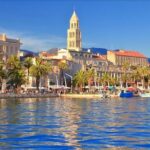
- Riva Harbor and the waterfront mindset of locals
- Fruit’s Square and Pjaca: where everyday city life takes over
- The teacher-style approach: 3D visuals, photo help, and interaction
- Price and value: what $38.62 buys you in real terms
- What this tour is best for (and where it may not fit)
- Should you book this Split historian walking tour?
- FAQ
- How long is the Split walking tour?
- Where does the tour start and end?
- Is the tour offered in English?
- What’s the maximum group size?
- Is admission included for the stops?
- What’s included in the experience?
- Does the guide help with photos?
- Is the tour mainly outside, inside, or a mix?
- Is it suitable for most travelers?
- What if the weather is bad?
Key highlights worth clocking
- Small group (max 12) keeps questions easy and the walk less crowded
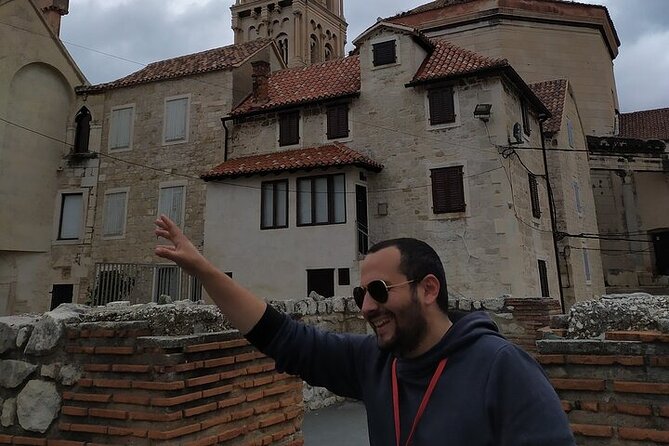
- Licensed historian Boris brings a teacher’s rhythm, including interactive Q&A and light trivia
- 3D reconstructions + photo-ready visuals help you understand Diocletian’s Palace quickly
- A smooth route from Golden Gate to Pjaca ties Roman foundations to later Split life
- Outside views of major religious sites let you grasp the shift from Rome to Christianity without extra tickets
Entering Split Through the Golden Gate’s Story
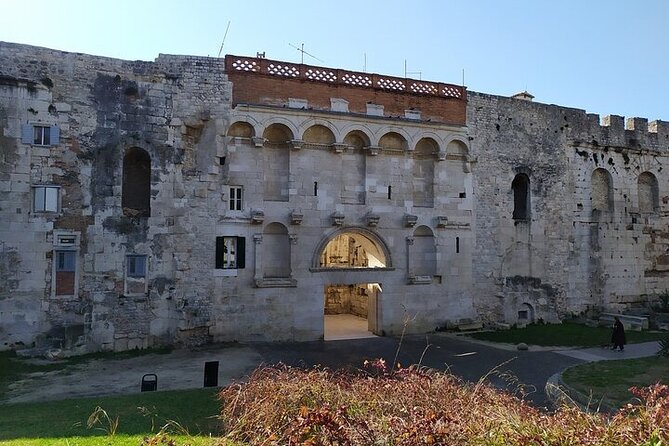
If you’re new to Split, Diocletian’s Palace can feel like a maze. This tour gives you the map in your head, starting at Golden Gate, the northern entrance of the palace complex. You’ll learn why that stone gate matters, especially because it sits across from Gregory of Nin, another signature landmark in the old town.
The guide’s job here is simple but effective: connect what you’re seeing to why it exists. In under ten minutes, you shift from watching architecture to understanding power, movement, and everyday life around the emperor’s walls.
You can also read our reviews of more tours and experiences in Split.


Golden Gate to Grgur Ninski: two landmarks that set the tone
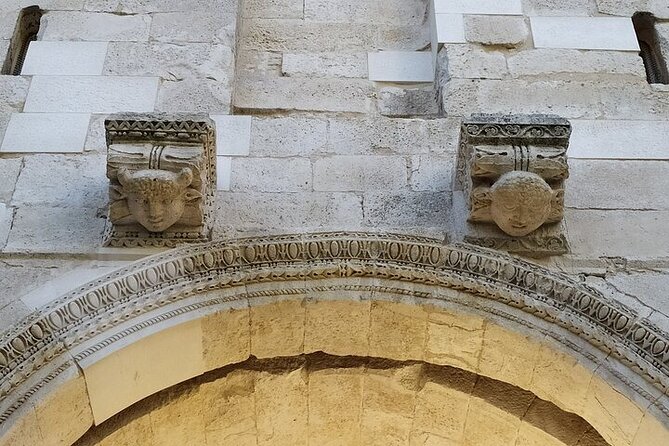
Golden Gate isn’t made of gold, but it earns attention for the role it played as an entry point into authority. From here, you also get a quick geography lesson: Split’s famous sights are laid out like a timeline, and the walk uses that layout to make the story feel linear.
Next comes Grgur Ninski Statue, dedicated to Gregory of Nin. You’ll hear an engaging breakdown of who he was, why the monument is one of the highest in Split, and even the sculptor’s angle. This is a nice early balance: you’re moving beyond Romans into the later cultural identity of the city.
Diocletian’s Palace core route: the parts most people miss
The main work starts when you reach Palazzo di Diocleziano, the heart of the old city and the reason Split looks the way it does today. The palace was built under one of the most successful Roman emperors, and it’s famous because it has survived in a remarkably preserved form.
What makes this section worth your time is the way the guide shapes your attention. Instead of only saying “this is important,” Boris points out key palace zones and hidden-feeling details—how the space would have worked and how it later became the medieval city people lived inside.
As you explore, you’ll cover the major sequence of sights and functions, including:
- Peristyle (the central hub)
- Jupiter’s Temple (outside)
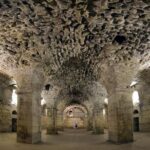
- Diocletian’s Cellars (central substructure area)
- Triclinium (the dining space)
- Mausoleum, which is now the Cathedral of St. Domnius (viewed outside)
Even if you’ve read about Diocletian’s Palace before, I like this approach because it turns “Roman facts” into a mental model you can walk through.
Peristyle: the palace square that controlled people
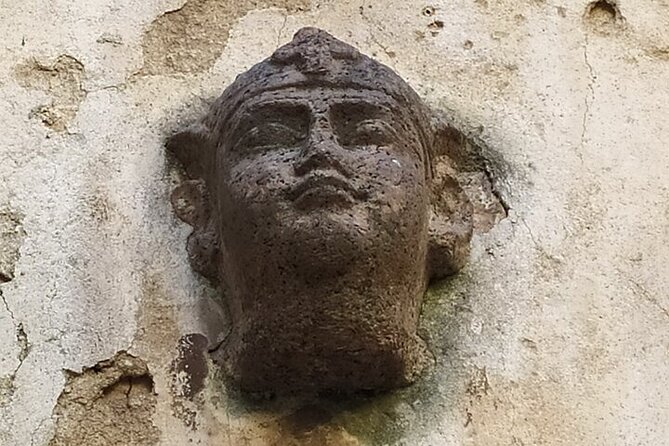
At the center is the Peristyle, and it’s not just impressive because it’s big. It’s important because it was designed to connect—and also separate—people from the emperor. Standing in that central space changes how the palace feels. You can understand movement at a glance, and you start seeing why some areas were ceremonial while others were practical.
This is also where you’ll get help with the big cultural transition. You’ll hear how Christianity’s rise changed the use and meaning of palace buildings, and how the city gradually re-shaped the Roman structure instead of simply abandoning it.
From the Peristyle, you then move into the central cellars area. You’ll learn how those spaces were used over time and how they connect directly to Split’s later history. It’s one of those stops where a bit of explanation turns stonework into a timeline.
Triclinium and Jupiter’s Temple: eating habits and religion on display

Triclinium is a highlight for me because it makes the palace human. The guide explains emperor dining habits and broader Roman eating practices, then links the architecture back to the organization of an emperor’s meal. You’re standing where social rank mattered—and you understand it, rather than just admiring it.
Right after that, you’ll look at Temple of Jupiter from outside. In the Roman world, religion wasn’t a side quest. Temples honoring gods were part of daily power structures, and you’ll get the reasoning behind why this particular temple belongs in the palace story.
The timing works well: first you learn how the emperor’s day may have looked around dining and status, then you shift to how belief sat inside that same system.




Cathedral of Saint Domnius (from the outside) and the big shift to Christianity
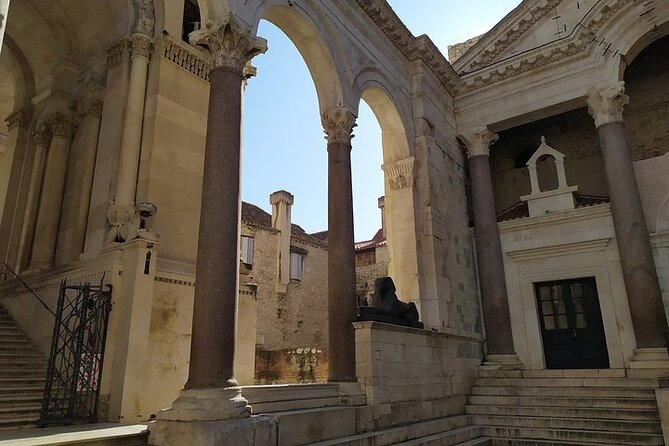
The Cathedral of Saint Domnius stop is an outside visit, but it carries weight because it represents continuity and change at the same time. The guide points out significant parts of what you’re seeing and warns you about things to notice if you later visit the interior on your own.
This is a smart way to handle religion in a short tour. You get orientation and interpretation first, without turning the walk into a heavy lecture or stopping your progress. If you’re the type who wants to return and see more, this stop sets you up for a better second visit.
The Vestibulum: a quiet space with a loud purpose
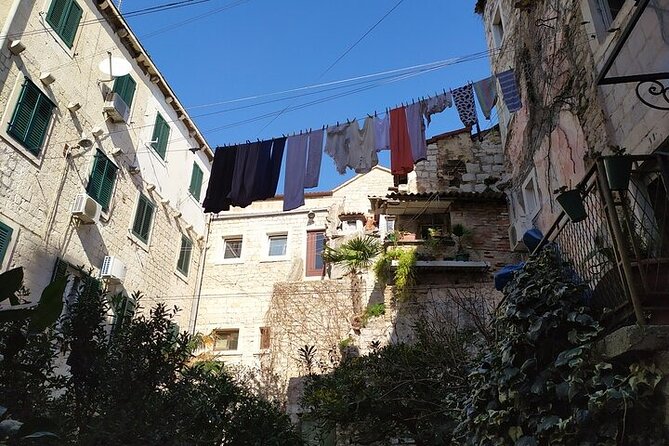
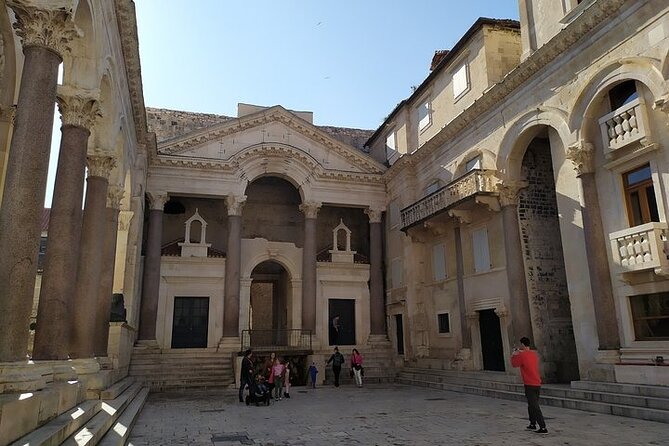
Vestibulum is the pre-entrance connected to the emperor’s private chambers. Even though it sounds minor, it’s useful because it shows how the palace was staged. Décor and function weren’t random; they matched importance.
This stop helps you understand that the palace wasn’t just grand halls and monuments. There were transitional spaces too—places designed to frame who was allowed where, and why.
Riva Harbor and the waterfront mindset of locals
After the palace core, the tour shifts from stone power to city life. Riva Harbor is the main city promenade, and you’ll learn how it developed across centuries and why it became central for locals.
This section is good for your brain. You’ve just learned how the emperor’s world worked. Now you watch how the city’s world grew outward and sideways—how people gathered, walked, and made the waterfront a daily habit.
If you’re hoping for moments of calm after dense architecture, this is one of them. It gives your eyes a breather before the squares.
Fruit’s Square and Pjaca: where everyday city life takes over
Fruit’s Square (Trg Brace Radic) is small, charming, and easy to miss if you’re walking fast. Here, you’ll find out why it’s called Fruit Square and what monument sits in the middle, plus what to pay attention to around it.
That leads into Pjaca (People’s Square), the old city’s main meeting point from medieval times to today. The guide explains how squares work as social centers and tells the story behind the buildings around you, including the old city hall area.
I like that the tour ends on Pjaca because it feels like a natural release point. You’re dropped into the part of Split where people actually hang out, not just where monuments line up for photos.
Before you finish, the guide also suggests other places to visit in Split that weren’t part of the walking tour route. That’s practical, because it helps you plan the next 24 hours instead of wondering what to do after the palace highlights.
The teacher-style approach: 3D visuals, photo help, and interaction
The included display book is more than decoration. It uses pictures and 3D reconstruction images so you can visualize how Diocletian’s Palace looked and functioned in earlier eras. When you’re standing among surviving structures, those visuals help you connect what remains to the bigger original design.
Another detail I appreciate: your guide can help you take photos. That matters in old towns, where the best angles often require standing in the right spot and waiting for the light or the crowd to thin.
Boris also runs the tour like a history teacher. You’ll have time for questions, and the energy tends to stay interactive rather than one-way. In particular, people mention how he uses a teacher’s style of explanation and trivia, which can be great if you’re traveling with kids or you simply like learning through back-and-forth.
Price and value: what $38.62 buys you in real terms
At about $38.62 per person for roughly two hours, the value depends on what you want from the palace. You’re paying for three things: a licensed local historian, a tight group size (max 12), and visual aids that make the architecture understandable.
There are no admission tickets included. That sounds limiting until you realize much of the route is designed for outside viewing and key zones without turning the experience into a costly ticket crawl. For most first-timers, that balance is the point: you come away with a solid overview, then you decide what deserves paid entry later.
One more practical note: this is often booked in advance (on average, about two months out). If you know your travel window, it’s smart to lock it in early rather than hoping a last-minute spot appears.
What this tour is best for (and where it may not fit)
This experience fits best if you’re:
- New to Split and want a clear orientation through Diocletian’s Palace
- Interested in how the Roman world shifted into the medieval and modern city
- Traveling with a small group where you want questions answered
- Looking for an easy way to turn landmarks into context fast
It may not be ideal if you want:
- A full, ticketed deep dive through multiple interiors on a strict schedule
- A self-guided experience where you control every pause and viewpoint without explanation
For most people, though, this is a strong first stop because it makes later sightseeing more satisfying. Once you understand how the palace layout works, you’ll start noticing details on your own.
Should you book this Split historian walking tour?
Yes, if you want a high-impact introduction with a real local in the lead. The small group size, the master’s-level history background, and the combination of 3D visuals + an approachable teacher style are exactly what you want when you’re trying to make sense of Diocletian’s Palace in a short visit.
If you’re the type who loves walking tours but hates vague explanations, you’ll probably feel at home here. And if your time in Split is limited, this gives you structure—so you can spend the rest of your day exploring with confidence.
FAQ
How long is the Split walking tour?
It runs for about 2 hours (approx.).
Where does the tour start and end?
It starts at Golden Gate (Dioklecijanova 7, 21000 Split) and ends at People’s Square (Pjaca).
Is the tour offered in English?
Yes, it’s offered in English.
What’s the maximum group size?
The group is capped at a maximum of 12 travelers.
Is admission included for the stops?
No admission tickets are included.
What’s included in the experience?
You get a local professional licensed guide with a master’s degree in history, plus a display book with pictures and 3D reconstruction images.
Does the guide help with photos?
Yes. The tour includes guidance on how to take photos during the walking stops.
Is the tour mainly outside, inside, or a mix?
The route includes key areas of Diocletian’s Palace and also outside visits of major sites such as Jupiter’s Temple and the Cathedral of St. Domnius, plus time in the palace’s cellar/substructure area.
Is it suitable for most travelers?
Most travelers can participate.
What if the weather is bad?
The experience requires good weather. If it’s canceled due to poor weather, you’ll be offered a different date or a full refund.