REVIEW · PULA
Explore layers of Pula’s History in German or English
Book on Viator →Operated by Exclusive tours · Bookable on Viator
Pula looks calm today, but it never stopped talking. This 2-hour walking tour stitches together Roman power, city gates, and the waterfront-minded past in a route that’s easy to follow. You’ll see major monuments close up, with English commentary that helps you understand what you’re looking at, not just where to stand for photos. One thing to consider: entrance tickets are not included for some of the biggest stops, so plan a little extra budget.
I especially like how the route keeps moving without feeling rushed, with frequent short stops (about 10–15 minutes each) so you can actually read the buildings and absorb the story. I also appreciate the human touch—feedback highlights guides who share clear explanations and even offer before-and-after context with photos that make Pula’s changes over time easier to grasp. A possible drawback: if you want to enter every paid interior, you’ll need to handle those tickets on your own.
You end right where you started, which is perfect when you’re still trying to map Pula for the rest of your day. And because the group is capped at 30, it stays manageable for questions and small pacing adjustments.
In This Review
- Key things to know before you go
- Temple of Augustus and the Forum start: get your bearings fast
- Augustus to the Arch of the Sergi: Roman monuments with clear purpose
- Gate of Hercules: a short stop that adds real texture
- Twin Gates and the secret passage to the castle area
- Pula Arena: the big name, but plan for paid entry
- Historical and Maritime Museum of Istria: defense meets waterfront thinking
- Franciscan Monastery of St. Francis of Assisi: ending with church details
- Price and ticket reality: where your $17.04 really goes
- Timing, pacing, and how to make it comfortable
- Who should book this walking history tour
- Quick decision: Should you book it?
- FAQ
- How long is the tour?
- What language is the tour offered in?
- Where does the tour start, and where does it end?
- What is the maximum group size?
- Is the entrance fee included for all stops?
- Is there a mobile ticket?
- Does the tour allow service animals?
- Is the tour near public transportation?
- What happens if the weather is bad?
Key things to know before you go
- A 2-hour loop with a tight highlight set: you hit Pula’s forum-area landmarks and the Arena area without a long slog
- Some entrances are free, others cost extra: several monuments are free to view, but Pula Arena and the museum aren’t included
- English-guided explanations at every stop: you’ll get context for arches, gates, and why the Romans cared about this town
- Main photo-worthy Roman sites: Temple of Augustus, Arch of the Sergi, Gate of Hercules, Twin Gates, and the Arena
- Small group size (max 30): easier listening, less crowd stress than big-bus city tours
- Mobile ticket: convenient for entry and day-of check-in
Temple of Augustus and the Forum start: get your bearings fast
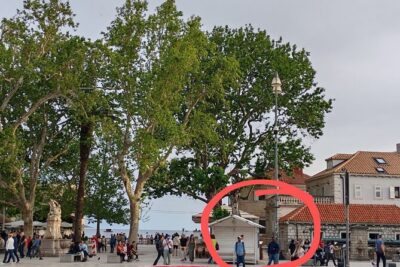
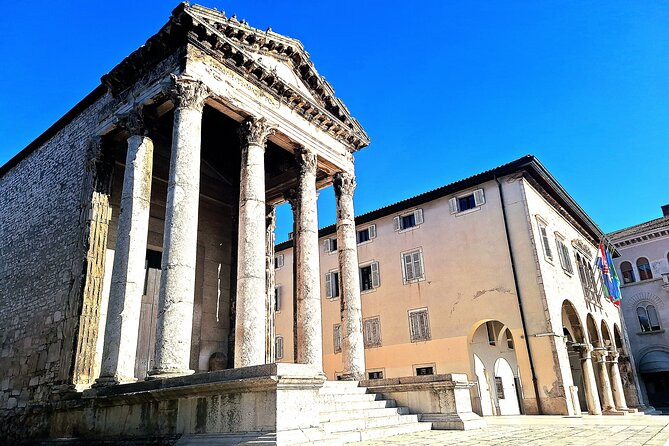
The tour begins at the Temple of Augustus, right by the main forum area in Pula (meeting point: Forum b.b., 52100). This matters more than it sounds. Starting with a central Roman landmark helps you understand the city layout early, so later stops feel connected rather than random.
From here, the guide sets the tone: this isn’t just a checklist of stones. It’s a walking timeline. You’ll get a plain explanation of who built what, and why this part of the city mattered—then you’re off to the next monument while the Roman context is still fresh.
What I like about starting at Augustus is that it turns the rest of the walk into a kind of reading exercise. You look at an arch or gate and think, Oh, this is part of the same political story. That keeps the walk interesting even if you’re not a hardcore architecture nerd.
One practical note: the tour includes time at the temple, but admission tickets are not included. If you want to go inside (where available), you’ll need to pay separately.
You can also read our reviews of more tours and experiences in Pula.



Augustus to the Arch of the Sergi: Roman monuments with clear purpose
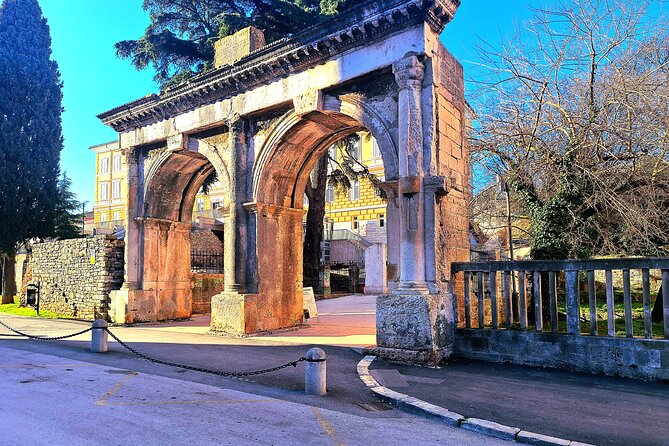
Next up is the Arch of the Sergii. Even if you’ve seen plenty of arches elsewhere, this one works because it’s placed in a real urban setting, not a museum display. You’ll take a short stop and learn what makes the monument historically significant for the town.
This portion of the walk is also a nice breather. You’re not trekking across town; you’re moving within the core sightseeing zone. The stop is about 15 minutes, which usually gives enough time for:
- quick orientation
- a guided explanation
- photos from a couple of angles
If you’re trying to decide whether to spend your limited time in Pula on a guided walk, this is where a good guide earns their keep. The arch becomes more than a decorative Roman leftover—it becomes a political marker, a way of saying power was here.
And since admission is free for this stop, you can enjoy the monument without thinking about extra ticket timing.
Gate of Hercules: a short stop that adds real texture
Then you reach the Gate of Hercules. Gates are fun because you can often picture how people moved through a city. They’re functional, not just symbolic. During your 15-minute stop, the guide explains what you’re seeing and points out interesting surroundings, so the area feels less like a street corner and more like an entry point in a much older city plan.
This is one of those stops that pays off later. After you learn to “read” gates as parts of a defensive or movement system, you’ll notice details you would otherwise miss—like how the whole complex sits in relation to nearby structures.
Just like the Sergi Arch, the Gate of Hercules is free to visit (no paid admission required for the tour experience itself). That makes it a low-stress part of the route.
Twin Gates and the secret passage to the castle area

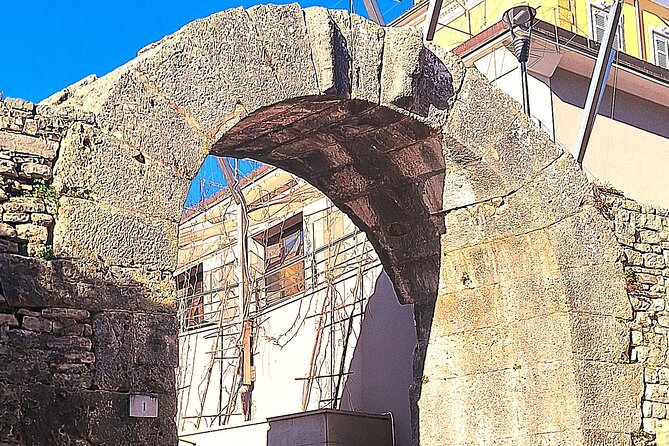
A standout in the itinerary is the Twin Gates of Pula—an impressive Antic/ancient-times monument with a secret passage to the city Castle area. The key word here is secret passage. Even if you don’t get access in the way you imagine, the idea gives the gates a story beyond pure looks.
You’ll have about 10 minutes here, which is short, but enough to:
- appreciate the twin structure
- understand the historical function
- get oriented for the castle connection
What makes this stop worth your attention is how it links city walls, movement, and later city identity. Pula’s history isn’t one straight line; it layers. These gates sit right on that overlap.
Again, admission for this stop is free, so it’s a great moment to take photos without checking your wallet mid-walk.
Pula Arena: the big name, but plan for paid entry
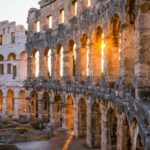
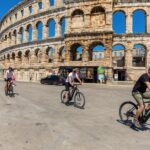
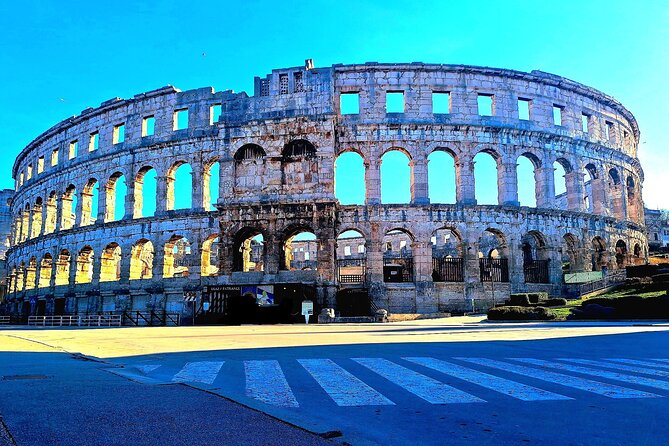
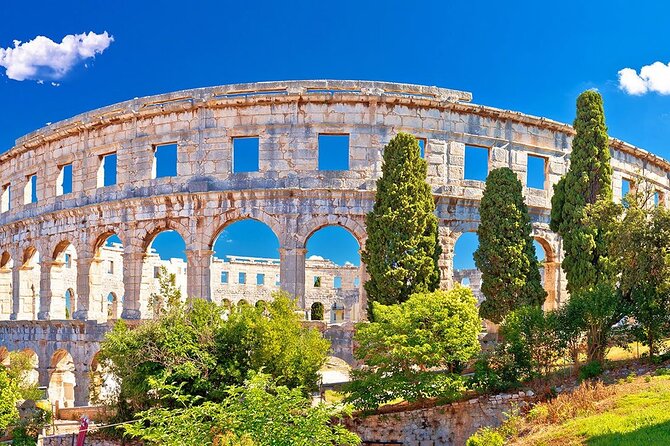
Then comes Pula Arena, the Roman amphitheater that most people come to see in Pula. This is your main-ticket attraction in the practical sense: it’s visually huge, and it’s the kind of place where a guide can help you understand why Romans built venues like this for entertainment.
Your stop is about 15 minutes. That usually works best if you treat it as a “see it and understand it” segment. If you want to step into areas inside, plan for tickets not included. The tour time alone likely won’t satisfy your curiosity if you’re hoping for a full interior visit.
One big plus from the experience feedback: guides explain the history behind the buildings and keep the walk paced well. If you’re going to feel satisfied at the Arena, it helps to have context—what you’re looking at, who it served, and how it fits into the city’s larger Roman story.
So here’s the decision point for you:
- If you want exterior views and explanation, this stop is already valuable.
- If you want to go inside, budget extra for admission.






Historical and Maritime Museum of Istria: defense meets waterfront thinking
After the Arena area, the tour heads toward the Historical and Maritime Museum of Istria. This stop offers a different angle from the purely Roman monuments. You’ll get a glimpse of the town’s defense castle setting, surrounded by churches—so the atmosphere shifts from amphitheater drama to protection, faith, and civic survival.
You’ll spend about 10 minutes here. And yes, admission tickets are not included. If your goal is museum time rather than just a guided orientation, this might feel short. But as part of a 2-hour walk, it can still give you a useful mental map: you start to see how Pula defended itself and how the sea shaped what mattered.
I like this stop because it balances the day. After gates and arches, the museum context helps you understand why the city developed the way it did. It also sets you up to explore nearby churches and viewpoints with better questions.
Franciscan Monastery of St. Francis of Assisi: ending with church details
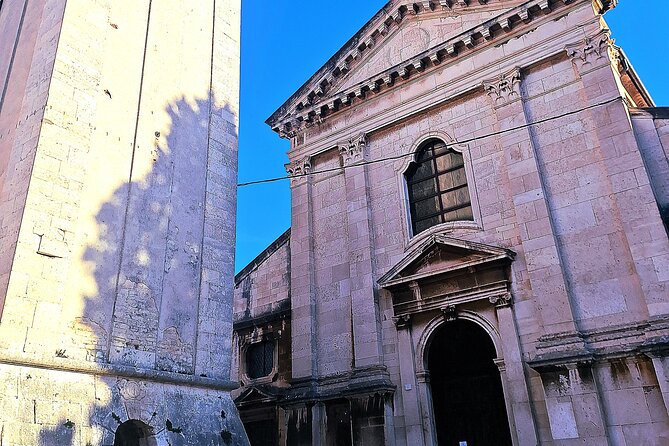
The final stop is the Franciscan Monastery of St. Francis of Assisi. This is about 10 minutes, and it’s a good landing pad for the tour. You get to look at the religious side of Pula—the churches the town offers—without needing to plan a separate visit for later.
If you’ve been focused on Roman structures for much of the walk, this ending feels like a natural twist. It’s still “history,” but it shows a different kind: community life, faith, and the later layers that continued shaping Pula after the Roman era.
And since admission is free for this stop, it’s an easy close to the loop. You’re also done with the paid-entry question for the day, which is handy if you’re trying to keep your schedule simple.
Price and ticket reality: where your $17.04 really goes
The price is listed at $17.04 per person and the tour runs about 2 hours. For that length, you’re paying for guided orientation through a dense cluster of recognizable Pula landmarks. In practical terms, you’re buying time efficiency: a guide helps you connect monuments so you don’t have to research each one in the street.
But you should go in with your eyes open about admissions. Some stops are free to view, while others require separate tickets. The temple, Arena, and the historical/maritime museum are noted as not included. That means your final total cost can be higher if you want to enter those interiors.
If you’re the type who mainly wants great exteriors and explanations, this tour stays strong value. If you want every inside ticket, you’ll still likely enjoy it, but you’ll need to plan for those extra payments.
Group discounts are mentioned, too. That can help if you’re traveling with friends or family and want a guide without going full private-tour budget.
Timing, pacing, and how to make it comfortable
This is a short walking tour with frequent stops, not a long hike. The itinerary is built around short segments—about 10–15 minutes each—so you can keep up without feeling like you’re sprinting from one highlight to the next.
It’s also limited to a maximum group size of 30, which helps with listening and question time. And because it’s near public transportation and most people can participate, it’s a solid choice even if you’re still figuring out Pula’s layout.
What to do for comfort: wear shoes you trust for uneven old-stone surfaces. Pula is the kind of place where the streets can look flat on a map but feel different underfoot in real life.
Who should book this walking history tour
You’ll like this tour if you want:
- a focused introduction to Pula’s Roman and later layers
- a guided route that hits the major monuments in about 2 hours
- explanations in English (and a manageable group size)
It’s especially good for first-timers who want to understand what they’re seeing right away—Temple of Augustus, Arch of the Sergii, Gate of Hercules, Twin Gates, and Pula Arena are a strong backbone for orientation.
One more useful note from the experience feedback: a guide named Erwin is specifically praised for lots of historical information plus personal experiences, with a friendly, flexible approach. If you happen to be assigned a guide with that style, you’ll likely enjoy the tour even more—because you’ll get story, not just dates.
Quick decision: Should you book it?
I’d book it if you want to maximize your time in Pula and you’re okay treating some of the big attractions as view-and-learn stops unless you also buy extra tickets for interiors. The money feels fair for a guided loop, especially because several monuments are free to enjoy and the route stays compact.
Skip or adjust expectations if your top priority is spending lots of time inside the Arena or the museum. The tour is built for short guided looks, not a museum afternoon.
If you’re in that sweet spot—half sightseeing, half learning—this tour is a smart way to understand why Pula still feels like a living stack of eras.
FAQ
How long is the tour?
The duration is approximately 2 hours.
What language is the tour offered in?
It is offered in English.
Where does the tour start, and where does it end?
It starts at Temple of Augustus, Forum b.b, 52100, Pula, Croatia, and ends back at the meeting point.
What is the maximum group size?
The tour has a maximum of 30 travelers.
Is the entrance fee included for all stops?
No. Admission tickets are not included for some locations, including the Temple of Augustus, Pula Arena, and the Historical and Maritime Museum of Istria. Other stops are listed as free.
Is there a mobile ticket?
Yes, it includes a mobile ticket.
Does the tour allow service animals?
Yes, service animals are allowed.
Is the tour near public transportation?
Yes, it is near public transportation.
What happens if the weather is bad?
The experience requires good weather. If it’s canceled due to poor weather, you’ll be offered a different date or a full refund.