REVIEW · SPLIT
From Split/Trogir: Mostar and Medjugorje Tour with Wine Tasting
Book on Viator →Operated by South Tours Croatia · Bookable on Viator
Two countries, one long day. This tour links Croatia to Bosnia and Herzegovina with a guided Mostar Old Bridge walk and a visit to Medjugorje’s Apparition Hill area. I love the way the day mixes history with real-time atmosphere, and I like that you’ll often be guided by locals—names you may hear include Ivan, Adriana, Ena, Amer, Antonio, Igor, and Emir.
One possible drawback: timing can feel rushed, especially if you want every planned moment in Medjugorje (church, prayers, and the hill) and in Mostar (museum and wine tasting).
In This Review
- Key Highlights You’ll Actually Care About
- Split-to-Bosnia Day Trip: Two Places, Different Moods
- Getting There and Back: Pickup Timing and Border Reality
- Mostar Old Bridge and Old Town: Why the Walk Matters
- The Museum and the Wine Tasting: Small Stops, Big Expectations
- How to Use Your Mostar Free Time Like a Pro
- Medjugorje: Church Time vs the Apparition Hill Climb
- Timing and Where the Day Can Feel Tight
- Price and Value: What $90 Buys You
- Who This Tour Fits Best (and Who Should Skip)
- Should You Book This Mostar and Medjugorje Tour from Split?
- FAQ
- How long is the tour?
- Where does the tour start from?
- Does this tour cross into Bosnia and Herzegovina?
- Do I need a passport?
- Is the wine tasting included?
- What entrance tickets are included?
- Are meals included?
- What language is the tour offered in?
- What should I wear for Medjugorje?
- What happens if weather is poor?
Key Highlights You’ll Actually Care About
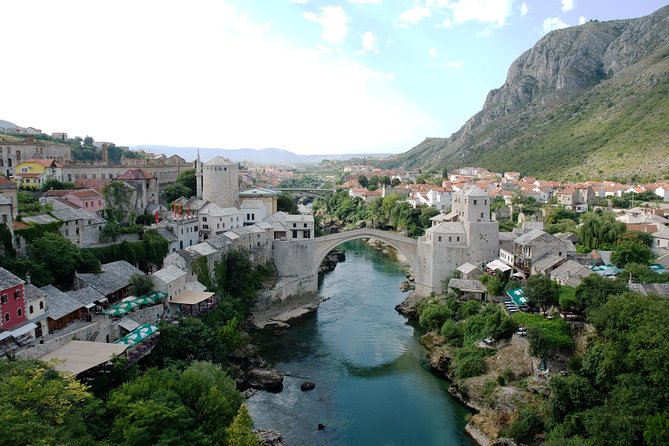
- UNESCO-listed Old Bridge in Mostar with a guided walk through rebuilt and restored old-town areas
- Wine tasting in Mostar paired with free time for shopping and Bosnian specialties
- Medjugorje’s two modes: church time or the steeper, rockier climb toward the Apparition Hill area
- Small group size (max 20) makes it easier to stay together on a busy day
- Border paperwork matters: passport required, plus a border crossing fee paid in cash at the meeting point
Split-to-Bosnia Day Trip: Two Places, Different Moods
This is the kind of day trip that works when you don’t want to choose one “type” of travel. Mostar gives you old-town texture—bazaars, shops, workshops, and the story behind the river and the bridge. Medjugorje shifts the mood to pilgrimage country, with the Church of St. James and the Apparition Hill area that pulls people in for faith, quiet, and prayer.
What I like most is how the tour tries to give you both experiences without pretending they’re the same. Mostar is social and visual; Medjugorje is contemplative and spiritual. If you’re traveling as a couple, with family, or as a small group, this combo can feel satisfying because you’re not “stuck” in one theme all day.
You do, however, need to match your expectations to the pace. This is about seeing highlights and making the day count, not about slow wandering with zero pressure.
You can also read our reviews of more tours and experiences in Split.
Getting There and Back: Pickup Timing and Border Reality
From Split (and the Trogir area, depending on your option), you’ll be picked up about 30 minutes before departure. Expect roughly 10 hours total, with driving time that varies with traffic and the time of day. The ride is in an air-conditioned minivan or coach, and the tour aims to run in all weather—so bring rain protection even if the forecast looks friendly.
Now, the part that catches people: crossing into Bosnia and Herzegovina is outside the EU and Schengen zone. Your passport is required. Also plan for a border crossing fee of €5 per person, and it’s cash only at the meeting point. I’d treat that as a checklist item, not an afterthought. If you show up with only an ID card, you can get stopped and forced to sort it out on the spot.
Practical tip: keep your passport in an easy-to-reach pocket or day-bag compartment. During a day like this, you don’t want to be searching through a backpack while the bus is waiting.
Mostar Old Bridge and Old Town: Why the Walk Matters
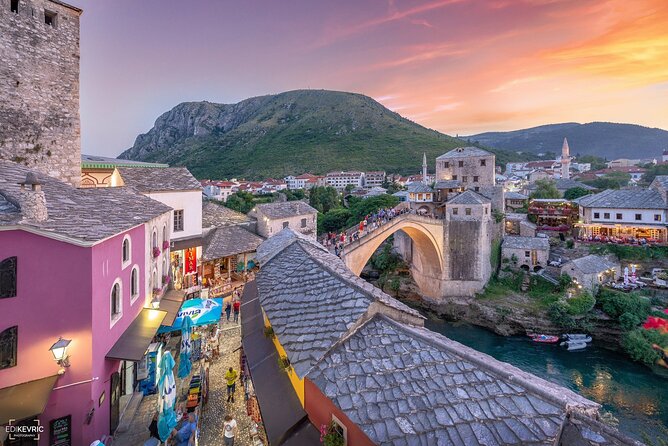
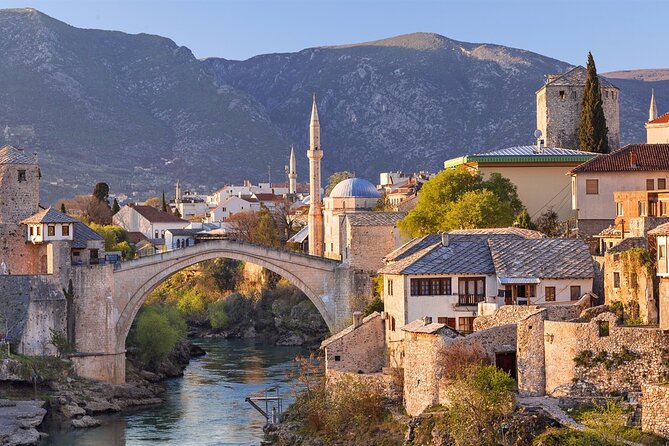
Mostar isn’t just a pretty town you pass through. It’s a place where the bridge is a physical symbol—and the tour leans into that. The Old Bridge (Stari most) is a top reason to come, and your guided time is designed to show you why it’s famous and why it’s emotionally loaded.
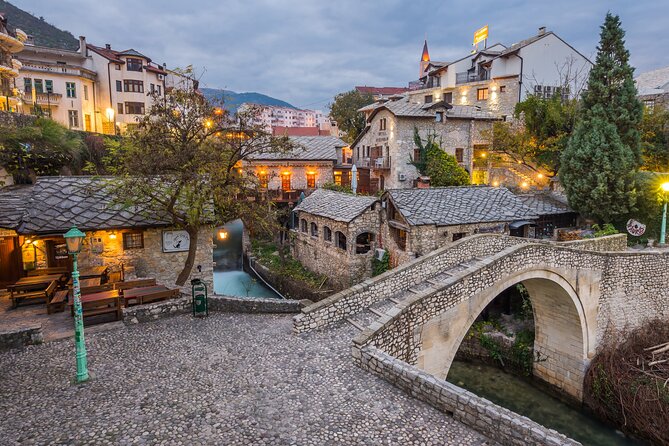
You’ll walk along and around the bridge area, with a guide framing Mostar’s story: the city’s historic layout, its old bazaar vibe, and how the area has been restored. The bridge itself has been rebuilt, and the old-town edges you see are part of that restoration effort—linked to international work credited toward UNESCO-related rebuilding and scientific support.
What you’ll enjoy here is the “meaning” layer. The bridge photo is great, but the point is understanding why people care about it. Your guide’s explanations can be the difference between seeing a landmark and actually grasping why it stands there the way it does.
Another plus: you get time for the old-town atmosphere, not just a march. Mostar is full of shops and workshops where you can browse and snack, and the day gives you room to do that.
The Museum and the Wine Tasting: Small Stops, Big Expectations
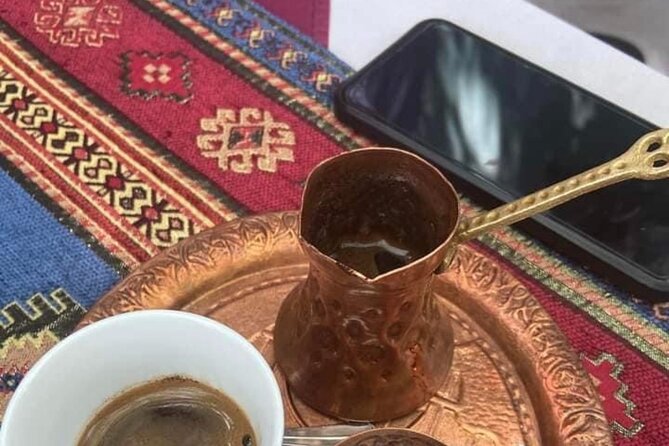
The tour includes entry tickets for the Authentic Ancient House Museum. That matters because it turns “walking around” into “learning what life looked like.” Even if the museum visit feels brief compared to how long you could spend in old-town streets, it gives context that shopping alone can’t.
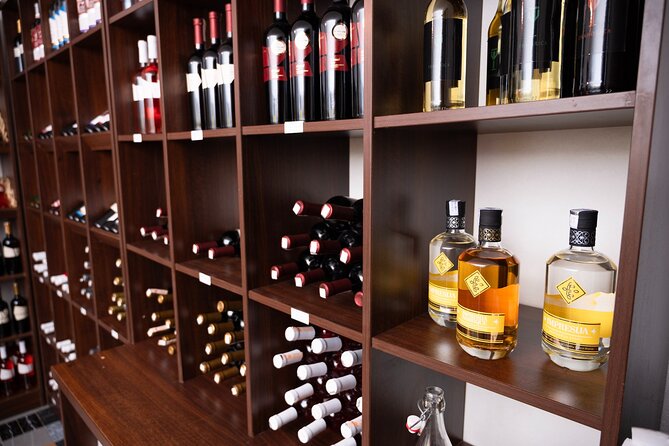
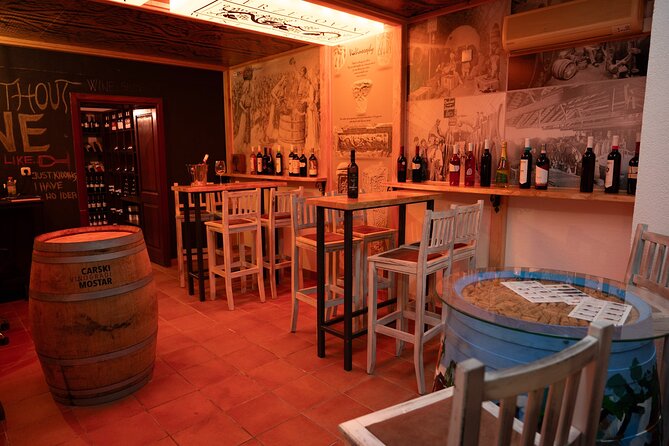
Then comes the wine tasting. The plan is a glass of wine in Mostar after the guided portion. This is one of those add-ons that can be a highlight—or a letdown—depending on how you imagine it ahead of time.
Here’s how I’d set yourself up for a good day: treat the wine tasting as a quick cultural moment, not a full tasting flight. In a tight schedule, it may be simple, and you should still enjoy it as a taste rather than a destination unto itself. If you want a long, vineyard-style experience, you’d likely need a different tour focused on wine.
Also note: food and drinks are not included. That’s why the free time in Mostar is important—you can turn it into an actual meal if you plan for it.
How to Use Your Mostar Free Time Like a Pro
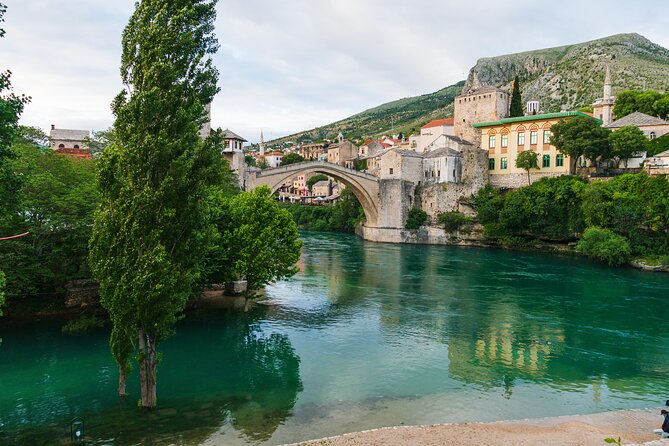
You’ll get free time in Mostar after the guided walk. This is where the day becomes personal. You can shop, take photos, or eat Bosnian specialties. Common picks include cevapi, pita, and burek—and even if you don’t have a specific place picked out, Mostar’s old-town streets make it easy to find a practical meal option.
The big win: you’re not locked into a single “lunch with the group” format. If you like browsing—textiles, souvenirs, small gifts—you’ll enjoy being able to slow down and look.
Quick sanity check: wear comfortable shoes. Mostar’s old-town areas are very walkable, but you’ll be moving for photos, viewpoints, and getting from bridge to bazaar to museum and back. If you’re sensitive to walking on uneven pavement, plan for that.
If you’re traveling with people who get bored quickly, this is still a decent segment because Mostar offers options: history for the curious, browsing for the shoppers, and food for people who want a simple win.


Medjugorje: Church Time vs the Apparition Hill Climb
Medjugorje is where the day changes gears. You’ll learn about its recognition beginning in 1981, when six young people described apparitions of the Virgin Mary. The town is a pilgrimage destination, and the atmosphere is built around spiritual renewal—plus the town’s rolling hills provide a dramatic backdrop.
Your main focus is usually the Apparition Hill area and the Church of St. James. The tour gives you a couple ways to experience it:
- If you’re coming mainly for prayer and a calm visit, spending time around the church makes sense.
- If you want the full “pilgrim effort” moment, you’ll consider the climb toward the hill area.
The climb itself can be more than a casual stroll. It’s often described as rocky and uneven, with areas where you’ll need solid footwear and cautious steps. If you’re with someone older, or with mobility limits, or if the terrain doesn’t match your comfort level, it’s reasonable to skip the hill and spend time in the church area instead.
Practical tip: bring shoes with grip. If it’s wet or muddy, that climb becomes even less forgiving. And if you’re easily fatigued, plan your effort early—once the bus schedule is moving, there’s less flexibility than you’d have on your own.
Timing and Where the Day Can Feel Tight
A day like this runs on a clock. Even when the tour is organized well, you can end up feeling “behind” if you get pulled into extra shopping time, photos, or long conversations with shopkeepers.
The two usual pressure points:
- Medjugorje time balance: church visit versus the climb.
- Mostar add-ons: museum and wine tasting can feel like quick moments rather than full experiences.
Also, the day depends on traffic and border flow. If there’s congestion on the route, you’ll feel it more in the later part of the day. This is one reason I think it helps to choose your priorities before you leave Split: decide whether you’re aiming for the hill climb, or if church time is your main goal.
One more note: some travelers care deeply about the exact order of events. If wine tasting or the museum visit are must-haves for you, I’d treat them as “check that it’s happening” items during the day—ask early and politely so your time is protected.
Price and Value: What $90 Buys You
At around $90.51 per person, this tour is priced like a high-value “highlights package.” You’re not just paying for a ride. You’re paying for:
- guided time in Mostar (including the Old Bridge walk and context),
- entrance to the Authentic Ancient House Museum, and
- a structured visit to Medjugorje’s key areas,
- plus pickup and drop-off around Split/Trogir (depending on option).
What’s not included is also part of the value math: food and drinks are on you. That means if you want a full sit-down lunch plus snacks, budget extra beyond the tour price.
Is it “worth it”? For many people, yes, if you want a first look at Bosnia and Herzegovina without spending the night. You get a fast cultural sampler: the Ottoman-era feel of Mostar’s old-town life and the pilgrimage focus of Medjugorje.
If you’re the kind of traveler who wants slow, detailed pacing (especially in Medjugorje), you might feel the day is too compressed. But if your goal is to check key highlights off with a guide and get back to Croatia at a reasonable hour, it’s a solid deal.
Who This Tour Fits Best (and Who Should Skip)
This fits best if you:
- want a day trip from Split that actually crosses into Bosnia,
- like guided interpretation, not just self-guided wandering,
- can handle some walking and basic uphill terrain,
- want both Mostar’s historic atmosphere and Medjugorje’s spiritual setting.
It may be less ideal if you:
- need lots of free time in one place (you’ll get it, but it’s limited),
- have mobility challenges that make uneven, rocky climbs difficult,
- or you’re expecting a long wine experience in a vineyard setting.
For families: it can work, but think carefully about the hill climb. For couples: it’s great if you’re aligned on priorities—history + faith + photos. For solo travelers: the guide and group structure can make this day smoother than trying to arrange transportation and timing yourself.
Should You Book This Mostar and Medjugorje Tour from Split?
Book it if you want a guided highlights day that mixes history and pilgrimage without stress over logistics. I especially like this option when you’re visiting Croatia and want Bosnia as a meaningful add-on, not an afterthought. The Mostar Old Bridge walk and the Medjugorje focus give you two strong “reasons to go,” not just a sightseeing checklist.
Skip or look for alternatives if your top priority is one place only—either deep time in Mostar or a more relaxed, unhurried Medjugorje experience. In this format, the schedule nudges you toward decisions: church or hill, museum or browse, quick wine moment or “move along.”
If you do book, do one thing for your future self: pack sturdy shoes and a rain layer, and make sure your passport is ready. Those two details keep the day moving and let you focus on the experience instead of the hurdles.
FAQ
How long is the tour?
It runs for about 10 hours (approx.), including transfers, though drive time can vary based on traffic and the time of day.
Where does the tour start from?
The tour starts in the Split area (including Trogir pickup options). You’ll meet at a pre-arranged meeting point, and pickup is described as being in front of your hotel about 30 minutes before the tour starts.
Does this tour cross into Bosnia and Herzegovina?
Yes. The tour visits Mostar and Medjugorje in Bosnia and Herzegovina.
Do I need a passport?
Yes, you need a current valid passport on the day of travel. A passport reminder is also important because border issues can happen if someone brings only an ID card.
Is the wine tasting included?
The tour description includes a wine tasting in Mostar, with guests invited to taste a glass of wine.
What entrance tickets are included?
Entry tickets for the Authentic Ancient House Museum are included. The tour also lists admission tickets as free for the main stops.
Are meals included?
No. Food and drinks are not included, so you’ll want to plan to pay for lunch or snacks during free time.
What language is the tour offered in?
The tour is offered in English.
What should I wear for Medjugorje?
You should dress appropriately for the day and weather. In addition, the climb toward the Apparition Hill area can involve rocky, uneven ground, so sturdy footwear helps.
What happens if weather is poor?
The tour operates in all weather conditions, but if it’s canceled due to poor weather, you’ll be offered a different date or a full refund.