REVIEW · ZADAR
Group History Walking Tour in Zadar Old Town
Book on Viator →Operated by Adria Mice · Bookable on Viator
Zadar’s Old Town is small, but it packs a punch. This 1-hour Zadar Old Town Group History Walking Tour is a fast, organized way to see the major landmarks—Roman ruins, big church stops, and the coastal finale. I especially like how it turns into a living history walkthrough, with a guide who knows how to explain what you’re looking at without dragging it out, and how it stays practical with a mobile ticket.
The one possible drawback: since it’s a walking tour that runs outdoors, you’ll want to be ready for uneven steps and changing weather, and the experience notes it requires good weather to run.
If you want a quick orientation before you wander on your own, this format fits well: a licensed guide, English service, and a maximum group size of 20. Also, it’s priced reasonably for a guided loop that includes a free admission ticket for the included stops, plus it ends at one of Zadar’s most memorable sights.
In This Review
- Key Highlights You’ll Feel During the Walk
- Zadar Old Town in 60 Minutes: The “Orientation” Sweet Spot
- Starting at Trg pet bunara: How the Route Gets You Oriented Fast
- Nora Rooms, Zadar: The First Stop and Why It Matters
- Roman Forum and Captain Tower: When You See the Bones of the Town
- Five Wells Square and Kalelarga: The City-Heart Moments
- People’s Square, St. Donatus, and St. Anastasia: Churches That Make More Sense Together
- Sea Organ: The End Point That Turns the Walk Into a Finish Line
- Price and Value: $21.29 for a One-Hour Guided Loop
- What It’s Like With the Guides: Warm, Responsive, and Focused
- Weather and Walking Reality: What to Plan For
- Who This Tour Is Best For (and Who Might Want Something Else)
- Should You Book This Zadar Old Town Walking Tour?
- FAQ
- How long is the Zadar Old Town group history walking tour?
- What is the price per person?
- Is the tour in English?
- Do I need to buy an admission ticket for the included stops?
- Where do I meet the guide?
- Where does the tour end?
- Is pick-up included?
- How big is the group?
- Are service animals allowed?
- What if the weather is bad?
- What is the cancellation policy?
Key Highlights You’ll Feel During the Walk

- A tight 1-hour circuit that covers the Old Town’s headline sights without wasting time
- Licensed guide storytelling that makes Roman and medieval Zadar easier to place
- Roman Forum to Church stops like St. Donatus and St. Anastasia on one route
- Five Wells Square and Kalelarga—the kind of spaces you’ll want to revisit later
- The Sea Organ finish gives you a satisfying coastal payoff at the end
- Small group size (max 20) keeps it easier to ask questions
Zadar Old Town in 60 Minutes: The “Orientation” Sweet Spot
This tour is built for people who don’t want to spend half a day just getting their bearings. In about an hour, you move through the Old Town’s core areas—so you come away with a mental map of where everything sits: Roman leftovers, medieval landmarks, and the lively squares that connect them.
The value here isn’t that you’ll see everything in Zadar. It’s that you’ll see the right things first. When you later explore on your own, you’ll know why a tower matters, what a forum area used to do, and how the church sites relate to the rest of the town core. That kind of context turns casual wandering into something sharper.
Another plus: the tour is offered in English and is designed so most people can participate. In practice, that means it’s a good option for a mixed travel group—couples, solo visitors, and anyone who wants a guided structure without it feeling too formal.
You can also read our reviews of more tours and experiences in Zadar.



Starting at Trg pet bunara: How the Route Gets You Oriented Fast
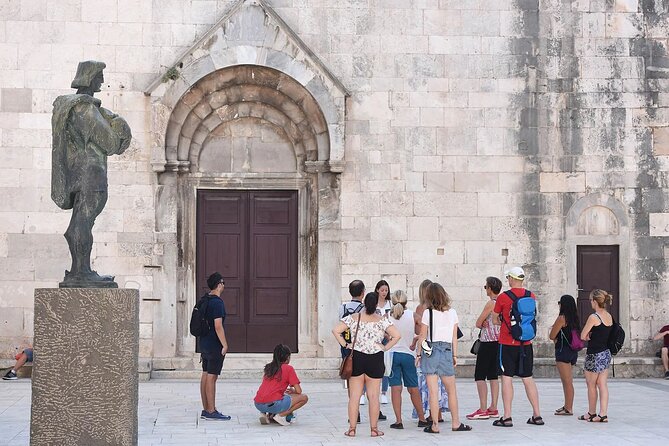
You begin at Trg pet bunara. It’s a strong starting point because it places you right into the Old Town’s walking rhythm from the first minutes. Rather than drifting between random streets, the walk leads you through the key areas in a logical order—so you’re not constantly backtracking.
From there, the tour is set up to build momentum. You’ll get early landmarks that help you understand Zadar’s layered story—Roman-era structure first, then the medieval religious and civic highlights that followed. When you see the town this way, you stop treating it like a list of sights and start seeing it as a timeline.
One practical note: there’s no pick-up included. So you’ll want to make sure you can reach the meeting point on your own, either by foot or via nearby public transportation (the tour is noted as being near public transit).
Nora Rooms, Zadar: The First Stop and Why It Matters
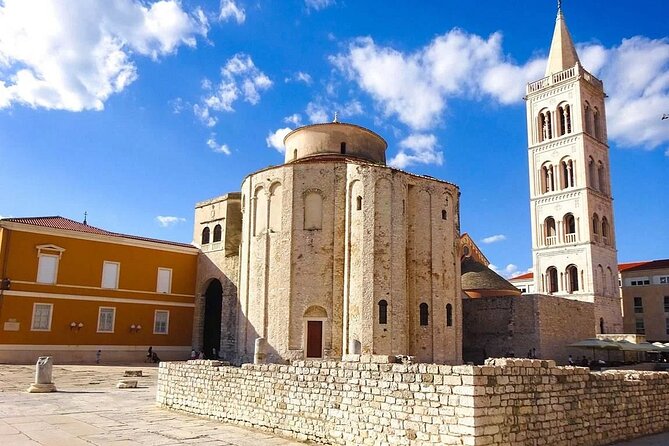
One of the first stops on the route is Nora rooms (listed as Stop 1). Even if you don’t already know the specifics, the value of a guided start like this is simple: you get a clear explanation of what you’re looking at before you move on.
That’s a big difference between touring with a guide and trying to piece it together from signs. With a good guide, the details you notice become meaningful. You’ll be able to look at later ruins and structures and understand how they fit into the bigger picture.
If you tend to skip explanations on your own trips, this is where you’ll benefit most. The tour starts with enough context that the remaining stops feel connected, not separate.
Roman Forum and Captain Tower: When You See the Bones of the Town
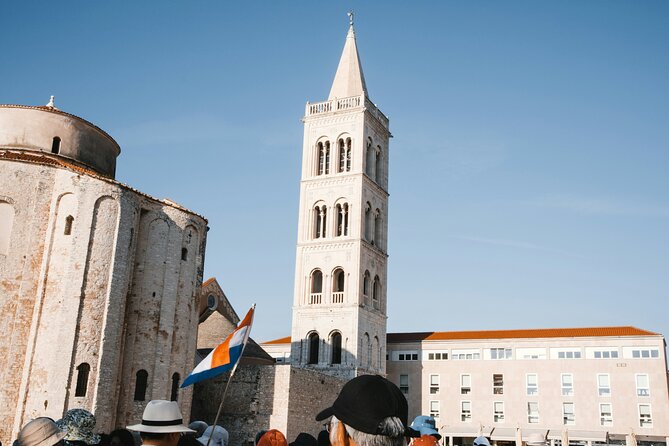
The route includes Roman Forum sights and the Captain Tower. These are the kind of places where it’s easy to think, Okay, that’s old—then move on. With the right guidance, you’ll notice that ruins and towers aren’t just pretty backdrops. They’re clues.
A Roman forum area helps you understand how the city functioned when Zadar had a very different role in the region. You’re not just looking at stone—you’re looking at where civic and everyday life would have happened. The Captain Tower complements that by offering a vertical anchor—something you can use to orient yourself visually as you keep walking.
The best part of including these early is that it sets up what comes next. When you later reach church stops and squares, you’ll see them as part of the same city system, not just isolated monuments.
Five Wells Square and Kalelarga: The City-Heart Moments

You’ll also pass by Five Wells Square and Kalelarga. These are the places where the tour shifts from historic explanation to atmosphere. Squares and main streets are where you feel how Zadar moves—where people gather, pause, and connect different parts of the Old Town.
Five Wells Square is especially useful to include on a guided loop because it’s the kind of spot you might remember visually later even if you forget the exact details. Kalelarga, the main thoroughfare, helps you understand how visitors and locals flow through the core. That makes the walk feel practical, not just educational.
This section is also where you’ll likely notice the benefits of a maximum group size of 20. A smaller group makes it easier to stop for explanations, then continue without getting tangled in traffic on busy streets.






People’s Square, St. Donatus, and St. Anastasia: Churches That Make More Sense Together
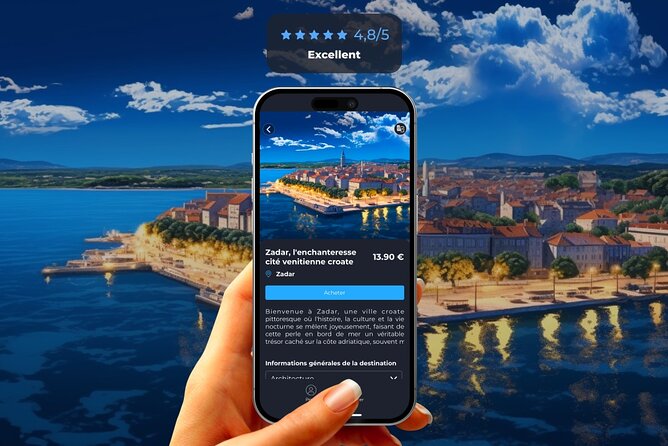
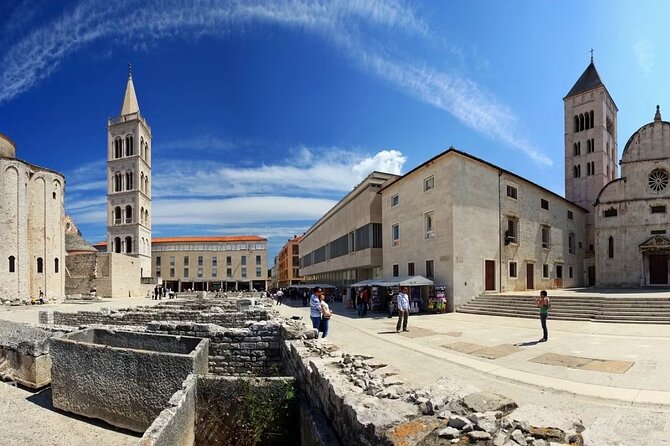
The tour includes People’s Square, St. Donatus Church, and St. Anastasia’s Cathedral. Putting these together on one walk is smart, because churches in old towns often feel repetitive if you’re only seeing one at a time. Here, you start comparing what you’re seeing—how each building’s style reflects the era and how the city’s identity concentrated around these landmarks.
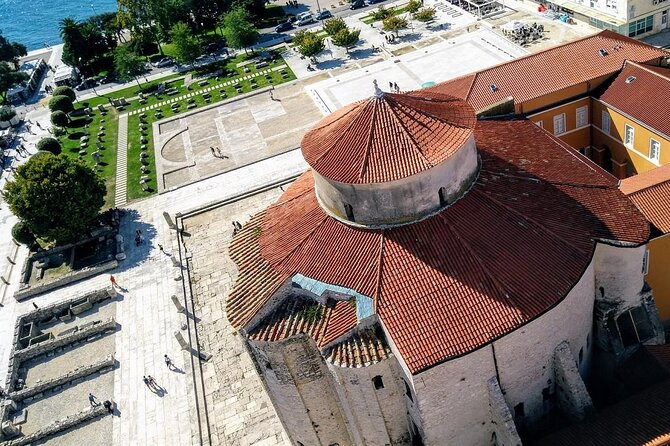
St. Donatus is one of those sights people recognize even if they can’t place it right away. A guided walkthrough helps you understand why it’s such a signature stop. St. Anastasia’s Cathedral brings another layer, and walking between these points helps you see them in relation to the spaces around them.
The People’s Square stop also helps you connect religion and civic life. Old towns usually don’t separate these categories—they overlap in how people used the streets, gathered in public spaces, and built monumental structures near daily life.
Sea Organ: The End Point That Turns the Walk Into a Finish Line
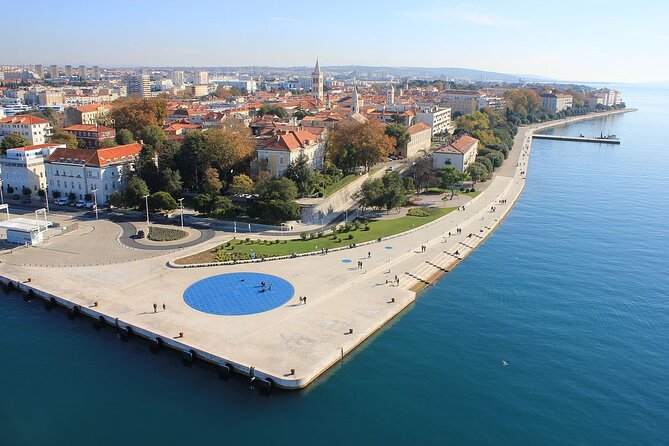
The tour ends at the Sea Organ. This matters because the Sea Organ is a “final photo” destination in the best way. You’re not ending in a random street corner; you’re ending at a spot tied to the waterfront and Zadar’s modern charm.
If you like finishing a sightseeing day with something memorable and slightly unusual, you’ll appreciate this. It also means you’re set up well for your next step after the tour—whether that’s lingering by the water, grabbing a snack, or continuing along the coast.
In other words, the route gives you structure first, then a satisfying payoff at the end.
Price and Value: $21.29 for a One-Hour Guided Loop
At $21.29 per person, the price feels more about what you gain than what you pay. For that cost, you get a licensed guide and a tour that touches multiple top Old Town sights in about an hour. You also have a free admission ticket for the included items (the tour notes admission ticket is free).
So the value is in three places:
- Time saved: you’re not sorting out the “what should I see first?” problem
- Guide context: Roman and medieval stops make more sense when you’re walking and learning in order
- A tight route: you get multiple landmarks without it turning into a long, tiring day
If you’re someone who likes to explore after guided time, this price makes sense as an investment in your later freedom. You’ll likely feel less lost when you strike out on your own afterward.
If you want an extended deep-dive experience where you go inside multiple sites for long periods, this may feel short. But for an Old Town orientation, it’s a good fit.
What It’s Like With the Guides: Warm, Responsive, and Focused
The reviews you’ll find for this tour point to one consistent strength: the guide’s ability to be both informative and friendly. One review specifically mentions Lydia, describing her as a great ambassador for Zadar—knowledgeable, enthusiastic, responsive, and warm.
That kind of guide matters because it changes how the stops land. You don’t just hear dates and names. You get answers to the small questions that pop up mid-walk—what you’re looking at, why it’s there, and how it connects to the broader Old Town layout.
Also, the tour runs with a small group format (up to 20). That tends to make a guide feel more like a real conversation than a performance for a crowd. For most people, that’s a major quality signal.
Weather and Walking Reality: What to Plan For
This experience requires good weather. That’s not a small detail—Zadar’s Old Town is a walking route, and the tour is timed at about an hour. If weather shifts, you might need to be flexible.
You should also plan for the normal walking-tour stuff: uneven Old Town surfaces and lots of standing to look and listen. The tour notes most travelers can participate, but if you’re dealing with mobility limitations, it’s worth thinking ahead about whether your pace matches a one-hour Old Town route.
A small but helpful note: service animals are allowed, and the meeting point is near public transportation. So even if you’re not staying right in the core, you can still get there without too much hassle.
Who This Tour Is Best For (and Who Might Want Something Else)
This is a strong choice if:
- you want a quick Old Town orientation
- you like Roman ruins and major church landmarks
- you’ll appreciate finishing at the Sea Organ and continuing your day by the water
- you prefer a smaller group setting (max 20) with time to ask questions
You might consider a different option if:
- you need pick-up service
- you want longer time at a single site instead of moving through many key stops
- you’re planning a trip around tight weather windows and can’t adjust at all
Should You Book This Zadar Old Town Walking Tour?
Yes—if you want a structured, hour-long introduction that helps you understand Zadar’s main landmarks in a walkable loop. The combination of a licensed guide, a free admission ticket for included items, and a logical route ending at the Sea Organ is a clean value proposition.
I’d book it when you want to start your day with clarity. Do it early enough that you can use what you learn to guide your later wandering. If you’re the type who loves context—why a tower or forum matters—this tour will feel like money well spent.
FAQ
How long is the Zadar Old Town group history walking tour?
The tour is approximately 1 hour.
What is the price per person?
It costs $21.29 per person.
Is the tour in English?
Yes, it is offered in English.
Do I need to buy an admission ticket for the included stops?
The experience notes that an admission ticket is free.
Where do I meet the guide?
You start at Trg pet bunara, 23000, Zadar, Croatia.
Where does the tour end?
The tour ends at the Sea Organ, Obala kralja Petra Krešimira IV, 23000, Zadar, Croatia.
Is pick-up included?
No, pick-up is not included.
How big is the group?
The tour has a maximum of 20 travelers.
Are service animals allowed?
Yes, service animals are allowed.
What if the weather is bad?
The experience requires good weather. If it’s canceled due to poor weather, you’ll be offered a different date or a full refund.
What is the cancellation policy?
You can cancel for a full refund up to 24 hours in advance of the experience’s start time. If you cancel less than 24 hours before, you won’t get a refund. Cut-off times are based on local time.