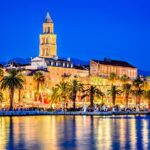
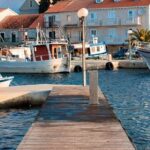
REVIEW · SPLIT
History & Cultural Walking Tour of Split and Diocletian’s Palace
Book on Viator →Operated by Ancient Tours · Bookable on Viator
Diocletian built a city inside a city. This 90-minute Split history walk takes you straight into the UNESCO-listed core and lets the streets, arches, and palace walls explain how the city grew around an emperor’s private world. You’ll move efficiently from the palace’s main hub to the harbor promenade, with a guide who ties each stop to the people and ideas that still show up in Split today.
I especially like two things. First, the tour starts at the Peristyle, so you get oriented instantly—this is the central square that connects you to almost everything else in Diocletian’s Palace. Second, you’ll see the big headline sights (Golden Gate, Gregory of Nin, Riva Harbor) and the human-scale places (Fruit’s Square and a pass by Split’s Synagogue) that make Split feel like a living city, not just a museum.
One drawback to note: this is a walking route and it’s not recommended for travelers who have issues with high steps. Also, the Split Synagogue stop is a pass-by and its admission is not included, so if you want to go inside, you’ll need to plan for that separately.
In This Review
- Key highlights I think you’ll care about
- Why Diocletian’s Palace is made for a 90-minute walk
- Meeting at Peristil and getting oriented fast
- Peristyle, vestibule, and substructures: where the palace’s “how it worked” shows up
- Golden Gate and Gregory of Nin: more than a dramatic entrance
- Riva Harbor and Fruit’s Square: seeing Split as a living city
- Split Synagogue: what you’ll see, and what you’ll need to pay for
- The guide is the difference-maker (and names you might hear)
- Price and value: is $22.98 worth your time?
- Logistics that affect comfort and enjoyment
- Who should book this Split history tour?
- Should you book this Split history walk?
- FAQ
- How long is the History & Cultural Walking Tour of Split and Diocletian’s Palace?
- How much does the tour cost?
- How large is the group?
- What language is the tour offered in?
- Where does the tour start?
- Do I need to pay admission for the stops?
- Is the tour mobile-ticket friendly?
- Is it suitable for people who have trouble with steps?
- Can I cancel and get a full refund?
- Is there a cultural component during the tour?
Key highlights I think you’ll care about
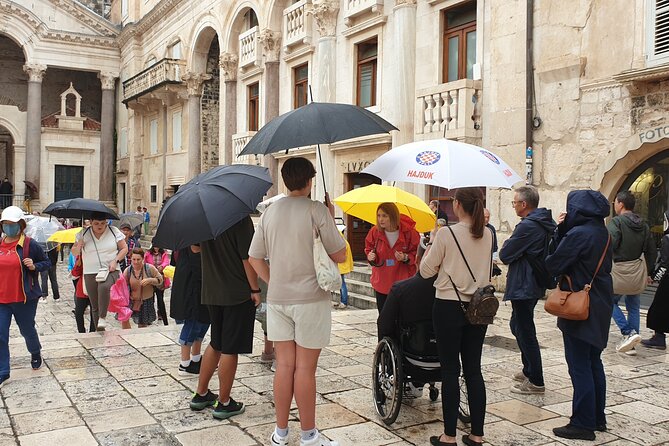
- Max 15 travelers keeps the tour intimate and makes Q&A actually work
- Free entry for most stops means you focus on the stories, not the line items
- Diocletian’s Palace in a logical order: Peristyle → Vestibule → substructures → Golden Gate
- Split landmarks beyond the palace like Riva Harbor and Trg Brace Radic
- Language and identity stories tied to the statue of Gregory of Nin
- A short cultural moment with traditional Dalmatian klapa singing during the tour
Why Diocletian’s Palace is made for a 90-minute walk
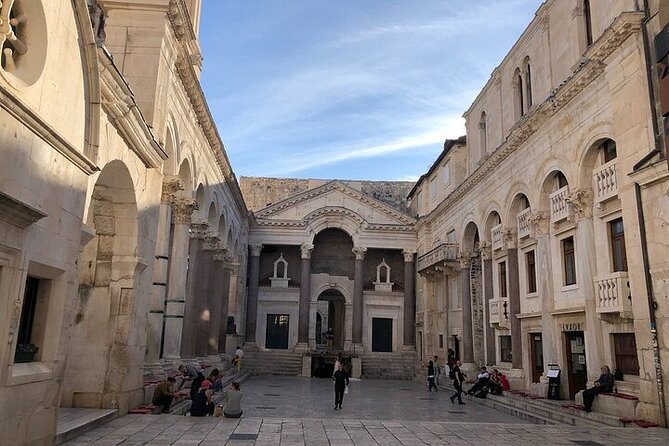
Split’s greatest shortcut is also its biggest clue. Diocletian’s Palace is not off to the side—it’s the reason Split looks the way it does. Streets weave through Roman stone like the city built itself around the walls, and that’s exactly what a walking tour helps you understand.
The best part of this format is pacing. In about 1 hour 30 minutes, you get the main “reads” of the palace and the surrounding old town without burning an entire morning on logistics. It’s a smart first-night kind of outing. You finish with a mental map you can use later, even if you only have a day or two in town.
You can also read our reviews of more tours and experiences in Split.


Meeting at Peristil and getting oriented fast
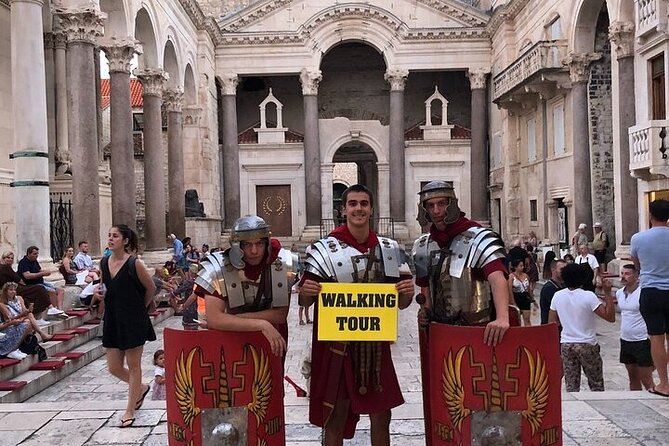
You meet at Peristil ul., right by the palace area. That matters more than it sounds. Starting where people actually pass through—the Peristyle—means you’re not spending the first 10 minutes just learning which way is north.
From that first square, the tour’s flow makes sense. You’re guided into spaces that sit in the palace’s internal logic: ceremonial areas first, then the transitional/functional spaces, and finally the entrances and the street-level view toward Split. It’s a route that helps you read the architecture instead of just seeing it.
You’ll also hear the kind of guidance that keeps your attention. This tour is designed around simple movement and clear explanations, so even if you’re not a die-hard Roman-history person, you’ll still connect the dots.
Peristyle, vestibule, and substructures: where the palace’s “how it worked” shows up
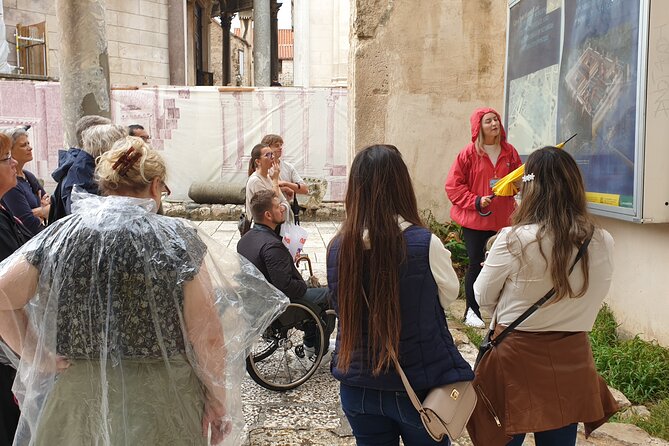
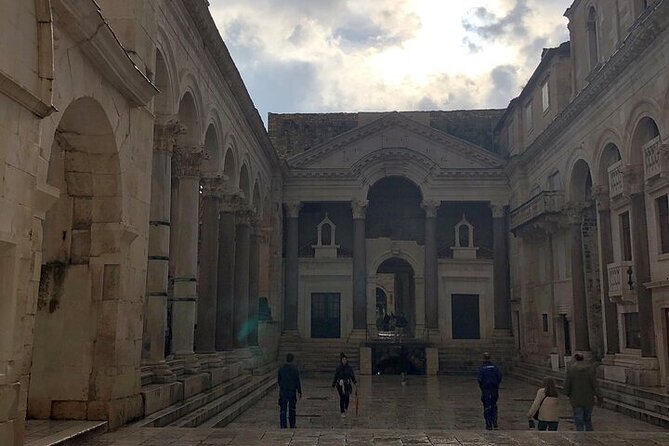
Stop 1 is the Peristyle of Diocletian’s Palace—the central square that links to almost everything else. Here, you get the palace’s overall layout in your head: open space, commanding views, and a sense of how the complex functioned as a self-contained world.
This is also where I think the guide’s job is hardest—and where they usually shine. The Peristyle can feel like a postcard spot if you don’t get the context. With the right explanations, it becomes the palace’s beating center: an architectural crossroads where power, movement, and ceremony meet.
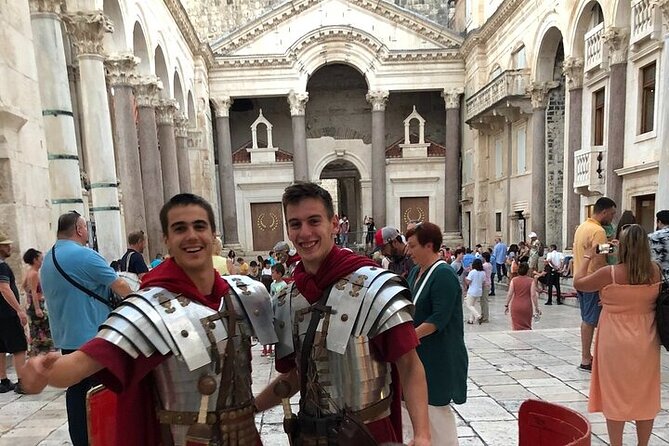
Stop 2 moves to the Vestibulum. This is a smaller stop, but it adds texture. You’ll learn about Emperor Diocletian and, at this point in the tour, you might even catch traditional Dalmatian singing—something you don’t get from a standard “walk and point” style tour. It’s brief, but it gives the stone a voice.
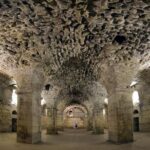
Stop 3 takes you through the Diocletian Palace substructures—the under-structure spaces where the tour explains how parts were constructed and what they served over time. You won’t visit the museum portion during this walk, which is a good choice if your goal is understanding the complex quickly. If you want more, you can still visit the museum afterward at your own pace.
What I like about this trio (Peristyle → Vestibulum → substructures) is that it covers three different “layers” of meaning:
- the palace’s public/central flow
- the emperor-adjacent spaces
- the practical spaces that show how it all worked behind the scenes
Golden Gate and Gregory of Nin: more than a dramatic entrance
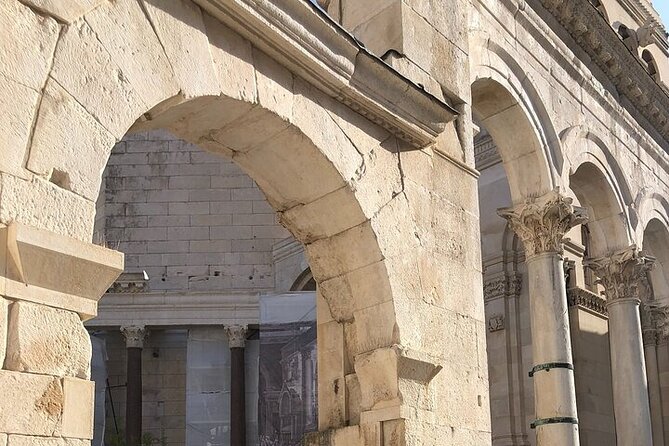
Stop 4 is the Golden Gate, the palace’s main entrance. This isn’t just a photo stop. The guide uses it to connect architecture to identity and language through the statue of Gregory of Nin.
Gregory of Nin is one of those figures that’s easy to miss if you only think in terms of famous Roman emperors. Here, you learn why he matters to Croatian history and language—so suddenly the palace entrance isn’t only about Roman symbolism. It becomes part of a longer story that still shapes what people feel about their heritage.
The Golden Gate also helps you understand why Split’s old town feels visually dramatic. You get the sense that entrances and thresholds were never neutral. They were messages.
Riva Harbor and Fruit’s Square: seeing Split as a living city
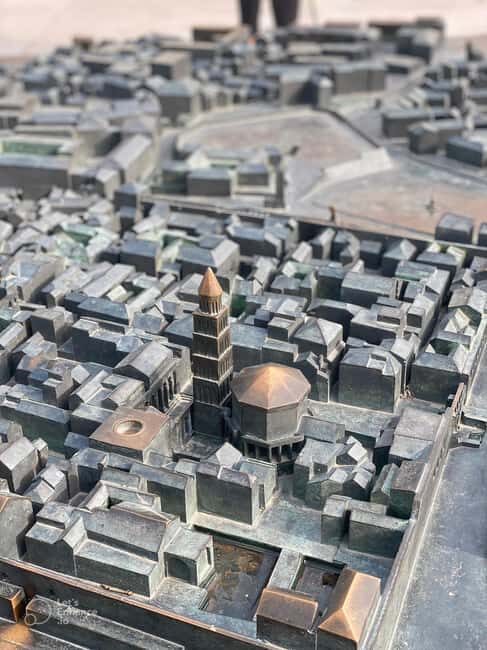
Stop 5 heads to Riva Harbor, where you’ll see a bronze model of Diocletian’s Palace and learn about the history of Split’s Riva promenade. This is a useful transition moment. You go from Roman scale and palace structure to street-level life—where people still stroll, meet, and watch the day unfold.
The bronze model helps you mentally “zoom out.” It turns what you just walked through into something you can picture from above. That’s a big help later when you’re wandering on your own and trying to make sense of which walls connect to which streets.
Stop 6 is Fruit’s Square (Trg Brace Radic). This stop brings you into a more local, city-specific story—one that ties in a Venetian citadel and the importance of Marko Marulić, often described as an origin point for Croatian literature. In other words: you’re not only learning who built things. You’re learning what kind of ideas those places supported.
This pairing—Riva Harbor and Fruit’s Square—works well because it balances “grand monuments” with civic life. Split is a port city. You can’t understand it by only looking inward at the palace walls.




Split Synagogue: what you’ll see, and what you’ll need to pay for
Stop 7 is the Split Synagogue. The tour passes by the 16th-century building and explains the history of the Jewish community in Split. Importantly, synagogue admission is not included in the tour price.
So here’s how to use this stop wisely. If you’re curious and you want to go inside, treat the tour as your orientation. You’ll leave knowing what you’re looking at and why it matters, then you can decide whether to add the visit on your own time.
Even without going in, this pass-by is valuable because it keeps the story of Split human and multi-layered. Cities are made by many communities, not just the dominant power of one era.
The guide is the difference-maker (and names you might hear)
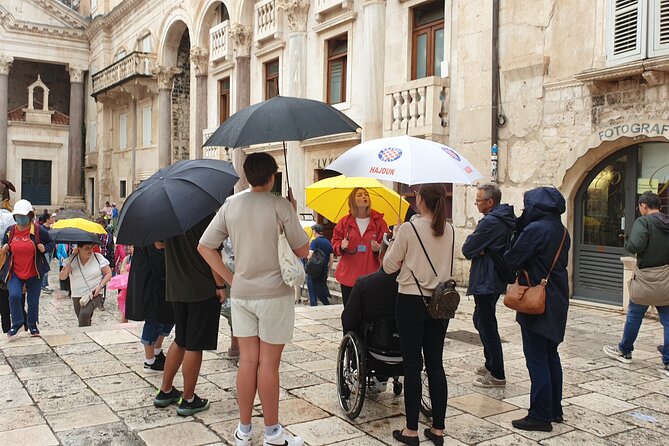
A history walk lives or dies by the person talking. This one is led by an educated guide with strong command of the sites around the palace.
What stood out from different guide experiences is how they shape the tour into a real conversation, not a lecture. I like the way guides keep it lively—sprinkling humor, calling for quick questions, and adjusting the pace so the group stays engaged.
You might end up with guides like Darko, Ante (Anthony), or Ivana. Those names matter because they’re the kind of guides who turn architecture into story, and story into something you can remember later while you’re walking around on your own.
Price and value: is $22.98 worth your time?
At $22.98 per person for roughly 1 hour 30 minutes, this tour sits in the “easy decision” zone—especially if you’re spending limited time in Split. The real value isn’t only the price. It’s what you get for that price: a structured route through the palace’s core spaces plus key old-town sights.
Also, most stops are marked as free admission for the tour portion. That keeps the cost predictable and means you’re paying for interpretation and guidance rather than a pile of separate entry fees.
The small-group size (up to 15 travelers) is another value driver. When you have fewer people, the guide can slow down at the moments that need explanation—like why Gregory of Nin matters or what the palace substructures were for.
If you’re history-minded, this is a strong way to get context without spending hours. If you’re not, it’s still a practical orientation tour that helps your first day in Split feel less like wandering in the dark.
Logistics that affect comfort and enjoyment
A few practical notes to keep your day smooth:
- It’s an English-language tour, and it’s designed for most travelers.
- You’ll use a mobile ticket.
- The route is near public transportation.
- Service animals are allowed.
- It’s not recommended for travelers with issues navigating high steps.
Since it’s a walking tour, bring comfortable shoes. The route moves through old-town surfaces and palace-adjacent areas where stairs and uneven areas can happen. If you’re even slightly worried about footing, this is the key line to pay attention to.
Who should book this Split history tour?
Book it if you:
- want a clear introduction to Diocletian’s Palace and how it shaped Split
- like guided context that makes monuments easier to understand
- appreciate small groups and a pace that doesn’t feel rushed
- need a strong first-night orientation, especially if you only have a couple of days
Consider skipping or adjusting your expectations if you:
- need a fully step-free route (this tour flags high steps)
- only care about visiting inside museums or closed-ticket sites (the museum portion of the substructures is not visited; synagogue admission is not included)
Should you book this Split history walk?
Yes—if you want your time in Split to feel organized and meaningful. This is the kind of tour that helps you see more later, because you understand what you’re looking at sooner. The palace stops are thoughtfully grouped, and the add-ons (Riva Harbor, Fruit’s Square, the synagogue pass-by) keep the story connected to the city you’ll actually walk through after the tour ends.
If you’re wary about steps, don’t ignore that warning—choose a different plan. And if synagogue visits matter to you, decide in advance whether you want to add that inside visit separately.
If you want one smart, high-impact first stop in Split, this is a very good choice.
FAQ
How long is the History & Cultural Walking Tour of Split and Diocletian’s Palace?
It lasts about 1 hour 30 minutes.
How much does the tour cost?
The price is $22.98 per person.
How large is the group?
The tour has a maximum of 15 travelers.
What language is the tour offered in?
It’s offered in English.
Where does the tour start?
The meeting point is Peristil ul., 21000, Split, Croatia.
Do I need to pay admission for the stops?
Most stops listed for the tour are free of charge. The Split Synagogue admission is not included.
Is the tour mobile-ticket friendly?
Yes, you’ll receive a mobile ticket.
Is it suitable for people who have trouble with steps?
It’s not recommended for travelers who have issues with high steps.
Can I cancel and get a full refund?
Free cancellation is available up to 24 hours in advance for a full refund.
Is there a cultural component during the tour?
The itinerary notes the possibility of hearing traditional Dalmatian singing around the vestibule stop.