REVIEW · RIJEKA
Istria Highlights Tour from Rijeka or Pula
Book on GetYourGuide →Operated by KoperTrips · Bookable on GetYourGuide
Tiny towns pack a big punch. In seven hours, this tour strings together three medieval stops—Hum, Motovun, and Labin—where legends, church towers, and local food actually make sense together. I especially like the way Hum’s tiny size turns its traditions into something you can feel, and I like Motovun’s hilltop setting, where truffles and wine aren’t just facts on a sign.
One watch-out: the day can feel short if you’re starting from a cruise, and the schedule may shift if timing gets tight. I’d plan for limited wandering time and some flexibility in the exact order, because the whole trip is built around transportation efficiency more than slow strolling.
In This Review
- Key highlights you’ll care about
- Istria in miniature: Hum, Motovun, and Old Labin
- Price and what’s included for about $134
- The 7-hour rhythm from Rijeka or a cruise terminal
- Hum: the tiny-world town with a real voting ritual
- Motovun above the Mirna: bell tower, truffles, and Teran-Malvasia culture
- Old Labin’s acropolis feel: gates, views, and artist life
- Tastings of food and wine: why they work on this route
- Guide quality: when patience turns into a better day
- Practical tips: shoes, pickup timing, and possible swaps
- Who this Istria Highlights tour suits best
- Should you book this Hum, Motovun, and Labin day trip?
- FAQ
- How long is the Istria Highlights Tour?
- Where does the tour meet?
- Which towns are included?
- What’s the price per person?
- What’s included in the tour price?
- What language is the tour guide?
- What should I bring?
- Is the tour wheelchair accessible?
- Is it suitable for pregnant women?
- Can I cancel or pay later?
Key highlights you’ll care about
- Hum’s “Election of the Prefect for a Year” ritual, complete with men carving votes into a wooden stick
- Motovun’s Romanesque-Gothic bell tower and town core anchored by a major municipal palace
- Labin’s best-preserved acropolis vibe on a 320-meter hill, with views as a real payoff
- Istrian food culture in context, not just tastings on autopilot
- Truffle and wine connections (white truffle season Sept–Dec; Teran and Malvasia from local vineyards)
- Guide-driven storytelling: English commentary can make the differences between towns click
Istria in miniature: Hum, Motovun, and Old Labin
This is the kind of day trip that works when you want a “greatest hits” taste of central Istria without renting a car or fighting bus schedules. The magic is that these three places aren’t random stops—they connect through the same region-wide themes: hilltop medieval life, tight-knit local traditions, and food that’s tied to what the land grows.
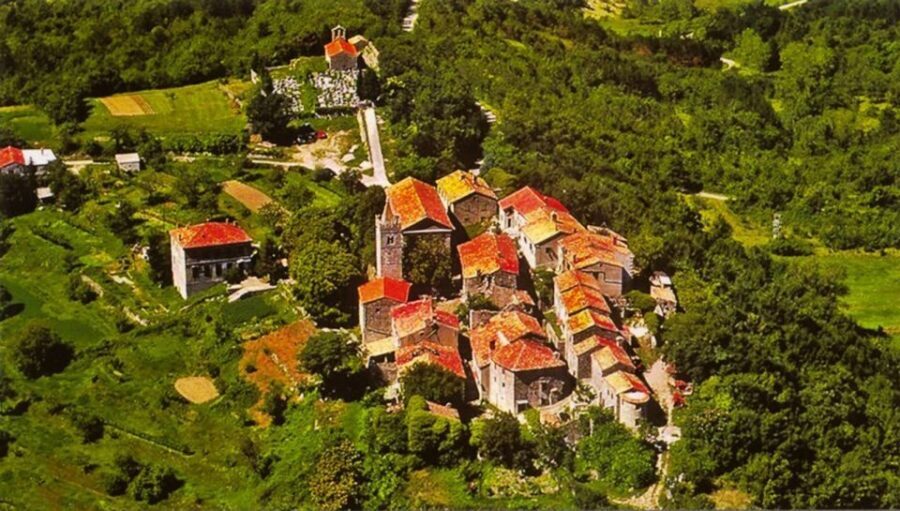
Hum gives you the scale-shock. It’s famously the smallest town in the world, with barely 20 inhabitants, and its story starts with a legend about stones left over when giants built towns in the Mirna River valley. Motovun then flips the mood to something grander and more scenic, perched above the river with a bell tower that dominates the center. Labin rounds it out with an older, artist-filled acropolis feel—one of those towns that makes you want to slow down just to look at the streets.
If you like travel that’s part sightseeing and part learning how locals think, this tour hits the sweet spot. You’ll get guided context for why these towns look the way they do, and you’ll pair that with tastings instead of treating food as an afterthought.
You can also read our reviews of more tours and experiences in Rijeka.
Price and what’s included for about $134
At $134 per person for a 7-hour tour, you’re paying for more than entry-level sightseeing. The basics included are a guide, transportation, tastings of food and wine, and insurance.
That matters because the transport and guide are doing the heavy lifting:
- You’re not paying for fuel, parking, or route-planning across hill towns.
- You’re not trying to assemble your own “best stops” list in a single day.
- You’re getting help interpreting what you’re seeing, especially in towns with layered medieval and religious landmarks.
Could you taste things on your own? Sure. But the value here is that the food and drink are connected to local products and stories you’ll hear during the walk-throughs.
The 7-hour rhythm from Rijeka or a cruise terminal
The meeting point is your accommodation in Rijeka or the cruise terminal. That setup is convenient, especially if you’re docked and want one organized plan for the day.
The timing is the trade-off. Even with good vehicles and an efficient route, seven hours is not a full immersion day. The best strategy is to treat each town as a focused visit: look up, take photos, enjoy the story, then enjoy the tastes—without expecting long, unhurried meandering.
Also note a practical consideration: if your day starts behind schedule—like ship docking running late—you may end up with less time in the towns than you’d hoped. That’s not a “bad tour” signal; it’s how day trips work when the pickup is tied to cruise logistics. If you’re traveling by ship, I’d come ready to enjoy the highlights rather than hunt for extra hours.
Hum: the tiny-world town with a real voting ritual
Hum is the kind of stop you remember because it feels unusual in a good way. In a village with barely 20 residents, it still hosts the tradition known as the Election of the Prefect for a Year.
Here’s what makes it more than trivia. On election day, the men from the parish gather at the Municipal Loggia (town hall) to elect the village superior. They even carve their votes into a wooden stick. It turns a normal civic process into a visible ritual, and once you hear it, Hum’s “smallness” feels intentional rather than accidental.
The town’s fame isn’t only about size and tradition. Hum has also become known for Biska, a mistletoe-spiced brandy made using an old recipe originating in Hum. And if your dates line up, you’ll find another food-and-drink connection: the Grappa festival takes place at the end of October, bringing brandy producers from across Istria.
What to watch for as you walk:
- The sense of “this is a living place,” not just a museum set.
- The way town-center buildings (like the loggia) become the stage for tradition.
- The quiet confidence of a place that doesn’t need crowds to justify itself.
Practical note: Hum’s lanes can be uneven. Comfortable shoes matter here, especially if your group spends more time than expected on photos and the story.
Motovun above the Mirna: bell tower, truffles, and Teran-Malvasia culture
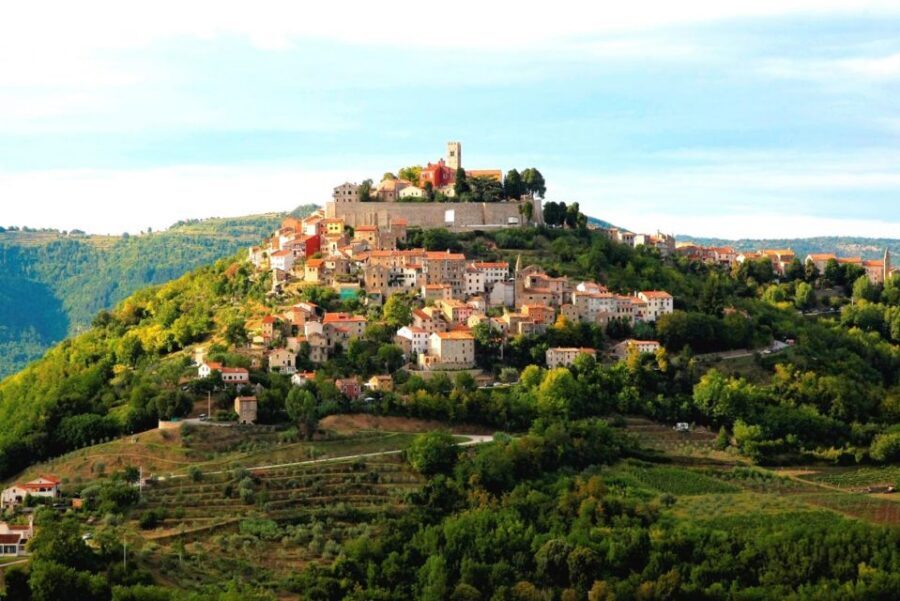
If Hum feels like a whisper, Motovun is the shout. The town sits high above the Mirna River, and it shows up as a symbol of central Istria’s hill life.
The landmark that anchors the center is Motovun’s bell tower: a 13th-century Romanesque-Gothic structure with a crenulated crown. Next to it is the 17th-century St Stephen’s parish church, which gives the town that familiar layered European look—medieval bones, later religious upgrades.
In the main square, you’ll find the Romanesque Municipal Palace, described as the biggest secular building in Istria when it was built. That detail helps you see Motovun as more than a scenic postcard. This was a place with power, not just beauty.
Now for the food brain. Motovun’s forest stretches down toward the Mirna valley, and it’s linked with truffle hunting. The tour highlights white truffles of Istria, said to be in season from September to December. You’ll hear the cultural angle too: truffles are treated almost like a regional symbol, tied to the idea of rare underground fungi and the restaurants that build reputations around them.
Then it shifts to vineyards and wine. Vineyards surround Motovun, and Istria’s wines—especially Teran (red) and Malvasia (white)—are produced from grapes grown here. You don’t need to be a wine expert to appreciate the logic: the hills, the micro-climate, and the local producers all line up.
One more thing I liked about Motovun as a stop: it’s where you can connect “story” and “taste” quickly. If the tastings include local wines or products, Motovun gives you the background to understand why those flavors feel like they belong.
Old Labin’s acropolis feel: gates, views, and artist life
Labin is built the way many strong old towns are: with the important stuff higher up. The old town sits on a hill about 320 meters above sea level, and the newer part lies below.
Old Labin is described as the best preserved acropolis in Istria, and walking in that old core helps you understand what people meant by defense and community focus. The town gates give you another anchor: St Flor, built in 1587, mark the entry into the old town.
You’ll also see why Labin is known for more than stone. The town has a genuine arts scene, with around 30 artists living and working there plus multiple galleries. If you’ve visited places where art is “added on,” Labin feels different because it’s integrated into daily town life.
Nearby, there’s even more creative infrastructure: in Dubrova you’ll find the Sculpture Par, tied to an international sculptors symposium that’s been running for around 40 years. In summer, the old center may be taken over by Art Republic, blending music, performance, and fine arts.
And if you want a payoff point for photos, look for Labin’s 17th-century tower, which offers a magnificent view. Even when you don’t climb every step, the view vibe alone is worth it.
Tastings of food and wine: why they work on this route
This tour includes tastings of food and wine, plus the guide’s context. That combo is important. If you do tastings on your own, you often get the flavors but miss the reason behind them. Here, you’ll hear the connections between the region and the products before you taste.
The exact items aren’t spelled out, but the tour’s framing gives you a strong clue about what matters most in Istria: local products tied to tradition. With Hum’s Biska and Motovun’s Teran and Malvasia showing up in the story, you’re likely to encounter those kinds of flavors and regional specialties during the tasting portion.
What’s worth keeping in mind: tastings can be hit-or-miss depending on expectations. If you want one stand-out “wow” product every single time, you might find the tastings merely good rather than life-changing. But if you’re happy with learning what Istria does well and sampling a few locals-first specialties, this part of the tour fits the overall pace.
Guide quality: when patience turns into a better day
This is one of those tours where the guide can change the whole experience. The English guides have been described as knowledgeable and entertaining, with real patience. Names that show up include Dejan, Dean, and Greg—and when these guides lead, the commentary tends to help you connect the physical sights to the stories behind them.
A good guide also makes the practical differences:
- They keep the group moving without turning stops into a blur.
- They explain what matters in a town center so you don’t feel lost.
- They time the tasting portion so it feels like part of the day, not a random detour.
If you’re the type who reads a little history at each stop, you’ll probably appreciate the way the guide builds a picture. If you just want photos and snacks, the guide still helps you understand what you’re looking at so the day feels less like driving around.
Practical tips: shoes, pickup timing, and possible swaps
Bring passport or ID card and comfortable shoes. That’s the bare minimum, but it’s the difference between enjoying hill towns and rushing through them.
Also, be ready for one logistics detail: pickup timing can be communicated the evening before. If you’re staying in Rijeka or on a cruise schedule, that’s manageable—just don’t plan your entire evening without checking your confirmation.
Finally, know that the plan can change. One example that’s happened is swapping Labin for Rovinj when the program needs adjustment. That doesn’t mean the tour is unreliable; it means the operator is still trying to keep the day coherent when conditions change. If you’re picky about seeing every exact stop, ask the guide at pickup what the current order is.
And a caution for safety and comfort: the tour is not suitable for pregnant women, even though it is described as wheelchair accessible. That usually points to uneven terrain and the way hill-town walking and transfers are handled.
Who this Istria Highlights tour suits best
You’ll likely enjoy this tour if:
- You want three medieval towns in one go, with the story explained.
- You’re short on time in Istria and starting from Rijeka or a cruise terminal.
- You like food and wine, but you also like to understand the local background.
You might want to consider alternatives if:
- You need a long, slow walking day. Hill towns plus seven hours means some stops will be brief.
- You’re traveling with mobility needs and prefer guaranteed level surfaces.
- Your schedule can’t handle time pressure from a docking delay.
Should you book this Hum, Motovun, and Labin day trip?
Book it if you want an organized, guide-led way to get the Istria highlight trio—Hum’s tiny-town traditions, Motovun’s hilltop medieval core and truffle-and-wine connections, and Labin’s acropolis feel with artists and views. The value is in the combination: transportation + an English guide + tastings, all in a single focused day.
Don’t book if your top priority is maximum time in each town, because seven hours can shrink under real-world scheduling. And if tastings are the main event for you, set expectations to “good local sampling with context,” not “one perfect tasting after another.”
If you like your day trips practical, story-driven, and genuinely tied to place, this is a strong way to spend a single day in central Istria.
FAQ
How long is the Istria Highlights Tour?
The tour lasts 7 hours.
Where does the tour meet?
It meets at your accommodation in Rijeka or at the cruise terminal.
Which towns are included?
The tour is described as visiting three medieval picturesque towns, with Hum, Motovun, and Labin highlighted in the information provided.
What’s the price per person?
The price is $134 per person.
What’s included in the tour price?
It includes a guide, transportation, tastings of food and wine, and insurance.
What language is the tour guide?
The live tour guide speaks English.
What should I bring?
Bring a passport or ID card and wear comfortable shoes.
Is the tour wheelchair accessible?
Yes, it is listed as wheelchair accessible.
Is it suitable for pregnant women?
No, it is not suitable for pregnant women.
Can I cancel or pay later?
Free cancellation is available up to 24 hours in advance for a full refund, and you can reserve now and pay later.