REVIEW · SPLIT
Jewish Heritage & Diocletian’s Palace Private Split Tour
Book on Viator →Operated by Jelena Vrancic Private Tourist Guide · Bookable on Viator
Diocletian’s Palace has Jewish fingerprints. This private Split tour pairs Roman grandeur with the Jewish story in the same walking route, starting in the palace’s substructures and ending with the everyday waterfront feel of town. I love how the guide connects small architectural details to real people, from early Roman-era Jewish life to later community memory.
The second big win for me is the synagogue time: you’re not just looking at doors and dates, you’re hearing stories from a community member and seeing the space in use today. One possible drawback is that it’s a walking-focused route, so if you have mobility limits, you’ll want to flag it at booking so the pace can be adjusted.
In This Review
- Key things I’d prioritize on this tour
- Roman walls, Jewish lives: why this tour feels uniquely Split
- Meeting point and pickup: how to start without stress
- Down in Diocletian’s substructures: where the clues are
- From foyer to Peristyle: reading Roman space like a local
- The synagogue and Jewish ghetto walk: where stories happen
- Narodni Trg memorial plaque and the city’s hard memory
- Finishing with Riva, Prokurative, and Marmontova: Split after the facts
- Price and value: what $187.05 buys you in real terms
- The guides: what you can expect from the human factor
- Who should book this tour, and who might prefer something else
- Tips to make your 2.5 hours smoother
- Should you book this tour?
- FAQ
- How long is the Jewish Heritage & Diocletian’s Palace Private Split Tour?
- Is this tour private?
- What language is the tour offered in?
- What does the tour include?
- Are any admissions included?
- Can I cancel for a full refund?
Key things I’d prioritize on this tour
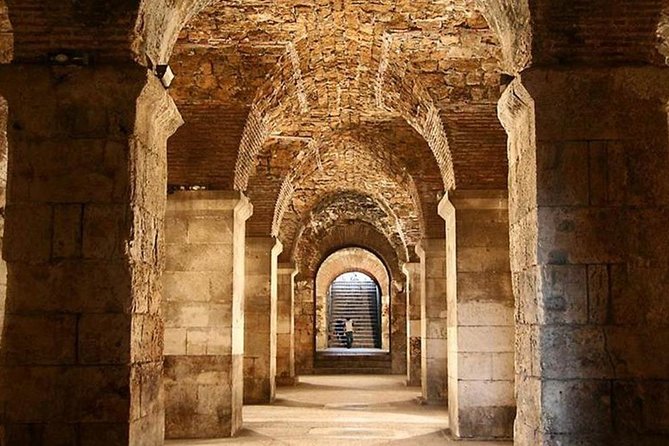
- Diocletian Palace substructures: time inside with admission covered, including visible clues like menorah carvings.
- Synagogue visit with a community member: conversation beats a checklist, and the caretaking connection makes it personal.
- Jewish ghetto walk: you get historical context while you’re physically in the neighborhood.
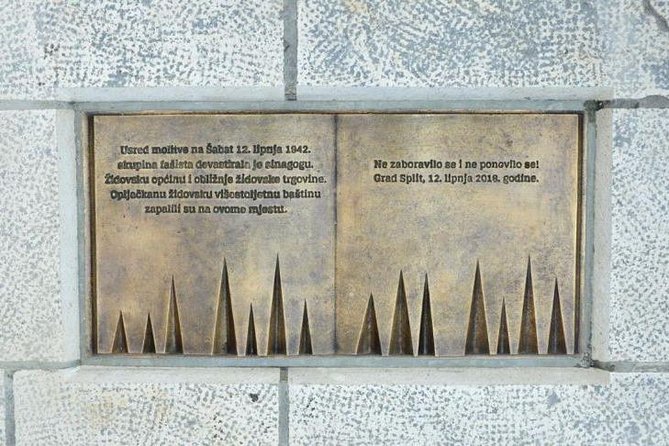
- Narodni Trg memorial plaque: a focused stop on what was destroyed and remembered, tied to 12 June 1942.
- Old Town landmarks added in: Peristyle, Grgur Ninski statue area, Riva, Prokurative, and Marmontova make it feel like more than one site.
Roman walls, Jewish lives: why this tour feels uniquely Split
Split’s old town can look like one big museum at first glance, but this tour nudges you to see it as lived-in history. Diocletian’s Palace isn’t just pretty stone; it’s a massive framework where later communities made use of space, routines, and survival. Pair that with the long Jewish presence in the region and you get a story with human texture, not just impressive buildings.
What works especially well is the way the tour links timelines. It starts with the Roman setting and the earliest references you can still sense in the basements, then moves forward into the Jewish quarter and the synagogue. Along the way, you also get classic Split landmarks, so the visit doesn’t feel like an isolated detour.
If your goal is a deeper understanding of Split beyond the waterfront photos, this is a strong pick. You’ll finish with the sense that the city’s layers are readable if someone points out what to notice.
You can also read our reviews of more tours and experiences in Split.


Meeting point and pickup: how to start without stress
The meeting point is simple: Obala Hrvatskog narodnog preporoda 23, near the main waterfront area called Riva, by the bronze map of the city. The tour ends back there, which is handy if you’re planning lunch or a gelato stop afterward.
If you’re on a cruise, you’re met at the port, and the guide has a name card for you after you walk toward the customs gate. For people staying in Old Town apartments, pickup is available right from your accommodation. If you’re staying outside the Old Town, the meeting point shifts to the Riva area.
One detail that matters: the start time is on request for private tours, and it runs Monday through Saturday from 8:00 AM to 5:30 PM for the listed operating window. That means you can often match it to your cruise or ferry schedule, as long as you plan ahead.
Down in Diocletian’s substructures: where the clues are
The tour’s opening act is the Diocletian Palace substructures. This is where the city’s Roman foundation stops being a concept and turns into a physical place with scale. You get about 45 minutes here with admission included, and the focus isn’t only architecture—it’s the way later Jewish life is read into the space.
The story the guide brings is that the Jewish community of Split is among the oldest in Europe, with archaeological findings connected to the nearby Roman city of Salona. The idea is straightforward: when people fled the region during later upheavals, they carried their lives with them, and the palace became part of the new chapter.
What makes this stop memorable is the mention of menorah carvings in the palace basements. Even if you’ve never seen these kinds of details before, it’s the sort of visual evidence that makes history feel less abstract. You’re not just told that communities existed—you’re shown a material trace.
A practical note: substructures can feel cooler and darker than the street. If you’re the type who gets cold easily, bring a light layer, even in warmer months.
From foyer to Peristyle: reading Roman space like a local
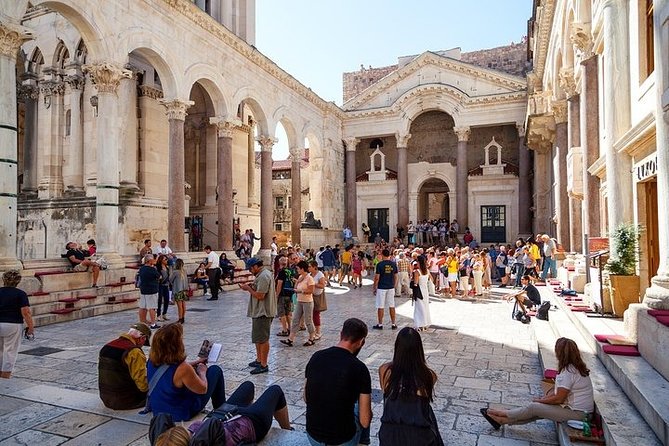
After the substructures, you move back up into the palace’s public spaces. The tour includes a quick stop at the Vestibule, a former foyer, where you get a sense of how the palace organized movement and access. It’s short—around 10 minutes—but it helps you recalibrate from underground scale to day-to-day Roman design.
Then comes the Peristyle, the main square inside Diocletian’s Palace. Here you’re given a clear sense of what the Peristyle functioned as in the past and what it is today. You also see columns brought from different parts of the empire when the palace was built in 305 AD, which is a good reminder that this wasn’t a local village project. It was imperial scale.
Also on this stretch is time around the Grgur Ninski statue area. It’s tied to Croatian religious and cultural history, and the guide uses it to keep the walking route varied. This matters because it prevents the whole tour from becoming only Jewish sites or only Roman sites.
If you’re trying to photograph everything, pace yourselves here. The Peristyle has “every angle looks good” energy, but rushing means you miss the context the guide is giving.
The synagogue and Jewish ghetto walk: where stories happen
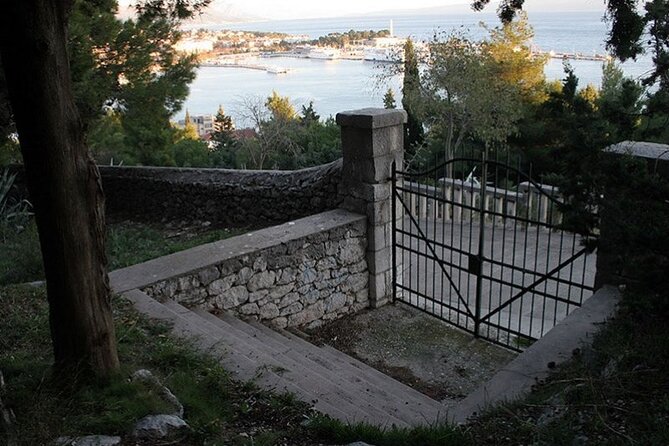
This is the emotional center of the tour. You walk through the Jewish ghetto area, and you get the neighborhood context while you’re actually moving through it, not just standing still for a photo. The point is to understand how community life was shaped by location, safety, and changing city life.
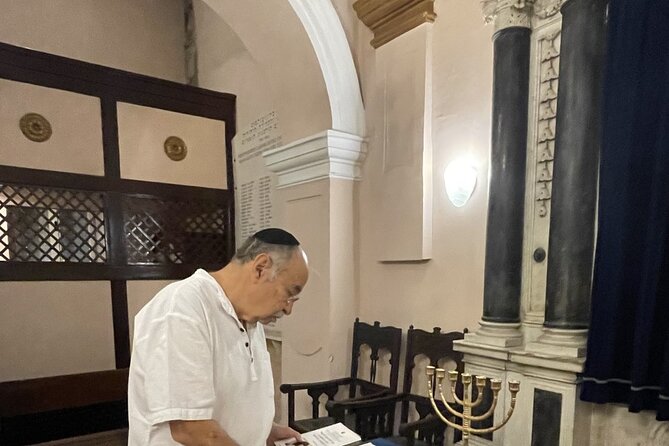
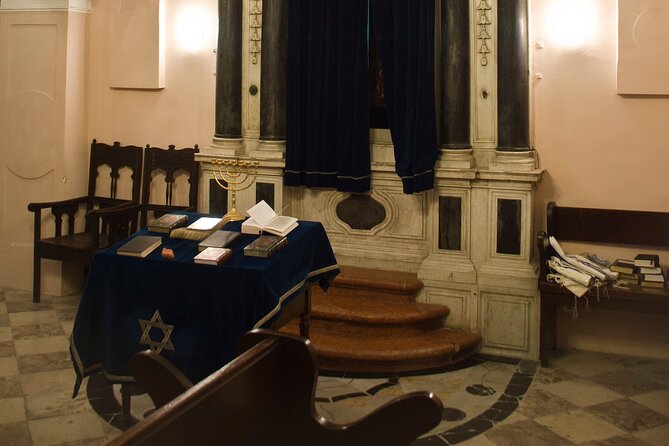
Then you visit the synagogue. The time allocation is about 30 minutes, and it’s not just sightseeing: you meet a member of the Jewish community who shares stories about Jewish life in Split. In many cases, the caretaker connection is the highlight because it turns the visit from museum mode into real-world continuity.
One detail you may hear in the conversation: the synagogue is described as the third oldest Jewish synagogue in Europe. Even if you’ve heard that kind of statistic before, it lands differently when you’re inside and someone is explaining what the space means.
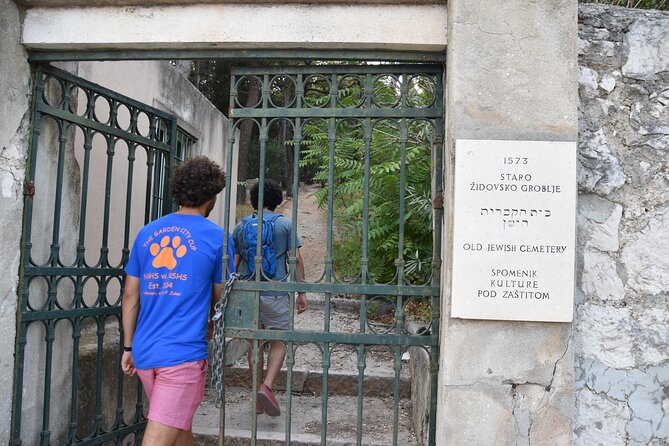
The tour also includes visits to Jewish significance beyond the synagogue itself, including a local Jewish cemetery mentioned in the overall highlights. If your guide takes you there during your particular timing, it’s usually the sort of stop that deepens the “timeline feeling,” because cemeteries make history personal fast.
What I appreciate most: the guide keeps the tone grounded. Even when the content turns serious, you’re guided through it in a way that respects the setting.




Narodni Trg memorial plaque and the city’s hard memory
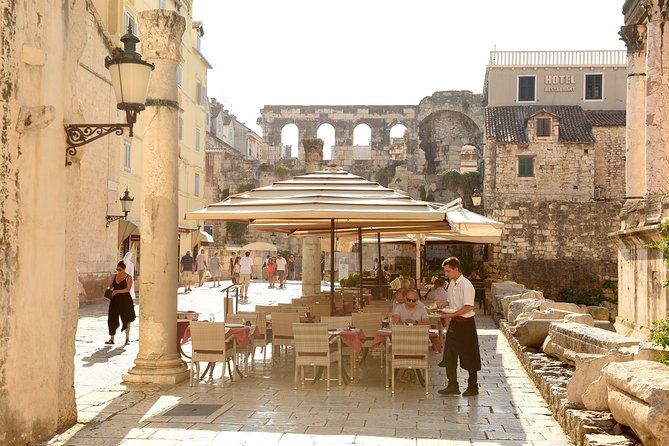
Split doesn’t hide difficult history, and this tour gives you a specific place to stand and think. At Narodni Trg, you’ll learn about a bronze plaque placed in memory of the destruction of precious items and archives from the synagogue on 12 June 1942.
This stop is brief—around 10 minutes—but it’s pointed. Instead of giving only sweeping statements about the Holocaust, you’re anchored to a concrete marker in the city’s public space. That’s the kind of detail that makes remembrance feel less distant.
Right next to that context, you’re also seeing the visual side of the square, including Venetian architecture. That combination can be powerful: beauty on one side, memory on the other.
If you’re visiting with kids or teens, this is a good moment to ask questions like why a plaque matters. It can turn an abstract topic into something the group can locate on foot.
Finishing with Riva, Prokurative, and Marmontova: Split after the facts
After the synagogue and memorial focus, the tour shifts into “how Split lives now.” You’ll pass or spend time at Riva Harbor, a pedestrian strip locals treat like a living room, packed with cafés and places to pause. Expect about 10 minutes here.
Then there’s Prokurative (Republic Square), which many people compare to Venice’s St. Mark’s Square. The guide connects the naming to the arches on the neo-Renaissance buildings around the square, and the viewpoint opens toward the harbor. Time is about 10 minutes, and it’s great for resetting your brain after heavier historical content.
Next comes Marmontova Ulica, another popular promenade area. You also get the option to check out the fish market nearby if you feel like watching daily life rather than only monuments. This is around 10 minutes, so it stays easy and light.
If you want a practical payoff: use this final segment to plan your next move. Riva and Prokurative are good zones to grab lunch or decide where you’ll take sunset photos, because the tour ends close by.
Price and value: what $187.05 buys you in real terms
At $187.05 per person for about 2 hours 30 minutes, you’re paying for a private, guided route that blends two major themes: Diocletian’s Palace access plus Jewish heritage sites. For a city where key historic areas are spread out, private guiding can save time and reduce confusion.
The value isn’t only “you get a guide.” It’s that the tour includes a key paid component: the Diocletian Palace substructures fee is included. Other sections of the route are listed as free admissions where applicable, which helps keep the experience focused on time with the guide rather than ticket logistics.
Private also means the guide can pace the walk to your group. In real situations, guides have adjusted for mobility needs during the tour, so if you have slow-walk needs, it’s worth raising that early. It also helps if you want to ask questions as you go, because you’re not stuck in a rigid group rhythm.
Where this price might feel less “worth it” is if you’re a hardcore self-guided person who loves guidebook-style reading. The tour’s main advantage is interpretation—someone connecting small details to the bigger story in the right order.
The guides: what you can expect from the human factor
This tour is led by licensed private tourist guides under Jelena Vrancic’s company, and you might meet different guides depending on scheduling. I like that the style described across guides is consistent: story-driven, not stuffy, and tuned to the group.
Names you may see include Jelena Vrancic, Emil, and Pero. In the synagogue itself, you might also speak with someone like Albert, who helps share the space and its meaning with visitors. Another guide mentioned is Vinka.
A recurring theme is adaptability. When weather turns rainy, the guide plan can change in real time so you still get the important inside time. That matters in Split, where a drizzle can mess with a walking plan if no one has flexibility.
And if your group has lots of questions—history buffs especially—this type of guiding tends to work well. You get answers tied to what you’re seeing, not random facts dumped at the end.
Who should book this tour, and who might prefer something else
This experience is a great fit if you want Jewish heritage in Split in a way that’s specific, not generic. You’ll get the synagogue visit, the ghetto walk, and a clear connection to Diocletian’s Palace structures that helped shape the city’s later life.
It also suits people who like short, efficient touring. At roughly 2.5 hours, you’re not stuck for half a day, and you still end in a lively area near the harbor. If you prefer walking but don’t want a long grind, the pacing is built for an Old Town route.
You might want a different option if your priority is purely Roman architecture, because Jewish heritage is the central thread. You’ll see Roman highlights, but the palace details exist to support the broader story.
If you’re traveling with kids, the tour notes that children must be accompanied by an adult. It’s also “most travelers can participate,” and service animals are allowed, so it generally works for many visitor types—just be sure to mention any mobility limits ahead of time.
Tips to make your 2.5 hours smoother
Bring comfortable shoes. This is an Old Town walking plan with stops that include indoor time, plus the usual cobblestone surfaces that feel fine until you’re halfway through.
Dress for quick weather shifts. One standout detail from how guides handle the day: they’ve been known to use umbrellas and keep timing smart when rain rolls in. So pack something light you can layer on.
If you care about depth, come with one or two questions. Things like how the community story connects to Salona and the later settlement patterns can lead to a better conversation during the synagogue portion.
For photography, focus on moments with meaning. The substructures menorah carvings and the memorial plaque are the kinds of details that often get overlooked in casual sightseeing, so slow down there and let the guide’s context land.
Should you book this tour?
If you want a Split experience that combines Diocletian’s Palace with the Jewish story in a way that feels grounded and human, I’d book it. The synagogue time and the community conversation are the reasons, and the palace substructures give you a physical starting point that makes the history easier to grasp.
If you’re short on time in Split or you’ve seen plenty of Roman sites already, this tour still holds up because it’s not a repeat of standard Old Town “greatest hits.” It gives you a different lens on the city.
Just make sure you’re comfortable with walking and that you communicate any mobility needs early. With that sorted, this is one of those tours that turns a beautiful city into a place with names, dates, and lived spaces.
FAQ
How long is the Jewish Heritage & Diocletian’s Palace Private Split Tour?
It runs about 2 hours 30 minutes.
Is this tour private?
Yes. It’s a private tour/activity, so only your group participates.
What language is the tour offered in?
The tour is offered in English.
What does the tour include?
You get a private guided tour, a visit to the synagogue and Jewish ghetto, and the fee for the Diocletian Palace substructures.
Are any admissions included?
The Diocletian Palace substructures admission ticket is included, while other listed stops are free.
Can I cancel for a full refund?
Yes. You can cancel up to 24 hours in advance for a full refund.