REVIEW · ZADAR
NEW! Zadar Traditional Boat Ride & Old Town Walking Tour by Šušur
Book on Viator →Operated by Šušur - Tours of Zadar · Bookable on Viator
There is more Zadar to see from the water. This small-group ride mixes a traditional gajeta boat with an easy, guided Old Town walk, so the city makes sense as one living place, not a pile of stops. You get views of the solar-powered sea-side installations and the story behind why locals keep singing about them.
I love how small the group is, which keeps the mood relaxed and the questions coming. I also like the way the guides connect landmarks to everyday Zadar life, with details that go beyond what you see on a plaque.
One catch: this includes a boat portion, so it is not ideal if you are a non-swimmer or if you get queasy on the water.
In This Review
- Key highlights to expect
- Why Zadar’s Old Town clicks when you start on a gajeta boat
- The 8:30 start, 1 hour 30 minutes, and how the pacing feels
- Price and value: what you pay for (and what you do not)
- Safety and comfort notes you should take seriously
- The waterfront intro: Sea Organ and Greeting to the Sun from the boat
- Foša Land Gate: the sea entrance into Old Town (and why it matters)
- Queen Jelena Madijevka Park and the Zadar paradox
- Five Wells Square: defense history that now hosts concerts
- Church of St. Simon: what makes it notable on an international level
- Narodni trg: the medieval heart, with bars that started early
- Široka ulica (Kalelarga): walking a route used since Roman times
- Roman Forum: the biggest Roman footprint on the eastern Adriatic
- What you will like most if you are the right fit
- Should you book this Zadar Traditional Boat Ride & Old Town Walking Tour?
- FAQ
- FAQ
- What is the duration of the tour?
- What time does the tour start?
- How much does it cost per person?
- What language is the tour offered in?
- How big is the group?
- Do I need to swim?
- Is the tour safe for people who get seasick?
- What is the cancellation policy?
Key highlights to expect
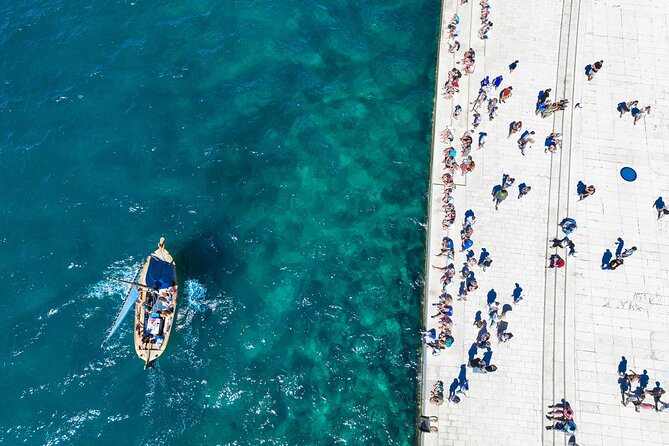
- Traditional gajeta boat views of Zadar’s waterfront, including the Sea Organ area and Greeting to the Sun solar panels
- Max 8 travelers, so you are not stuck behind a sea of heads
- Foša Land Gate (UNESCO-listed fortifications) right at the sea entrance into the Old Town
- Five Wells Square history tied to defense against Ottoman invasions, now used for festivals and concerts
- Kalelarga main street walk (Široka ulica) on a route used since Roman times
- Roman Forum stop with the scale of ancient Zadar explained in human terms
Why Zadar’s Old Town clicks when you start on a gajeta boat
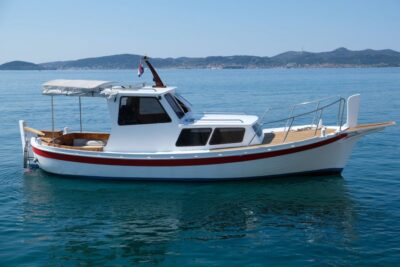
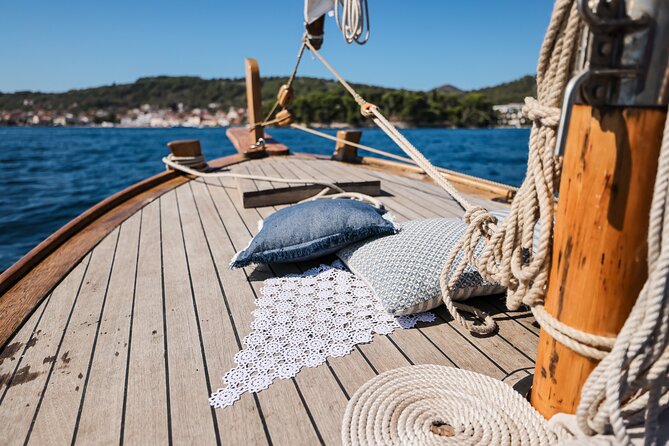
If you only tour Zadar on foot, you miss the waterfront logic. The gajeta boat portion gives you the “why” first: where people came from by sea, where the city defended itself, and how the coast became a cultural stage.
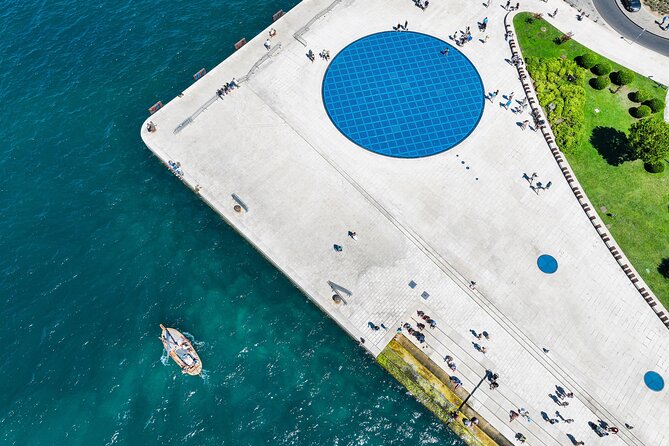
The boat part also frames the two big modern icons you will spot from offshore. You will see the solar-panel monument where the planets are shown in proportional figures, plus you will get the architectural, nature-linked feel of the sea-side sound installation area. The guides explain the local emotional pull too, including the fact that songs were written about it. That matters, because you will not treat it like a random gadget once you know it has a cultural heartbeat.
And yes, it feels genuinely local. These traditional wooden boats, called gajeta, are not the usual cruise-ship experience. One reason this gets rave reactions is that it feels like a craft with pride behind it, not a ticketed ride that could be swapped for any coastline.
You can also read our reviews of more tours and experiences in Zadar.

The 8:30 start, 1 hour 30 minutes, and how the pacing feels
The tour starts at 8:30 am and runs about 1.5 hours. That is a good length for a morning plan because you still have time to explore on your own afterward without feeling dragged around all day.
The group cap is 8 travelers, which changes everything about the feel. You can hear stories, you can ask questions, and the guide can adjust if your group moves slower. It is also a practical size for a boat: you do not end up bouncing between strangers to get a good view.
You will also get a clear direction of travel. The walk ends at the Forum, so the tour naturally hands you back to the heart of the Old Town.
Price and value: what you pay for (and what you do not)
At $48.19 per person, this is not the cheapest option in Zadar. But you are paying for two things that usually cost more separately: boat time plus a live guide who stitches the story together.
A big value clue is the timing and the stop setup. Several stops are marked as free entry, including Foša Land Gate, Queen Jelena Madijevka Park, Five Wells Square, and other key viewpoints along the Old Town route. So your money is mostly going toward the boat experience, guiding, and getting you from spot to spot with a smart order.
For a one-and-a-half-hour tour, that is also efficient. You get both the waterfront perspective and the core Old Town highlights without spending hours navigating yourself.
Safety and comfort notes you should take seriously
This tour includes a boat segment, so it comes with straightforward limits. It is not recommended for non-swimmers. It is also not recommended for people prone to seasickness, which is exactly the kind of note I would trust when planning.
Weather matters too. The experience requires good weather, and if it is canceled because conditions are poor, you are offered a different date or a full refund. If you are arriving the same day, it helps to build in a little flexibility for your morning schedule.
The waterfront intro: Sea Organ and Greeting to the Sun from the boat

Before the walking tour starts, you will see key waterfront installations from the water. One stop is the monument that represents the solar system with solar panels forming the planetary figures, including the Sun. From a boat, that piece becomes more than a photo subject. You see it in context—part of a coastline design that changes how the sea feels to visitors and residents.
Another stop is the architectural masterpiece that connects with nature in a unique way. This is where you learn why locals have real sentimental attachment to the area. The guide explains the deeper reason, including the fact that songs have been written about it. When you carry that backstory with you, the whole Old Town walk later feels tied to place, not just time periods.
Expect a lot of pointing and short explanations. It is not a lecture. The guide uses the boat views to make the later land stops click.





Foša Land Gate: the sea entrance into Old Town (and why it matters)

Once you switch from boat to walking, the tour starts with Foša (the Land Gate). This is not just a pretty facade. It is described as the original sea entrance into Zadar’s Old Town, tied to the fortification system that is listed as UNESCO World Heritage.
Standing here, you can feel what people meant by “defense.” The gate is part of how the city controlled movement, and the sea entrance explains why Zadar grew the way it did. If you like understanding how cities actually worked—who came in, where ships landed, what walls were for—this stop delivers.
You do not need extra time for this one. It is a quick stop, but it gives you a mental map for everything else you will see next.
Queen Jelena Madijevka Park and the Zadar paradox

Then you move to Queen Jelena Madijevka Park, the oldest park in the city, opened in 1829. The guide turns this into more than a stroll through greenery. You will hear the secret behind the Zadar paradox: why the old town is described as the greenest neighborhood in the entire city.
That is a nice theme to take with you. It pushes you to notice how greenery works in tight medieval space. You stop thinking of “old city” as stone-only. You start seeing how people built shade, planted life, and made the tight streets livable.
It is a short visit, so keep your eyes open. This is the moment to spot how the Old Town breathes.
Five Wells Square: defense history that now hosts concerts
Next comes The Five Wells Square, and it has a strong historical job description. It played a role in the defense system during the Ottoman invasions in the 16th and 17th centuries.
Here is the useful part for your visit: history does not feel like distant trivia. Wells meant survival. If you can picture water as strategy, everything about this space makes more sense.
Today the square has a very different rhythm. It serves as a popular venue for festivals and concerts, including the annual Christmas market. So you get the contrast: hard survival infrastructure from centuries ago, used for community life now.
Church of St. Simon: what makes it notable on an international level
The walking route continues to the Church of St. Simon. The tour notes that there is a treasure inside and that the church is significant even at an international level.
I like this kind of stop because it gives you a reason to look beyond the exterior. Even if you already know the basics of Zadar’s religious architecture, the guide points you toward what is special here. In plain terms: you will leave with a better sense of why this church gets attention beyond the local scene.
Time is tight, though. This is not the stop for a long, slow museum-style visit. Use it to orient yourself and then decide if you want to return later on your own.
Narodni trg: the medieval heart, with bars that started early
At Narodni trg, you reach the center of urban life in Zadar since medieval times. The tour frames it as where the city’s urban identity took shape, and it notes that the first bars opened already in the early 18th century.
This stop works well if you like city energy. You are not just seeing buildings. You are seeing how people actually used public space: meeting, trading, drinking, and gathering.
It is also a helpful pause in the tour flow. After earlier defense and church history, this one puts daily life front and center. It is the kind of place where you can stand for a minute and feel Zadar’s social pulse.
Široka ulica (Kalelarga): walking a route used since Roman times
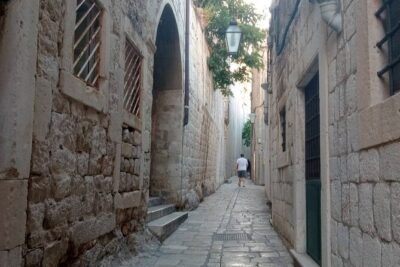
Now you walk Široka ulica, which is the main street of the Old Town known as Kalelarga. The tour notes that this street has been walked upon since Roman times.
I love when a guide connects a modern street to its ancient footprint. It turns your legs into a timeline. Every step starts to feel like you are following an old path, even if the storefronts and street signs are totally new.
This is also a great part of the tour for photos and simple people-watching, as long as you keep moving. It is a main street, so it can get busy, but your group is small and the pacing stays controlled.
Roman Forum: the biggest Roman footprint on the eastern Adriatic
The tour ends with Roman Forum, described as the city’s most important cultural site and the largest Roman forum on the eastern Adriatic.
If you want ancient history that feels like living place rather than ruins-only, this stop is your payoff. The guide explains stories of urban life in ancient times and talks about the dynamic history of Zadar, so you understand how the city kept changing while still using the same strategic location.
Also, ending here makes sense. You finish at a landmark that you can continue exploring on your own. If you want to spend extra time reading stones and imagining crowds, the forum is a natural place to extend your morning.
What you will like most if you are the right fit
This tour is a strong match if you want:
- A short, high-impact introduction to Zadar
- A traditional boat experience that still connects to Old Town walking
- Guides who talk like locals and tell stories tied to daily life
It is also a good option if you do not want a long day of museum hopping. You get the waterfront icons and the core historic structure in about 90 minutes.
If your travel style is more DIY than guided, you might still enjoy it because it gives you the map and the context. But if you prefer long stops and slow pacing, you may find the timing a bit brisk.
Should you book this Zadar Traditional Boat Ride & Old Town Walking Tour?
Yes—if you want the best of Zadar in a short window, this is a smart pick. The mix of a traditional gajeta ride plus a focused Old Town walk makes the city easier to understand, and the max 8 travelers size keeps it friendly instead of chaotic.
Skip it if you cannot do the boat portion comfortably, especially if you are prone to seasickness or you are not a confident swimmer. Also, if you dislike guided pacing and would rather wander at your own speed, you might feel rushed.
FAQ
FAQ
What is the duration of the tour?
The tour runs about 1 hour 30 minutes (approx.).
What time does the tour start?
The start time is 8:30 am.
How much does it cost per person?
The price is $48.19 per person.
What language is the tour offered in?
The tour is offered in English.
How big is the group?
The tour has a maximum of 8 travelers.
Do I need to swim?
You do not need to swim, but the tour is not recommended for non-swimmers because there is a boat portion.
Is the tour safe for people who get seasick?
It is not recommended for people prone to seasickness.
What is the cancellation policy?
Free cancellation is available up to 24 hours in advance for a full refund. If you cancel less than 24 hours before the start time, the amount paid is not refunded.