REVIEW · SPLIT
People of Split – meet the locals
Book on Viator →Operated by Walking tours with The Storyteller Croatia · Bookable on Viator
Split has layers, and this walk reads them. This People of Split experience focuses less on big-ticket monuments and more on how the city actually lives inside the walls, guided by a native storyteller like Mirjana from The Storyteller Croatia. You’ll hit iconic spots like the Split sign and Diocletian’s Palace substructures, then slow down for street-level moments that feel real, not rehearsed.
I especially like the way it mixes Roman-era architecture with everyday scenes—laundry lines, window people-watching, and artisans and vendors. I also like that you get photo-spot guidance built into the walk, so you’re not guessing where to stand while everyone else takes the same postcard shot.
One consideration: it’s a compact walking tour with several tight stops in older stone areas, so it’s worth wearing shoes you trust and going at a comfortable pace if your legs need breaks.
In This Review
- Key highlights from the People of Split walk
- Meeting at the Split sign: the fastest way to get your bearings
- Riva Harbor to Diocletian’s Palace substructures: Roman layers and pop-culture crossover
- The Peristyle pause: where Roman power becomes human-scale stories
- Dominisova ulica: learning Split by watching people
- Grgur Ninski: the toe-rubbing tradition (and why it exists)
- Narodni Trg and Pjaca: the square-world beyond the palace walls
- Price and value for a group of up to 8
- The guide factor: why Mirjana-style storytelling wins
- What to expect from the timing (and how to plan your day)
- Practical tips for a smooth, photo-friendly walk
- Should you book People of Split – meet the locals?
- FAQ
- How long is the People of Split walking tour?
- Is this tour private?
- What language is the tour offered in?
- Where do we meet, and where does the tour end?
- Are any of the key sites admission-free during the tour?
- What’s included in the price?
- Are tips included?
- Is the tour suitable for most travelers?
- What are the tour’s operating hours?
- Can I cancel for a full refund?
Key highlights from the People of Split walk
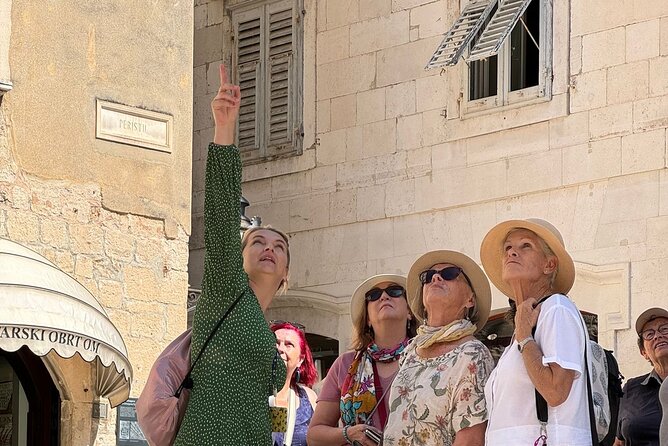
- Native storytelling with Mirjana-style energy, grounded in daily life in Split, not just dates and stones
- Diocletian’s Palace stops that include substructures and the Peristyle, with clear context as you walk
- Photo-stop strategy from a local guide who knows where the best angles and moments happen
- Real street-life details like Dominisova ulica, where residents lean out and clothes line the air
- A short toe-rubbing tradition stop at Grgur Ninski, with the reason behind it
- Narodni Trg and Pjaca for a square-world view of trades and local themes
Meeting at the Split sign: the fastest way to get your bearings
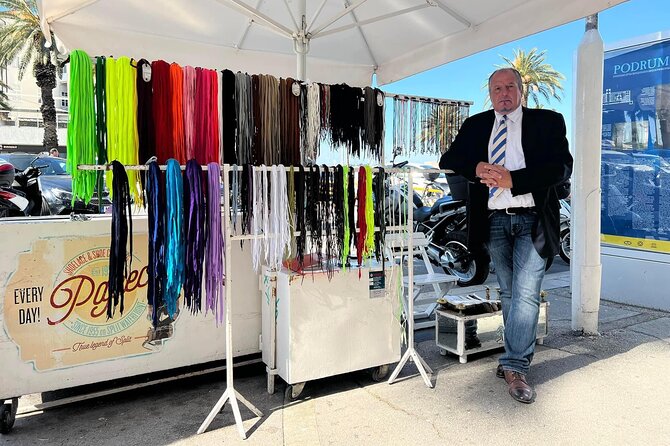
Your walk begins at the Split sign (21000 Grad, Split). That first photo moment does more than mark a start—it helps you orient fast, because Split’s old core can feel like a maze until someone gives you a mental map.
This opening step matters for value. With only about 1 hour 20 minutes to 1 hour 35 minutes, you don’t want to spend half your time searching for the next landmark. Starting at a clear, iconic point keeps you moving and helps you understand how everything connects.
You can also read our reviews of more tours and experiences in Split.


Riva Harbor to Diocletian’s Palace substructures: Roman layers and pop-culture crossover
From the harbor area, you head toward Diocletian’s Palace substructures—one of those places in Split where the past feels physical. You’re stepping into a structure that’s roughly 1,700 years old and still in use today, which changes how you look at it. It’s not a museum exhibit behind glass; it’s part of the living city.
A big hook here is the connection to Game of Thrones filming. Even if you’re not a super-fan, that detail helps your brain grab onto the scale and atmosphere. You start seeing the space as a setting, not just an archaeological site.
Practical note: this segment is short, around 10–15 minutes at each key moment. That’s good if you like variety. If you prefer one deep site for a long stretch, you may wish there were more time—but the trade-off is you get multiple “aha” moments across the city center.
The Peristyle pause: where Roman power becomes human-scale stories
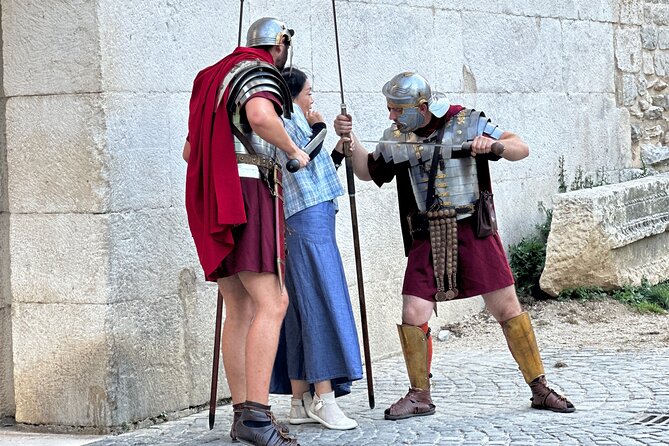
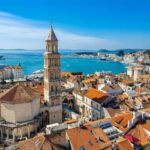
Next comes the Peristyle of Diocletian’s Palace. This was built in the 4th century as a retirement home for Roman Emperor Diocletian, and today it functions as a central stage for the historic heart of Split. The guide’s job at this stop is to help you see the space in layers: the architecture, the myth, and the way the square energy works in real life.
This is also where you’ll get the kind of storytelling that makes the walk feel personal. The tour description emphasizes hidden corners and secret spots, plus chances to sample fresh produce from local vendors and meet artisans practicing their craft. That matters because it turns a “look and leave” stop into a “notice and connect” moment.
What I’d watch for as a traveler: the Peristyle is a popular area, so photo time and group movement can require quick teamwork. If your camera is your top priority, bring patience for a few crowd-wait moments, especially during peak daytime hours.
Dominisova ulica: learning Split by watching people
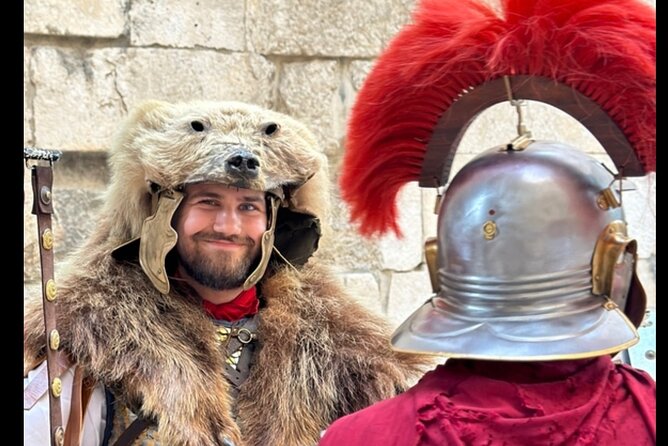
Dominisova ulica is one of Split’s most beloved street scenes, and the guide uses it for a reason. Here, you’re not mainly chasing landmarks—you’re learning how to read the city by observing residents. The description calls out locals leaning out their windows to enjoy the fresh air and hanging clothes to dry. That’s the kind of detail you’d miss if you walked straight through.
This stop takes about 10 minutes, but it can feel longer in a good way. It nudges you to slow down and treat Split like a community, not a theme park. And it fits the tour’s overall theme: people of Split.
A small consideration: since this is about lived-in streets, you may want to keep your voice at a friendly level and follow your guide’s cues. The best street moments happen when you’re respectful and quiet enough to notice the real rhythm.
Grgur Ninski: the toe-rubbing tradition (and why it exists)
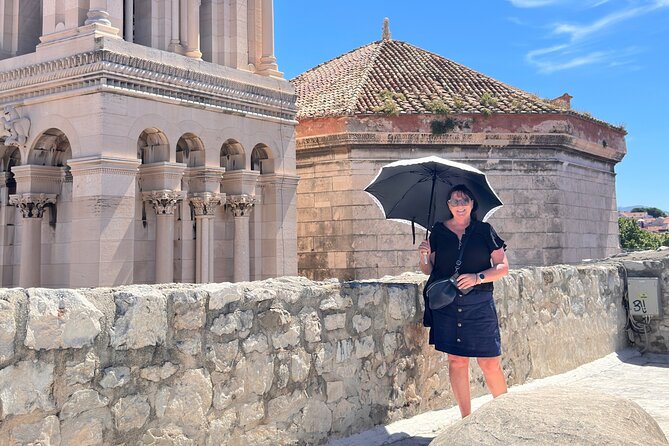
At Grgur Ninski Statue, you’ll do the famous toe rub. The tour keeps it short—around 10 minutes—but the point isn’t the novelty. The stop includes an explanation of why his statue is in Split, which turns a quick ritual into a meaningful story.
This kind of tradition stop is actually good value on a time-limited walk. Instead of turning every stop into a long lecture, the guide gives you a compact cultural fact you can carry with you. It also gives you an easy moment to reset your feet while still feeling like you learned something.
If you’re traveling with kids, this is often the segment they remember most because it’s hands-on and visual. Adults like it too, because it’s one of those customs that feels old-world but still shows up in everyday tourism.


Narodni Trg and Pjaca: the square-world beyond the palace walls
The walk finishes with Narodni Trg and then brings you to Pjaca, described as the first square built outside the ancient city. This is where the tour shifts from “palace inside” to “city outside”—and you can feel the change in pace.
Pjaca is presented as a people-watching hub where you could spend an entire day just observing. It’s also described as a hub of activism that’s alive and well in Split, so you’re not only seeing old architecture. You’re seeing current themes played out in a public space.
The guide also connects you with old trades and traditional craftsmen at work. That’s part of the tour’s value proposition: you’re not only learning what Split used to be. You’re getting a glimpse of what still survives, in craft and culture.
Time here is about 10 minutes, so it’s not a full market tour. But for a short walking experience, it’s a smart ending. You leave with images of daily life, not just stones.
Price and value for a group of up to 8
The price is $258.88 per group (up to 8 people). On the surface, that number looks steep. The math changes fast depending on group size.
- If your group is full at 8, the cost is about $32 per person.
- If you’re fewer than 8, your per-person cost climbs, since it’s priced per group.
So this is best value if you’re traveling with friends, family, or another small group that can fill the cap. It’s also private, meaning you’re not squeezed into a big crowd where your questions get swallowed.
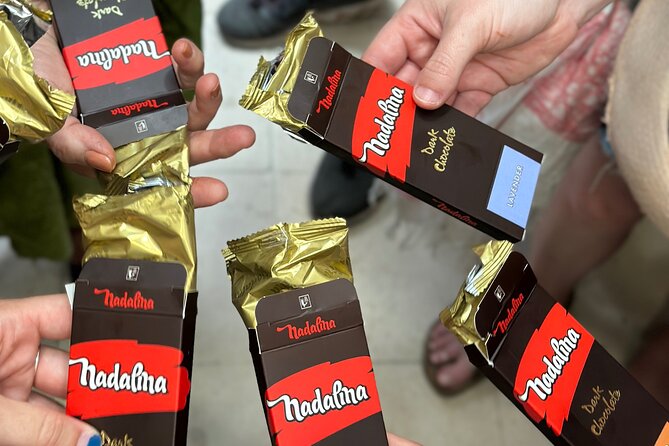
Included extras help your money go further. You’ll get snacks, a mobile ticket, and a guide who suggests the best photo spots—small items that can save time and frustration. Also, the stops listed include admission-ticket-free time, so you’re not adding extra entry fees for the core moments on this walk.
The guide factor: why Mirjana-style storytelling wins
The strongest praise you’ll find about this experience centers on the guide’s approach. Mirjana (The Storyteller Croatia) comes up again and again for a reason: she’s described as warm, passionate, funny, and able to answer questions in a way that keeps the group moving.
A pattern across the feedback is that she doesn’t only talk monuments. She connects history to everyday life, and she listens to what people want. That’s a big deal because Split has more than one story. Some people want Roman details. Some want Croatian context. Some want street-life observations. When the guide adapts, you walk away feeling like you got the version of Split that matches your interests.
You’ll also notice a specific storytelling style mentioned: she can weave in unexpected elements—like cultural context beyond architecture—and she’s comfortable discussing bigger themes, including Croatia’s more recent history and conflicts. That can turn your walk from “fun facts” into understanding.
English proficiency matters too. Multiple comments highlight confident delivery, clear storytelling, and the ability to keep a larger group heard. That’s practical: it means you spend less time straining to catch every word and more time actually enjoying the walk.
What to expect from the timing (and how to plan your day)
The total duration is about 1 hour 20 minutes to 1 hour 35 minutes, with the stops clocking in around 10–15 minutes each and a few longer photo-and-pause segments. That length is ideal for people who want a guided feel without locking up half the day.
Since it’s a daytime option with 8:00 AM–6:00 PM opening hours, you can fit it between meals and other sights. I’d plan your day so you don’t schedule a super-early or super-late transfer right afterward. You’ll want a little breathing room to wander on your own after the guide gives you the city map in your head.
A quick shoe note: you’ll be walking through historic streets and within or beside old stone structures. Comfort matters more than fashion here. Bring water if it’s warm, and keep your camera ready for quick photo cues.
Practical tips for a smooth, photo-friendly walk
Here’s how to get the most out of a tour like this, using the structure and what the guide is known for:
- Arrive a few minutes early at the Split sign, so you can start calm instead of late-stress.
- Wear shoes you can trust on uneven historic surfaces.
- If you care about photos, listen for the guide’s best photo spots cues rather than drifting ahead.
- Keep your curiosity switched on at the street stops. Dominisova ulica is about noticing people, not collecting pictures.
- Bring a question or two. A big part of the experience is how the guide answers and steers the stories.
Also, the tour is described as offered in English, and it’s marked as suitable for most travelers, with service animals allowed. If you’re traveling with mobility constraints, the walking portion is still worth considering carefully given the tight, older-street environment.
Should you book People of Split – meet the locals?
If you want a Split that feels lived-in—not just photographed—this is the kind of tour that helps. The price is fair when you can share it across a group, and the time length is perfect for first-timers who want both Roman context and street-level culture.
Book it if:
- You enjoy storytelling that connects monuments to daily life.
- You like tours where photo spots are guided, not guessed.
- You’re traveling in a group that can get near the 8-person cap.
Skip it (or pair it with something else) if:
- You want only one site with a deep, long, slow explanation.
- You dislike short stops and prefer open-ended wandering without a set pace.
If you’re aiming for the best “first understanding” of Split, this is an excellent bet—especially thanks to Mirjana’s reputation for turning history into something you can actually feel in the streets.
FAQ
How long is the People of Split walking tour?
The tour lasts about 1 hour 20 minutes to 1 hour 35 minutes.
Is this tour private?
Yes. It’s a private tour/activity, so only your group participates.
What language is the tour offered in?
The tour is offered in English.
Where do we meet, and where does the tour end?
You meet in front of the Split sign (21000, Grad, Split, Croatia) and end at the Golden Gate (Dioklecijanova 7, 21000, Split, Croatia).
Are any of the key sites admission-free during the tour?
The stops listed include admission ticket free time for the sites mentioned on the walk.
What’s included in the price?
Included are a Heritage Interpretation Guide & Storyteller, a local guide native of Split, suggestions for the best photo spots, and snacks. It also uses a mobile ticket.
Are tips included?
No. Tips and gratuities are not included.
Is the tour suitable for most travelers?
It’s marked as suitable for most travelers, and service animals are allowed.
What are the tour’s operating hours?
The opening hours are Monday through Sunday, 8:00 AM to 6:00 PM.
Can I cancel for a full refund?
Yes. You can cancel for free up to 24 hours in advance for a full refund. If you cancel less than 24 hours before the start time, the amount paid is not refunded.