REVIEW · SPLIT
Private Foodie Tour: Wine & Seafood with a Local Chef
Book on Viator →Operated by Black Apple Tours · Bookable on Viator
Split is food first, history second.
This private wine-and-seafood tour pairs real local bites with an easy walk through Diocletian’s world, told by a chef who’s happy to answer your questions. I love how the meal is built from everyday Split staples, not just one fancy restaurant stop. I also love that the pace is short and story-driven, so you’re not stuck listening for hours.
My favorite part is the mix of market flavors and palace landmarks in the same afternoon. You start with an Ottoman-influenced dish at Prerada bakery, then hit the Green Market for the kinds of products locals actually cook with, before winding up near the Temple of Jupiter for lunch.
One thing to think about: this is a walk-heavy tour in the old center, so if you’re sensitive to heat or uneven cobblestones, plan your day accordingly and wear comfy shoes.
In This Review
- Key highlights you’ll feel right away
- How Split’s Food Walk Turns Roman Ruins Into a Real Meal
- Prerada Bakery and Ottoman Burek: Your First Bite in Split
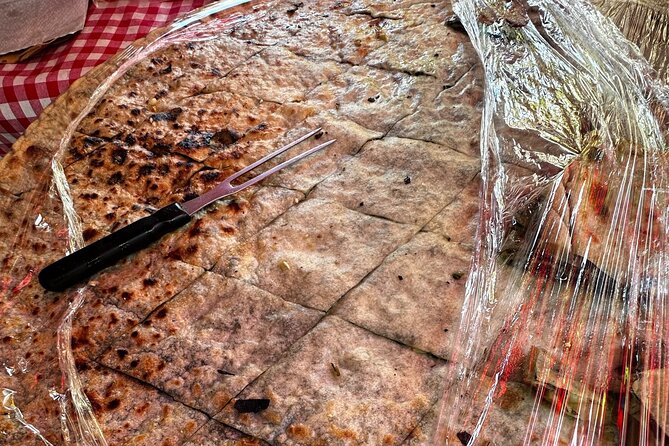
- Green Market Tastings: Prosciutto, Cheese, Olive Oil, Bread, and Soparnik
- Riva Harbor and Fjaka: The Art of Doing Nothing (Briefly)
- Entering Diocletian’s Cellars and Substructures
- Peristyle, Golden Gate, and Gregory of Nin’s Statue
- Temple of Jupiter Lunch: Fish Stew, White Fish, Sphinxes, and Let Me Pass
- Narodni trg (People’s Square) Gelato Break at Gelateria aMare
- Price and Timing: Does $216.74 per Person Make Sense?
- Who Should Book This Wine & Seafood Tour in Split
- Should You Book Black Apple Tours for Wine and Seafood With a Local Chef?
- FAQ
- How long is the private food tour in Split?
- Where does the tour start and end?
- Is pickup available?
- Is the tour private?
- What kind of food do we eat?
- What if the weather is bad or I need to cancel?
Key highlights you’ll feel right away
- Chef-led food tastings that connect everyday ingredients to Split’s food story
- Burek to soparnik: Ottoman and Roman-era influences in what you eat
- Diocletian’s Cellars and Palace substructures with easy-to-follow Roman context
- Lunch near the Temple of Jupiter, plus the tiny street moment called Let Me Pass
- Narodni trg (People’s Square) for a classic break from the waterfront heat
- Private tour format for questions, pacing, and a group that stays together
How Split’s Food Walk Turns Roman Ruins Into a Real Meal
Split can feel like two cities at once: a living waterfront and a Roman set that never quite stopped being used. This tour works because it ties those worlds together through food. You’re not just seeing buildings. You’re tasting the kinds of products and traditions that shaped daily life here.
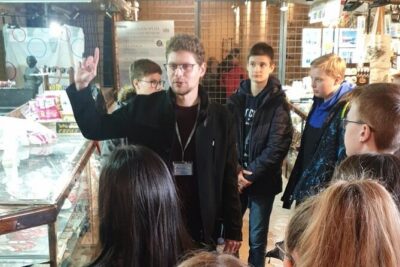
The “private” part matters more than you might expect. In a small group, your guide—Tomislav (often called Tom/Tomo in responses)—can steer the pace and focus. If you want extra detail about how a fish stew is flavored, or why the palace layout matters, you can ask without feeling like you’re interrupting a lecture.
And yes, you do get a full sightseeing thread through Diocletian’s Palace: Cellars, substructures, the Peristyle, the Golden Gate area, and the Temple of Jupiter zone. But the backbone is the food. You’ll go from medieval Ottoman comfort food to market staples, then end with seafood lunch and a sweet stop, all while learning what to look for in the stone.
You can also read our reviews of more tours and experiences in Split.

Prerada Bakery and Ottoman Burek: Your First Bite in Split
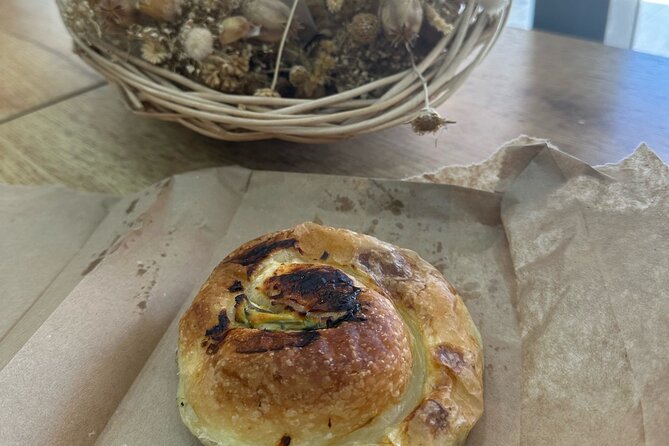
You start at the Brass Gate (Porta Aenea), then step into the Old Town mindset quickly: eat first, orient second. The opening stop at Prerada bakery is built around burek, described as a medieval dish linked to the Ottoman Empire that became part of modern food culture here.
Why this works: burek is approachable. It’s familiar enough to be easy on your stomach, but it also sets the theme for the whole tour—Split’s identity is layered. You’re not being handed a “history lesson.” You’re tasting a cultural transfer that stuck, then learning why locals still talk about Ottoman-era customs in everyday language.
In a chef-led tour, the value isn’t only that you try the dish. It’s that you get context on how these foods live on: what the ingredients imply, how people think about fillings, and why this kind of food remains practical in a Mediterranean setting. This is also a good “warm-up” stop. It gets you moving and talking before you hit the Green Market.
Practical tip: since you’re starting with food, keep your lunch hunger dialed in. Don’t plan a big breakfast right before. Wear shoes you can handle on uneven surfaces—Split’s stone is charming, but it’s not exactly flat.
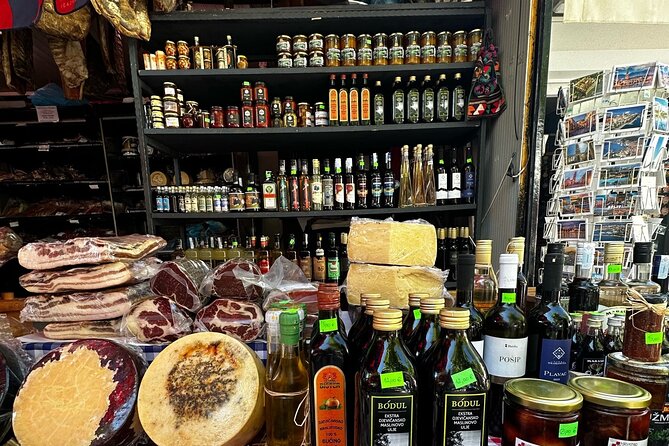
Green Market Tastings: Prosciutto, Cheese, Olive Oil, Bread, and Soparnik
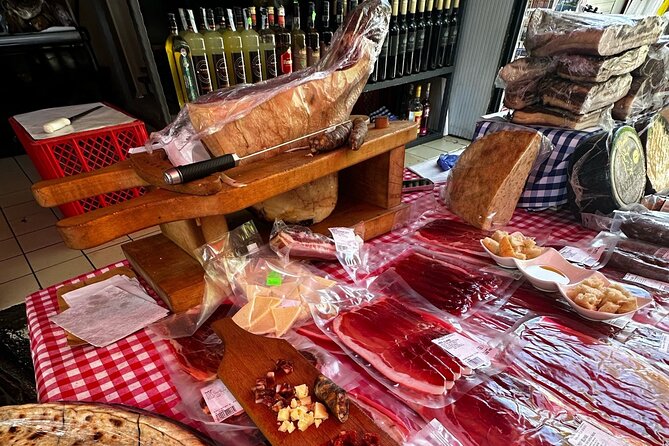
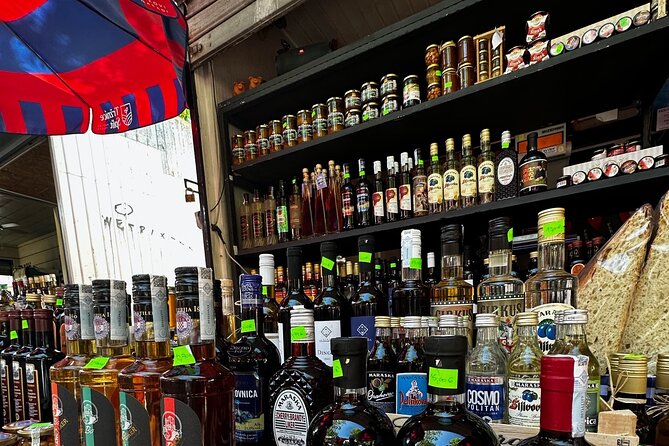
Next you head to the Green Market, presented as the local chef’s daily pantry. This is where you’ll try several of Split’s most recognizable items: prosciutto, cheese, olive oil, bread, and soparnik.
Soparnik deserves attention because it’s not just another snack—it’s local food culture on a plate. Your guide connects it to Roman-era ideas like feasts, which helps you see how ingredients and traditions stack up over centuries. You’re learning by tasting: salty meat, dairy richness, fruity olive oil, simple bread, and a dish that feels both humble and special.
Here’s the part I like most for real-world value. You leave with a clearer mental map of what to buy and what to look for later. If you come back to the market on your own, you’ll recognize the products and understand why locals use them together—this isn’t just food theater.
What you might consider: market tasting stops can move fast, because the point is variety. If you’re the type who wants to linger over every bite and take slow photos, this stop may feel a bit “hands-on, go-go.” The private format helps, though, so you can ask for a slower explanation if needed.
Riva Harbor and Fjaka: The Art of Doing Nothing (Briefly)
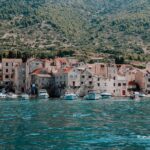
Then the tour opens up into the heart of the city: the Riva waterfront area. This part isn’t about eating more. It’s about setting the rhythm of Split—coffee here can last for hours, and locals call that mental state fjaka, the art of doing nothing.
That might sound poetic, but it’s actually useful. If you understand fjaka, you’ll stop trying to “win” Split by sprinting from spot to spot. You’ll get why people linger near the harbor, why the afternoon feels slower, and why the palace ruins don’t feel dead or distant.
From here, you also start connecting the city’s big story: Roman Empire traces, Diocletian’s Palace, and how the modern city sits around that older structure. This is the bridge between lunch-minded eating and sightseeing-minded wandering.
One small drawback to keep in mind: waterfront stops can be visually impressive, but they also can be busy and hot depending on when you go. Bring water. Use sun protection. The tour runs for about three hours, so timing matters more than you think.
Entering Diocletian’s Cellars and Substructures
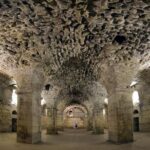
Now you shift into the big-ticket architecture: Diocletian’s Cellars and the Palace substructures. You get a real walk through the spaces created for work and power—places where the story is written in stone corridors and layered levels.
This is also where the tour gives you a memorable anchor. It’s noted as a filming location for Game of Thrones, specifically linked to the Dungeon of Dragons idea. Even if you’re not into that series, it helps you visualize how these spaces feel in a modern context: tight, dramatic, and built for movement rather than posing.
Why this is valuable: palace touring often becomes either too academic or too vague. Here, the guide ties the architectural purpose to people—hardworking men, women, and slaves are mentioned as part of what created the palace. That framing matters. You start seeing the building as functional and human-sized, not just “big and old.”
Practical note: indoor areas like cellars usually feel cooler, which is a good break during warmer months. But don’t count on air conditioning. Wear light layers and keep an eye on your footing in dimmer spots.


Peristyle, Golden Gate, and Gregory of Nin’s Statue
After the substructures, the tour moves into the palace core around the Peristyle area. This is where you see the Temple of Jupiter, which is now connected to the Catholic Cathedral of Saint Domnius, surrounded by mighty Egyptian columns.
You’ll learn how the same space can shift roles without losing its power. Temples become cathedrals. The political center becomes a living center. That’s the real magic of Split: the layers are not museum-only. They’re active.
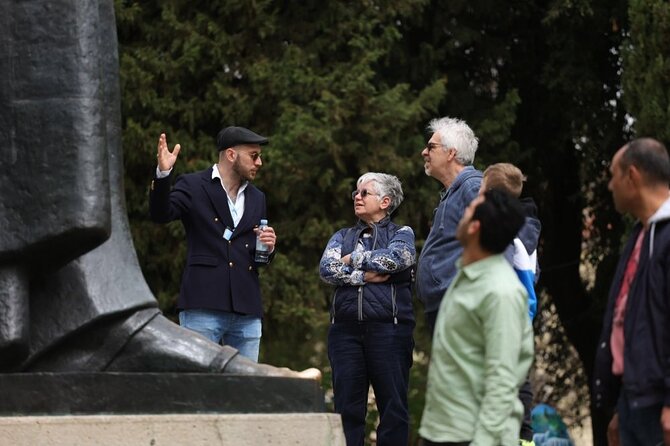
Then you get the Golden Gate zone, once the main entrance. You’re told about the four statues that once stood here, plus you’ll see the statue of Gregory of Nin, created by the local sculptor Ivan Meštrović. Gregory of Nin is one of those figures people love because the statue is bold and instantly recognizable. It helps your brain anchor the palace area with something human and slightly playful.
This section is a strong mix of big visuals and specific names. If you care about making sense of what you’re seeing, you’ll appreciate that the tour gives you labels you can remember later. It turns “random palace walls” into “I know what that part is and why it matters.”
Potential consideration: these stops are short, which is good for a three-hour tour, but it means you may want to do your own extra photos afterward once you’ve learned the key points. The tour gives you the map; it doesn’t try to replace your independent wandering.
Temple of Jupiter Lunch: Fish Stew, White Fish, Sphinxes, and Let Me Pass
The tour’s lunch stop takes place in the Temple of Jupiter museum area. This is one of those details that makes the food feel timed perfectly with the sightseeing. While you eat, you’re in the zone of ancient pieces, including Egyptian sphinxes that were taken as war trophies, plus a famous tiny street called Let Me Pass.
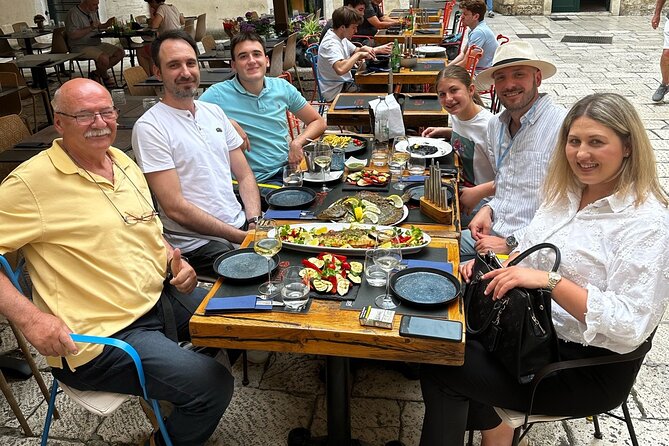
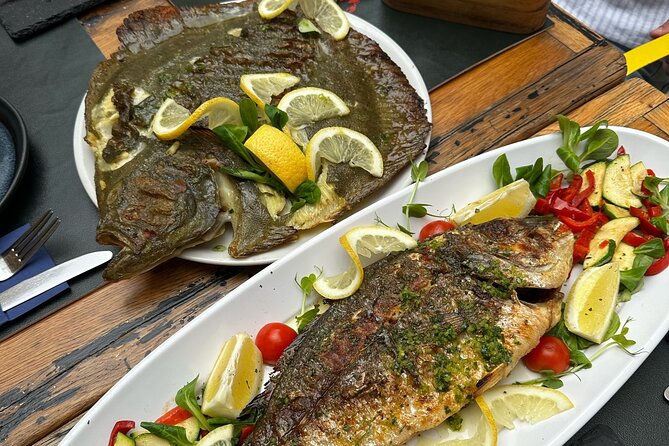
Lunch options are straightforward: fresh local white fish or fish stew. For a seafood-and-wine style tour, this is the part that makes the experience feel like a true meal, not just “snacks along the way.” And because you’re right near the palace religious-administrative center, the setting makes the meal feel tied to place rather than outsourced.
Why I think this is great value for your money: you’re paying for a guided connection between food and setting. A normal restaurant meal doesn’t give you the context of why the area is memorable. Here, the guide helps you understand what you’re looking at, then you sit down and eat where the history is physically around you.
What to consider: lunch choices are limited to what’s listed (white fish or fish stew). If you have strict dietary restrictions beyond what’s mentioned, you should message the operator before booking. The tour data doesn’t spell out a broader menu, so don’t assume it’s flexible.
Also, the tiny street Let Me Pass is the kind of photo moment that becomes a conversation starter later. It’s small, but it’s memorable—like the perfect bite size for a tour with a lot packed in.
Narodni trg (People’s Square) Gelato Break at Gelateria aMare
After lunch, the tour softens into a final flavor-and-photo finish at Narodni trg, also known as People’s Square (Pjaca). You’ll see the medieval city hall, now a museum. The tour notes that locals use this square to escape heat from the waterfront, which is a good reminder: Split has places to slow down that aren’t only “pretty.”
Then you get the dessert stop: ice cream from Gelateria aMare, described as one of the best in town. Even if you’re not chasing hype, it’s a smart ending. You’ve been eating savory all day; gelato is the release valve.
This section also helps with logistics. The tour ends here at Narodni trg, so you’re dropped in a central spot where you can choose your next move: linger, explore side streets, or head back toward the waterfront.
One small caution: gelato stops are great, but don’t plan to “walk it off” immediately. If you’re full, take a seat. Fjaka still counts.
Price and Timing: Does $216.74 per Person Make Sense?
The price is $216.74 per person for about three hours, offered in English by Black Apple Tours. For a private tour, that figure is less about paying for a chair and more about paying for (1) a local chef perspective, (2) guided entry/visits at key palace areas, and (3) food that’s not just one plate.
From what you’ll actually do, the value is in the mix:
- You get a guided food sequence that includes early bites like burek and market tasting items like soparnik, prosciutto, cheese, and olive oil.
- You get lunch with a seafood focus (white fish or fish stew) in a historic setting near the Temple of Jupiter.
- You finish with a named dessert stop at Gelateria aMare.
In other words, you’re not paying extra just to “see” Diocletian’s Palace. You’re paying to understand it alongside the flavors and cultural references that shaped daily life in Split.
If you’re the kind of person who enjoys food but also wants real context (not just facts thrown at you), this price often feels justified. If you mostly want a self-guided history walk and only one meal, you might prefer a cheaper tour format. But for a chef-led private blend of food and landmarks, this is a reasonable spend.
Who Should Book This Wine & Seafood Tour in Split
This tour fits best if you want a guided experience without the “tour bus” feel. Since it’s private, it works well for couples, friends, and small family groups who want a chef to explain what’s on your plate and where it belongs in Split’s story.
It’s also a good match if you care about flavor basics: how olive oil tastes when you’re actually in the market, why certain dishes persist, and how fish dishes differ when they’re tied to local preferences. If you like the idea of leaving with practical food recognition—what to buy later, what to order, what terms mean—it clicks.
You might consider a different option if you’re not interested in walking through Diocletian’s Palace areas or if you need a lot of downtime built in. The tour is paced tightly enough to fit multiple stops into three hours, and it’s weather dependent.
Should You Book Black Apple Tours for Wine and Seafood With a Local Chef?
My take: book it if you want Split to taste like Split. The tour is built around food you can name after you leave—burek, soparnik, prosciutto, local cheese, olive oil, and a fish-based lunch—while tying those flavors to Diocletian’s Palace and the Roman layers around it.
I’d particularly recommend it if you’re curious about how different eras show up in everyday eating, and if you’d enjoy learning from Tomislav, a former chef-style guide who brings both food focus and city context.
If you’re only looking for a long history lecture or a pure beach break, you might feel this is too structured. But if you want the perfect “three hours well spent” mix of seafood lunch, palace sights, and local culture moments like fjaka, this is an easy yes.
FAQ
How long is the private food tour in Split?
It’s about 3 hours.
Where does the tour start and end?
The tour starts at the Brass Gate (Porta Aenea) on Obala Hrvatskog narodnog preporoda 22, Split, and ends at Narodni trg (People’s Square).
Is pickup available?
Yes, pickup is offered, and you can also arrange to speak by phone beforehand to set an easy meeting point.
Is the tour private?
Yes. It’s private, so only your group participates.
What kind of food do we eat?
You’ll start with burek, try items such as prosciutto, cheese, olive oil, bread, and soparnik at the Green Market, and later have lunch with fresh local white fish or fish stew. The tour also includes ice cream from Gelateria aMare.
What if the weather is bad or I need to cancel?
The experience requires good weather. If it’s canceled due to poor weather, you’ll be offered a different date or a full refund. You can cancel for a full refund up to 24 hours in advance.