REVIEW · DUBROVNIK
Private Self-Guided Audio Walking Tour in Dubrovnik Old Town
Book on Viator →Operated by Navicup experiences · Bookable on Viator
Dubrovnik is easiest to understand when you walk it at your pace. This private self-guided audio tour strings together key Old Town sights with GPS-triggered narration, so you can keep moving instead of waiting for a group. I like that it’s priced like a budget activity but still covers big-name landmarks—Pile Gate, Sponza, and St. Blaise—without you needing a live guide.
Two things I really like: first, the audio map on your phone with offline content, so you’re not stuck with roaming bills. Second, the stop order is sensible for a first-timer because you hit the city’s main “story stops” along Stradun and nearby squares. The main drawback to consider is tech: the audio experience depends on the app working smoothly, and some people have reported glitches (repeating audio, overlays, or audio not starting).
In This Review
- Key Points You’ll Care About (Before You Start Walking)
- Dubrovnik Old Town Is Built for Self-Guided Walking
- Price and Value: What $9.61 Buys You (and What It Doesn’t)
- The Route Starts at EXCELSA Nekretnine: Easy Day, No Big Logistics
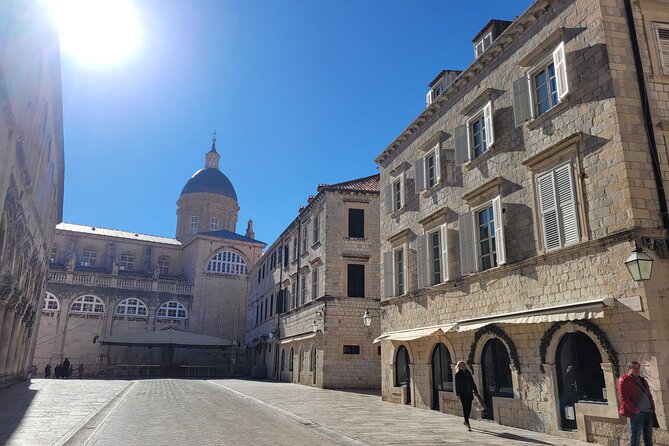
- Stop 1: Church of Saint Blaise (1715 Venetian Baroque Focus)
- Rector’s Palace: Where Government and Punishment Lived
- Amerling Fountain (1900): A Gift That Links Dubrovnik Abroad
- Monument to Poet Ivan Gundulić: Read the Four Reliefs
- Pile Gate (Built 1537): The Main Entrance into Old Town
- Luža Square and the 31-Metre Tower: End of Stradun’s Big Axis
- Sponza Palace (1516–1522): Rainwater, Stone Craft, and Civic Memory
- How the Navicup App Feels in Real Life: GPS Audio Is the Star
- Who This Tour Fits Best (and Who Should Skip It)
- My Booking Verdict: Should You Book This Dubrovnik Old Town Audio Walk?
- FAQ
- How long is the Private Self-Guided Audio Walking Tour in Dubrovnik Old Town?
- Is this tour really private?
- What’s included in the tour price?
- Do I need internet?
- Are entrance tickets included?
- Can I cancel for free?
Key Points You’ll Care About (Before You Start Walking)
- GPS-triggered audio: narration can start automatically as your phone recognizes each stop.
- Offline audio content: you can download so you’re not relying on constant internet during the walk.
- No entrance tickets included: some stops are free to view, but museum-style entries may not be covered.
- Headphones aren’t included: you’ll want your own earbuds to enjoy the narration.
- Private means just your group: no joining crowds or coordinating walking pace with others.
- Some tech friction is possible: activation or playback issues can happen, so keep a little patience.
Dubrovnik Old Town Is Built for Self-Guided Walking
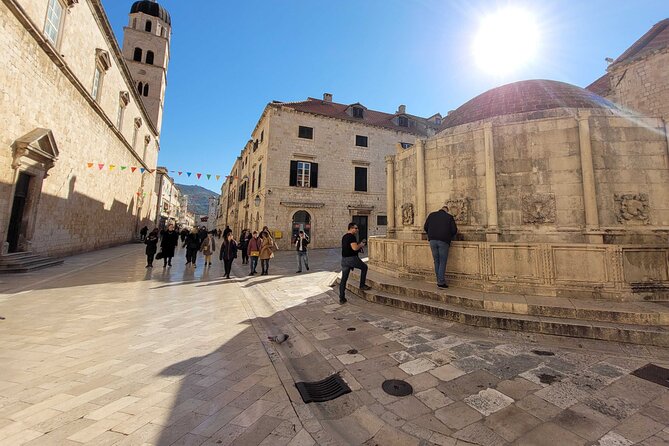
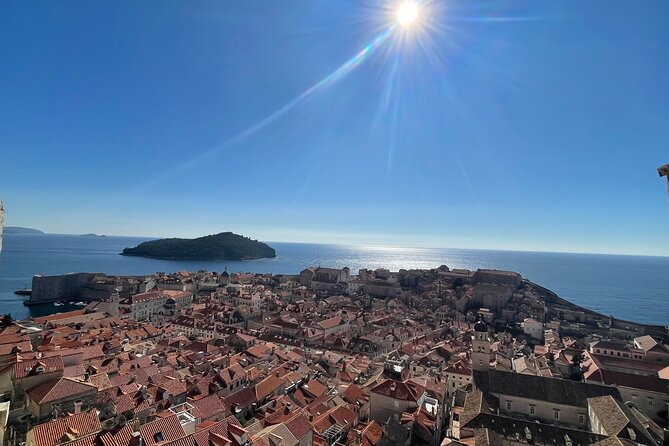
Dubrovnik Old Town is compact, but it’s full of visual cues—gateways, palaces, fountains, and dramatic street lines—that make it easy to “read” as you walk. That’s why an audio route works so well here: you can stop when something catches your eye and then continue when you’re ready.
This tour keeps you moving through the core sights around Stradun and the squares that frame it. The duration is flexible—about 1 to 3 hours—so you can do it quickly between main activities or stretch it out with photos and a slow look at stone details.
And because it’s private, you’re not listening to a guide while trying to squeeze between strangers. It’s just your group, your pace, and an app that’s supposed to guide you stop by stop.
You can also read our reviews of more tours and experiences in Dubrovnik.


Price and Value: What $9.61 Buys You (and What It Doesn’t)
At $9.61 per person, this is very much an “access to audio” kind of purchase. You’re paying for the downloadable guide and the route content, not for museum admissions or a human guide.
What you do get:
- A downloadable audio-guide map on your smartphone
- An activation link to access the tour
- Offline content so you can avoid roaming charges
What you should plan for:
- Your own smartphone (and ideally your own headphones)
- Internet connection for downloading the Navicup app and the audio tour
- No transportation
- No live guide
- Entrance tickets are not included (the route notes this clearly for at least one stop)
So the value equation is simple. If you’re comfortable using your phone for navigation and audio, this can be a cheap and effective way to learn the basics fast. If you hate relying on apps, or you’re worried about phone battery and audio glitches, you might feel the value slip.
The Route Starts at EXCELSA Nekretnine: Easy Day, No Big Logistics
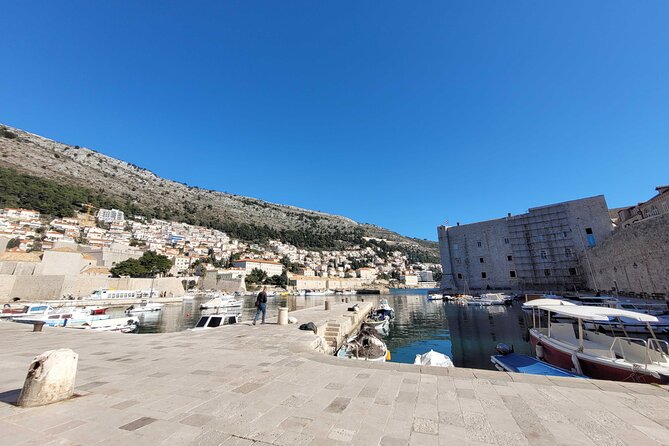
The meeting point is EXCELSA NEKRETNINE D.D. Ul. Svetog Đurđa 1, 20000 Dubrovnik. The tour also ends back at the same meeting spot, so you don’t need to worry about a “last stop somewhere else” scramble.
The operating window is basically open all day (12:00 AM to 11:59 PM), which is helpful when you’re trying to fit in a short Old Town walk around other plans like boat tours, day-trip bus schedules, or lunch.
Since it’s “near public transportation,” you can treat it as a bridge between transit and walking time. Bring water, because Old Town stone walks add up even if the audio route is only a couple hours.
Stop 1: Church of Saint Blaise (1715 Venetian Baroque Focus)
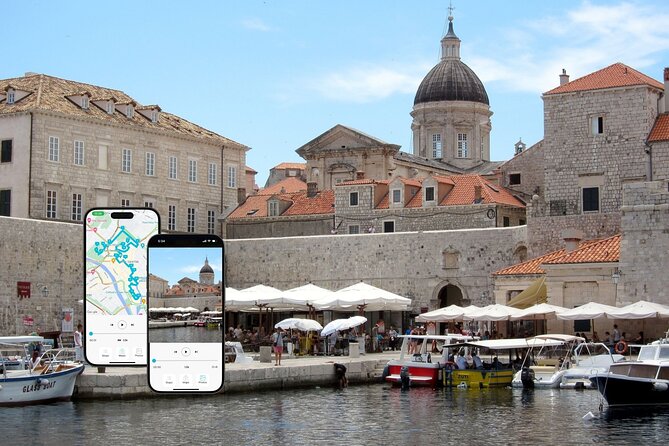
Your first stop is the Church of Saint Blaise, a major sacred landmark in Dubrovnik. The current church dates to 1715 and is described as Venetian Baroque style—so even if you don’t go inside (admission isn’t included), the building’s presence sets a tone for the rest of the walk.
Why it’s a smart start:
- It’s a powerful anchor for understanding how Dubrovnik combines devotion, civic pride, and architecture.
- Starting with a church gives you a “frame” before you move on to government buildings and public squares.
The route notes admission ticket not included here. That means you should plan on viewing what you can from outside, or paying separately if you decide you want interior time.
Rector’s Palace: Where Government and Punishment Lived

Next up is the Rector’s Palace, seat of the Rector of the Republic of Ragusa from the 14th century until 1808. It wasn’t just a pretty façade—this is where power operated.
The description of what the palace contained is the key detail: it also housed the smaller council and state government, plus an armory, a powder magazine, a guard house, and a prison.
In plain terms, this stop helps you connect Old Town beauty with the machinery of rule. When you look at grand façades, it’s easy to imagine only ceremony. This location reminds you that administrations also run security, storage, and punishment.
The tour notes no admission information for this specific stop, so you’ll want to treat it as a place where you may view the exterior and walk past areas at ground level unless you buy tickets separately.



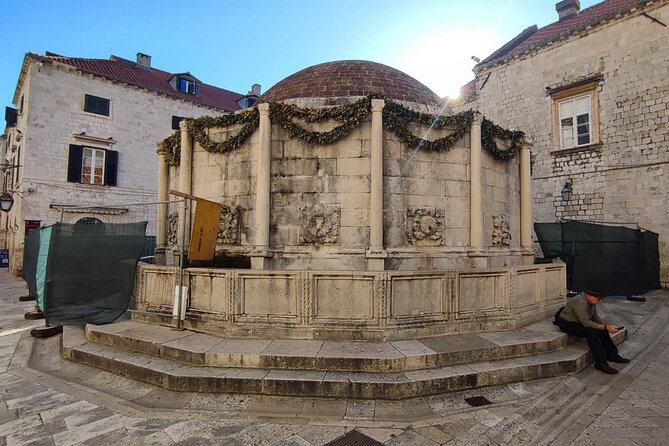
Amerling Fountain (1900): A Gift That Links Dubrovnik Abroad

The Amerling Fountain is a short stop—around a couple minutes—but it adds a different flavor. It’s one of the finest works by Croatian sculptor Ivan Renditchi, installed in 1900 as a gift to the Amerling brothers’ hometown.
This is one of those moments where a city’s international links show up in public stone and water. You’re not just touring buildings; you’re noticing how Dubrovnik marks names and relationships in everyday spaces.
The fountain is listed as free to visit, so there’s no ticket decision to slow you down. Even on a tight schedule, this kind of quick stop can keep your walk from feeling like a long parade of only big monuments.
Monument to Poet Ivan Gundulić: Read the Four Reliefs
Another quick but memorable stop is the Monument of Poet Ivan Gundulić. What makes it worth your attention is not just the monument itself, but what’s at its base: four low-relief panels showing key episodes from his epic Osman.
The route also gives you a starting point for context: Ivan Gundulić was born in 1589 in an aristocratic family. That helps you see him as part of a class that shaped Dubrovnik’s cultural output, not just a lone writer.
This is listed as free, and it’s short by design. Use it as a “story break” between the city’s civic architecture (palaces and gates) and the street-axis views around Stradun and the squares.
Pile Gate (Built 1537): The Main Entrance into Old Town
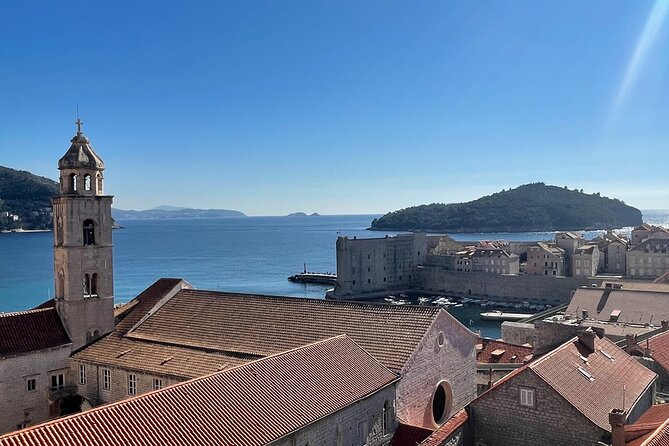
Then you reach Pile Gate, described as the natural starting point for visiting Dubrovnik. The gate was built in 1537 and functioned as the main entrance—originally Dubrovnik Old Town had only two entrances, with Pile Gate being the primary one.
This is one of the best stops on the route for getting oriented, because gates aren’t just landmarks—they’re spatial bookmarks. When you’re standing at Pile Gate, you can immediately feel the “city-within-a-city” logic.
The route lists this as free. That means you can linger without worrying about tickets. Also, it’s a good spot to pause your pace: if you’ve been rushing, this is where you can slow down and reset before the walk opens up.
Luža Square and the 31-Metre Tower: End of Stradun’s Big Axis
After Pile Gate, the route takes you to Luža Square, at the end of Stradun, where you’ll find the tower described as 31 metres high.
Even without going into the tower, its placement matters. Stradun is the classic Old Town main street, and the end of it is where the city starts to feel most “composed.” The tower gives you scale and a sense of how sight lines were designed.
The tower stop is listed without a specific ticket note here, so treat it as a view-and-walk-by moment unless you choose to add entry separately.
If you’re taking photos, this is one of the stops where you can frame the architecture with the street geometry in the background.
Sponza Palace (1516–1522): Rainwater, Stone Craft, and Civic Memory
Your final stop is Sponza Palace, described as one of Dubrovnik’s most beautiful palaces and one that preserved its original form. Construction is given as 1516 to 1522, and its style is presented as reminiscent of what many Dubrovnik palaces looked like before the 1667 earthquake.
The name matters too: “Sponza” comes from a word connected to a place where rainwater was collected, matching the former use of the site where it was built.
Why this stop works even on a self-guided format:
- It’s civic (a public-feeling palace) but tied to practical infrastructure (water collection).
- It gives you a big-picture reminder that Dubrovnik’s identity is built from both grand façades and day-to-day systems.
Sponza Palace is marked as free on the route list, which is helpful. You can focus on the architectural details without adding ticket decisions to your schedule.
How the Navicup App Feels in Real Life: GPS Audio Is the Star
The whole concept here is the phone acting like your guide. In the best-case scenario, the app uses GPS so narration starts as you approach each point of interest.
That’s the upside: you don’t need to constantly press play, and you’re not stuck scrolling. The downloadable audio-guide map is meant to keep you oriented as you move.
Here’s what to watch for, based on the most common technical complaints:
- Activation hiccups can happen. One issue described is missing automated notification, requiring support to activate a code manually.
- Playback bugs can include audio repeating, audio overlays (next stop starting on top of the current one), or audio not playing for a site.
- Map clutter can affect concentration. One report said the map included irrelevant items like Hard Rock Cafe and nightclubs, which overload the journey—there’s also advice to filter those objects on the map.
I’d plan your “risk management” like this:
- Keep your phone battery charged and avoid low-power modes.
- Download the tour audio ahead of time when you have internet.
- If audio misbehaves, don’t panic—recheck the stop on your map and let the track finish before moving on.
If you’re the kind of traveler who expects perfect app behavior, you might find the tour frustrating. If you can treat it as a low-cost audio companion and stay flexible, it can still work well.
Who This Tour Fits Best (and Who Should Skip It)
This tour suits you best if:
- You want to walk Dubrovnik Old Town at your own speed
- You like learning short, structured bits at the places themselves
- You’re comfortable using a smartphone and downloading an app before you go
- You’d rather do a private route than wait around for a group pace
You might want to choose something else if:
- You dislike depending on GPS triggers and audio playback
- You’re traveling with poor phone reception or low battery anxiety
- You really want a deep, story-driven guide voice rather than short location descriptions
It’s also a good fit for travelers who like building a base understanding first, then switching to wandering mode afterward—because the route hits a clean set of iconic civic and cultural anchors.
My Booking Verdict: Should You Book This Dubrovnik Old Town Audio Walk?
I’d book it if you’re looking for a low-cost way to connect the major names of Old Town to what you’re actually standing in front of. For $9.61, the price-to-effort ratio is strong—especially since key spots like Amerling Fountain, Gundulić’s monument, Pile Gate, and Sponza are listed as free.
I would hesitate only if you know you’ll be angry about app glitches or you can’t spare the time to download content in advance. The experience seems to run best when the GPS narration and activation go smoothly; when tech doesn’t cooperate, it can feel like too much hassle for too little payoff.
If you want a practical learning tool and you’re okay being the “backup guide” for your phone, this one can be a smart pick. If you want a guaranteed smooth guided experience, you should probably look for an option with a live guide.
FAQ
How long is the Private Self-Guided Audio Walking Tour in Dubrovnik Old Town?
The duration is listed as about 1 to 3 hours, depending on how long you spend at each stop.
Is this tour really private?
Yes. It’s listed as a private tour/activity, so only your group will participate.
What’s included in the tour price?
You get a downloadable audio-guide map for your smartphone, an activation link, and offline content to help avoid roaming charges.
Do I need internet?
For downloading the Navicup application and the audio tour, you need an internet connection. After that, the content is provided for offline use.
Are entrance tickets included?
Not always. The route notes that admission tickets are not included for at least the Church of Saint Blaise. Some other listed stops are marked free, but entrance is not included in general.
Can I cancel for free?
Yes. Free cancellation is available, and you must cancel up to 24 hours in advance for a full refund.
If you tell me your travel month and whether you’re using Android or iPhone, I can suggest the best way to set up your phone before you start walking.