REVIEW · SPLIT
Private Split Walking tour with a Photo session
Book on Viator →Operated by Costumed Tours · Bookable on Viator
Roman ruins and photos in Split.
This private Photo session walking tour sets you loose along the Riva promenade and deep inside Diocletian’s Palace, with a professional photographer guiding what to capture. It’s designed for a slow, comfortable rhythm, so the stories land and the pictures actually look like you were there, not just in front of a landmark.
I love how easy the meeting spot is, starting right where you can orient yourself fast. I also like that it’s truly private, so you can linger at the best views and keep walking without feeling rushed.
One consideration: admission for Saint Domnius Cathedral (and the included Temple of Jupiter and Crypt of St. Lucy) is 25 Croatian kuna, so your total cost won’t be purely the tour price.
In This Review
- Key things to know before you go
- Riva Harbor start: get your bearings and your first great photos
- Diocletian’s Palace: walk the Emperor’s plan, not just the ruins
- Vestibulum: the acoustics stop you’ll remember longer than you expect
- Saint Domnius Cathedral: a major stop with one extra ticket
- Golden Gate area: Grgur Ninski and the language story
- Squares that feel like daily life: Narodni Trg and Trg Brace Radic
- Prokurative arcades: mini Venice vibes, pop-music energy
- Photo session + private guide: how to get the most from 2.5 hours
- Price and value: what $300.73 per person buys you in Split
- Who should book this private Split photo-walk
- One last practical check: meeting point and weather
- Should you book this tour?
- FAQ
- How long is the private Split walking tour with photo session?
- Is this tour private or shared with other groups?
- What language is the tour offered in?
- Where is the meeting point?
- Is the Cathedral of Saint Domnius admission included?
- Is a photographer included?
- Do I get a mobile ticket?
- What happens if the weather is bad?
- What is the cancellation deadline for a full refund?
Key things to know before you go
- Pro lifestyle photographer is included (Ivan Gudić)
- Riva promenade is the smart starting point for bearings and sea views
- Diocletian’s Palace gets the right focus on structure, function, and scale
- Vestibulum’s acoustics matter more than you’d expect
- You’ll have free time afterward once the 2.5 hours are done
Riva Harbor start: get your bearings and your first great photos
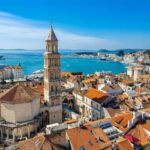
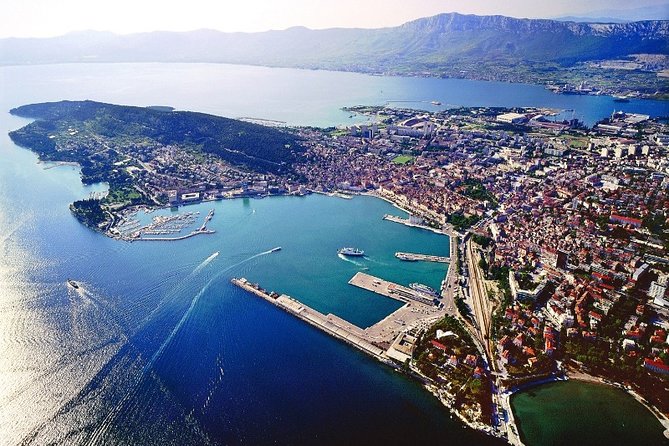
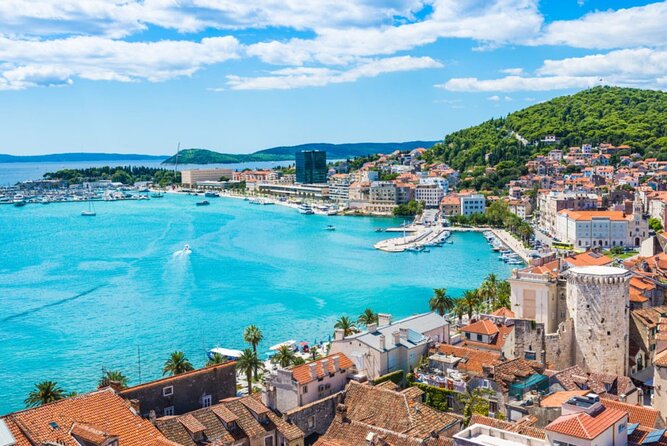
The tour begins on the Riva promenade, Split’s main public space along the sea. It’s not just a pretty walk; it’s the kind of place locals treat like a front room—where events happen through the year, from major holidays to city celebrations. If you’ve ever felt overwhelmed in a new city center, starting here helps. You get orientation, waterfront energy, and a “this is Split” feeling within minutes.
The meeting location is near a bronze model of the city of Split, at the very beginning of the Riva. That detail matters because it reduces the usual early-trip stress: you can spot where you need to be without hunting through side streets. It also sets you up for photos with natural light and a wide frame, before you head into the tighter palace lanes.
Plan on using this first stretch for wide shots—promenade + skyline + the sea—while your photographer helps you find angles that look intentional. You’ll also likely pass coffee spots and restaurants along the way, but the route keeps moving just enough that you stay focused.
You can also read our reviews of more tours and experiences in Split.

Diocletian’s Palace: walk the Emperor’s plan, not just the ruins
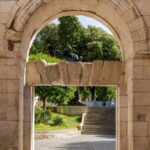
The big step is moving from the open waterfront into Diocletian’s Palace, one of the best-preserved Roman architectural complexes in the world. You’re not just strolling among stones here. You’re walking a designed machine: part luxury summer villa, part Roman military camp (castrum), laid out in four parts with two main streets.
What I like about this stop is how the guide frames the palace as purpose-built. The southern portion ties to the Emperor’s apartment and ceremonies. The northern portion relates to the guard, servants, storage—everyday systems that make the whole place feel lived-in, even now. The palace is roughly rectangular (about 215 x 180 meters) with four large corner towers, doors on each of the four sides, and smaller towers on the walls. Those numbers help you “see” the structure, even when the walls and passageways look different from street level.
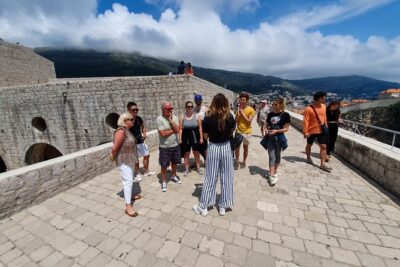
For photos, this is where you’ll benefit from going at your own pace. You can step into doorways, line up shots with the palace geometry, and take a breath before moving deeper. The time here is about 30 minutes, which is enough to cover the essentials without turning the place into a checklist. The trade-off is that if you want very close-up shots of carvings and details, you may feel a bit time-crunched—so pick a few sections you care about most and let the rest be context.
Vestibulum: the acoustics stop you’ll remember longer than you expect
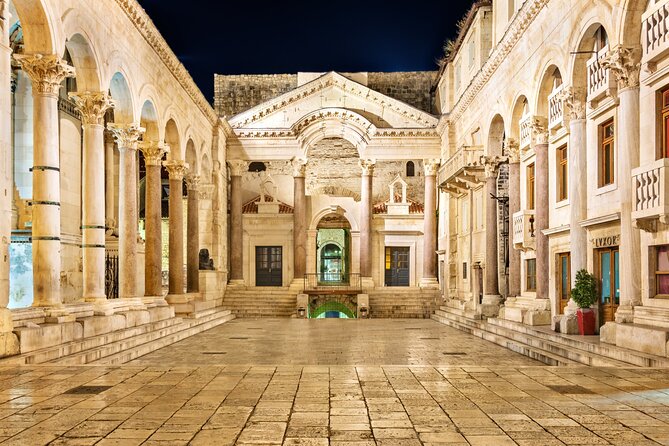
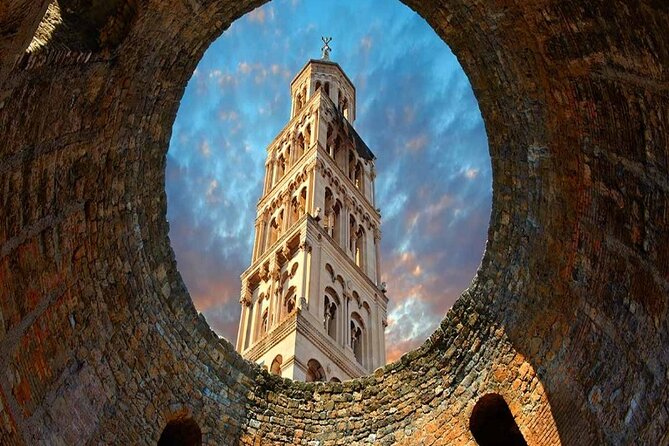
Next comes the Vestibulum of Diocletian’s Palace, a space that feels monumental from both the outside rectangle shape and the inside circular plan. Even if you don’t consider yourself an architecture person, this stop lands because it’s described in a way that makes you look differently. You’ll notice semicircular niches with statues, and a large cupola with colourful mosaic. The idea that a 16th-century manuscript by Marko Marulić described the mosaic helps anchor why it’s been seen and valued for centuries.
There’s also a fascinating human twist: this vestibule wasn’t always just ceremonial space. It was used as an entry to the residential part of the palace, and at one point (not that long ago in the long story of the building) residents reportedly kept poultry and cultivated gardens there. That contrast helps you understand why the palace doesn’t feel like an empty museum shell. It has layers of real use.
Then comes the acoustics. Vestibulum has outstanding sound properties, and you might hear group singing—traditional dalmatian a cappella songs—depending on timing and conditions. Either way, you’ll probably start paying attention to how sound travels inside. For photos, keep it flexible: you’ll likely want both wide frames to catch the curve of the room and more grounded shots that show scale.
Saint Domnius Cathedral: a major stop with one extra ticket

Inside the Cathedral of Saint Domnius, the timeline gets wild—in a good way. This cathedral sits in the Mausoleum of the Roman Emperor Diocletian, and it’s a rare kind of continuity: ancient pagan foundation turned into Christian medieval worship space and still active today.
What makes this stop meaningful is the way it ties different eras together in one building. You’ll hear about the shift to cathedral use in the 7th century, and how altars dedicated to St Domnius and St Anastasius connect to local history and martyrdom stories. The cathedral today is primarily a place of liturgy, with long continuity shown in regular services and renewed grandeur around St Domnius day.
There’s also a visual detail that travel pros love: the cathedral gates carved in walnut by Andrija Buvina from Split. If you’re taking portraits, pause here for close-ups of woodwork and door textures. Those details give your photos a sense of place beyond “I stood in a cathedral.”
One practical note: Cathedral entry is 25 Croatian kuna, and that ticket includes the Temple of Jupiter and the Crypt of St. Lucy. The walking portion is included in your tour flow, but this specific ticket is not. Budget for it so you’re not surprised mid-route.
Golden Gate area: Grgur Ninski and the language story

Just outside the Golden Gate, you’ll stop at the statue of Grgur Ninski (Gregory of Nin). It’s an outdoor moment, but it’s not a random statue pose. The story is political in the best human sense: Gregory of Nin was a medieval bishop who pushed back against Rome and insisted Catholic services use the Croatian language instead of Latin. The practical outcome was that people could understand what was being said.
This statue was crafted by Croatian sculptor Ivan Meštrović in 1929 to mark a thousand years since Gregory’s defense of Croatian culture. And yes, there’s a playful local custom: the story says rubbing his big toe will grant your wish. It’s the kind of gesture you’ll feel comfortable doing quickly—just be aware there may be other photo-seekers around, especially in peak seasons.
For photography, outdoor statues work best when you keep your framing clean. Let the gate and palace background do the heavy lifting, and use your photographer to help you position so you get context without too many random passersby blocking the shot.

Squares that feel like daily life: Narodni Trg and Trg Brace Radic
After the palace zone, you transition into Split’s squares, where the city rhythm becomes obvious. Narodni Trg (often called Pjaca, or People’s Square) is a central stage for everyday life. Historically, it was first mentioned in the 13th century as St. Lawrence’s Square, and it became the first inhabited part of Split outside the Diocletian Palace along the west wall. It also served as the seat of civic authority, with buildings like the Gothic Old Town Hall now acting as an exhibition center.
This is where you should slow down and do a little people-watching, because the square explains what the palace doesn’t. Roman walls tell you how power worked. Pjaca tells you how culture and commerce continue to work.
Next is Fruit’s Square, or Trg Brace Radic, a smaller square but full of landmarks. Look for the octagonal Venetian tower—leftover from a 15th-century fortress that defended the town when it was smaller. Across from it, the Palace of the old family Milesi from the 17th century shows a Baroque facade, one of the better examples of that style in Dalmatia. Right in front, you’ll see a monument to Marko Marulić, a major figure in Croatian literature and philosophy, also associated with Split. Many of these sculptural elements tie back to Ivan Meštrović.
For photos, this area gives you variety without a lot of walking. You can shoot architectural facades, square compositions, and portrait-style images with a strong background that doesn’t require climbing anything.
Prokurative arcades: mini Venice vibes, pop-music energy
Your final stretch heads to Prokurative, also known as Republic Square, a place that people often compare to Venice’s St. Mark’s Square. The resemblance comes from the arcades and the neo-Renaissance buildings around the square. The name links to the arches on the buildings, and the arcades are the star of the show.
This square was shaped in the mid-19th century under mayor Antonio Bajamonti, who pushed Italian cultural influence in Split. The architecture reflects that with colonnades resembling Venetian style and reliefs above windows hinting at ancient and Renaissance tastes. He also planned a great theatre on the square, but it burned down—so the square you see now is what survived and evolved.
The Prokurative area works as a social hub. It’s used for cultural events, especially pop music festivals, and the surrounding bars and restaurants keep it lively. The tour uses this stop to land you back into the “today” version of Split right before you’re released to enjoy the rest of your day.
For your photo session, this kind of open plaza can be great for brighter shots with stronger contrast. If your photographer brings you into the arcades, you’ll get the classic light-and-shadow look from columns and arches.
Photo session + private guide: how to get the most from 2.5 hours
The core promise here is straightforward: you get a guided walking tour of Split’s big historic beats and a private professional photo session. The photographer is Ivan Gudić, listed as a private professional lifestyle photographer, so you’re not just relying on your own phone and luck.
In a tour like this, the best way to maximize value is to treat it like a set of “photo opportunities with context,” not just photo stops. When the guide explains what you’re looking at—Roman military camp logic, how the vestibule functioned, why the cathedral sits where it does—you naturally take better photos because you know what the building is doing.
Also, this is paced for you. The route is about 2.5 hours, with the rest of the day left open after. That means you can use the photos immediately for social posts, but you can also treat the day afterward as your own Split plan—beach time, more wandering, or a meal in one of the square-area restaurants you passed.
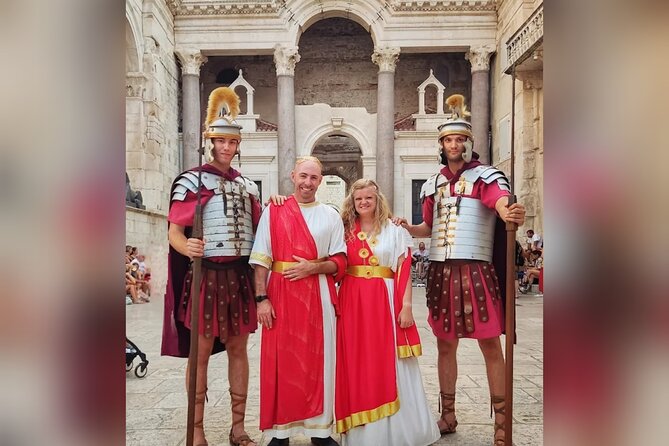
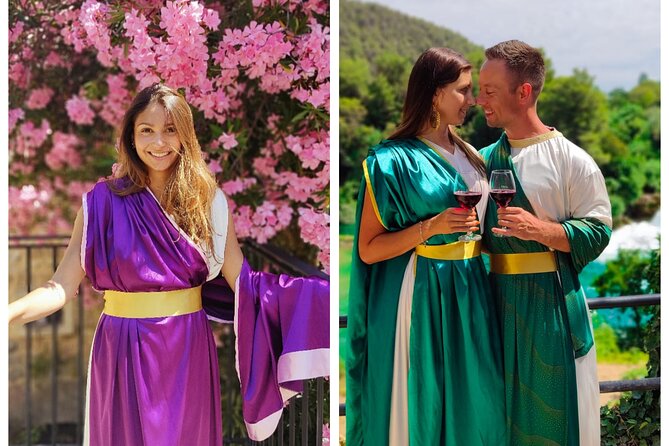
One fun detail that’s been included in some versions of the experience: a playful Roman outfit photo moment. It’s the sort of thing that turns the history theme into something you’ll remember, especially for couples and families who like a bit of theatrical fun. If it’s offered during your time slot, take it.
Price and value: what $300.73 per person buys you in Split
At $300.73 per person for a 2.5-hour private experience, this is not a budget-only walking tour. But it’s also not trying to compete with cheap group tours. The value comes from three things working together:
- Private guiding and routing through the palace and squares without fighting crowds for a “turning point” explanation.
- A professional photographer (Ivan Gudić) included in the experience, which changes the whole purpose of the outing from sightseeing to “story + portraits.”
- Smart selection of stops where photos are easy to take and the explanations add meaning, especially in Diocletian’s Palace and the vestibule.
Your add-on cost to factor in is the 25 Croatian kuna admission for the Saint Domnius Cathedral complex. That’s a normal reality for these interiors, and it’s actually a good sign: you’re not paying a big “bundle price” for things you can clearly see you’ll still have to access.
If you’re traveling as a couple, this kind of experience can feel especially worth it because you’re essentially paying for a guided photo walk with human guidance. If you’re solo, it can still be great—just be honest about what you want: if you only need a basic overview, you may find cheaper ways to see Split. If you want your photos to look purposeful and your walk to feel guided but not rushed, this price makes more sense.
Booking timing is also worth a glance. This tour is commonly booked about 13 days in advance, so don’t wait until the last week if your dates are fixed.
Who should book this private Split photo-walk
This tour fits best if you want more than a standard highlights loop. You’ll enjoy it if you like:
- Roman and medieval layers, explained in plain language
- Architecture and “why was this built this way” stories
- Better photos without having to direct a friend for every shot
- A private format where you can go slower through the parts you like most
It’s also a solid match for couples and families who want one “anchor activity” in Split, then freedom afterward. Most travelers can participate, and service animals are allowed, which helps for some visitors who need that flexibility.
It can be a less ideal fit if you’re determined to spend a long time inside every stop. The palace and cathedral areas are time-limited in this format, so you’ll want to use your free time after the tour to come back if something really grabs you.
One last practical check: meeting point and weather
The meeting point is on Obala Hrvatskog narodnog preporoda, 21000, Split and the tour ends back there. That’s helpful because you’re not left stranded at a random landmark. It’s also close to public transportation, so if your plan changes you’re not far from an easy exit.
One more reality check: the experience requires good weather. If conditions are rough, you should be ready for rescheduling or a full refund option through the provider.
Should you book this tour?
If your goal is a guided walk through Split’s most important historic spaces plus photos that look like they belong to you, I think this is a smart booking. The included photographer (Ivan Gudić) and the tightly chosen stops—Riva, Diocletian’s Palace, vestibule acoustics, Saint Domnius, and the key squares—make the 2.5 hours feel intentional rather than rushed.
Skip it if you mainly want the cheapest way to see Split’s center or if you don’t care about having professional portraits from the day. Otherwise, it’s a strong way to experience Split with context, photos, and room for the rest of your day.
FAQ
How long is the private Split walking tour with photo session?
It’s about 2 hours 30 minutes.
Is this tour private or shared with other groups?
This is a private tour/activity. Only your group will participate.
What language is the tour offered in?
It’s offered in English.
Where is the meeting point?
The start point is Obala Hrvatskog narodnog preporoda, 21000, Split, Croatia, and it ends back at the same meeting point.
Is the Cathedral of Saint Domnius admission included?
No. Admission to the Cathedral of Saint Domnius (including the Temple of Jupiter and the Crypt of Saint Lucy) is 25 Croatian kuna (3.5 euros).
Is a photographer included?
Yes. A private professional lifestyle photographer, Ivan Gudić, is included.
Do I get a mobile ticket?
Yes, it includes a mobile ticket.
What happens if the weather is bad?
The experience requires good weather. If it’s canceled due to poor weather, you’ll be offered a different date or a full refund.
What is the cancellation deadline for a full refund?
You can cancel up to 24 hours in advance for a full refund.