Dubrovnik reads best on foot. This private walking tour is built for a short, satisfying loop through the Old Town, with real-history stops like Pile Gate and Onofrio’s Fountain, plus story time you can actually follow. I love the small-group feel (up to 6) and how the guide connects details—water supply, the Republic era, and even war context—to what you see in front of you; the only catch is that some interiors are optional or not included, so you’ll decide on add-on entry tickets as you go.
You’ll start at Amerling Fountain at 9:00 am and finish near the Bell Tower, with a total duration of about 2 hours. The guide language options are Dutch-NL / English / French, and you get a mobile ticket to keep things simple in the Old Town.
This walk is mostly outdoors, which is great for pacing, but you’ll still want comfortable shoes. Expect quick pauses—usually around 10–15 minutes per stop—so you get the highlights without getting stuck in long lines.
In This Review
- Key highlights worth paying attention to
- Why this 2-hour private walk makes Dubrovnik easier to read
- Meeting at Amerling Fountain and ending by the Bell Tower
- Pile Gate: Dubrovnik’s medieval front door and St. Blaise welcome
- Onofrio’s Large Fountain: the city’s water system told through 16 stone masks
- Franciscan Monastery Museum: the calm cloister and the optional 1317 pharmacy
- Stradun: Dubrovnik’s main street where history keeps walking
- Church of Saint Blaise: Baroque style and the protective patron statue
- Sponza Palace and Rector’s Palace views: Republic-era power made stone
- The Cathedral of the Assumption: Baroque rebuilding after an earthquake
- Old Port and the Bell Tower finale: trading routes to the hour-strike show
- Who should book this Dubrovnik hidden gems and history walk
- Should you book this tour?
- FAQ
- How long is the Dubrovnik private walking tour?
- What is the price and group size?
- Where do we meet and where does it end?
- Is the tour private?
- Are entrance fees included?
- What languages are available for the guide?
- Can I cancel for a full refund?
Key highlights worth paying attention to
- Pile Gate’s 15th-century fortifications: the Old Town entrance with drawbridge-style history and St. Blaise symbolism
- Onofrio’s Fountain masks and the 12-kilometer water story: 16 stone faces tied to fresh water distribution
- Franciscan Monastery and the 1317 pharmacy: an optional interior stop if you want the quiet side of Dubrovnik
- Stradun’s limestone promenade: the main street where the city’s daily life and old political core meet
- Sponza Palace and archives vibe: Gothic-Renaissance details tied to Republic-era administration
- Bell Tower finale with Maro and Baro: the hour-striking bronze figures that close the loop
Why this 2-hour private walk makes Dubrovnik easier to read
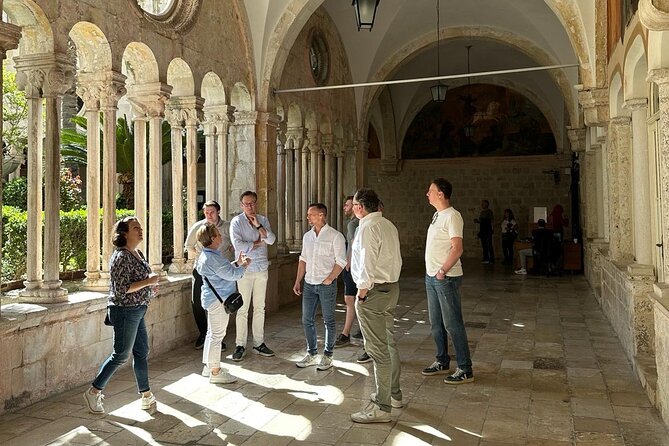
Dubrovnik can feel like a lot at once—walls, churches, palaces, crowds, and so much stone. This tour is smart because it stays tight: about 2 hours, so you don’t lose momentum or energy before you get to the key stories.
The other value piece is that this is private for your group (up to 6). That means you can ask questions and steer slightly, instead of trying to catch a guide’s voice while people shuffle past you.
About the price: it’s $228.05 per group. That sounds like a “private tour price,” but for up to six people it can work out very reasonable compared to paying separate entrance-line help or doing a crowded group tour with less time to ask questions.
You can also read our reviews of more tours and experiences in Dubrovnik.


Meeting at Amerling Fountain and ending by the Bell Tower
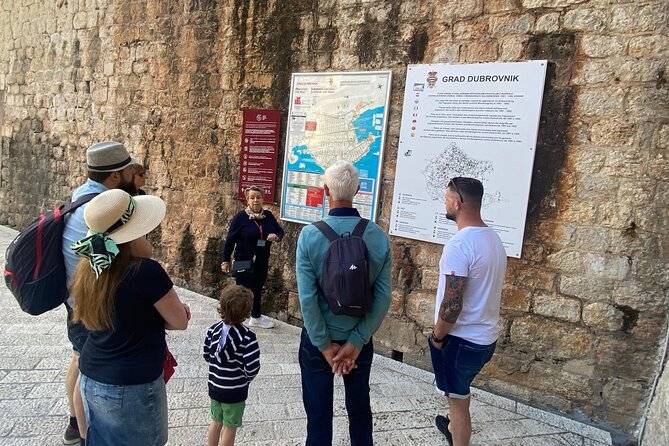
You meet at Amerling Fountain (Ul. Svetog Đurđa, 20000 Dubrovnik) and start at 9:00 am. The end point is the Clock Tower of Dubrovnik, near the Bell Tower—an easy finish because it’s a natural focal point in the Old Town.
This matters because Old Town routes can feel maze-like. By using a start-to-finish path, you get a logical flow from the main gate area toward the waterfront and the bell-tower viewpoint.
Bring your best walking shoes. Even with short stop times, the Old Town surface is limestone-paved, and you’ll want stable footing.
Pile Gate: Dubrovnik’s medieval front door and St. Blaise welcome
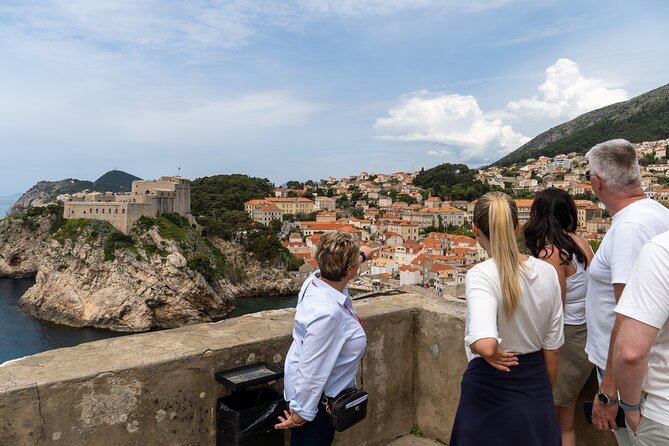
Your first real “this is Dubrovnik” moment is Pile Gate, the main entrance to the Old Town. It was built in the 15th century as part of the city’s fortifications, and it includes the dramatic architectural setup visitors expect from a defensive gateway—stone bridge and drawbridge-style history.
There’s also a religious-political detail that makes Dubrovnik feel more human: a statue of St. Blaise, the city’s patron saint. This isn’t just decoration. It’s a reminder that in Dubrovnik, faith and civic identity are tangled together.
One practical benefit of starting here: you’ll get oriented early, so later details like street names (and why certain spaces matter) make more sense as you walk.
Onofrio’s Large Fountain: the city’s water system told through 16 stone masks
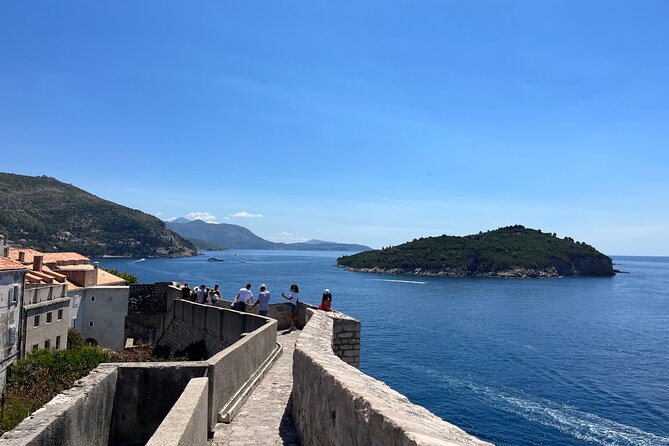
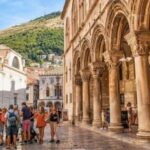
Next up is Onofrio’s Large Fountain, built in 1438 by Italian architect Onofrio della Cava. The fountain wasn’t just for looks—it was part of the water supply system that brought fresh water from a spring 12 kilometers away.
What I like about this stop is the way it turns infrastructure into a story. The circular fountain is decorated with 16 carved stone masks, each with a spout, which once delivered drinking water to the city.
This is one of the most memorable “hidden gems” because it makes you look at stone differently. You’ll stop seeing a photo spot and start seeing a working system the city relied on.
Franciscan Monastery Museum: the calm cloister and the optional 1317 pharmacy
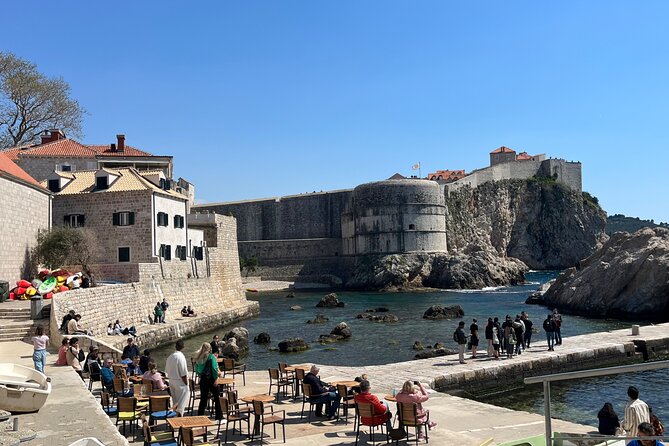
The Franciscan Monastery dates back to the 14th century and is known for a peaceful cloister and the monastery’s pharmacy. Inside is one of Europe’s oldest still-functioning pharmacies, established in 1317, which served both the monastery and the public.
Here’s the only timing catch in this part: the tour lists the monastery and old pharmacy visit as optional, and the entrance fee is not included. If you’re the type who loves interiors and historical objects, this stop can add a lot. If you’d rather stay strictly outdoors, you can treat it as a short orientation stop and keep your budget steady.
Even if you skip the interior, the monastery area still gives you a break from the main-street flow. Dubrovnik can be loud with footsteps; this portion gives your brain a breather.


Stradun: Dubrovnik’s main street where history keeps walking
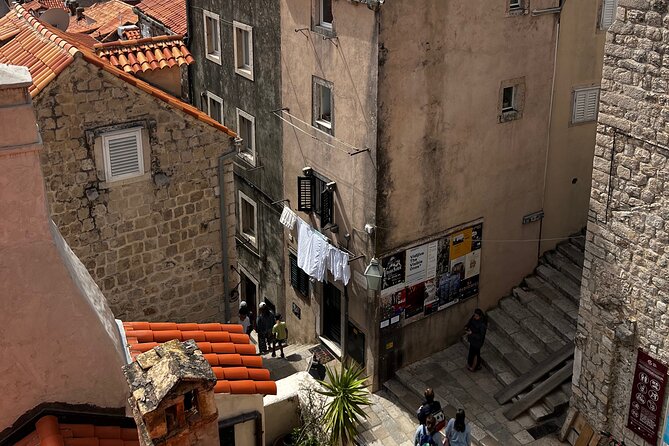
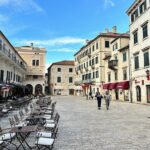
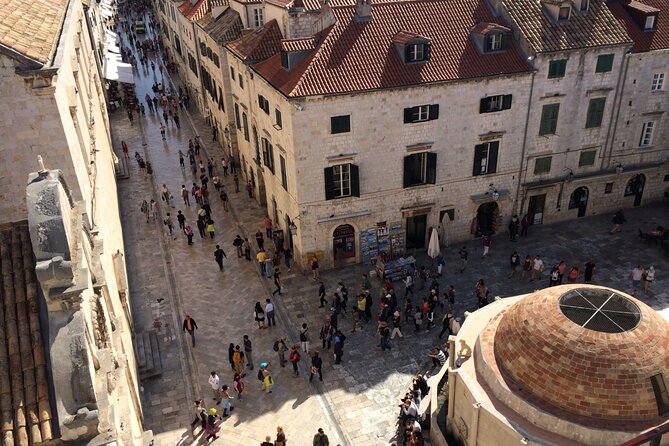
Then you step into Stradun, the Old Town’s wide limestone-paved main street. It runs through the heart of the city, lined with historic buildings, shops, and cafés—basically the place where people naturally gather.
This is where the guide’s role really helps: Stradun is straightforward to see, but it’s easier to understand with context. You’ll get the stories of why Stradun is the social and cultural hub and how it connects to Dubrovnik’s civic life.
If you’re visiting during peak hours, Stradun will feel busy no matter what. The tour’s structure helps because you’re not aimlessly searching; you’re moving with purpose and getting your “why this matters” moments without drifting too long.
Church of Saint Blaise: Baroque style and the protective patron statue
At the Church of Saint Blaise, the key detail is the Baroque style and the saint-centered meaning of the place. The church dates to the early 18th century and is dedicated to the city’s patron saint.
The standout inside is the treasured statue of Saint Blaise holding a model of medieval Dubrovnik. It’s a compact symbol with big weight: the idea of protection over the city.
The tour has you learn more about the saint protector, which is especially useful if you’ve already met St. Blaise at Pile Gate. The effect is cumulative—you’re building a clear thread of civic identity instead of collecting random facts.
Sponza Palace and Rector’s Palace views: Republic-era power made stone
On Stradun’s eastern end is Sponza Palace, built in the 16th century with Gothic and Renaissance blending. It once served as a customs house and treasury and now holds Dubrovnik’s historical archives and memorial spaces for defenders.
The practical value here is that Sponza is the kind of building where you can feel civic organization even without going inside. You’ll see a structure that reflects the Republic’s administrative muscle—trade, records, and identity all in one.
A few minutes later you reach Rector’s Palace. This stop is designed as a visual one—you’ll pause in front rather than enter. The palace mixes Gothic, Renaissance, and Baroque styles and was the seat of the Rector governing the Republic of Ragusa.
If you want museum time inside, you might want to add more on your own day. But for a 2-hour walk, stopping outside keeps the focus on the bigger story arc: how power, money, and governance were physically built into the city.
The Cathedral of the Assumption: Baroque rebuilding after an earthquake
Dubrovnik’s Assumption Cathedral (Church of the Assumption of the Virgin Mary) was rebuilt in the 18th century after an earthquake. The design is grand and Baroque, and it’s tied to the city’s spiritual and cultural rebuilding.
Inside is an impressive treasury with relics, including those of Saint Blaise, plus a painting attributed to Titian. The tour lists a cathedral visit as optional, and entrance fees are not included.
I like having this as an option because it matches different travel styles. If you enjoy churches as places of art and ritual, you can spend more time inside. If you’d rather keep moving and save time for the sea and viewpoints, you can admire the exterior and stay on pace.
Old Port and the Bell Tower finale: trading routes to the hour-strike show
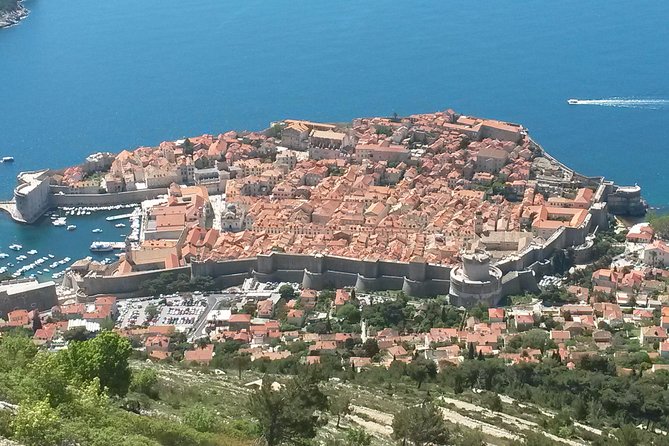
The route then brings you to the Old Port, tucked beneath the city walls. Historically, it was tied to Dubrovnik’s trade and naval power during the Republic of Ragusa. Today, it’s a scenic zone with boats, cafés, and departures for day trips to nearby islands.
This is a good moment to look down and take in the city’s “why it survived” logic. The walls matter, but so does the waterfront. Dubrovnik’s story isn’t only stone buildings—it’s movement, shipping, and protection.
Finally, you end at the Bell Tower, which stands at 31 meters. It was originally built in the 15th century and reconstructed in the 1920s after earthquake damage. The bell tower includes two bronze figures called Maro and Baro, who strike the bell every hour.
Finishing here works because it gives you a payoff that feels like Dubrovnik’s personality: practical, rhythmic, and a little theatrical.
Who should book this Dubrovnik hidden gems and history walk
This tour is a great match if you want a structured Old Town experience without long ticket queues. It suits first-timers who need orientation and context, and it also works for repeat visitors who want a sharper explanation of why the city’s key symbols and buildings matter.
It’s especially good for small groups that care about conversation—your guide can adapt to your interests, and you’ll have room to ask questions instead of racing a schedule.
If you’re chasing only museum-heavy time inside multiple paid sites, you may find the optional stops don’t satisfy your whole day. In that case, pair this walk with additional interior visits later using your own priorities.
Should you book this tour?
Yes, if you want a clear, high-impact Old Town storyline in about 2 hours with a private guide and optional museum add-ons. I’d book it for couples, friends, and family groups who like history tied to real places—gate, water system, cloister, palaces, cathedral, port, and the bell-tower finale.
Skip it or adjust expectations if you prefer long museum sessions and you want to enter every major attraction without extra decisions. This is designed for walking, seeing, and understanding fast—then letting you choose what to do next on your own.
FAQ
How long is the Dubrovnik private walking tour?
It lasts about 2 hours.
What is the price and group size?
The price is $228.05 per group, with a maximum group size of up to 6 people.
Where do we meet and where does it end?
You start at Amerling Fountain (Ul. Svetog Đurđa, 20000 Dubrovnik) and end near the Clock Tower of Dubrovnik, close to the Bell Tower.
Is the tour private?
Yes. It is a private experience, and only your group participates.
Are entrance fees included?
Some stops have free admission to view the area, but optional museum or monastery visits (and some interiors like the Franciscan monastery pharmacy and the cathedral) are not included. Entrance fees are not included for optional visits.
What languages are available for the guide?
The guide service is offered in Dutch-NL / English or French.
Can I cancel for a full refund?
Yes, free cancellation is available. You must cancel at least 24 hours before the experience’s start time for a full refund.