REVIEW · SPLIT
Private Walking Tour of Split with a Local
Book on Viator →Operated by TEMPER TRAVEL · Bookable on Viator
Split tells its story on foot. This private walking tour pairs a licensed local guide with the key heartbeats of Split: Diocletian’s palace, a Roman-era cathedral, and the waterfront places where daily life plays out. I love how the best guides here focus on storytelling instead of tossing out random facts, and I love that your time includes the Cathedral of Saint Domnius entrance so you can spend less time figuring out tickets and more time looking closely.
I also like the flexibility built into the start. If you want it, you can begin with coffee or tea like a local, then steer the tour toward what you care about most. And along the way you get moments that feel very Split, like the sound of klapa singing around the palace spaces.
One consideration: this is moderate walking, and the finish includes a short walk to a viewpoint on Marjan. If you’re short on mobility or you hate uneven old-stone steps, you’ll want to go slow and plan to take breaks.
In This Review
- Key things to know before you go
- Entering Split through Diocletian’s Golden Gate
- The Peristyle square: where palace life became city life
- Cathedral of Saint Domnius: a mausoleum turned cathedral
- The Vestibulum: the emperor’s chambers and the sound of klapa
- Riva promenade: Split’s living room
- Pjaca: the square where everyday conversations happen
- Split Fish Market: Adriatic flavors and city folklore
- Prokurative: a square with the harbor in the frame
- Marjan viewpoint finish: Prva Vidilica Na Marjanu
- Licensed guide + private pacing: why it feels worth it
- Where the tour starts and ends (so you don’t waste time)
- Who should book this private walk
- Should you book this Split private walking tour?
- FAQ
- How long is the private walking tour of Split?
- What does the tour cost per person?
- Is the tour offered in English?
- Is this tour private?
- What is included in the price?
- What are the main highlights you’ll see?
- Where does the tour start and end?
- Can I cancel for a full refund?
Key things to know before you go
- Private guide, small moment-to-moment attention so your questions actually shape the walk
- Cathedral of Saint Domnius ticket included, which removes one hassle from your day
- Diocletian’s palace spine from the Golden Gate to the Peristyle square
- Local atmosphere stops at Riva, Pjaca, and the Fish Market, not just monuments
- A sound-and-sight stop in the Vestibulum area where klapa can be heard
- Marjan viewpoint at the end for the big-picture feel of Split
Entering Split through Diocletian’s Golden Gate
Your morning (it starts at 9:00 am) begins at the Golden Gate area, near Dioklecijanova 7. From the first steps, you get that Split trick: you’re not touring a museum. You’re walking through a living city that grew around an ancient palace wall.
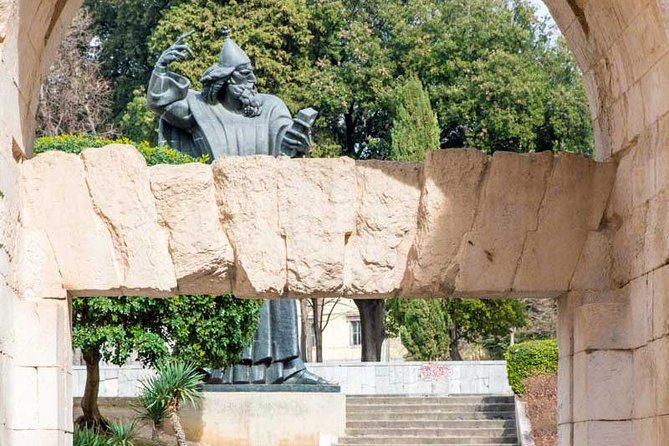
The Golden Gate is your first clue that Diocletian didn’t treat this place like a passing project. It marks the main entrance concept—how an emperor moved into retirement and never left the story behind. You’ll also get a small, fun detail about the statue of the Croatian bishop Grgur overlooking the gates, which is the kind of local touch that makes the whole area feel more personal than purely historical.
If you like your history with human scale, this is a great way in. You see the structure first, then the guide explains why it mattered—so the stones don’t stay silent.
You can also read our reviews of more tours and experiences in Split.


The Peristyle square: where palace life became city life
From the gates you move into the palace’s central stage: the Peristyle. This square is described as the geographical and spiritual center of the palace, and once you’re there, you understand why people still measure Split from this kind of “center.”
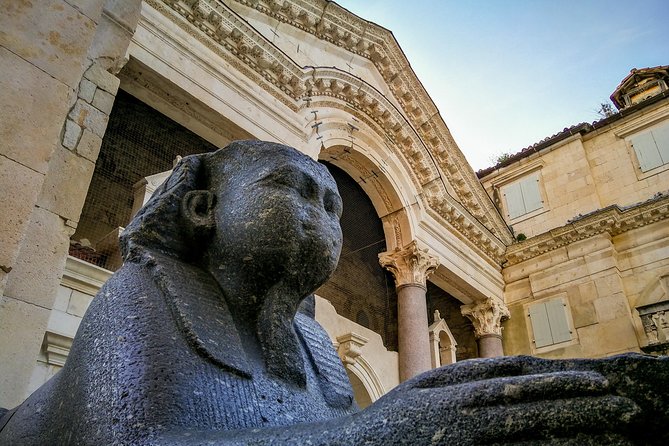
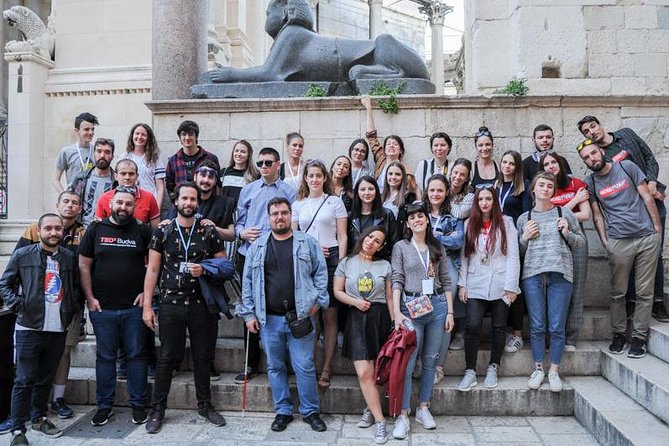
What I like about this stop is how it links ancient and modern in the same glance. The Peristyle feels like a meeting place even now, and the guide points out features that make it feel guarded by time, not just architecture. One standout detail is the nearby sphinx that’s said to be 3,500 years old—enough to remind you that you’re not just looking at ruins. You’re standing in a place with a very long memory.
As you approach from the Riva side, there’s also a stretch of well-preserved substructures where local artists set up. This is one of the best “in-between” moments on the tour. You’re not rushing; you’re watching the city do what cities do, which is trade, sell, talk, and create while history stands around you.
Practical note: this part of the walk can be crowded. If you’re photo-focused, let your guide lead the pace and choose the angles instead of trying to fight for space.
Cathedral of Saint Domnius: a mausoleum turned cathedral
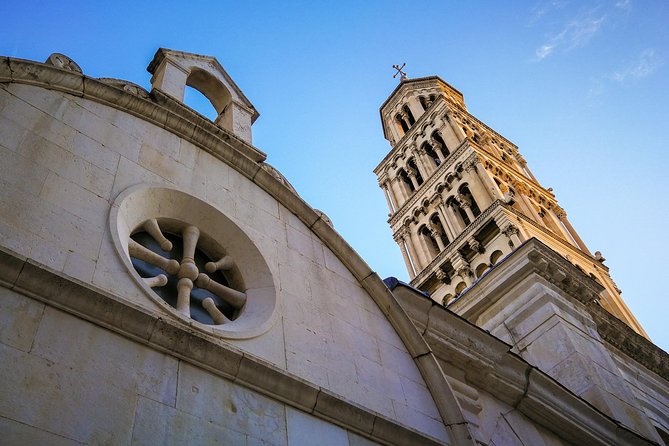
Next comes the Cathedral of Saint Domnius, one of those rare places where you can trace a whole timeline in one building. This cathedral used to be the mausoleum of Emperor Diocletian, so you’re looking at Roman imperial architecture that later became a central church.
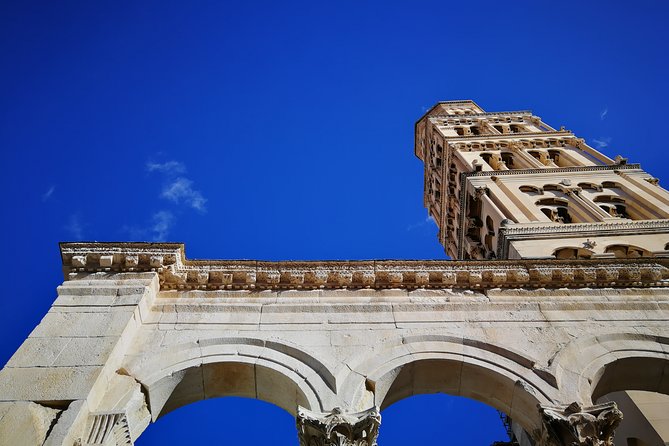
What makes it special is the way the old Roman purpose and later Christian role sit side by side. In front of the cathedral you’ll see the Romanesque bell tower, which is the kind of detail you might miss if you were wandering alone. Since the entrance fee here is included, you avoid the small friction that often pops up mid-tour.
This stop is also where a good guide earns their keep. They’ll help you notice what you’re seeing—how the building was used, what changed, and what stayed recognizable. You leave with a clearer mental map of Split’s timeline, not just a list of sights.
The Vestibulum: the emperor’s chambers and the sound of klapa
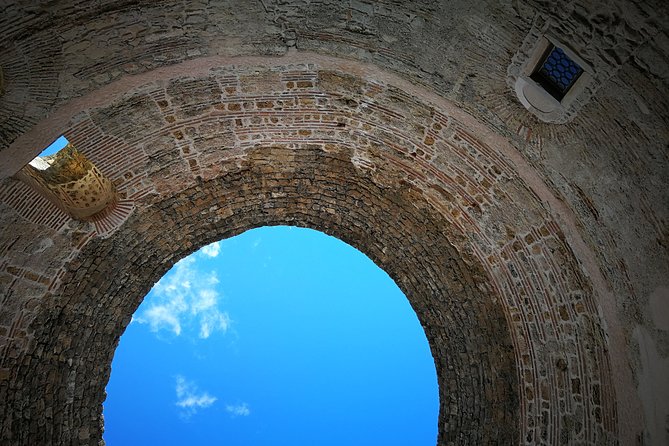
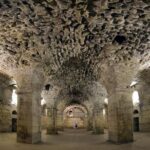
Then you step into the palace’s Vestibulum area, described as a round hallway that functions like a threshold into the emperor’s chambers. The physical feel matters here. Round spaces can carry sound in a way that feels surprising in open-air cities.
And yes, you might hear klapa singing nearby—music that sounds made for these stones. Even if you catch only a short moment, it helps you understand that Split’s history isn’t only visual. It’s audible, social, and tied to local tradition.
This is one of my favorite kinds of stops: it’s brief, but it changes how you perceive the entire palace complex. After a place like this, the big monuments stop feeling like set pieces and start feeling like part of a real daily world.
Riva promenade: Split’s living room
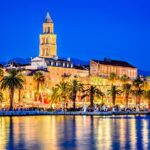
After the palace core, the tour brings you back to the street-level heartbeat: the Riva harbor promenade. The guide frames Riva as the city’s living room—Split’s main public place where people come day after day for views, meeting up, and simply being seen.
Riva also works as a reset for your feet. After centuries of stone and alleys, the promenade feels open, airy, and easy to breathe in. You can just watch how people move: families, couples, and anyone passing through with a coffee in hand.
If you’re the type who likes to understand where locals spend their free time, Riva is a must. You don’t have to “do” anything here. Just stand for a few minutes with your guide explaining what makes this stretch so important to Split’s identity.


Pjaca: the square where everyday conversations happen
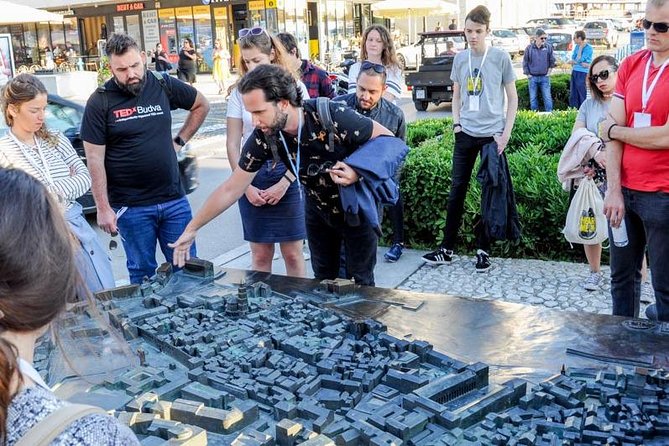
From Riva you head to Pjaca, the central stage for everyday city life. The key detail here is how the square functions as a social center. People rest, meet, see each other, and talk—especially about football, which is exactly the kind of local specificity that turns a generic “square” into a real place.
The best part of Pjaca in a guided setting is that you stop looking at it as a photo backdrop. You start noticing the rhythm of use: where people gather, how the square frames conversations, and why it matters to Split beyond tourism.
This is also a good moment to ask your guide what else they’d prioritize if you only had half a day more. A licensed local tends to have good instincts about pacing across the city.
Split Fish Market: Adriatic flavors and city folklore
Next is the Fish Market, which the guide treats as a core point of Split’s folklore. You’ll see the range of what the Adriatic brings: hakes, picarels, sardines, mackerels, breams, sea bass, shrimps, sea shells—the menu reads like a coastline inventory.
The guide’s framing matters. The market isn’t only about buying. It’s about how Split relates to the sea: what’s available, what’s seasonal, and what the city repeats year after year. And yes, there’s a note about flies. Even without overthinking it, you can expect the market to feel like a market—active, close-up, and a little chaotic in the way real food places often are.
If you’re sensitive to strong smells, be ready for that. If you like food culture and local rhythm, this stop is one of the most memorable because it’s grounded in daily reality.
Prokurative: a square with the harbor in the frame
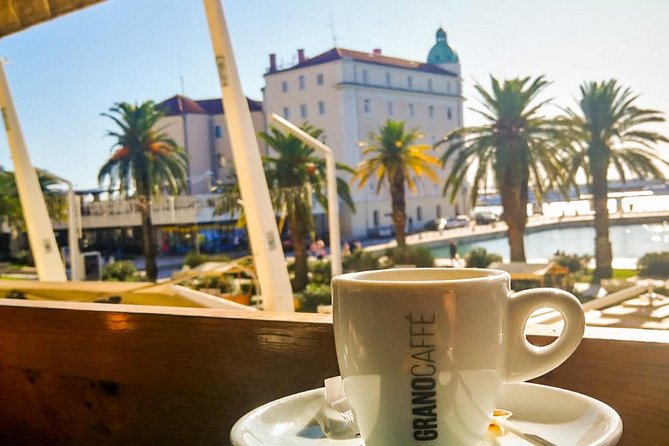
Then you move to Prokurative, also called Republic Square. The guide compares its look to St. Mark’s Square in Venice, which gives you a helpful visual reference: open space, strong façade presence, and a connection to waterfront views.
Here, I’d focus on two things: first, how the square opens toward the harbor, and second, how the architecture guides your sightlines. A good guide doesn’t just point at buildings; they help you understand how the city arranges power and movement.
Even a short stop works well because your attention shifts from details to relationships—square to sea, buildings to foot traffic.
Marjan viewpoint finish: Prva Vidilica Na Marjanu
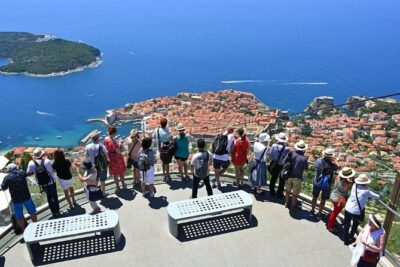
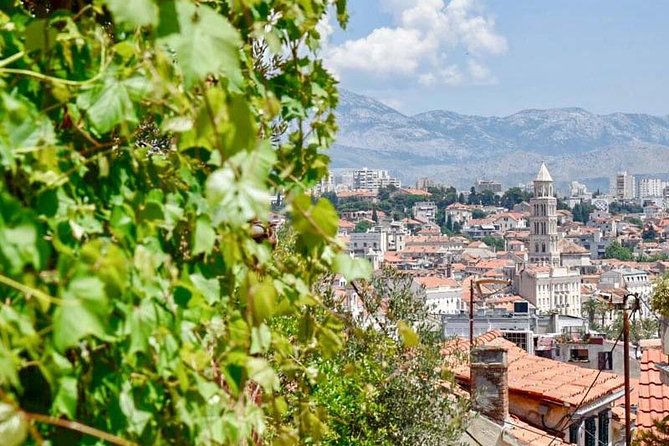
The tour ends with a viewpoint at Marjan: Prva Vidilica Na Marjanu. You’ll walk about 15 minutes from the old town area to reach the terrace, and then you get the payoff—Split laid out with the kind of breadth you simply don’t get from the streets below.
This final section is a great way to “lock in” the earlier parts of the walk. Suddenly the palace location, waterfront shape, and square layout all make more sense because you can see the city’s structure at once.
If you’re taking your time, this is the place to do it. Sit, breathe, and let the view answer questions your guide asked earlier. It’s one of those travel moments that helps your brain build a map.
Licensed guide + private pacing: why it feels worth it
Let’s talk value. At $96.13 per person, you’re paying for a private, English-speaking licensed local guide for roughly 2.5 to 3 hours. That sounds like a simple math problem, but in practice it’s about what you get: timing, order, context, and the freedom to ask questions without feeling like you’re interrupting a group rhythm.
Two inclusions also help the value story. First, the Cathedral of Saint Domnius entrance fee is included, so the tour doesn’t lose momentum when you reach the one place people most often need tickets for. Second, you can add coffee or tea at the start if you want it, which makes the experience feel more like meeting a local and less like joining a schedule.
What I find especially strong is how guides tend to connect the story across stops. One guide named Boska is described as amazing at historical perspective, and another named Pavle is noted for telling the story rather than drowning you in facts. That matters because Split’s history overlaps in layers, and the best guides stitch it together so it becomes understandable, not just impressive.
One more practical detail: you’ll receive a mobile ticket. That’s a small thing, but it cuts down on stress when you’re walking and checking out multiple sites in one morning.
Where the tour starts and ends (so you don’t waste time)
The tour starts at the Golden Gate area (Dioklecijanova 7, Split) at 9:00 am. It ends by the fountain at the beginning of Riva promenade, listed as Vodoskok (Trg Franje Tuđmana). That end point is handy because it leaves you near Split’s busiest promenade area, so you can keep the day going easily—lunch, a second walk, or quick transport links.
If you’re planning other activities the same day, I’d treat this as your core “orientation” block. When you finish near Riva, you’re already set up to explore at your own pace.
Who should book this private walk
This tour fits best if you want:
- A clear first-time orientation to Split’s most important historical and social spaces
- Context that makes the palace make sense, especially the shift from imperial Roman to later cathedral use
- Food and local culture moments, like the Fish Market, without turning the whole day into a shopping trip
It’s also a good pick for couples and small groups who want to move at their own speed. Private means your guide can slow down when you’re curious, or focus when you’re short on time.
If your top priority is only photos of ruins with zero talking, you might find a guided format heavier than you want. But if you want to understand what you’re seeing while you’re seeing it, this style works.
Should you book this Split private walking tour?
I’d book it if you’re craving the “why” behind Split’s sights. The route brings you through Diocletian’s palace core, lands you in the Cathedral area with the right ticket already handled, and then balances monuments with living-city stops like Riva, Pjaca, and the Fish Market. The Marjan viewpoint at the end is a smart finish because it turns the walk into a real mental map.
I’d think twice if you’re likely to struggle with uneven old streets and a moderate walking pace, especially with the walk to the Marjan terrace. And if you’re extremely sensitive to market conditions, prepare for the Fish Market environment.
If you’re in that sweet spot—history, local feel, good guidance—this tour is a solid use of your time in Split.
FAQ
How long is the private walking tour of Split?
It lasts about 2 hours 30 minutes to 3 hours.
What does the tour cost per person?
The price is $96.13 per person.
Is the tour offered in English?
Yes, it is offered in English.
Is this tour private?
Yes, it’s private, so only your group participates.
What is included in the price?
Included items are an English-speaking licensed local guide, coffee and/or tea if you want to start that way, and the entrance fee to the Cathedral of Saint Domnius.
What are the main highlights you’ll see?
You’ll visit places including the Golden Gate, the Peristyle of Diocletian’s Palace, the Cathedral of Saint Domnius, Riva Harbor, Pjaca, the Fish Market, Prokurative, and end at Prva Vidilica Na Marjanu in Marjan.
Where does the tour start and end?
It starts at Golden Gate (Dioklecijanova 7, Split). It ends at Vodoskok, at the fountain at the beginning of the Riva promenade.
Can I cancel for a full refund?
Yes. You can cancel up to 24 hours in advance for a full refund. If you cancel less than 24 hours before the start time, the amount paid is not refunded.