REVIEW · PULA
Pula 2 Hour Walking Tour with a Local
Book on Viator →Operated by Walking Tour Pula with a local - Augustus Walks · Bookable on Viator
Roman Pula hits hard in just two hours.
I like how this walk connects Pula Arena to street-level gates and then down into the Zerostrasse tunnel, so the city feels like one story, not six separate stops. You’ll also get a small-group feel and a guide who makes the facts easy to remember. One heads-up: the Arena and Zerostrasse have separate entry, so your final spend may be a bit higher than the base price.
You start at Park NimfejaArena and end at the Forum, so the route naturally eases you from the ancient “big ticket” site to Pula’s main square. In about two hours, you’ll walk enough to feel oriented, but not so long that you’re regretting your shoes.
It’s offered in English (with a mobile ticket), and it’s designed for people with moderate physical fitness. With a maximum group size of 40, the pacing stays friendly, especially if you like asking questions.
In This Review
- Key highlights I’d plan around
- Where the tour starts: Park NimfejaArena to the Forum
- Pula Arena: the Roman amphitheater that still feels huge
- Tito’s Park: the calm reset between Roman monuments
- The Twin Gates and Gate of Hercules: ancient entrances and great photo angles
- Zerostrasse: walking into a World War I shelter
- Arch of the Sergii: a smaller Roman moment in a real city block
- A relaxed pace with real local storytelling
- Price and value: $23.66 for two hours in Pula
- Practical tips so the walk feels easy
- Should you book this Pula walking tour with a local?
- FAQ
- How long is the Pula walking tour?
- How much does the tour cost?
- Where does the tour start and end?
- Is the tour offered in English?
- Do I need to buy admission tickets during the tour?
- Does the tour use a mobile ticket?
- What group size should I expect?
- What weather and cancellation rules should I know?
Key highlights I’d plan around
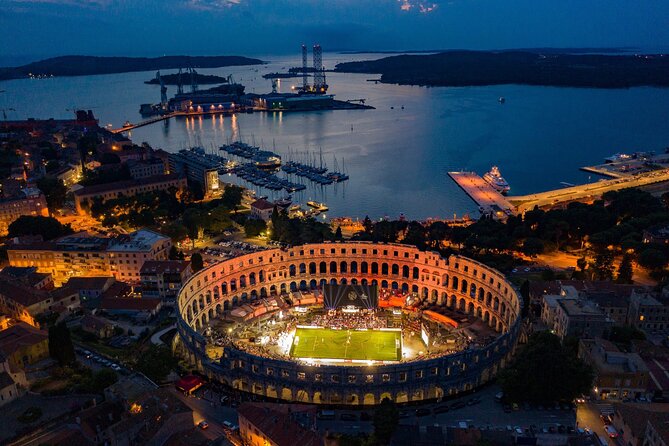
- Pula Arena up close: one of the largest Roman amphitheaters, perfect for photos and atmosphere
- Zerostrasse tunnel walkthrough: a World War I shelter you can only really understand with a guide
- Roman gates you can actually walk through: Twin Gates and Gate of Hercules make the old city feel real
- Tito’s Park as a breathing space: a calmer stop with paths, sculptures, and a model of Pula
- Forum finish point: you end where modern life meets Roman remains
Where the tour starts: Park NimfejaArena to the Forum
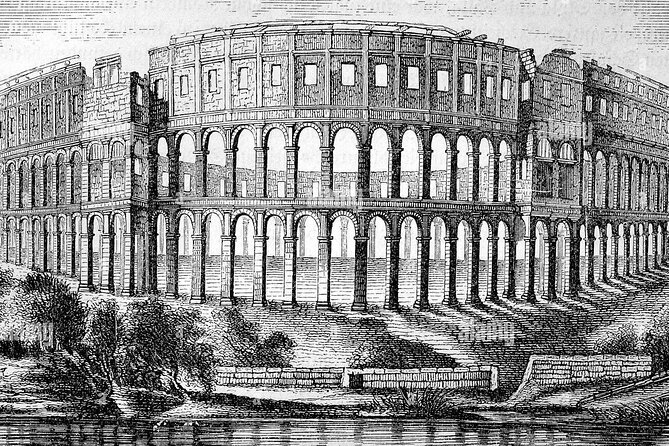
I like tours that start where you’d already want to wander. Here, the meeting point is Park NimfejaArena, 52100 Pula, right by the Arena area. That’s smart, because the first stop is the city’s biggest Roman showpiece, so you’re not spending half your time just getting “to the good stuff.”
The walk ends at the Forum, Pula’s main square dating back to the Roman period. In practical terms, that means you’re dropping out in a place where you can easily keep the day going—coffee, snacks, and more sights are usually right around you. It also helps you feel like you completed a loop: ancient structure → city gates → darker wartime space → back out into daylight and daily life.
You can also read our reviews of more tours and experiences in Pula.


Pula Arena: the Roman amphitheater that still feels huge
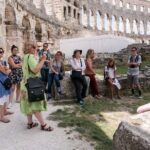
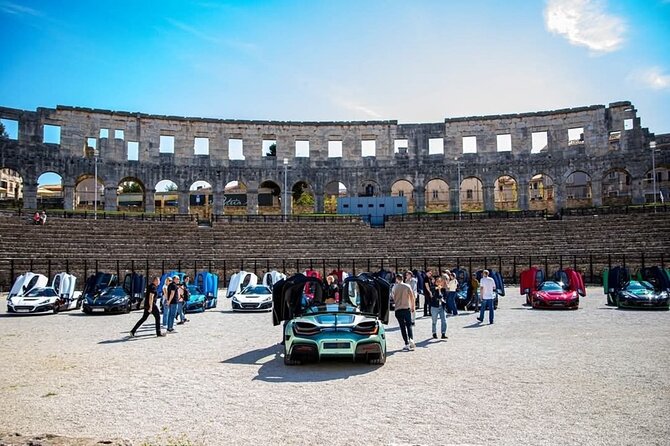
Stop 1 is the Amphitheatre de Pula (and you’ll need an admission ticket for it). Even if you’ve seen Roman ruins before, this one hits differently because it’s so intact. The shape is clear. The scale is obvious. You can stand in the right spots and imagine crowds, shows, and gladiator-era spectacles without needing a bunch of mental work.
Here’s why I think this stop is the best use of time at the start of the tour:
- You’re fresh. The Arena is a lot to take in, so doing it early helps.
- It sets the tone for everything after. Once you understand the amphitheater’s role, the rest of the Roman fragments feel connected instead of random.
- It’s a photo-friendly stop with angles that make sense immediately—no hunting required.
A small drawback: because admission isn’t included, make sure you factor that in so you don’t feel surprised at the entrance. If you’re the type who hates last-minute ticket hassles, keep a little extra cash or payment ready.
Tito’s Park: the calm reset between Roman monuments
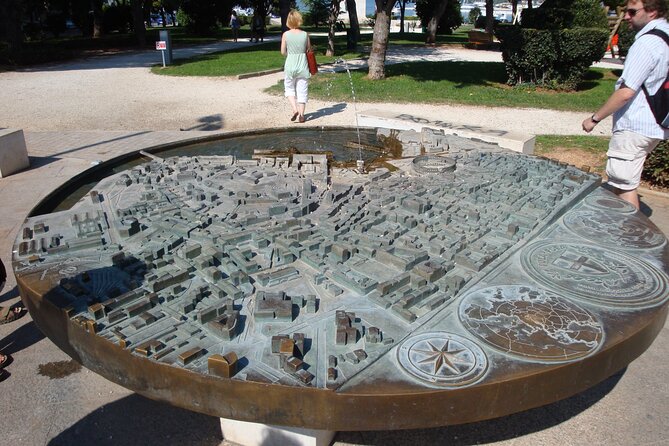
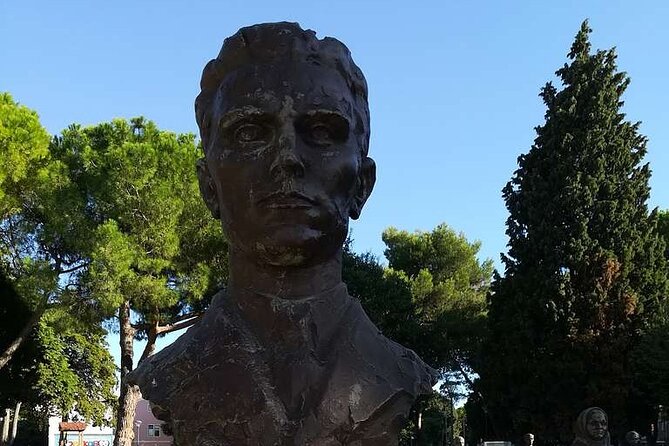
Stop 2 is Tito’s Park, and it’s free. This is a good breather after Roman stone. Instead of more architecture, you get a green space dedicated to Josip Broz Tito, with walking paths, sculptures, and a model of the city of Pula.
Why this matters on a walking tour: your brain needs a reset. The Roman part of Pula can feel like a timeline of structures. Tito’s Park interrupts that and gives you a way to see Pula as a place that kept changing. The model of the city is especially helpful. Even in a short time, it can help you picture how the old core fits together and where you might want to go next on your own.
This stop is also a nice pace-change. It’s only about 15 minutes, so you won’t feel like you’re losing time to something less important. If you’re traveling with anyone who gets “ruined out,” Tito’s Park is the kindness move built into the route.
The Twin Gates and Gate of Hercules: ancient entrances and great photo angles
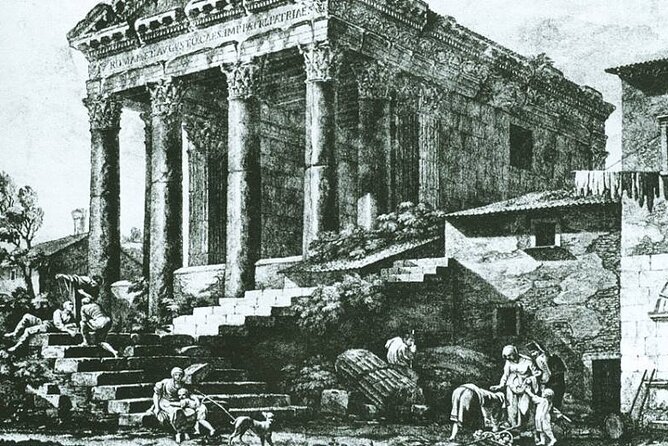
Stop 3 is the Twin Gates of Pula (free). These date back to the 2nd century and served as entrances into the city. Walk up to them and it’s hard not to think about how people moved through Pula before modern streets and modern traffic.
Stop 5 is the Gate of Hercules (free), another Roman gate with an iconic head of Hercules. If you care about photos, this is the kind of stop that rewards you with clear focal points. Also, it’s quick enough that you’re not stuck waiting for the group while your interest fades.
What I like about doing these gates back-to-back is that they give you a sense of “city rhythm.” Gates aren’t just monuments; they’re reminders that a city had boundaries, defenses, and controlled entry. Once you’ve seen the gates, Pula’s old-town layout starts to make more sense during the rest of your day.
Zerostrasse: walking into a World War I shelter
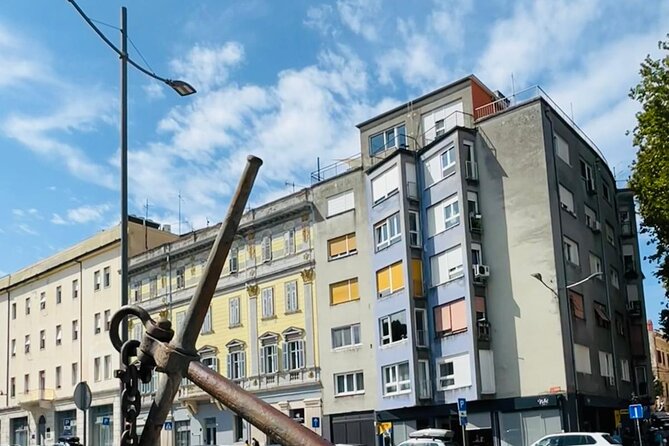
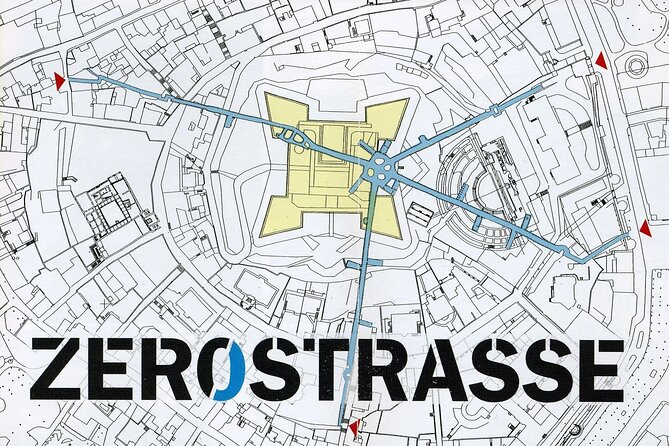
Stop 4 is Zerostrasse, an underground tunnel system built during World War I as a shelter (admission ticket not included). This is the stop where the tour becomes more than a history walk—it becomes a physical experience.
Underground spaces change how sound and light work, and that alone makes it feel more real than reading a plaque. A guided walkthrough also matters here. Without context, a tunnel can feel like just walls and steps. With context, you start understanding why these shelters existed, how they were used, and what life meant when the threat wasn’t hypothetical.
Time-wise, this stop is short—about 5 minutes in the itinerary rhythm. But don’t treat it as “just a quick peek.” If you want history you can feel, make sure you’re paying attention here.
Practical note: because admission isn’t included, plan for separate payment. If you’re trying to keep your budget tight, this is the one part you’ll want to anticipate.






Arch of the Sergii: a smaller Roman moment in a real city block
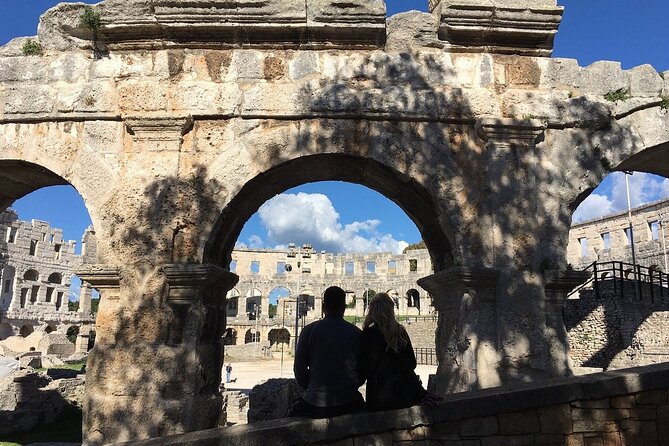
Stop 6 is the Arch of the Sergii (free). It’s a historical arch built to commemorate the Sergi family, and it features intricate Roman architectural details. It also sits in a part of town where modern life is visible, so you get a contrast: ancient stone built to mark status and memory, right in the middle of daily streets.
This stop is only about 10 minutes, but I like ending with something you can look at closely. If you’re the type who often rushes through monuments, take advantage of the time here. Look at the carvings and proportions. You’ll notice that Roman architecture often works because it’s disciplined, not because it’s overly dramatic.
Also, this stop ties nicely into the tour’s end at the Forum. It reminds you: you’re not just visiting relics. You’re walking through a living town with Roman layers.
A relaxed pace with real local storytelling
What makes this tour worth your time isn’t only the sites. It’s how the route is handled: you get a calm rhythm, clear explanations, and plenty of room for questions.
The vibe tends to feel personal rather than scripted. The guide approach is story-based, with a mix of city history and little insights that help you navigate Pula with more confidence afterward. I especially like that it doesn’t feel like a speed-run. At two hours, it stays focused, but it doesn’t feel like you’re being rushed from photo spot to photo spot.
Group size is capped at 40, which helps keep the experience from turning into chaos. You might still be in a group setting, but the format supports interaction.
Price and value: $23.66 for two hours in Pula
At $23.66 per person for about 2 hours, I see this as solid value for a few reasons:
- You’re getting an efficient route that covers major Roman highlights and adds a wartime underworld stop.
- The guide adds meaning. Roman stones are easier to understand when someone links them into a story you can repeat.
- You’ll spend the rest of your day more effectively. When you finish near the Forum, you’re already oriented.
The key value consideration is admissions. The tour price doesn’t include entry for the Amphitheatre and Zerostrasse. Everything else listed here is free: Tito’s Park, the Twin Gates, Gate of Hercules, and the Arch of the Sergii. So your total cost depends on what you pay at those two paid stops.
If you’re on a tight budget, you can still make it work—you just need to budget for the separate tickets upfront. If you care about guided context, this is one of those tours where the guide time is the main “asset,” not the ticket line.
Practical tips so the walk feels easy
This experience is marked as moderate physical fitness, and that’s fair. You’ll be doing a real walking circuit through the center of Pula. Wear shoes you trust. The difference between a fun day and a painful day is often just grip and cushion.
Also, plan for weather. The tour requires good weather. If it gets canceled due to poor conditions, you’ll be offered a different date or a full refund. That’s one of those small comforts that matters when you’re building a day around an outdoor walk.
Finally, since it’s offered in English and uses a mobile ticket, have your phone ready at check-in. If your battery hates you, bring a small power bank. You don’t want to turn a history walk into a tech support mission.
Should you book this Pula walking tour with a local?
Yes, if you want an efficient, story-driven introduction to Pula that covers more than just the postcard ruins. I think it’s especially good for history lovers who also like a human pace—someone who can connect the dots between Roman civic life, symbolic city gateways, and what happened when World War I turned the city into a shelter.
Skip it or reconsider if you want a strictly self-guided day with no extra ticket stops. Also, if you hate paying separate entry fees mid-tour, check that you’re okay with paying for the Arena and Zerostrasse separately.
If your goal is simple—get your bearings fast and see the best of Pula without wandering blindly—this is a smart way to do it, and it ends right where your next move is easy: the Forum.
FAQ
How long is the Pula walking tour?
It lasts about 2 hours.
How much does the tour cost?
The price is $23.66 per person.
Where does the tour start and end?
It starts at Park NimfejaArena, 52100 Pula, Croatia and ends at the Forum, 52100 Pula, Croatia.
Is the tour offered in English?
Yes, it’s offered in English.
Do I need to buy admission tickets during the tour?
Some stops require admission tickets that are not included, including the Amphitheatre de Pula and Zerostrasse. The other listed stops are free.
Does the tour use a mobile ticket?
Yes, it includes a mobile ticket.
What group size should I expect?
The tour has a maximum of 40 travelers.
What weather and cancellation rules should I know?
It requires good weather. If it’s canceled due to poor weather, you’ll be offered a different date or a full refund. You can cancel for a full refund up to 24 hours in advance.