REVIEW · PULA
Pula Food Walking Tour
Book on Viator →Operated by Pula food tour · Bookable on Viator
Seven stops, serious flavor, and Roman stone.
This Pula Food Walking Tour strings together iconic landmarks and dinner-style tastings in about 3.5 hours, with a cap of 12 people for a more personal vibe. The 7:00 pm start also means you’re seeing Pula as it lights up, not under midday sun.
I particularly like the mix of food + wine with history stops, so you don’t just eat—you understand what you’re tasting. I also like that you’re not wandering alone: a professional licensed guide runs the whole evening, and guides such as Denis and Anna show up in past tours with lots of local context. A fair consideration: the menu includes items like octopus and cabbage, so if you’re picky, you’ll want to flag preferences early (and don’t expect every dish to please everyone).
In This Review
- Key highlights at a glance
- Pula Arena at 7 pm: a Roman entrance to your evening
- Seven tastes, olive oil, and wine: what this evening actually feeds you
- From the Twin Gates to Titov Park: a quick map of old Pula
- Forum and Danteov trg: Roman administration meets a poet’s square
- Arch of the Sergii: where gates meet performances
- Gate of Hercules and the dessert finish: a sweet landing after wine
- Price and value: what $106.82 buys you in Pula
- Who should book this food walking tour
- Practical tips before you go
- Should you book the Pula Food Walking Tour?
- FAQ
- How long is the Pula Food Walking Tour?
- What time does the tour start?
- How much does the tour cost?
- Is the tour in English?
- How big is the group?
- Where does the tour start and end?
- What food and drinks are included?
- Are any entry tickets required for the sights?
- What if the weather is bad?
- Can I cancel for a full refund?
Key highlights at a glance
- Roman sights first: Start at Pula Arena, then hit the Twin Gates and other major landmarks on foot.
- Dinner-style tasting: You get multiple food stops plus olive oil tasting.
- Wine included: Three wine tastings plus an aperitif are part of the package.
- Small group feel: Max 12 participants, which keeps the walking pace comfortable and questions easier.
- Evening timing: A 7:00 pm departure helps you enjoy cooler weather and nighttime atmosphere.
- Local dessert finish: The last stop ends with something sweet near the Gate of Hercules area.
Pula Arena at 7 pm: a Roman entrance to your evening
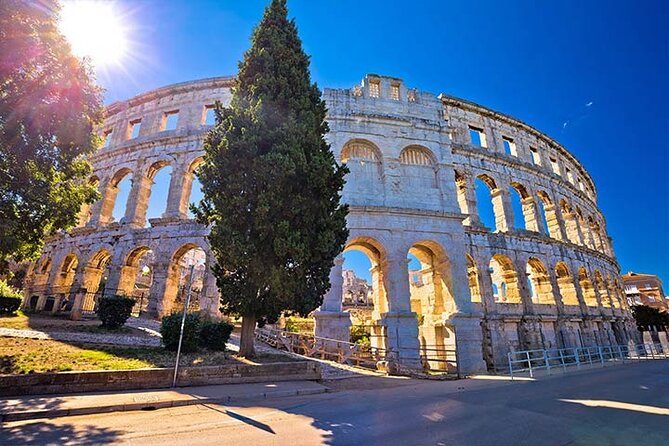
Starting at Pula Arena (also called the Amphitheatre de Pula) is a smart move. It’s the city’s most important monument, built in the 1st century AD, linked with gladiator games, and believed to have held around 20,000 spectators. Even if you’re not a Roman-nerd, it’s hard not to feel the scale when you’re standing in the shadow of that kind of architecture.
From a practical standpoint, the timing matters. You begin at 7:00 pm, which helps you avoid the harshest daylight and makes the walk feel like a proper night outing. And since the arena admission is listed as free as part of the tour, you’re not stuck doing extra ticket math before you can start eating.
One more plus: the tour’s route is designed so you’re not crisscrossing the whole peninsula of your own. You start near the arena area and end close by again, so this works well as an early-stay orientation—even if you’re just trying to get your bearings fast.
You can also read our reviews of more tours and experiences in Pula.


Seven tastes, olive oil, and wine: what this evening actually feeds you
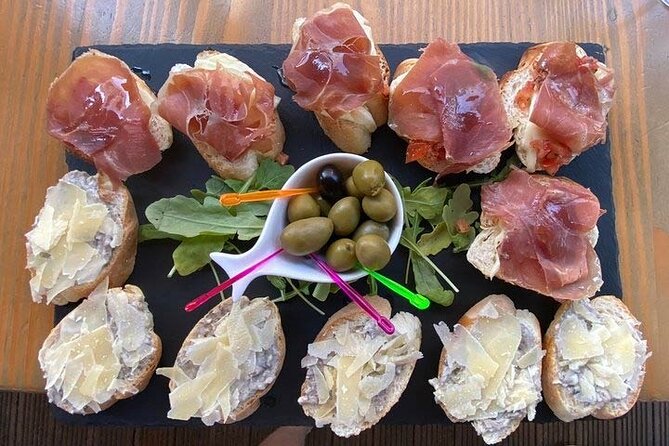
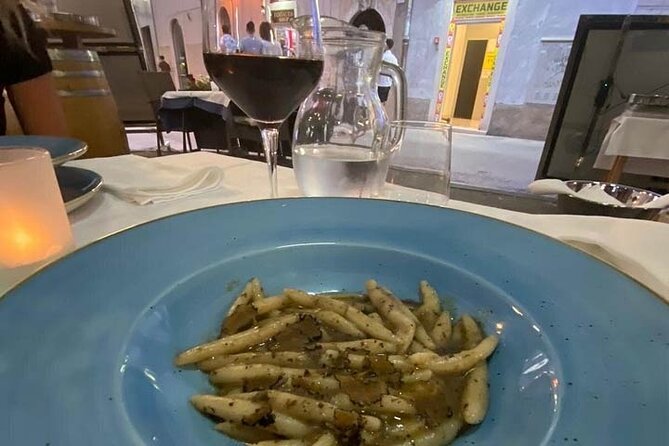
This tour is built around food that shows up in a region’s everyday life—just in a guided, paced way. The highlights describe seven different food items plus olive oil, and the inclusions list food tastings alongside three glasses of wine and an aperitif. Reviews also mention specific dishes like bruschetta, an octopus course, and street-food style seafood bites (including a fish taco-style stop). That “small plates, multiple stops” format is why this works for people who want variety without committing to one huge restaurant meal.
Here’s the value angle: you’re paying about $106.82 per person for a guided 3.5-hour walk plus multiple tastings and alcohol. If you tried to recreate that by yourself—guide time, several restaurant stops, and tastings—it would usually cost more in both money and effort. You’re essentially buying a planned dinner route with history context layered in.
Do note the one downside to plan for: because this is not a choose-your-own menu, you can’t guarantee every dish fits your tastes. One guest specifically called out dishes they wished the group knew about ahead of time, including octopus and cabbage. If you love seafood, you’ll likely be thrilled. If you’re cautious, you’ll want to speak up before you start so the guide can help you handle preferences within the structure of the tour.
From the Twin Gates to Titov Park: a quick map of old Pula
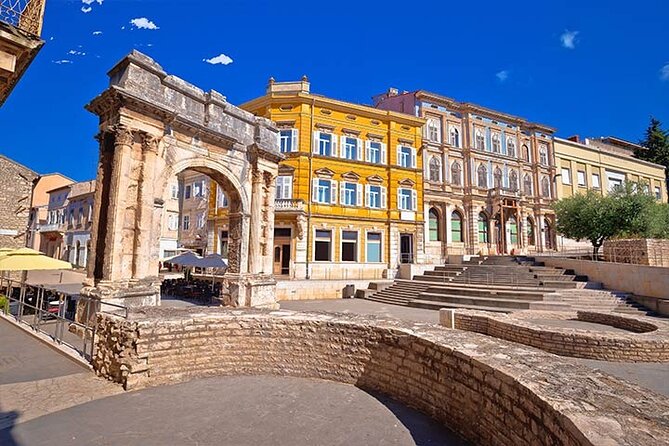
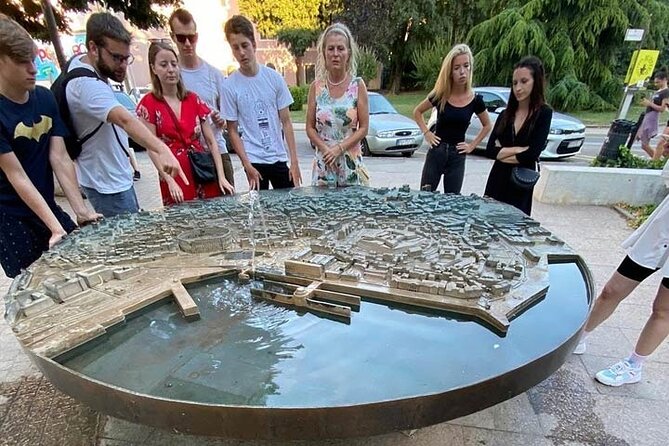
After the arena, the route shifts to the city’s medieval-and-Roman story lines. The Twin Gates of Pula are next—once an imposing entrance to the city—and today they frame the path toward major sites like the archaeological museum and the castle. On a walking tour, this kind of stop is more than a photo moment. It gives you a sense of where people would have entered from outside, and how the city’s movement and foot traffic shaped what developed where.
Then you roll into Titov Park, established in the 1950s. The key detail here is what the park still represents: in the evenings, it’s known as a gathering spot for young people. That makes it a useful stop in two ways. First, it breaks up the more stone-and-structure landmarks with a human-scale pause. Second, it helps you feel the present-day Pula rhythm while you’re already learning its older layers.
If you get motion sickness easily, this is a relatively simple segment—more walking than steep climbs are implied by the route—but you will still be on your feet. Comfortable shoes matter here, especially since you’re stacking multiple short stops across 3.5 hours.
Forum and Danteov trg: Roman administration meets a poet’s square
The tour moves to the Forum, positioned below Pula’s central hill. In Roman times, it was the centre of city life, and today it still functions as a legislative and administrative centre. You’ll also learn about the Temple of Augustus and the municipality headquarters located there. This stop is a good reminder that ancient cities didn’t just vanish—they often got repurposed.
Why I think this part is worth your time: it ties the “wow factor” of Roman monuments to how modern life continues in the same spaces. Even if you don’t go inside anything, the idea that the Forum still matters is a strong mental anchor for understanding Pula’s layout.
From there you reach Danteov trg, a square associated with Italian poet Dante Alighieri. This is where the tour keeps you from falling into a pattern of only Roman architecture. A named square like this gives you a cultural thread, and it helps you understand why certain spots become gathering points through the centuries.
Arch of the Sergii: where gates meet performances
Next up is the Arch of the Sergii, built in the 1st century by the Sergi family and designed in Corinthian style. It’s a classic “why that shape matters” stop: arches like this weren’t just decoration; they were statements of power and identity.
What makes this stop more than a quick look is the setting. Today, the arch and the square beside it play an ongoing role in Pula’s cultural scene, with theatrical and musical performances taking place there. That matters because it explains why some historic structures remain prominent. They’re not frozen in time—they’re part of daily public life.
If you’re the type who likes to match what you see with what you’ll experience later, this is a helpful hint. It nudges you to pay attention to what’s scheduled around that area once your walk ends.



Gate of Hercules and the dessert finish: a sweet landing after wine
The last landmark stop is the Gate of Hercules, built in Roman times and located between two medieval towers. The tour route brings you there as a short closing segment, and it ends with local dessert. That order is practical: you’ve had savory tastings and wine earlier, so saving something sweet for the final stretch makes the experience feel complete.
One small timing note: a full evening of walking plus tastings can feel long if you move slowly in crowds. The tour duration is listed at about 3 hours 30 minutes, and it uses short segments at each stop, so it should stay manageable for most people. Still, be ready for the fact that one guest reported the schedule shortened when someone was late at the meeting point—so arrive a few minutes early and you’ll protect the flow of the night.
Price and value: what $106.82 buys you in Pula
At $106.82 per person, this isn’t a budget snack tour. You’re paying for several things at once:
- a licensed guide covering Roman and later-era context across multiple city sights
- multiple food stops, including olive oil tasting and several tastings that together function like a full meal
- alcohol: three wine tastings and an aperitif
In other words, the cost is doing the work of planning and coordination. You’re not spending hours hunting for the right places to eat, and you’re not stuck choosing just one restaurant. You also get a route that starts at Pula Arena, then connects major squares and gates in a way that makes sense on foot.
I also like that the tour group is capped at 12. That tends to mean less chaos at each tasting and more chances to ask questions without shouting.
Who should book this food walking tour
This tour is a great match if you want:
- a first-night orientation to Pula, without paying for individual attractions
- a guided evening that combines history with food instead of treating them like separate trips
- a paced plan where you try multiple dishes, not just one big dinner
It’s especially good for people who enjoy wine culture and are comfortable with guided tastings at restaurants and food spots. Reviews highlight the octopus dish as a standout, including accounts of hesitant eaters still cleaning their plates—so if you’re curious about seafood, go with an open mind.
It may not be the best fit if you’re extremely selective about food. Since the tour includes items some people dislike, you’ll want to communicate allergies or dislikes in advance. And if you’re hoping for a super-short, light walk, keep in mind that multiple tastings take time and you’re drinking wine as part of the experience.
Practical tips before you go
Here are a few things that will make your evening smoother:
- Come hungry. This tour is heavy on food and wine, in the best way. Plan your day so you can enjoy tastings without feeling stuffed too early.
- Wear comfortable shoes. You’ll move between gates, squares, and parks, plus spend time standing for views and quick explanations.
- Ask about preferences early. If you don’t eat octopus or you’re not a fan of certain vegetables like cabbage, tell the guide so you’re not stuck hoping for a workaround mid-tour.
- Use the history stops to orient yourself. Learn the layout as you walk: arena → gates → park → Forum → squares → arches → final dessert.
- Arrive a few minutes early. One report mentioned a schedule change when someone was late, and you want the full route without compression.
If you have language concerns, the tour is offered in English, and the meeting point is near public transportation, which makes it easier to plug into the rest of your evening plans.
Should you book the Pula Food Walking Tour?
If you want a night that mixes Roman architecture with a planned “try everything” meal, this is an easy yes. The strengths—small group size, multiple tastings, olive oil, and wine, plus the standout Roman kickoff at Pula Arena—add up to a tour that feels like a proper evening, not a rushed checklist.
I’d hesitate only if you’re highly picky with food or hoping for a lighter, shorter experience. In that case, you might still enjoy it, but you should set expectations that not every dish will be your favorite, and you’ll be walking for the full 3.5 hours.
FAQ
How long is the Pula Food Walking Tour?
It runs for about 3 hours 30 minutes.
What time does the tour start?
The start time is 7:00 pm.
How much does the tour cost?
The price is $106.82 per person.
Is the tour in English?
Yes, it’s offered in English.
How big is the group?
The group size is capped at a maximum of 12 travelers.
Where does the tour start and end?
It starts at Istarska ul. 40, 52100, Pula, Croatia, and ends close to Pula Arena at Flavijevska ul., 52100, Pula, Croatia.
What food and drinks are included?
You get multiple food tastings, olive oil tasting, three wine tastings, and one local aperitif.
Are any entry tickets required for the sights?
The tour notes admission tickets as free at the main stops listed, including Pula Arena.
What if the weather is bad?
This experience requires good weather. If it’s canceled due to poor weather, you’ll be offered a different date or a full refund.
Can I cancel for a full refund?
Yes. You can cancel up to 24 hours in advance for a full refund.