REVIEW · ISTRIA COUNTY
Pula: Historic Sites Private Walking Tour
Book on GetYourGuide →Operated by Istria Tours · Bookable on GetYourGuide
Roman Pula is best with a plan. In two hours, you’ll cover the big hitters: Pula Arena area history, forum sights with Roman mosaics, and a climb up to the castle for wide views. I like the tight route because you get context without feeling rushed, and I like that the tour is built around major sites instead of scattered photo stops. The only real drawback to plan for is that the walk includes steeper sections, so comfy shoes and a realistic pace matter.
The guide does the heavy lifting—explaining architecture and culture—and the private format means they can adapt to your group. In the feedback I saw, Jacob Juul specifically noted the guide was attentive to everyone, including where to find a restroom and offering alternatives if the incline was too much. Expect rain or shine, and languages are set for English and German.
In This Review
- Key highlights worth showing up for
- Why Pula’s historic core works on a 2-hour private walk
- Starting at the Pula Arena: orientation first, then your inside option
- Pula Castle and Cathedral: 17th-century height, then sacred stops
- The Roman Forum route: Augustus Temple, City Hall, mosaics, and Arch of Sergii
- Market to Gate of Hercules to the Twin gate: finishing the Roman circuit
- Price and value: what $136 per group gets you
- Pacing, weather, and comfort notes for this route
- Who this private tour fits best
- Should you book this Pula historic sites walking tour?
- FAQ
- How long is the Pula Historic Sites private walking tour?
- Where do we meet the guide?
- Is the Pula Arena entry ticket included?
- Does the tour help with ticket lines?
- What sites are included in the walking route?
- What languages is the live tour guide available in?
- Is this a private group tour?
- Is the tour canceled if it rains?
- Where does the tour end?
- Is it wheelchair accessible?
- What is the cancellation policy?
Key highlights worth showing up for
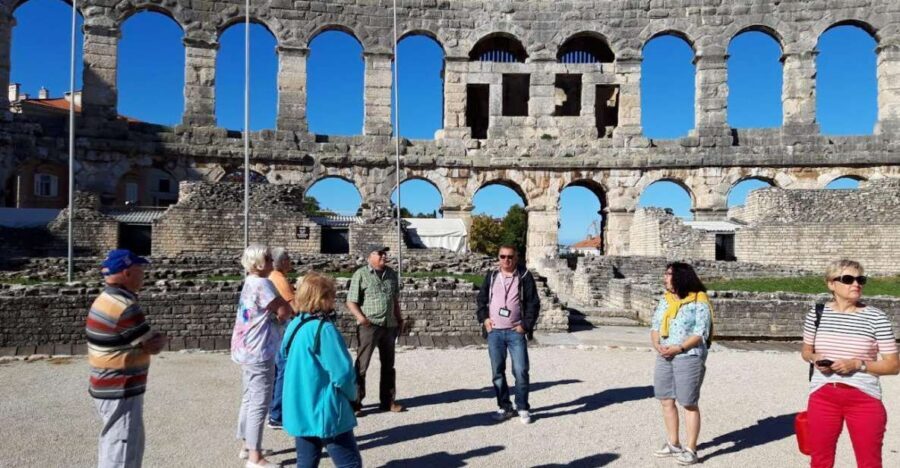
- Pula Arena focus with an optional inside visit and skip-the-line access
- Panoramic views from Pula Castle, built by the Venetians in the 17th century
- Forum highlights like the Augustus Temple and City Hall areas
- Roman mosaics plus Arch of Sergii as part of the same Roman core route
- Local flavor at Pula Market (established in the early 1900s)
- A practical guide who helps with pacing, steep bits, and restroom timing
Why Pula’s historic core works on a 2-hour private walk
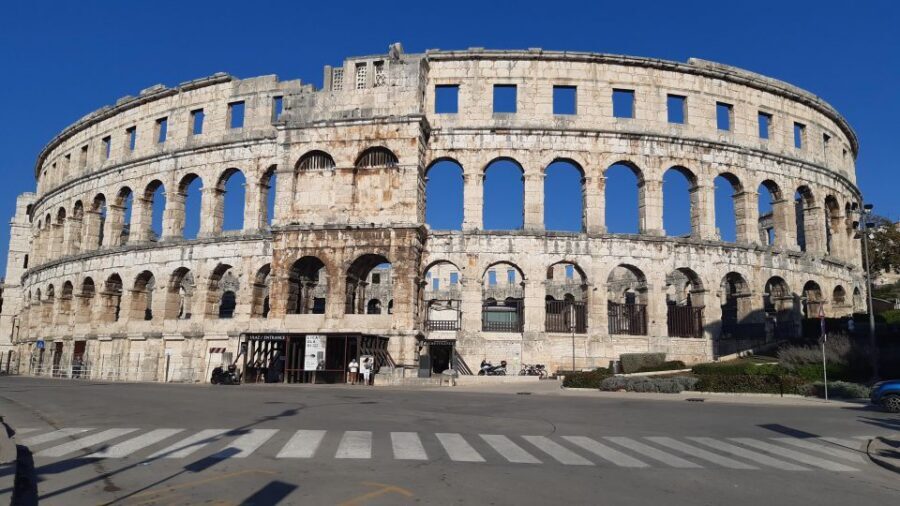
Pula is the kind of place where one building explains another. This tour leans into that: you start with the amphitheater, then move into the city’s power center around the forum, then finish at gates that bookend the old town. With a local expert in your ear, the streets make more sense fast.
The timing is smart for first-timers. You get guided time where it counts—40 minutes at the Arena area and about 80 minutes covering the rest of the highlights—so you’re not spending the whole tour just finding where to go. Plus, it’s a private group, which generally means you can ask questions and keep your own pace.
The value question comes down to the group price. It’s listed as $136 per group (up to 49 people), so if you’re booking as a smaller group, you’ll want to compare it to other options that charge per person. If you’re traveling with friends and can fill the group, it can be a better deal. More on that later.
You can also read our reviews of more walking tours in Istria County
Starting at the Pula Arena: orientation first, then your inside option
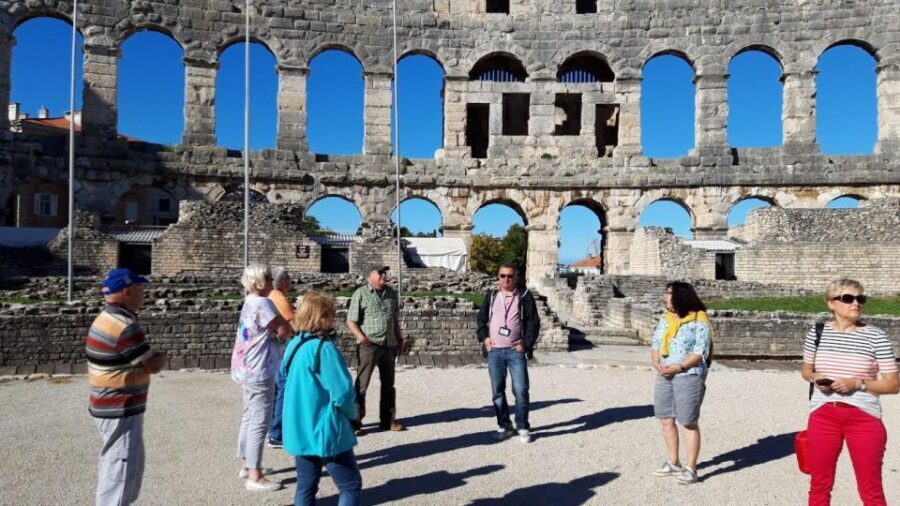
You meet your guide in front of the Amphitheater entrance, with a blue card around their neck and an umbrella—easy to spot, even if the weather is doing its own thing. The tour begins with an overview right at the Arena, so you quickly understand what you’re looking at before you start moving.
You’ll get a guided visit there for about 40 minutes. The best part for flexibility is that there’s an optional inside visit: if you want to go in, you can pay the entry tickets on the spot. The tour also states you can skip the ticket line, which is exactly what you want with major sites—less time waiting, more time learning and walking.
What I like about starting here is that the Arena sets the Roman context. Once you’ve got that baseline, the forum area later hits harder, because you can connect entertainment/public architecture to the places where politics and civic life happened.
Practical note: keep your expectations realistic if you’re sensitive to hills. In the feedback, Jacob Juul mentioned the guide was attentive to whether everyone could handle steeper walking and suggested alternatives. That’s the kind of thing that makes a short tour actually enjoyable instead of stressful.
Pula Castle and Cathedral: 17th-century height, then sacred stops
After the Arena area, you’ll continue to Pula Castle, built by the Venetians in the 17th century. This is where the tour shifts from Roman structures to later layers of control and identity. The castle stop also gives you panoramic views, which is great because it helps you understand how the old city relates to the surrounding layout.
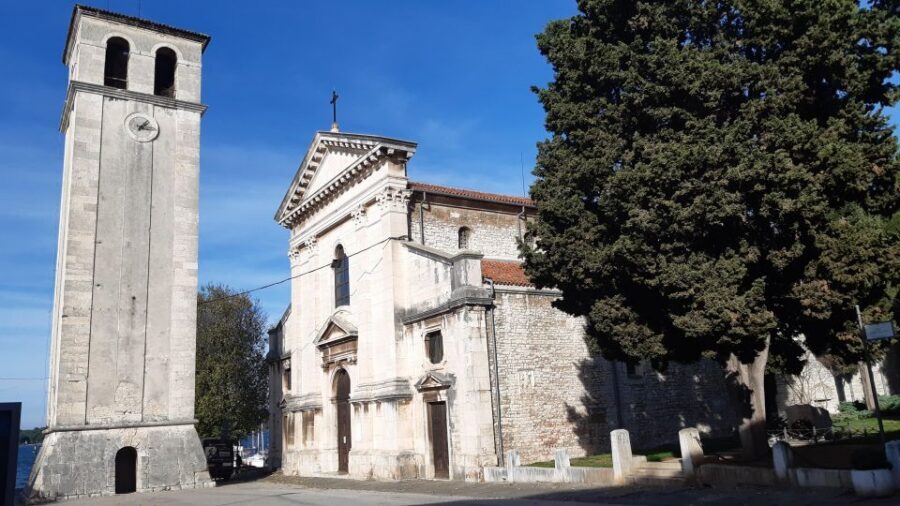
From there, the route continues to the Cathedral. The key advantage of including it on this same walk is that it breaks the rhythm in a helpful way. Instead of only seeing Roman-era ruins, you get a different kind of landmark and another chapter of architectural change.
If you’re traveling with older kids, or you just want variety without adding extra transit, this sequence works. You’re still walking through the historic core, but the mix of time periods makes the city feel lived-in rather than museum-like.
And again: it’s rain or shine. If you’re expecting slick pavement, plan for slower steps on the uphill or uneven sections. The tour’s short duration makes it manageable, but traction is still traction.
The Roman Forum route: Augustus Temple, City Hall, mosaics, and Arch of Sergii
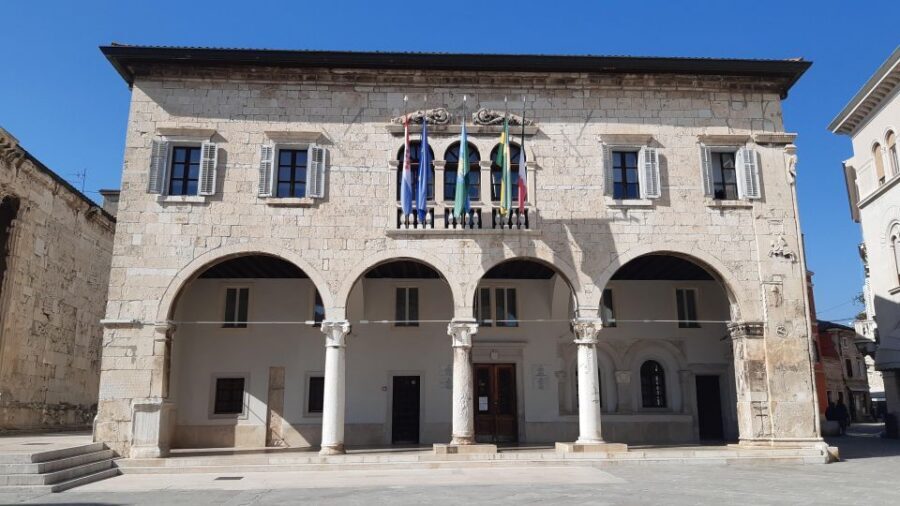
This is the heart of the tour, and the stops are laid out like a guided storyline. You’ll head to the Roman Forum, including the Augustus Temple and the City Hall area. Along the way, you’ll see Roman mosaics, which are the kind of details that make you look twice because they feel too delicate to survive centuries.
You’ll also visit the Arch of Sergii. Even without getting lost in technical terminology, an arch like this helps you “read” the city. It’s a clue that this place wasn’t just about buildings—it was about movement, honors, and public moments. With a guide translating what you’re seeing, that meaning comes quickly instead of taking hours of independent research.
One practical reason this Roman stretch is valuable: it’s grouped efficiently. You don’t have to guess which corners connect. The guide walks you through the sequence, then fills in the architectural and cultural context along the way. For many people, that’s the difference between visiting ruins and actually understanding them.
From a comfort standpoint, the group pacing matters here most. The feedback highlighted that the guide watched whether participants could handle steeper walking and offered alternatives if needed. That’s especially relevant around older sites where paths can feel uneven or angled.
Market to Gate of Hercules to the Twin gate: finishing the Roman circuit
Once the forum area is done, the tour keeps rolling into the parts of town where history meets everyday life. You’ll explore the Pula Market, established in the early 1900s. This stop is a smart contrast: after Roman structures, you get a more modern commercial setting, and your guide can share insider information about how Pula’s heritage shows up in daily rhythms.
Then you’ll move to the ancient Gate of Hercules. Gate stops are great on walking tours because they feel like punctuation marks. They help you visualize how people once entered and moved through the city’s boundaries.
Finally, the tour ends at the Twin gate. Having a clear finish point helps you plan the rest of your day. It’s also a nice symbolic wrap-up: you’re not just drifting from one landmark to another—you’re moving through a coherent route that ends where the old town’s flow makes sense.
If you like photos, you’ll get them, but the real win is the structure. You’ll know why each stop is placed where it is, instead of wondering how everything connects after the fact.



Price and value: what $136 per group gets you
At $136 per group (up to 49 people), this tour is priced in a way that can work well for groups. The biggest value driver is that the price is for the group rather than per person, and it includes a local expert guide. That means the cost-efficiency improves as more people share the booking.
Tickets for the Arena inside visit are not included, but the tour does say you can skip the ticket line and pay on the spot if you choose to go in. So you’re not forced to commit upfront. You’re buying guided time and reduced waiting, then deciding about the entry based on your interest and energy.
Duration is 2 hours, rain or shine, private group. That combination matters: it’s short enough to fit into a busy day in Istria, and it’s structured enough that you’re not spending a bunch of it figuring out logistics.
Bottom line on value: if you want guided context across multiple major sites without spending most of your day traveling between them, this price can feel fair—especially for groups. If you’re booking solo or as a duo, treat it as a guided sightseeing option and compare it against per-person tours that may cost less depending on your itinerary style.
Pacing, weather, and comfort notes for this route
This tour is designed for walking through older streets and site-adjacent areas, and the route includes steeper walking sections. Jacob Juul’s feedback specifically called out the guide being attentive to participants and suggesting alternatives when steep walking might be tough. That’s good to know if you’re planning around stairs, inclines, or overall stamina.
Also note a data mismatch you should handle before you go: the tour lists wheelchair accessibility, but it also says it is not suitable for people with mobility impairments. If mobility is a concern, I’d contact the provider directly before booking and ask how steep the route is and what alternatives they can offer on the day.
Weather-wise, it runs rain or shine. Bring a jacket you can move in, and if you’re going inside the Arena, keep in mind you’ll likely be standing/walking in real conditions longer than you would on a quick photo stop.
The good news: because the tour is only 2 hours, the time commitment is manageable, and the guide can keep things practical.
Who this private tour fits best
This is a great match if you want Roman Pula plus later historic layers, without turning your day into a multi-stop scavenger hunt. It’s also a strong choice if you appreciate architecture explanations—Roman civic landmarks, Venetian-era influences, and city gates all in one arc.
You’ll likely enjoy it if:
- You’re visiting Pula for the first time and want a guided route that makes the city feel readable.
- You like your sightseeing with context, not just photos.
- You prefer a private setting where you can pace yourself and ask questions.
If you dislike walking, or if you need a very flat route, you should ask about alternatives due to the steep segments.
Should you book this Pula historic sites walking tour?
Book it if you want an efficient, guided hit of Pula’s standout sites in about 2 hours, with an easy option to go inside the Arena and skip ticket lines. The guide quality looks like the real differentiator here: in the feedback you’ll find an emphasis on being attentive to participants, including restroom timing and help with steeper sections.
Skip or reconsider if you’re very mobility-limited and you can’t manage uneven ground or inclines. Also, if you strongly prefer unguided wandering and you’re happy researching landmarks on your own, you might not get as much value from the guided time.
If you want a smart first-day plan that connects the Roman core to later layers and ends at a clear finish point, this is the kind of tour that helps Pula click fast.
FAQ
How long is the Pula Historic Sites private walking tour?
It lasts 2 hours.
Where do we meet the guide?
Meet in front of the Amphitheater entrance. The guide will have a blue card around their neck and an umbrella.
Is the Pula Arena entry ticket included?
No. Entry tickets are not included, but you can pay for tickets on the spot if you want to go inside.
Does the tour help with ticket lines?
Yes. The tour includes skip-the-line access for the Arena.
What sites are included in the walking route?
You’ll see the Pula Arena, Pula Castle, the Cathedral, the Roman Forum (including Augustus Temple and City Hall), Roman mosaics along the way, the Arch of Sergii, Pula Market (early 1900s), the Gate of Hercules, and you finish at the Twin gate.
What languages is the live tour guide available in?
English and German.
Is this a private group tour?
Yes. It’s a private group.
Is the tour canceled if it rains?
No. It runs rain or shine.
Where does the tour end?
There are two drop-off locations listed at Carrarina ul. 8, 52100, Pula, Croatia.
Is it wheelchair accessible?
The information lists wheelchair accessible, but it also states it is not suitable for people with mobility impairments. If mobility is a factor for you, it’s worth checking directly with the provider.
What is the cancellation policy?
Free cancellation is available up to 24 hours in advance for a full refund.