Gladiator stories start on the street. This Pula walking tour strings together the city’s best Roman landmarks and key medieval-era viewpoints in about 1 hour 30 minutes, mostly from the outside, with a pace that lets you keep moving without feeling rushed. I especially like that you can match the start time to your day, and it runs with a small group (max 15).
Two things I really like: first, the tour is built for real street-level orientation—so you leave with a mental map of Pula’s power centers (arena, fortress, gates) and not just a list of sights. Second, the guide is local and answers questions clearly in English, with a tour that stays focused on what matters rather than what sounds good in a brochure.
One thing to consider: most stops are explained from outside, and major sites you’ll see from afar (like the Amphitheatre) are not included for entry. If you want a lot of indoor time or deep museum crawling, you may feel this is more of a fast, smart introduction than a full ticketed tour.
In This Review
- Key things to know before you go
- Where the walk begins (and why the ending matters)
- Price and value: $20.16 for a smart Pula orientation
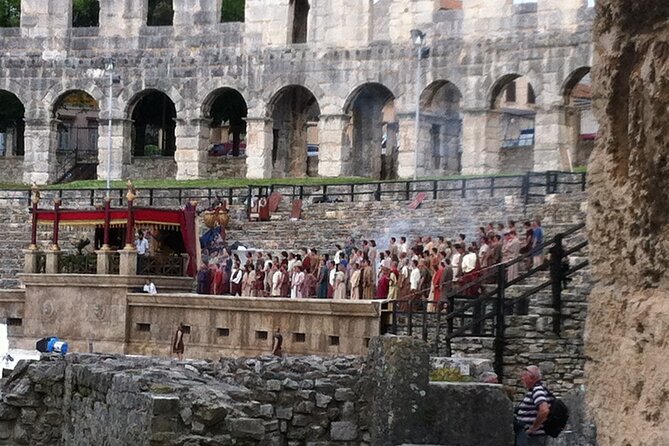
- The Amphitheatre de Pula stop: the Arena from the outside
- Kastel fortress viewpoints: where Pula’s position makes sense
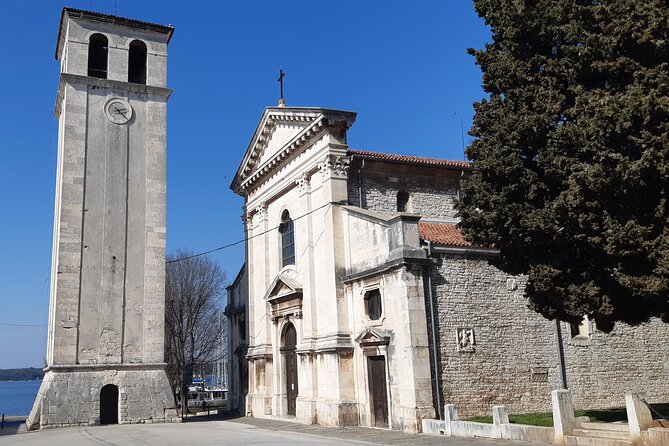
- Pula Cathedral: a quick church glimpse (and possible entry)
- Tempio di Augusto: why Roman temples still look Roman
- Arco dei Sergi and the free-photo stops you’ll actually use
- Gradska Trznica Pula: the market stop that grounds the history
- Your tour pacing: what 90 minutes feels like in real life
- Who this walking tour suits best
- How to prepare for weather and comfort
- After the tour: using the finish line at the Twin Gates
- Should you book the Pula walking tour?
- FAQ
- How long is the Pula walking tour?
- What is the price per person?
- Where does the tour start and end?
- What language is the tour in and how big is the group?
- Are entry tickets included for the sights?
- Does the tour run in bad weather?
- Can I cancel and get a full refund?
Key things to know before you go
- Mostly outside views: you get context without spending time waiting at entrances.
- Small group feel (max 15): easier questions, better flow, less crowd noise.
- Free stops mixed in: you’ll hit several areas where you don’t need paid entry.
- Fortress viewpoint moment: the Kastel stop helps explain why Pula grew the way it did.
- Easy finish: you end at the Twin Gates, a convenient springboard for the rest of your evening.
Where the walk begins (and why the ending matters)
The tour starts at Pula Arena (Flavijevska ul.) and ends at the Twin Gate (Carrarina ul. 8). That start-to-finish route is useful because it naturally leads you from the big Roman showpiece zone toward the city gates and onward into the central core.
You’ll also get a clear rhythm: each stop is short, so you’re not stuck in one place too long. Expect a steady walk with brief orientation stops—ideal if you want history with legs, not history with lines.
If you like to plan your day around “anchors,” this one works. The Arena is your first anchor, the fortress viewpoint gives you a second anchor, and the gates at the end act like a natural signpost for where to go next.
You can also read our reviews of more tours and experiences in Pula.


Price and value: $20.16 for a smart Pula orientation
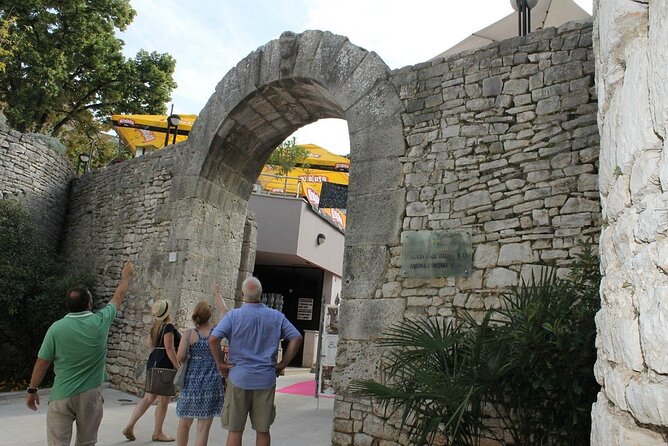
At $20.16 per person for roughly 1 hour 30 minutes, this is priced like a high-value city intro: you’re paying for a professional/local guide plus the time it takes to connect the dots between Roman structures, later layers of influence, and the look of Pula today.
Here’s the practical value equation:
- You’re not paying for multiple paid admissions because the tour is mostly outside.
- Several stops are free to access (so you’re not forced into extra costs).
- You’re paying for interpretation: what you see means more when someone local explains the why, not just the what.
Also, it’s offered in English, runs with a mobile ticket, and confirmation is typically received within 48 hours (if spots remain). And it’s been popular enough that it’s commonly booked about a month in advance—nothing crazy, but it’s not a last-minute gamble if you’re traveling in busier weeks.
The Amphitheatre de Pula stop: the Arena from the outside
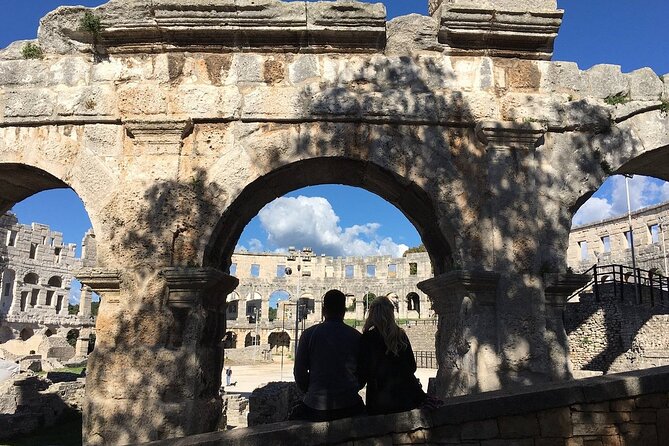
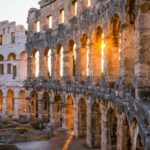
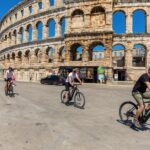
You kick off at the Amphitheatre de Pula, with the guide explaining it from outside for about 20 minutes. Even if you don’t enter, the exterior view is enough to learn how the Roman arena dominated the city’s identity. You’ll get details you can actually look for: how the building reads in street view, why it was built where it was, and what it signaled about Pula’s importance.
One subtle benefit of an outside-only start: it helps you understand the setting before you ever consider paying for entry elsewhere. If you later decide to go in on your own, you’ll know what questions to ask and what features to pay attention to.
The trade-off is also simple: the Arena admission isn’t included, and the tour won’t replace a full internal visit. If you were hoping for a long, ticketed deep dive right away, plan that separately.
Kastel fortress viewpoints: where Pula’s position makes sense
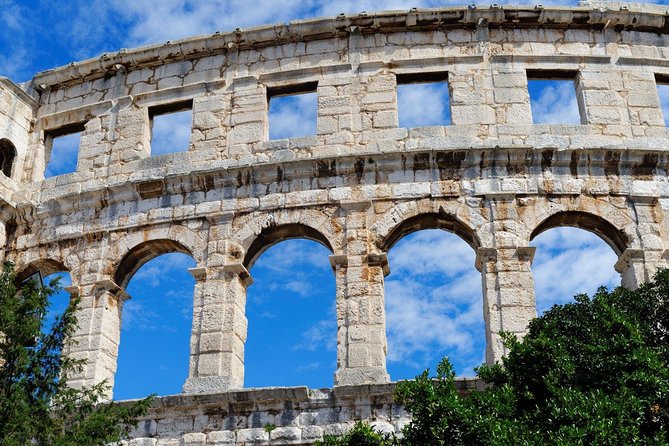
Next comes Kastel, about a 10-minute stop. The guide explains the fortress from outside and you get a view toward the harbor. This is one of the best “value” moments because it turns architecture into understanding.
From the fortress area, you can start to see how Pula’s geography influenced control, defense, and trade. That matters because Pula isn’t just Roman ruins in a vacuum—its location helped shape its story across centuries.
The drawback here is time. Ten minutes is quick, so you’ll get the key idea, not a linger-and-stare photo marathon. But that quickness is also why the whole tour stays around 90 minutes.
Pula Cathedral: a quick church glimpse (and possible entry)

You’ll then reach Pula Cathedral, explained from the outside for about 5 minutes. If it’s open, you may be able to enter the church. The entry (if you’re able to go inside) is free.
Even when you can’t go in, this stop is still useful. Cathedrals give you a time jump. In a short walk, you’re moving from Roman civic power to later religious and cultural anchors—so your brain starts sorting eras instead of treating them all as “old buildings.”
The main consideration: opening hours aren’t guaranteed in the tour description. So I’d treat entry as a bonus, not the core plan.




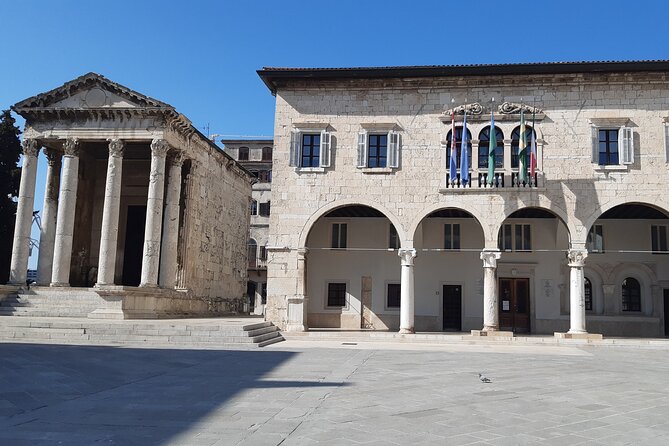
Tempio di Augusto: why Roman temples still look Roman
The tour continues to Tempio di Augusto for about 10 minutes, explained from outside. This stop is all about learning to read Roman sacred architecture in plain sight—what the structure suggests and how it fits into the city’s layout.
Since entry isn’t included here, you’re working with exterior cues: placement, form, and how it sits among surrounding streets. That can feel limiting if you’re expecting museum-style access, but it’s also what keeps the walk fast and efficient.
If you want more than an exterior lesson, you’ll likely enjoy adding a separate ticketed visit later. The upside of this tour is that it gives you a strong baseline so you’re not just looking at stones—you’re connecting them to function.
Arco dei Sergi and the free-photo stops you’ll actually use

You’ll make a pair of quick, helpful stops: Arco dei Sergi (about 10 minutes) and then Gate of Hercules plus the Twin Gates of Pula (each explained for a few minutes).
- Arco dei Sergi is a short stop with free access, and it’s explained from outside. This is the kind of monument that can be easy to miss if you’re walking alone. With a guide, you’ll understand what kind of message an arch delivered and why it’s still placed where it is.
- Gate of Hercules gets its own mini-moment for about 5 minutes. This stop reinforces the idea of Pula as a walled city, where entrances mattered more than we often think today.
- The Twin Gates are the finish point, also explained from outside for about 5 minutes, and they’re free.
I like these quick stops because they build momentum. They’re short enough that you stay engaged, but each one adds a different layer to your mental map: civic spectacle, defense/position, sacred structures, and then city entrance symbolism.
Gradska Trznica Pula: the market stop that grounds the history
You’ll also pass Gradska Trznica Pula for about 10 minutes, where the guide explains the market from outside. This is another smart pacing choice: after Roman monuments and fortress logic, you land in a space that feels like day-to-day Pula.
Even though you’re not there for a long shopping stop, you get context for how the city’s heart works today. If you’re hungry later, you’ll know where to aim, and you’ll likely feel more confident ordering or browsing on your own.
If you don’t plan to eat right away, it still works. Think of it as the “present day” anchor, so the whole walk doesn’t turn into history-only fog.
Your tour pacing: what 90 minutes feels like in real life
The schedule is designed around short blocks:
- A longer start at the Amphitheatre
- A fortress viewpoint mid-walk
- A few rapid exterior lessons
- Several free-access photo stops
- A practical finish at the Twin Gates
In real terms, that means you’re not wearing yourself out. The walking level is listed as moderate physical fitness, so you’ll want comfortable shoes, but you’re not signing up for a hike.
Also, the group limit of 15 helps the flow. It tends to feel closer to a guided conversation than a lecture you can’t interrupt.
Who this walking tour suits best
This is a great fit for:
- First-timers who want a fast, high-signal overview of Pula
- Families (including kids who can handle a steady walk), since the tour runs with guidance and kids must be with an adult
- Teens and curious adults who like history stories tied to places you can actually point at in the city
- Anyone who wants outdoor orientation first, then decides later whether they want ticketed entry elsewhere
It may be less ideal if you:
- Want lots of time inside major monuments (entries aren’t included for most of them, and the tour explains from outside)
- Want a long, unbroken market or shopping hangout (the market time is brief)
One extra detail I found interesting from past experiences: guides in this program have a reputation for strong storytelling and answering questions clearly. Names that show up in guide praise include Sini and Jane, which is a good sign that the interpretation side tends to be a highlight.
How to prepare for weather and comfort
The tour operates in all weather conditions, so bring the usual Croatia walking logic:
- Wear comfortable shoes you can move in for 90 minutes
- Dress for sun or rain (the tour doesn’t pause just because the clouds move in)
- Bring a small layer you can tolerate when temperatures shift
Because several stops are outside-only and mostly short, you’ll benefit most from being ready to keep walking and keeping your eyes up.
After the tour: using the finish line at the Twin Gates
Ending at the Twin Gates is practical. It’s central, easy to reorient from, and it gives you a natural handoff: you can continue exploring, grab a snack, or take your photos and keep moving.
I like end points like this because they reduce decision fatigue. When a tour ends in the middle of a landmark-free zone, you feel stuck. Here, the finish is visually clear and helps you plot the next step with less guesswork.
Should you book the Pula walking tour?
If you want a smart Pula Roman highlights intro without spending your whole day on ticket lines, I think this is an easy yes. With a 4.8 rating across 96 reviews and a 99% recommendation rate, it has strong signals for exactly what people come for: good pacing, clear English explanations, and sights that cover the city’s main themes.
Book it especially if:
- You have limited time in Pula and want a guided framework fast
- You’d rather learn from a local than rely on guessy self-guided reading
- You like short stops that let you explore on your own afterward
Skip it if you’re aiming for a long museum-style itinerary or expect the tour to include entry to the biggest paid sights. In that case, use this as the foundation, then add ticketed visits on a separate trip.
FAQ
How long is the Pula walking tour?
It runs for about 1 hour 30 minutes.
What is the price per person?
The price is $20.16 per person.
Where does the tour start and end?
It starts at Pula Arena, Flavijevska ul. 52100, Pula and ends at the Twin Gate, Carrarina ul. 8, 52100, Pula.
What language is the tour in and how big is the group?
The tour is offered in English and has a maximum of 15 travelers.
Are entry tickets included for the sights?
No. Admission tickets are not included for several stops. Pula Cathedral, Arco dei Sergi, and the gate stops are listed as free (if you want to go in for the cathedral, it’s only if it’s open).
Does the tour run in bad weather?
Yes, it operates in all weather conditions, so dress appropriately.
Can I cancel and get a full refund?
Yes. You can cancel for a full refund up to 24 hours before the experience’s start time.