REVIEW · SPLIT
Salona & Amphitheater – Private guided tour – Admission incl.
Book on Viator →Operated by Split Guide · Bookable on Viator
Stone ruins with a Roman-size story. This private guided tour is interesting because it stitches together Roman city life and early Christian martyr sites in one compact walk, led by guide Ivan. I especially like how the route keeps things moving (short stops, clear takeaways), and I like the way the amphitheater still feels surprisingly whole. One consideration: the experience depends on good weather, and the open-air museum portion comes with an entrance fee of about 10 euros for adults that isn’t included.
Over about 2 hours 30 minutes, you’ll cover a lot of ground without the usual big “museum fatigue.” You’ll pause at major ruins like the amphitheater, plus smaller but meaningful stops—necropolis areas, basilicas, gateways, and bath remains—so the story makes sense instead of feeling like a checklist.
Since this is a private tour for just your group, you can ask questions and set your pace a bit. The main drawback is that many stops are outdoors and the walking is part of the deal, so plan for comfortable shoes and expect light-to-moderate roaming around the sites.
In This Review
- Key highlights you’ll feel during the walk
- Why Salona’s ruins still land hard (even after the stones were stolen)
- The 2.5-hour rhythm: many short stops, not one long lecture
- Ancient Salona: the former metropolis and the entrance fee reality
- Manastirine necropolis and St. Dominius: where civic and sacred meet
- Tusculum: the archaeology-meets-religion stop
- The bishop’s palace area and the early-Christian freedom context
- Roman baths and the social center idea
- Five bridges, industrial edges, and the real shape of the city
- Porta Caesarea: ruts of Roman chariots are the star
- Forum, temple remains, and an ancient Roman theater zone
- Cemetery of the 16 sarcophagi and Kapljuc: martyr sites in walking distance
- Amphitheatre Salona: the highlight that still works as a centerpiece
- Price and value: what the 203.50 per person covers (and what to budget)
- Who this tour fits best
- Should you book this Salona & Amphitheatre private tour?
- FAQ
- How long is the private tour?
- Is this a private tour or a group tour?
- What language is the guide using?
- Where does the tour start and end?
- Is admission included?
- Do I need to pay for every stop?
- Will I receive a mobile ticket?
- What happens if the weather is bad?
- What is the cancellation policy?
- Is it suitable for everyone, and are service animals allowed?
Key highlights you’ll feel during the walk
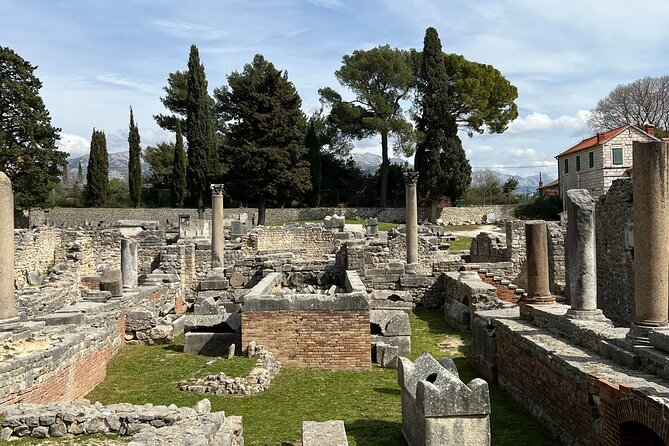
- A private group format that keeps the experience personal and question-friendly
- Ivan’s on-the-ground storytelling that helps the ruins connect in your mind
- Roman city-to-Christian city transitions shown through multiple necropolises and sacred sites
- Porta Caesarea’s visible ruts, a great detail for anyone who likes physical proof of history
- The amphitheater as the payoff, with entry handled as part of the tour
- Many stops are free to enter, so your extra costs stay limited
Why Salona’s ruins still land hard (even after the stones were stolen)
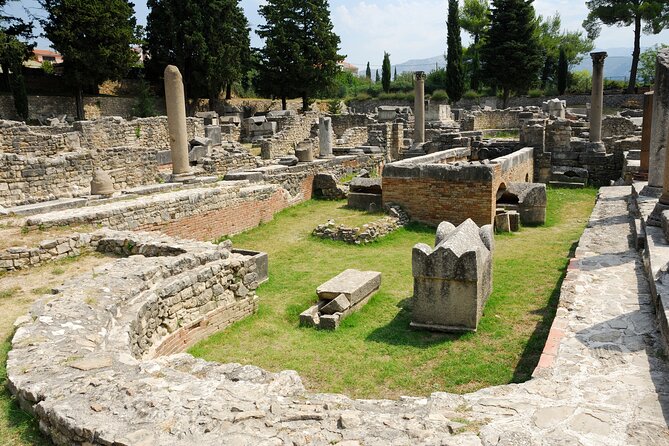
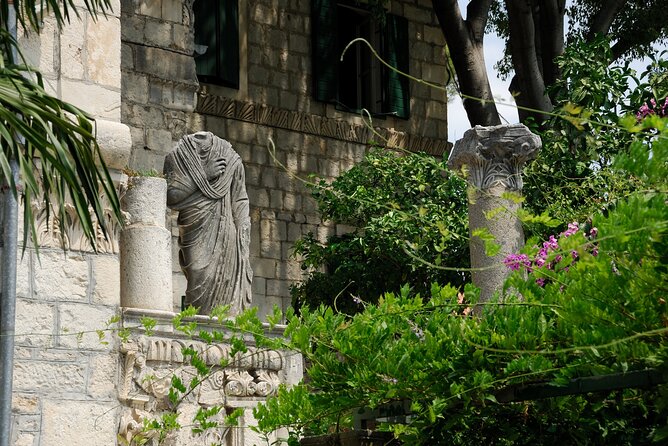
Salona isn’t just a pile of Roman leftovers. It’s a place where you can trace change over centuries: a major Roman metropolis that was later destroyed, and then a landscape that became important again as Christian worship and burial practices took root.
I like that this tour leans into the “layers” you can actually see. You’re not only looking at the amphitheater and calling it a day—you’re also walking through gateways, baths, necropoleis, and early Christian spaces that show how people used these sites for centuries.
And yes, you’ll hear the detail about how Venetians removed lots of stones to build churches in Venice. It’s not said to make you sad—it’s said so you understand why certain areas look the way they do today.
You can also read our reviews of more tours and experiences in Split.


The 2.5-hour rhythm: many short stops, not one long lecture
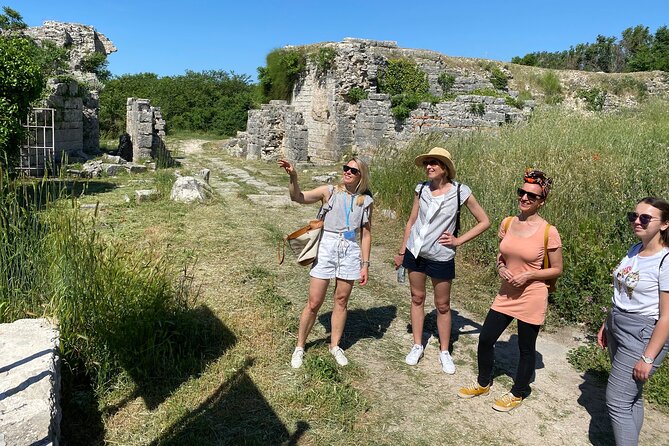
This is built like a walking tour with a series of focused pauses. Plan on around 10–15 minutes at most stops, then a longer moment at the big finale. That timing matters because the ruins are spread out in different zones, and a short stop keeps you from feeling lost or bored.
You’ll start at the Salona main entrance in Solin (Ul. don Frane Bulića 58). The tour ends back at the meeting point, so you’re not left to figure out how to get yourself home after the last photo.
Since it’s in English and geared for most people, it works if you’re traveling with adults who want meaning—not just sightseeing. It’s also ideal if you prefer an active schedule that doesn’t eat your entire day.
Ancient Salona: the former metropolis and the entrance fee reality
Your first stop is Ancient Salona, introduced as a Roman metropolis with around 60,000 inhabitants until it was completely destroyed by the Avars in the 6th century. That single fact gives you the right frame: these aren’t ruins you stumble across by luck; they’re the remains of a city that once mattered a lot.
You’ll explore Salona on foot, and at the entrance you’ll get a quick orientation. The open-air museum portion has an entrance fee of about 10 euros for adults, and it’s not included in the tour price.
Time check: you’ll spend about 15 minutes here. That’s enough to understand what you’re seeing and why it’s there, without turning the stop into a long detour.
Practical tip: if you know your group will want photos near the main ruins, arrive ready with water. Even when the pace is brisk, the outdoor setting can add up.
Manastirine necropolis and St. Dominius: where civic and sacred meet
Next you’ll visit Manastirine, described as a necropolis in Roman times that later became a Christian cemetery. This is one of those places where the word necropolis isn’t abstract—it’s right there in the landscape.
You’ll also connect the site to a key figure for Split: St. Dominius, who was the martyr and city patron of Split. Time on this stop is about 15 minutes, and it’s often the kind of moment where the guide’s explanations help you read the place correctly.
Admission here is free, so you’re not paying extra for the most meaningful transitions. You’re simply getting a clearer picture of how burial sites gained new importance over time.
Tusculum: the archaeology-meets-religion stop
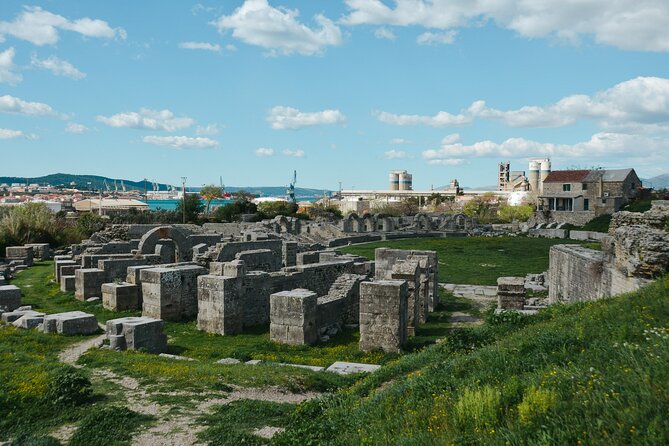
The Tusculum is tied to Don Frane Bulić, a well-known Split clergyman and archaeologist. The tour explains that it was used as an office and meeting place, and that some rooms can be visited.
Time check: about 15 minutes. This is a smaller stop, so it works as a calm reset between larger, more visually dramatic areas. It also helps you understand that archaeology isn’t just about the past—it’s about the people who studied the past and built the connections we rely on now.
Admission is free, which makes it an easy win.



The bishop’s palace area and the early-Christian freedom context
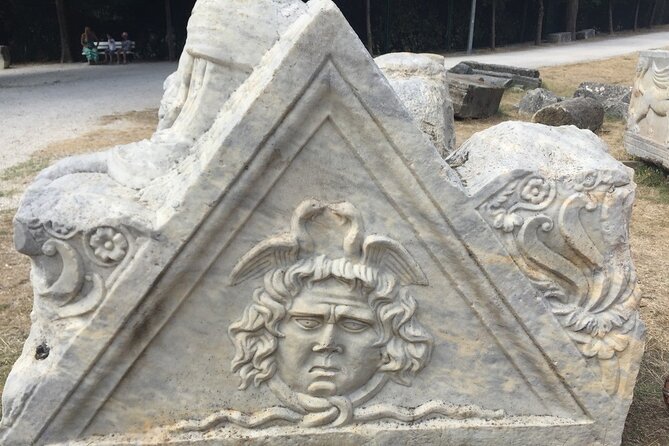
Then comes Biskupska palača (Palatium episcopi), centered on the bishop’s palace and the remains of two cathedrals dating to a time when Christians could practice their religion freely.
Today, what you’ll see are the foundation walls. That might sound minimal, but that’s exactly why it’s worth visiting. Foundations force you to think in outlines and scale rather than relying only on dramatic structures.
This is about 15 minutes, and admission is free.
Roman baths and the social center idea
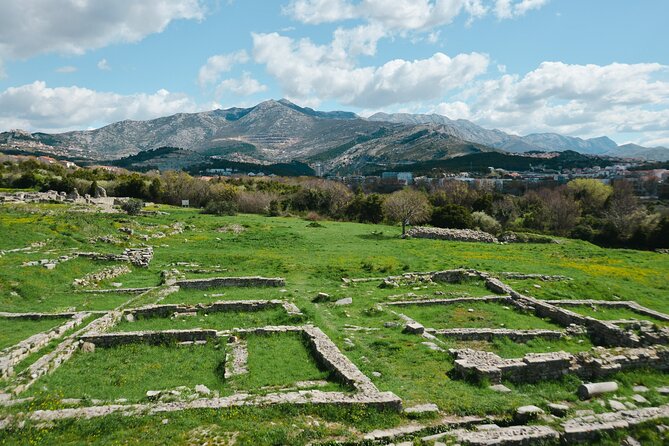
The tour moves to the Large urban spa, with Roman baths that were used for several hundred years. Here’s the point that I found useful: these baths weren’t just for bathing—they were presented as a center of social and cultural life in Roman times.
Time check: around 10 minutes. That short duration is perfect because it keeps you from losing the thread. You’re seeing the physical remnants, and you’re being told what function they had.
Admission is free.
Five bridges, industrial edges, and the real shape of the city
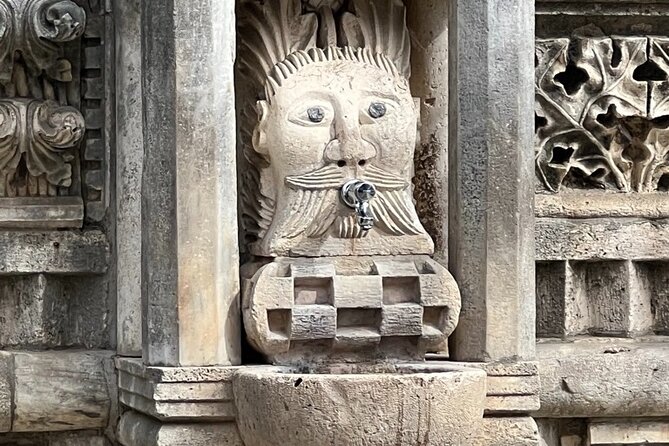
At Pet mostova—literally the five bridges area—you learn that these bridges once belonged to a kind of industrial zone outside the old city center.
Time check: about 10 minutes. This stop is a good reminder that cities aren’t only temples and big arenas. They have work zones, transport connections, and practical routes that support day-to-day life.
Admission is free, so you get the context without paying extra.
Porta Caesarea: ruts of Roman chariots are the star
Town Gate – Porta Caesarea is where you’ll spot one of the tour’s most physical details: the ruts left by old Roman chariots. The tour frames it as the capital gate in Roman times.
Time check: about 10 minutes. This is short but memorable because it gives you something to point at, not just something to imagine.
Admission is free.
Why I like this detail: when history gives you a physical track to follow, it’s easier to remember later. It’s one of those moments you can relive even after you leave the site.
Forum, temple remains, and an ancient Roman theater zone
Next is the Hram area, described as the oldest part of the city with remains of the forum, a temple, and an ancient Roman theater.
Time check: about 10 minutes. This stop is about orientation: you’re learning how civic space, worship space, and public performance space sat near each other.
Admission is free.
If you prefer a tour that explains how a city worked, you’ll appreciate this. If you only want dramatic single-structure stops, you might think it’s too “many things.” But the payoff is that the amphitheater later feels connected, not random.
Cemetery of the 16 sarcophagi and Kapljuc: martyr sites in walking distance
You then walk past Ul. don Frane Bulića 91, the Cemetery of the 16 Sarcophagi. This necropolis sits next to the road leading to the amphitheater, and the tour explains that Roman cemeteries were built outside city walls at that time.
Time check: around 10 minutes. This stop keeps the story moving toward the amphitheater without repeating itself.
Admission is free.
After that, you reach Kapljuc, another basilica and necropolis on the way to the amphitheater. Here the tour connects the site to burial of five martyrs who died in the amphitheater of Salona at the beginning of the 4th century during persecution of Christians by Diocletian.
Time check: about 10 minutes. Admission is free.
Consideration: these are solemn topics, and the stop lengths are short. If your group likes quiet reflection, you might want to take extra moments on your own after the guided explanation.
Amphitheatre Salona: the highlight that still works as a centerpiece
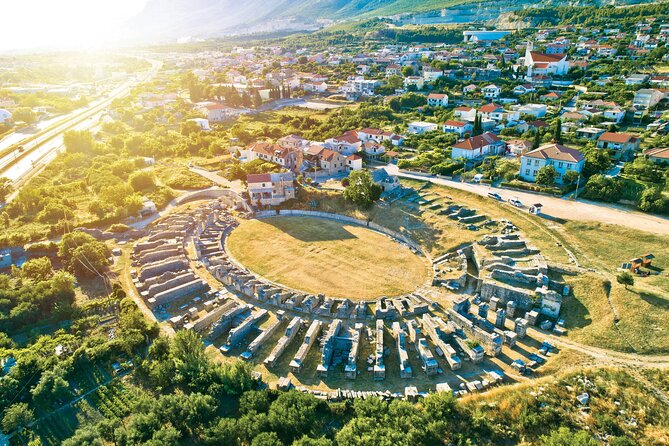
Finally, you arrive at the Amphitheatre Salona, the tour’s highlight. The guide explains that the amphitheater is relatively well preserved, even though Venetians removed many stones to build churches in Venice.
Time check: about 30 minutes. This is the one stop where you get breathing room—enough time to look around, orient yourself, and let the scale sink in.
Admission is listed as free for this part of the tour, and the overall experience is described as including admission. Either way, the practical message is simple: you should come expecting the amphitheater to be the core included moment.
Why it’s worth the time: after seeing gateways, baths, necropolises, and church-related foundations, the amphitheater feels less like a standalone monument. It becomes the stage where multiple eras and stories connect—especially when you just heard about the martyrs linked to it.
Price and value: what the 203.50 per person covers (and what to budget)
At $203.50 per person, you’re paying for a private English-guided experience that strings together multiple major stops over roughly 2 hours 30 minutes. For value, here’s the key: most of the sites you visit are free to enter, which keeps your on-the-spot costs predictable.
The one likely extra cost comes at the open-air museum portion at the start: about 10 euros for adults (not included). If your group includes only adults, you’ll want to budget for that entrance fee.
In other words, the price makes sense when you want more than a drive-by. You’re not just looking at ruins; you’re getting a guided path through Roman civic space and early Christian burial sites, plus the payoff of time at the amphitheater.
Also, booking trends matter: this tour is commonly reserved about 84 days in advance. If you’re traveling in a busy period, you’ll likely be happier locking in earlier rather than testing your luck.
Who this tour fits best
This is a strong fit if you want:
- a private walk with a guide who keeps the narrative clear
- Roman sites plus early Christian context in one outing
- a route where most stops are short, so you don’t feel trapped in a single long stop
It’s also a good match for couples and small groups who like photos, but prefer explanations that help you remember what you saw.
If your group can’t handle outdoor walking, you might find the multiple ruins stops too tiring. Also, because the tour requires good weather, plan a flexible mindset—this isn’t the kind of activity you’d want to treat as a guaranteed go no matter what.
Should you book this Salona & Amphitheatre private tour?
I’d book it if you care about connections, not just sites. The route moves from Salona’s Roman metropolis story into later Christian burial spaces, and then lands at the amphitheater as the satisfying centerpiece. The private format also means you’re not rushed through explanations, and the guide’s friendly, clear approach (Ivan) makes the whole walk feel worth your time.
Skip it only if you’re chasing a purely dramatic, single-location experience. The beauty here is the “many stops, one coherent story” structure.
If you want the ruins of Salona explained in a way that helps you see the whole picture, this private tour is a solid choice.
FAQ
How long is the private tour?
The tour lasts about 2 hours 30 minutes.
Is this a private tour or a group tour?
It’s a private tour. Only your group participates.
What language is the guide using?
The tour is offered in English.
Where does the tour start and end?
The start is at Salona main entrance, Ul. don Frane Bulića 58, 21210 Solin, Croatia. The activity ends back at the meeting point.
Is admission included?
The experience is listed as including admission, but the open-air museum entrance fee at Ancient Salona is about 10 euros for adults and is not included.
Do I need to pay for every stop?
No. Several stops are free to enter, while the open-air museum portion at Ancient Salona is the main listed fee (about 10 euros for adults).
Will I receive a mobile ticket?
Yes. The tour uses a mobile ticket.
What happens if the weather is bad?
The experience requires good weather. If it’s canceled due to poor weather, you’ll be offered a different date or a full refund.
What is the cancellation policy?
You can cancel for a full refund up to 24 hours in advance. If you cancel less than 24 hours before the start time, the amount paid won’t be refunded.
Is it suitable for everyone, and are service animals allowed?
Most travelers can participate, and service animals are allowed. It’s also near public transportation.