REVIEW · SPLIT
Small-Group Communist Tour of Split – Boutique group tour
Book on Viator →Operated by Pomalo tours · Bookable on Viator
Communism leaves footprints all over Split. This 3.5-hour small-group tour uses a car and a focused guide to show you Split’s Communist past in plain, human terms, not just dates on a wall. You’ll move between key sites, hear how Yugoslavia worked in daily life, and catch architecture you’d normally miss on a quick stroll.
What I like most is the teaching style: you’re guided by a local historian/history teacher, so the stops come with context and clear cause-and-effect. Second, the logistics are smart—a private, air-conditioned vehicle handles the distances between dispersed points, so you’re not burning your morning in transfers.
The main trade-off is the theme. If you came to Split mostly for Roman ruins and old-town views, this tour stays tightly on Yugoslavia’s socialist era and its final, violent end. Also, it runs only in good weather, since a good chunk is outside around public sites.
In This Review
- Key highlights at a glance
- Split’s Communist past: why this tour feels different
- Start at Franje Tuđmana Square, then get oriented fast
- Stop 1: Trg Franje Tuđmana and the WWII-to-Yugoslavia bridge
- Stop 2: Poljud Stadium, MoMA-level architecture, and the China Wall
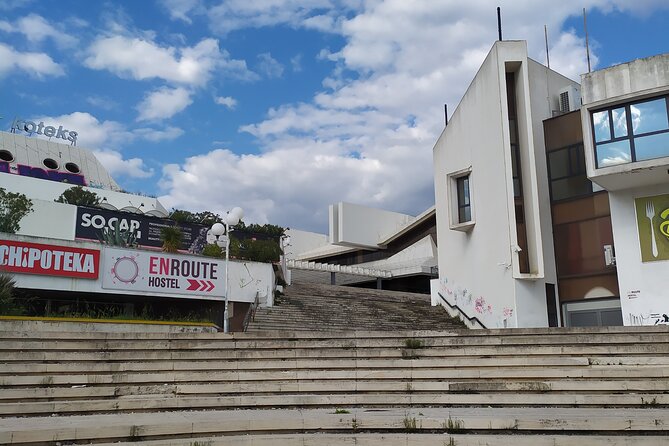
- Stop 3: Koteks and the idea of communist consumer life
- Stop 4: Split 3 (Krstarica) and the planned life behind the design
- Stop 5: Split predgrađe and the armored train finale
- Price and value: paying for transport, focus, and a small group
- Comfort, timing, and what to wear
- Who this tour is for (and who might skip it)
- Should you book Communist Split with a boutique group?
- FAQ
- Is the tour only for people who speak Croatian?
- How long is the experience?
- Where do I meet the tour?
- Is there assigned transportation during the tour?
- What group size should I expect?
- Does the tour include any food or drinks?
- Are there paid entry tickets at the stops?
- Is the tour mostly outdoors?
- Will I get a mobile ticket?
- What is the cancellation policy?
Key highlights at a glance
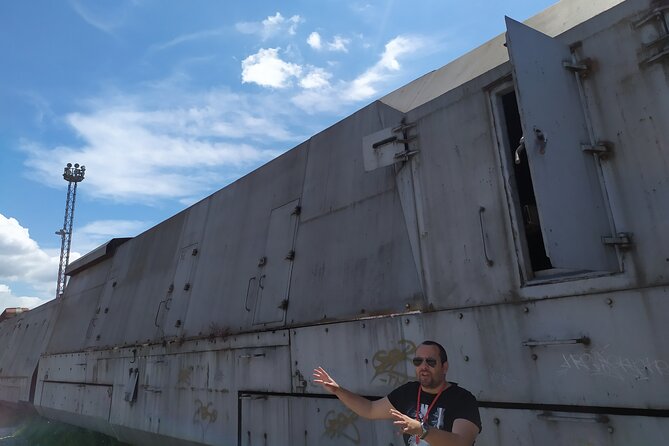
- Boris-led storytelling: the guide is a local historian/history teacher, and the tour can even run as a one-on-one depending on bookings
- Poljud Stadium + MoMA connection: you’ll hear why this Yugoslav sports landmark mattered abroad
- China Wall stop: a quick look at Yugoslav socialist architecture in the shape of a real local landmark
- Koteks and consumer life: you’ll walk through the idea of a “modern” communist shopping mall and why it didn’t last
- Split 3, planned living: housing, schooling, health, economy, and politics explained through the neighborhood’s design
- Armored train at Kopilica: a strong final stop that frames how Yugoslavia unraveled in the 1990s
Split’s Communist past: why this tour feels different
Split is a place where you can walk past big layers of history in a single afternoon. Most tours focus on the medieval core and the Adriatic glow. This one does something bolder: it treats the Communist era as the backbone of understanding modern Split, including the architecture and the daily-life systems that came with it.
What makes the experience work is the balance between public landmarks and practical explanations. You’re not just looking at buildings. You’re hearing how people lived, where resources went, how education and health were organized, and how politics shaped everyday routines. That mix turns architecture into a story you can actually picture.
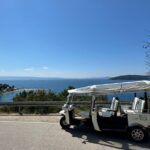
And yes, it helps that you’re not doing this all on foot. The tour is built around a private vehicle that keeps you moving efficiently from square to stadium to neighborhood—without turning the day into logistics.
You can also read our reviews of more tours and experiences in Split.

Start at Franje Tuđmana Square, then get oriented fast
You meet at the bus stop area near Autobusno stajalište Sv. FraneTrg Franje Tuđmana, right by Trg Franje Tuđmana in Split. The start time is 9:00 am, and the tour ends back at the meeting point.
This opening matters. Instead of jumping straight to an architecture photo-op, you begin with the birth of the Yugoslav communist state and the World War II context that fed into it. You’ll even see pictures of wartime damage in Split. It’s a quick primer, but it gives you a frame for everything that comes next—especially when you later see optimism in postwar building plans alongside the harsh reality implied by the armored-train finale.
One practical tip: arrive a bit early. The meeting point is a transit area, and the tour groups are small (max 8 travelers), so you want to make sure you’re with the right group before the guide starts moving you through the story.
Stop 1: Trg Franje Tuđmana and the WWII-to-Yugoslavia bridge
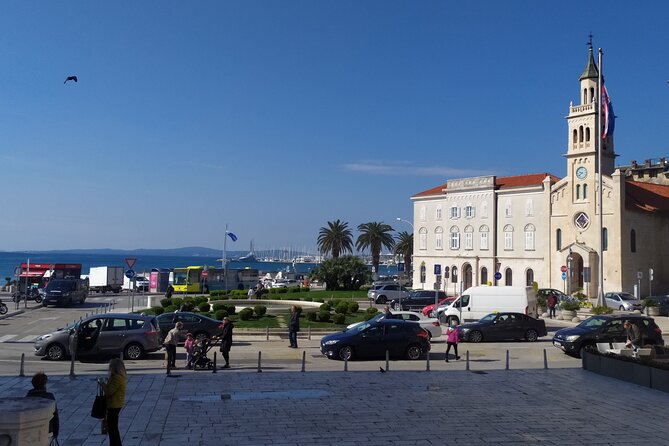
At the square, you get the tour’s origin story: the Communist tour of Split is introduced, and the guide connects major World War II events in Split and across Yugoslavia to the formation of the new communist state. This is where the tour’s tone sets itself.
Why this stop is valuable: it prevents the later sites from feeling random. When you reach postwar buildings—stadiums, housing projects, and shopping concepts—you’ll understand them as part of a system, not just as odd-looking structures from the 20th century.
Time-wise, it’s short (about 25 minutes). That’s just enough to give you vocabulary for what you’ll see later.
Stop 2: Poljud Stadium, MoMA-level architecture, and the China Wall
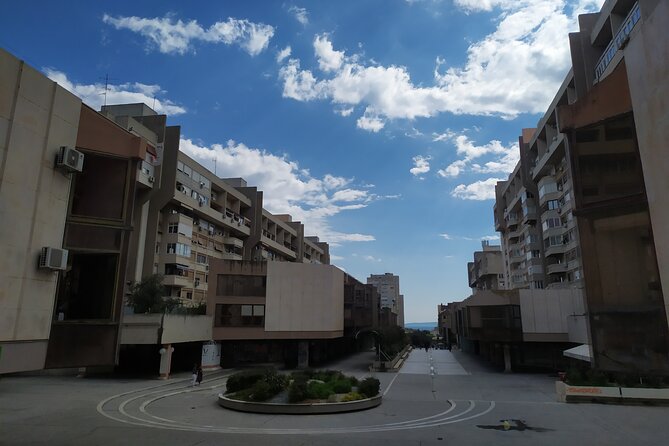
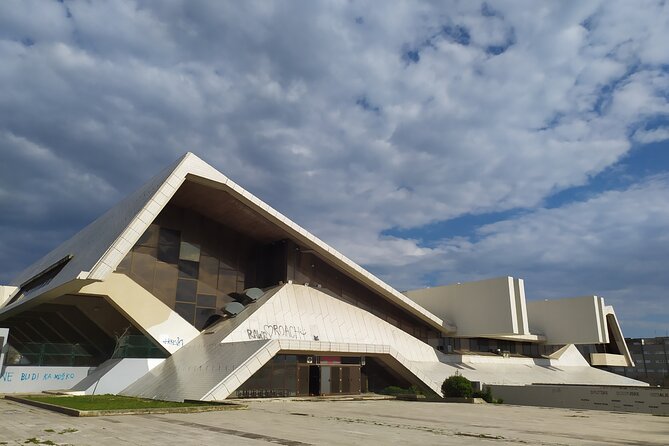
Next you’re taken for a short panoramic stop around Poljud Stadium, one of Split’s most recognizable symbols from the communist period. You’ll hear that it was built for major sports events in Yugoslavia, including the Mediterranean Games. Even better for curious minds: the stadium was presented as a standout example of Yugoslav architecture in an exhibition at MoMA in New York. That detail helps you see the international reach of Yugoslav design, not just local pride.
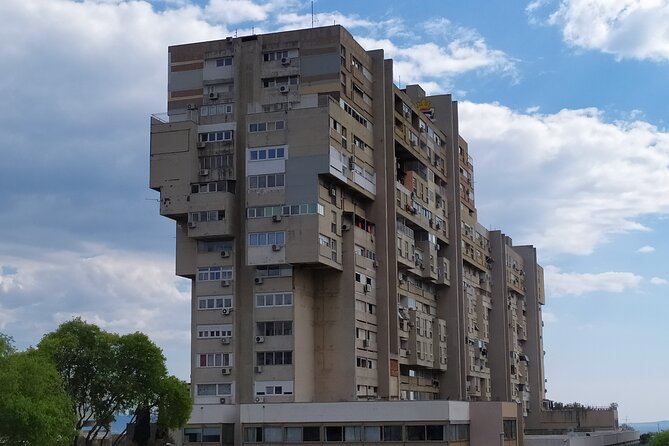
You also get a quick stop for the China Wall, described as the widest existing building in Split. It’s tied to Yugoslav socialist architecture as well—meaning it’s not a random nickname stop. It’s your chance to connect the big, famous landmark to the broader architectural language used across the city.
This section works because it teaches you how to look. You’re not only spotting the buildings—you’re learning what kind of modernity they were built to represent, and why that design mattered outside Croatia too.
A small consideration: the stop is panoramic and brief (about 10 minutes). Bring your phone/camera, but also listen closely—the interpretation is part of what you’re paying for.
Stop 3: Koteks and the idea of communist consumer life
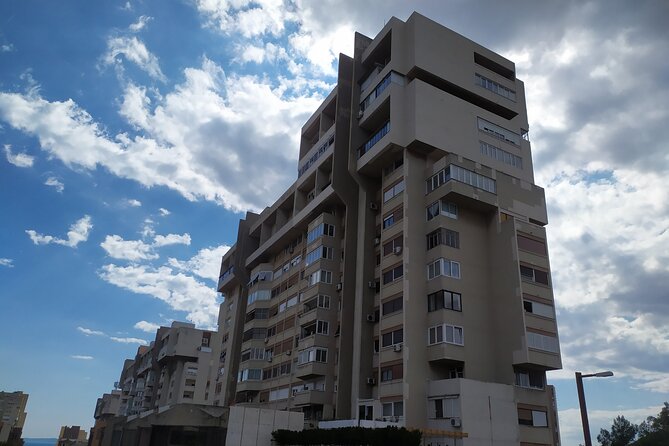
Then you shift from big stadium architecture to something more everyday: Prodajni centar Koteks, described as the first shopping mall in Yugoslavia. Walking around it, you’ll hear about the “modern” idea of shopping in the communist state—along with the limits of how that system worked.
This is where the tour turns from buildings into behavior. The concept of consumer life in Yugoslavia is presented as being between an “open West” and a “closed East,” with its own supply story. The tour’s message isn’t that everything was smooth or that people had endless options. It’s that they often had to be creative to find the goods they needed.
Why you’ll likely enjoy this stop: it adds texture. You get a sense of how policies shaped choices, and how everyday life adapted to those choices. It also helps explain why certain “modern” concepts didn’t last in the same way they did in fully market-driven systems.
Time here is about 30 minutes, so it’s not just a photo break. You get enough time to walk and absorb what the guide is saying about consumer culture and its short-lived appeal.


Stop 4: Split 3 (Krstarica) and the planned life behind the design
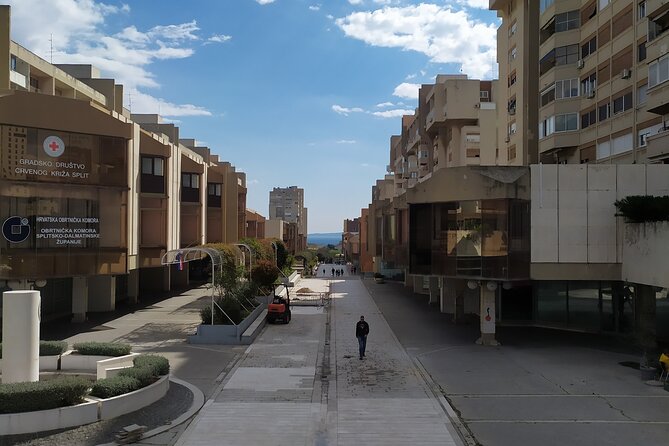
This is the tour’s biggest thematic block. You reach Split 3, also referenced through the neighborhood project around Krstarica, which was purposely designed to support quality living, working, and resting. It’s described as a unique high-quality project from the communist era and an example of planned modern neighborhoods recognized internationally.
You’ll walk around the area and look at architectural signatures from local architects—down to building nicknames like the Cruiser building (called out during the tour). While you’re looking at the shapes and styles, your guide connects those design choices to the systems behind them:
- housing policy
- the educational system
- health system
- economy and social life
- politics, with emphasis on Tito’s dictatorship
This stop is also where you get the clearest “so what?” for the whole tour. Once you understand how a planned neighborhood was meant to function, the city’s modern layout makes more sense. The buildings stop being just “old communist architecture” and start acting like evidence of how Yugoslavia tried to organize society.
Time-wise, you get a generous chunk here: 1 hour 10 minutes, including free time. That free time is useful because you can step away for a closer look at details you might have missed while listening, or just take a breather before the final stop.
One more detail that gives this stop extra weight: Split 3 was also recognized as a top exhibit connected to Yugoslav architecture at MoMA in New York. That international recognition helps justify why this neighborhood is worth your time—especially if you’re the type who likes understanding why places became “important” beyond their own borders.
Stop 5: Split predgrađe and the armored train finale
The last stop shifts mood. At Kopilica railway station, part of what’s described as Split predgrađe, you hear reasons Yugoslavia didn’t survive and why the end in the 1990s was violent.
The core visual here is the armored train exposed at the railway. It’s presented as a symbol of the beginning of the bloody end of Yugoslavia—something that changed relations among nations and religions across southeast Europe.
Why the ending lands: it stops the tour from feeling like a museum display of “how things were.” It connects architecture and systems to the human cost when political structures break down. If you came in expecting ideology-talk only, this last stop gives you a harder reality check without turning it into chaos.
This final segment runs about 30 minutes, so you’ll finish with enough time to get back out into Split with your own thoughts.
Price and value: paying for transport, focus, and a small group
At $108.14 per person for about 3 hours 30 minutes, the price might look steep if you’re comparing it to a standard walking tour. But what you’re buying here is not just narration—it’s private transportation in an air-conditioned vehicle, plus a tightly focused guide who brings the topic to life across several dispersed stops.
A few value boosters from the tour format:
- The group size is max 8, which helps the guide keep things coherent and allows room for questions.
- Most stops have free admission tickets noted, so your money isn’t going into entry fees.
- You get a small included comfort item: a typical soft local drink (pop) that was popular in communist Yugoslavia and is still around today.
There’s also a nice practical bonus from one of the strongest review-style signals: the tour can turn into a one-on-one experience depending on how many people book. When that happens, you get more direct conversation with the guide—Boris—and you can ask follow-ups that fit your interests.
Comfort, timing, and what to wear
This tour is built for a morning start. At 9:00 am, it’s early enough to get the historical angle while you still have energy for your day after. The total time includes transit between stops and a meaningful walking component inside neighborhoods.
The weather requirement matters. Since the experience depends on being outdoors around public sites and neighborhood streets, you’ll want to plan for decent conditions. If it gets canceled due to poor weather, you’ll be offered another date or a full refund.
What to wear:
- Comfortable shoes for the neighborhood stop at Split 3
- Light layers, since you’re moving between squares and stadium/panoramic areas
- Sun protection, because there are outside segments and you’ll be standing and looking
Who this tour is for (and who might skip it)
You’ll love this tour if you:
- are curious about Yugoslavia beyond generic war-era facts
- like architecture with a political and social backstory
- want more than the usual medieval Split photo route
- enjoy guides who explain systems: housing, schools, health, and daily life
You might choose something else if you’re:
- only here for the waterfront/old town highlights
- not interested in Tito-era politics or postwar rebuilding plans
- hoping for a Roman/ancient-focused city tour
In other words, this isn’t a compromise tour. It’s a theme tour. If that theme is your thing, it’s a great use of half a day.
Should you book Communist Split with a boutique group?
Book it if you want Split to feel newly readable. The itinerary is designed to connect the dots: WWII context first, then architecture and public design, then consumer life, then planned housing and social systems, and finally the sharp ending with the armored train.
Skip it if you’re already overwhelmed by history and want only the most iconic scenery. This tour asks you to think while you walk.
Also, if you like small-group formats, pay attention to the size limit (up to 8). That’s the difference between a tour that feels like a loud bus lecture and one that feels like a focused conversation in motion.
FAQ
Is the tour only for people who speak Croatian?
No. It’s offered in English.
How long is the experience?
It runs for about 3 hours 30 minutes.
Where do I meet the tour?
You meet at Autobusno stajalište Sv. FraneTrg Franje Tuđmana, 21000, Split, Croatia.
Is there assigned transportation during the tour?
Yes. You travel by an air-conditioned vehicle and use private transportation between stops.
What group size should I expect?
The tour has a maximum of 8 travelers.
Does the tour include any food or drinks?
Yes. You get soda/pop, a soft local drink popular in communist Yugoslavia and still today.
Are there paid entry tickets at the stops?
Admission tickets are listed as free for the stops mentioned.
Is the tour mostly outdoors?
A good portion of it is outside around public sites and neighborhoods, and it requires good weather.
Will I get a mobile ticket?
The tour features a mobile ticket.
What is the cancellation policy?
There is free cancellation. You can cancel up to 24 hours in advance for a full refund. If you cancel less than 24 hours before the experience starts, you won’t get a refund.