REVIEW · SPLIT
Small Group Walking Tour of Split for First Time Visitors
Book on Viator →Bookable on Viator
Split can feel like Roman rubble and café lines at once. This short walk turns the chaos into a clear route through the heart of town. I love how it gives a micro history lesson without slowing you down, and I also like that the pace is first-timer friendly with a small group. One thing to keep in mind: the walk includes a few steps, so strollers and anyone with limited mobility will want to go slow and plan for some uneven stone.
You start at the famous Gregory of Nin statue and end by the water on the Riva, so you finish with a natural place to keep exploring. The guide brings the sites to life with practical context, plus time for questions and local suggestions (and yes, that adds value fast). My only caution is simple: you’ll cover a lot of landmark ground in 1 hour 30 minutes, so bring comfortable shoes and expect tight timing.
In This Review
- Key Takeaways Before You Go
- Why This 90-Minute Split Walk Hits for First Timers
- Starting at Gregory of Nin: Your Route Begins Where Split Wants You To
- Stop 1: The Golden Gate and the Real Meaning of a Name
- Stop 2: Narodni Trg, Split’s Old Town Heart
- Stop 3: The Temple of Jupiter Now Serves as Baptistery
- Stop 4: The Peristyle of Diocletian’s Palace, the Courtyard That Runs the Show
- Stop 5: Cathedral of Saint Domnius and a Roman Mausoleum Story
- Stop 6: The Vestibulum, Where Acoustics Make It Fun
- Stop 7: Substructures Under the Palace (And Why They Still Matter)
- Stop 8: Riva Harbor, Finish With Sea Views and a Plan
- Value for $24: What You’re Really Buying
- What Pace and Comfort Feels Like on the Ground
- Who This Tour Fits Best (And Who Might Want More Time)
- Should You Book This Tour?
- FAQ
- How long is the Split walking tour?
- Is the tour offered in English?
- Where do I meet, and where do we end?
- How big is the group?
- Are there tickets to pay for the stops?
- What is the cost per person?
- Can I cancel for a refund?
Key Takeaways Before You Go
- A first-day orientation in 90 minutes that maps Split’s Old Town to what you’re actually seeing
- Diocletian’s Palace highlights, explained clearly from gates to courtyards to basements
- Free-entry stops listed on the route, so you’re paying mainly for the guide and the connections
- A small group limit of 15 for better pacing and easier questions
- Acoustics and sound on the Vestibulum stop with klapa singing you might hear
- A finish at the Riva that helps you transition from history mode to seaside strolling
Why This 90-Minute Split Walk Hits for First Timers
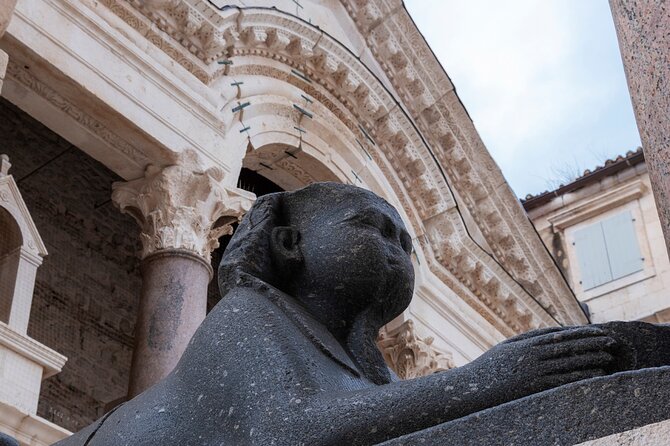
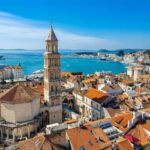
Split is famous for Diocletian’s Palace, but on your own you can end up wandering in circles. This tour gives you a logical thread through the palace complex and the surrounding Old Town center. The result is that you walk away with a mental map, not just photos.
The best part is how quickly the guide connects place to story. You get the meaning behind names, how spaces were used, and why the Roman-to-Christian changes happened—without turning your day into a lecture. It’s exactly the kind of “short and useful” walking tour that helps you plan the rest of your trip.
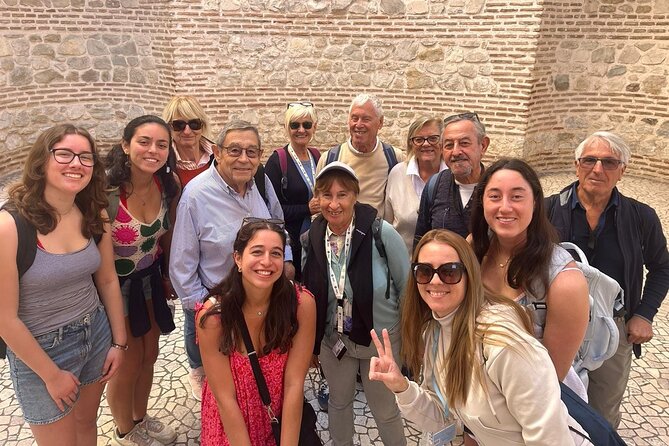
Another strong value point: it’s a small group (max 15). That means you’re not constantly stuck behind strangers during the tighter palace passages and courtyards.
The only drawback is intensity. You’ll cover multiple major stops, so if you want slow museum-style time, you’ll feel a bit rushed. Bring good shoes, and don’t plan to cram another big activity right after.
You can also read our reviews of more tours and experiences in Split.


Starting at Gregory of Nin: Your Route Begins Where Split Wants You To
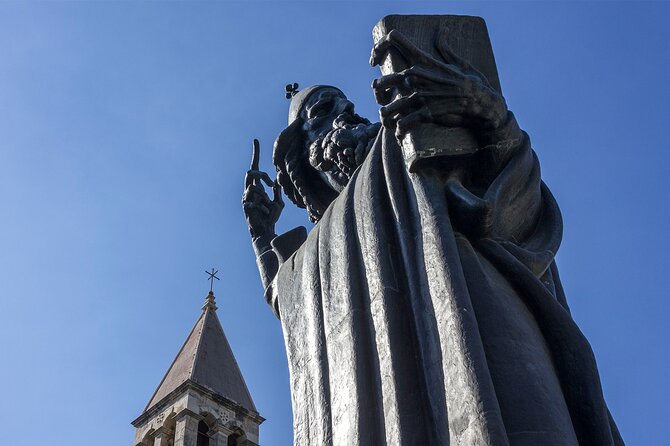
The meeting point is the Gregory of Nin Statue on Ul. kralja Tomislava 12. It’s a smart start because it anchors you at one end of the Old Town area, then your walking route naturally flows toward the palace core and later to the sea.
From here, you’ll get oriented fast. Instead of trying to figure out which street “leads to the palace,” you’ll follow the guide from landmark to landmark in the order that makes sense.
This matters more than it sounds. Split’s Old Town has twists, narrow lanes, and signs that don’t always tell you the whole story. A guided start helps you avoid the classic first-day trap: seeing something cool and realizing you’re pointed the wrong direction for the next big stop.
Stop 1: The Golden Gate and the Real Meaning of a Name
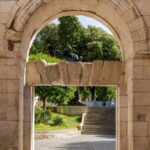
Your first major stop is the Golden Gate, the northern entrance to Diocletian’s Palace. This was the main landward gate, which is a big deal because it tells you how the palace functioned as a fortress-city, not just a royal residence.
The guide explains the real meaning behind its name. Even if you’ve seen the gate in pictures, you’ll get more out of it once you understand the role it played in controlling movement and protecting the palace.
What I like here is the timing. You’re not wasting the first minutes; you begin with a gateway that frames everything else you’ll walk through.
Stop 2: Narodni Trg, Split’s Old Town Heart
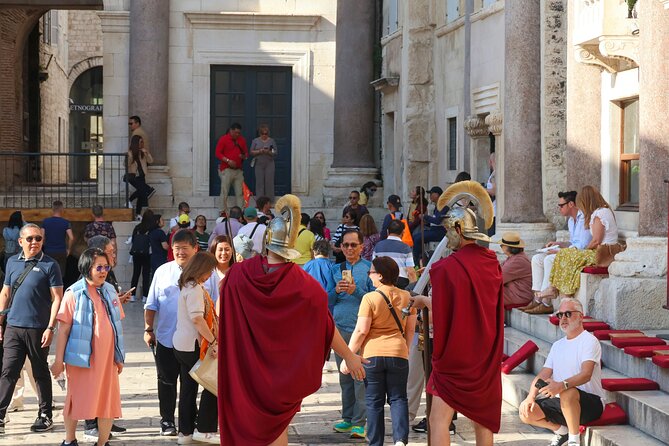
Next comes Narodni Trg, a central square that has been a gathering place for centuries. It sits in the middle of historic buildings, including the old Town Hall, and today it’s lined with cafés and shops.
This stop works as a reset. After the palace gate, the square gives you open space to orient your body and your bearings. If you’re feeling jet-lagged, this is where you naturally catch your breath and still learn something.
The tradeoff: squares like this are busy. If you’re visiting during peak hours, expect noise and crowds—so keep your expectations realistic and focus on the context and layout.
Stop 3: The Temple of Jupiter Now Serves as Baptistery
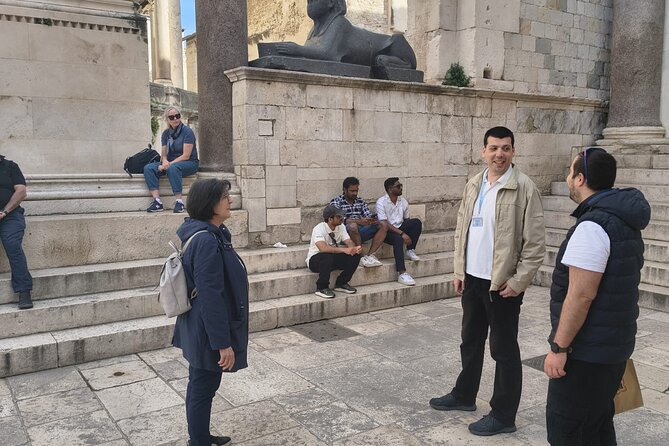
Then you reach the Temple of Jupiter, near the Peristyle. Built in the 4th century AD and dedicated to Rome’s main deity, it later became something else: today it serves as the Baptistery of St. John the Baptist.
This is the kind of change that makes Split so interesting. You see how Roman religious spaces didn’t simply disappear—they were reused and transformed as the world shifted. That Roman-to-Christian transition isn’t abstract once you stand in the structure.
What you’ll likely appreciate: the explanation of not just what it is, but how and why it happened. That turns a stop that could be “just another temple” into a real story you can remember.




Stop 4: The Peristyle of Diocletian’s Palace, the Courtyard That Runs the Show
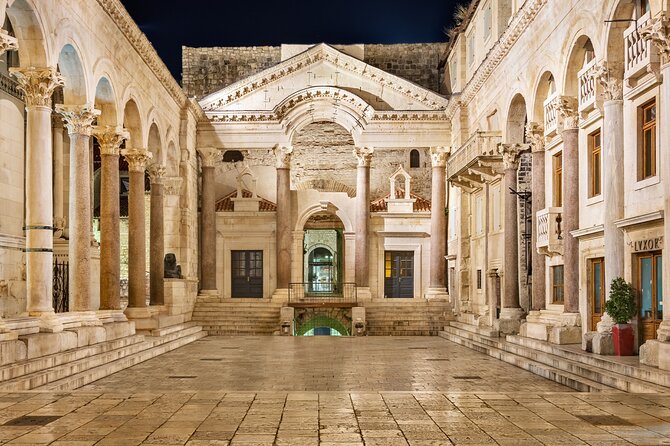
At the Peristyle, you’re stepping into the central courtyard of Diocletian’s Palace. It’s flanked by monumental columns and arches, and it served as the main access point to the imperial apartments and religious buildings.
This stop is where many first-time visitors finally understand why people got so excited about Diocletian’s Palace in the first place. Courtyards like this are more than pretty stones—they’re traffic planners. They decide where people go, where ceremonies happen, and how authority is staged.
One practical note: the Peristyle is open to views from many angles. That’s great for photos, but it also means you’re competing with other visitors. Stay close to the guide’s timing and don’t worry about perfect camera timing—focus on the big picture.
Stop 5: Cathedral of Saint Domnius and a Roman Mausoleum Story
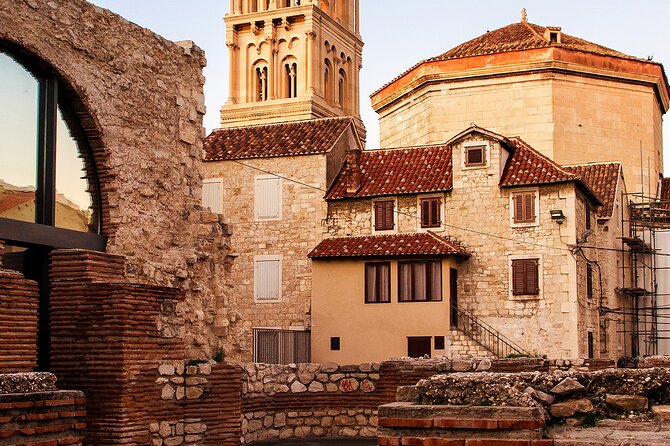
Next is the Cathedral of Saint Domnius. Originally built as Emperor Diocletian’s mausoleum, the structure was transformed into a cathedral in the 7th century and dedicated to Saint Domnius, Split’s patron saint.
It’s also one of the oldest Catholic cathedrals still in use in its original structure. That detail matters because it means you’re not just looking at ruins—you’re looking at continuity. A space that began as a Roman end-of-life monument became a working Christian cathedral.
If you’re the type who loves seeing how old buildings keep getting repurposed, this stop will feel especially satisfying. It’s a clear example of how history stacks instead of resetting.
Stop 6: The Vestibulum, Where Acoustics Make It Fun
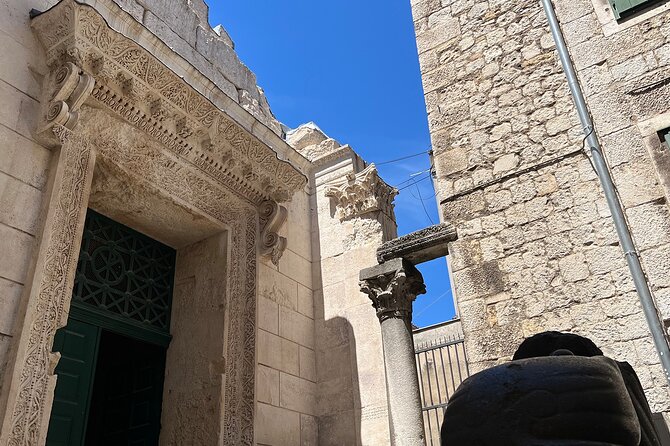
The Vestibulum of Diocletian’s Palace is a grand circular foyer. It once led to the emperor’s private quarters, and the domed ceiling gives it standout acoustics.
This is where you might hear klapa singing, plus it’s a great place for photos because the dome and shape frame your shots. Even if the singing doesn’t happen exactly when you’re there, the guide’s explanation of why the space sounds the way it does adds a layer you won’t get from a simple walk-by.
The small downside: this is a quick stop. You’ll get the magic, then move on. If you want long moments inside, you’ll likely want to come back later on your own.
Stop 7: Substructures Under the Palace (And Why They Still Matter)
Below the imperial apartments are the Diocletian Palace Substructures. These basements are among the best-preserved ancient complexes of their type, and they’ve also been used as filming locations—including in Game of Thrones.
This stop does two useful things. First, it helps you understand how Romans built and used the palace spaces that weren’t meant for daily public viewing. Second, it covers how medieval people used these areas for their needs, which shows the palace didn’t freeze in time.
Why this matters for you: Split’s main sights can feel like surface-level beauty if you don’t get context. The substructures add the “how it worked” layer. They make the whole palace feel more real, like a functioning machine rather than a postcard.
Stop 8: Riva Harbor, Finish With Sea Views and a Plan
Finally, your tour ends at Riva Harbor, Split’s iconic waterfront promenade. The Riva stretches along the harbor and is lined with palm trees, cafés, and restaurants.
This ending is smart because it gives your trip an emotional finish. You transition from stone history into sea-level life. After the tour, you’ll know where you are and what direction the big landmarks sit relative to the water.
If you want to keep going right after the walk, this is where you can do it. Grab a drink, take a slower stroll, and use your new route knowledge to decide what to revisit.
Value for $24: What You’re Really Buying
At $24 per person, this isn’t about paying for expensive ticket entry. The stops are listed as admission ticket free, so most of what you’re buying is the guide and the pacing.
That’s good value in a place like Split. Many people struggle to connect Diocletian’s Palace sites into a single story when they’re walking on their own. Here, you’re getting that “connections” piece in about 90 minutes, plus a guide who can handle questions and offer recommendations.
Also, a 1 hour 30 minutes duration is a sweet spot for a first day. You can still do a longer meal, explore side streets, or head to another neighborhood after without feeling like you lost half your vacation to one activity.
What Pace and Comfort Feels Like on the Ground
This is a walking tour, and it includes a few steps. The good news is that it’s described as easy for most travelers, and a stroller with an infant was possible on at least one tour experience.
If you’re traveling with a stroller, I’d treat it like this: expect a bit of hassle and plan for slower movement at tighter sections. If you’re someone who needs step-free routes, you’ll want to assess your comfort level before booking, since “a few steps” can still be the difference between fine and not fine.
If you’re otherwise healthy and comfortable on uneven stone, you should be fine. The group size helps because the guide can keep things moving without constant bunching.
Who This Tour Fits Best (And Who Might Want More Time)
This tour is ideal if you’re:
- Visiting Split for the first time and want an immediate orientation
- Short on time but still want the major Diocletian Palace story beats
- The type who likes practical explanations you can carry into the rest of your day
It’s also a good choice if you enjoy asking questions. The guide experience described here includes taking time for questions and helpful recommendations, which turns the walk into a conversation, not a script.
You might want a different option if you:
- Want a slow pace with longer time inside each building
- Prefer museum-style learning over exterior and corridor walking
- Feel uncomfortable with steps and uneven ancient surfaces
Should You Book This Tour?
Yes, if your goal is get your bearings fast and understand what you’re looking at. The structure—Golden Gate to Riva—builds a clear route, and the explanations turn famous landmarks into meaningful stops. For $24 with free-entry stops and a small group of up to 15, it’s strong value.
I’d book it early in your trip. The sooner you do it, the easier it is to navigate and choose what to revisit. And if you’re the kind of traveler who likes asking questions, you’ll likely leave with a better plan for the rest of your Split days.
FAQ
How long is the Split walking tour?
The tour lasts about 1 hour 30 minutes.
Is the tour offered in English?
Yes, the tour is offered in English.
Where do I meet, and where do we end?
You meet at the Gregory of Nin Statue (Ul. kralja Tomislava 12, 21000 Split). You end on the Split Riva promenade next to the 3d map.
How big is the group?
The group maximum is 15 travelers.
Are there tickets to pay for the stops?
The listed stops are marked as admission ticket free.
What is the cost per person?
The price is $24.00 per person.
Can I cancel for a refund?
Yes. You can cancel for free up to 24 hours in advance for a full refund. If you cancel less than 24 hours before the start time, you don’t get a refund.