REVIEW · SPLIT
Split Palace & Old Town -Private walking tour- Entrance included
Book on Viator →Operated by Split Guide · Bookable on Viator
Diocletian’s Palace turns a stroll into a story. This private 2.5-hour walk through Split connects the palace core with Old Town squares, while covering the main indoor sights with entrance tickets included. You start near the sea on the Riva promenade and finish at Prokurative, a classic place to linger.
I love that the entrance fees are folded into the route for the palace interior areas (basement section, the Cathedral interior, and the Temple of Jupiter) and for Diocletian’s Cellars, so you spend more time looking and less time figuring things out. I also like that it is truly private, which makes it easier to ask questions and move at a comfortable pace, and guides such as Dana and Jana are repeatedly singled out for clear explanations plus helpful direction for what to do next.
A possible drawback is that the experience depends on good weather, and some sights can be altered if there are events or church services. And at $203.95 per person, it is pricey if you’re mainly chasing the lowest cost instead of a guide-led route.
In This Review
- Key things that make this tour work so well
- Private 2.5-hour route: how you actually experience Diocletian’s Palace
- Starting at Split’s Riva: quick context before the palace walls
- Diocletian’s Palace interiors: what the included tickets let you see
- Entering Diocletian’s Cellars through the South Gate
- Peristyle to Jupiter’s Temple: the imperial showpieces
- Vestibulum and Saint Domnius Cathedral: from private access to Christian space
- Golden Gate and the wall-walk into Old Split
- Pjaca, Marko Marulić, and the fish market with sulfur-bath reality
- Marmontova ulica and Prokurative: finishing with streets, not just stones
- Price and value: what $203.95 per person buys you
- Timing, access changes, and what to expect if things don’t go perfectly
- Should you book this Split Palace & Old Town private tour?
- FAQ
- How long is the Split Palace & Old Town private walking tour?
- Is this tour private or shared with other groups?
- Are entrance tickets included?
- Where do I meet the guide and where does the tour end?
- What language is the tour offered in?
- What happens if the weather is bad or a sight can’t be accessed?
Key things that make this tour work so well
- Private group, English-language guide: Only your group goes with the guide.
- Main entrances included: Palace interior areas and Diocletian’s Cellars are covered; you won’t need to buy every ticket on the spot.
- Roman power meets Christian Split: The Cathedral and Temple of Jupiter show the shift from pagan Rome to Christian use.
- Scale you can feel: The cellars and palace layout give you real perspective on how massive Diocletian’s complex was.
- Old Town that goes beyond monuments: Fish market smells, sulfur baths next door, and Napoleon-era Marmontova street keep it grounded in daily life.
- A satisfying ending point: Prokurative is an easy finish, with cafes and a change of pace after the stones.
Private 2.5-hour route: how you actually experience Diocletian’s Palace
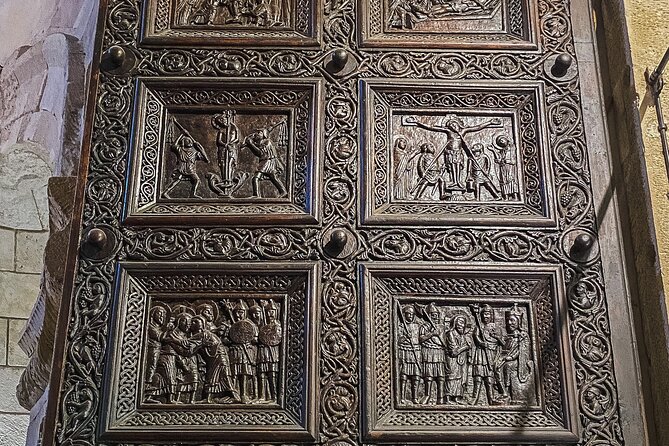
Split can feel like a maze at first. This tour helps because it strings together the palace and the Old Town in one planned line, so you get orientation along the way instead of wandering in circles.
In a private setup, your guide can adjust the pace, repeat key points, or spend extra time on what you care about most. That matters here because Diocletian’s Palace is not one single sight; it’s an entire built world, and the meaning of each doorway and square gets clearer once you hear how it all connects.
The tour also moves in a way that fits a morning or early afternoon in Split. At about 2 hours 30 minutes, you’re not trapped for the whole day, but you’re still getting enough of the palace sequence to understand it.
You can also read our reviews of more tours and experiences in Split.


Starting at Split’s Riva: quick context before the palace walls
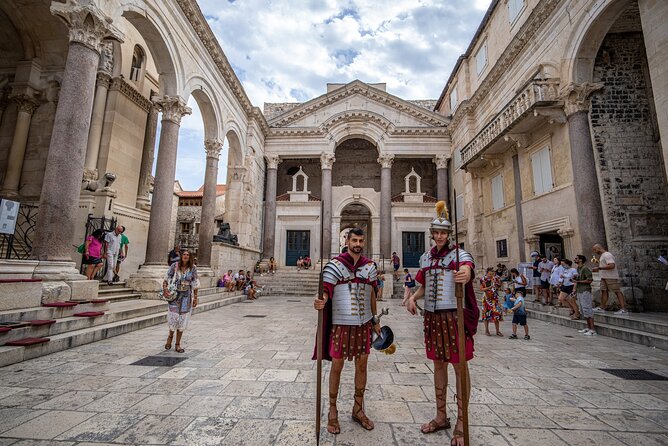
You meet at the model of Split’s historical core, near Obala Hrvatskog narodnog preporoda. It’s a smart way to begin, because the model gives you a mental map before you walk into the real thing.
From there, the route starts on the Riva, Split’s waterfront promenade. This opening works because your brain settles into the city first—light, sea air, and street life—before the tour starts pulling you into Roman stone and gated entrances.
If you’re the type who likes to know what direction you’re heading, this start helps. You’re not just showing up at random landmarks; you’re building a path that makes sense once you hit the palace.
Diocletian’s Palace interiors: what the included tickets let you see

Diocletian’s Palace is the headline in Split, but the important part is what you’re seeing inside the complex. This tour targets the areas that help you understand how it functioned, not just the exterior walls.
Where you’ll get ticket coverage depends on access, but the plan includes palace interior sights such as the basement area, the Cathedral interior, and the Temple of Jupiter when they are open and not affected by worship or events. That conditional piece is worth noting because church schedules can change access in older monuments like these.
Even if you only remember one takeaway from this section, make it this: Diocletian designed this place for imperial power, and later generations kept the bones while changing the use. Your guide’s job is to point out those transformations while you’re standing in the right spots.
Entering Diocletian’s Cellars through the South Gate
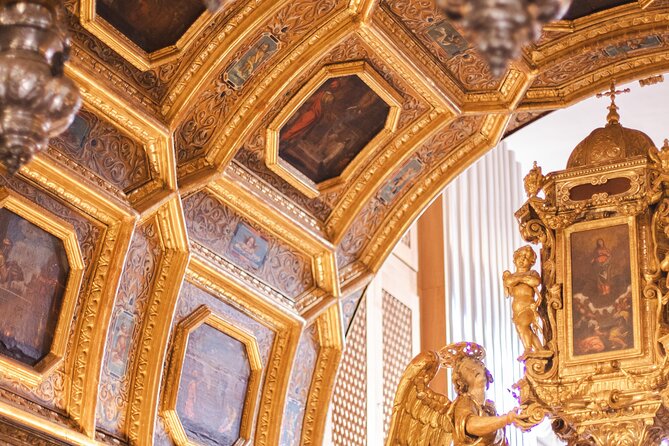
After the palace complex, you head into Diocletian’s Cellars via the South Gate. This stop is powerful because cellars compress scale. The architecture makes you feel how enormous the original complex had to be to support daily life on that level.
The cellars are described as very well preserved and over 1,700 years old, which you’ll feel once you’re in the space. It’s the kind of stop where the guide’s measurements and comparisons help, because your eyes can otherwise underestimate size in underground rooms.
Here’s a practical benefit for you: the cellars break up the daylight sightseeing. After the sunny walk and the palace courtyards, stepping into the stone coolness helps reset your attention.
Peristyle to Jupiter’s Temple: the imperial showpieces
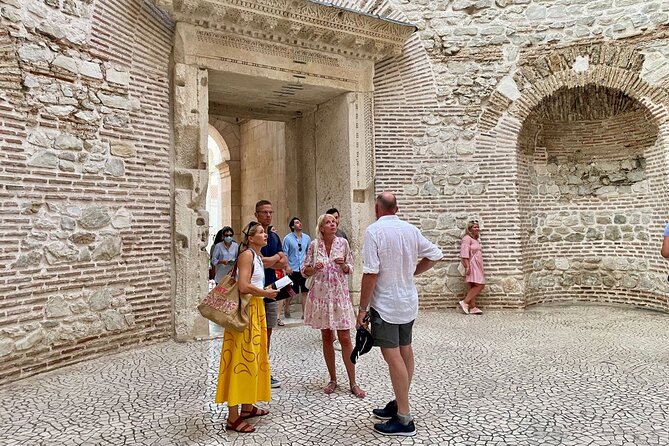
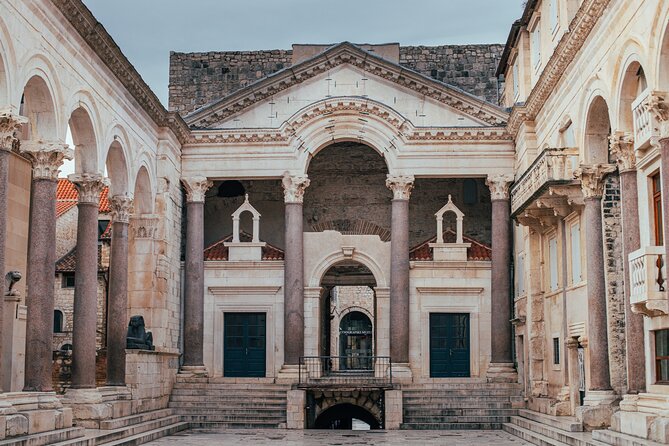
From the palace sequence, you reach the Peristyle, described as a sacral meeting place in Diocletian’s time. The guide frames it as a space where Diocletian appeared before his subjects and connected his rule with Roman divine imagery.
Next comes the Temple of Jupiter, which is now a baptistery. That change from temple to Christian use is one of the most interesting threads in Split, because it shows you continuity through reuse. The ceiling design is also highlighted for how its style influenced later Renaissance architects in Dalmatia, giving you a longer timeline to think about.
Two stops, one theme: this is not just about facts. It’s about how power was staged in stone—then reshaped by later belief systems.




Vestibulum and Saint Domnius Cathedral: from private access to Christian space
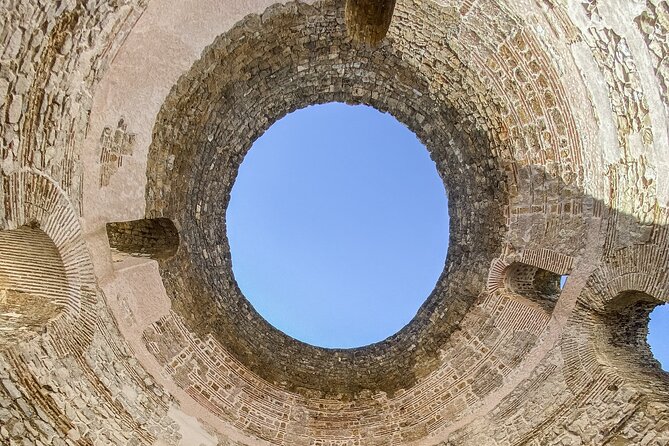
The vestibulum stop focuses on a more intimate side of Diocletian’s palace life: the entrance area to his private chambers. It’s a small zone compared to the grand squares, but it adds a lot because it reminds you the palace wasn’t only for public ceremonies.
Then you reach Cathedral of Saint Domnius. This is more than a church stop in this context because it used to be Diocletian’s mausoleum, and later the emperor’s remains disappeared during the Christianization of the site. That shift makes the Cathedral feel like a living layer of history, not a museum piece.
If you care about how cities evolve, this is a high-value moment. You can see the same location serving different eras, while the building remains physically present.
Golden Gate and the wall-walk into Old Split
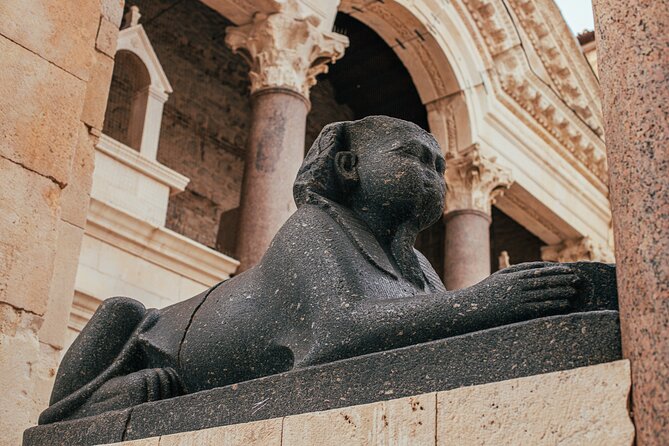
You move from the interior palace zone toward the gates and streets that connect the palace to the rest of the city. The Golden Gate is one of those Roman-era details that’s easier to appreciate when your guide explains the original function: it was the most important gate in Roman times, and from there the road led to Salona, the capital of the Roman province.
After that, the tour continues along palace walls into Old Split, heading toward Narodni Trg and the former fruit market area, Voćni Trg. This part of the route matters because it shows you how daily life grew around and west of the palace over the Middle Ages.
If you’ve ever felt that Old Towns can seem like a pile of pretty streets, this section helps you see the logic. The palace isn’t just decoration; it influenced what came next.
Pjaca, Marko Marulić, and the fish market with sulfur-bath reality
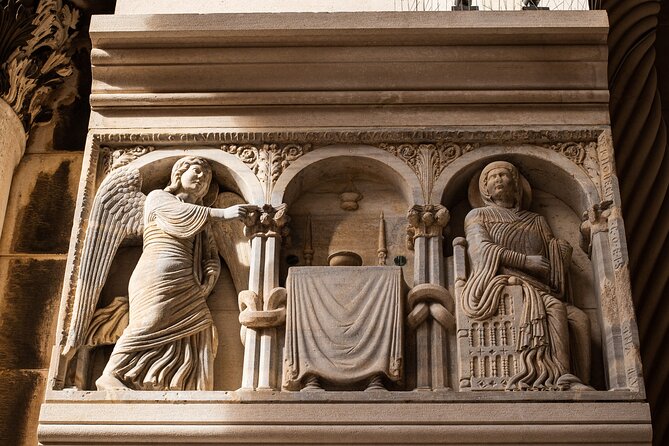
The tour hits People’s Square (Pjaca), described as the city center since the Middle Ages. The building details you’ll notice here include old Venetian palaces and a neo-Gothic city hall, which adds a later layer beyond Roman foundations.
From there you visit Fruit’s Square (Trg Brace Radic), where there’s a monument to Marko Marulić, a major Renaissance author for Split. It’s a good moment to slow down, because the square gives you a break after the tighter palace corridors.
Then comes Split Fish Market and a fun, real-world detail: the fish market is next door to sulfur baths, and the sulfur smell is the reason there are no flies in the market. That kind of practical trivia is exactly why a guided route can outperform DIY. You notice things like this only if someone points you at them.
Marmontova ulica and Prokurative: finishing with streets, not just stones
The tour moves into Marmontova ulica, a busy pedestrian shopping street. You’re told it was built by the French during Napoleon’s rule in the early 19th century, which helps you connect what you see today to the political swing that reshaped the city later on.
Finally, you end at Prokurative, a square reminiscent of St. Mark’s Square in Venice. This ending is smart because it puts you in a place filled with cafes and restaurants, so you can turn the tour into a real meal plan instead of hunting for somewhere to sit after you’re done.
It also gives you an easy transition to explore at your own speed. You’re already oriented, and you’re finishing where locals naturally linger.
Price and value: what $203.95 per person buys you
At $203.95 per person, this is not a budget tour. But the value case is pretty clear when you look at what’s included and how the time is structured.
First, the tour covers entrance fees for key stops inside the palace complex, including Diocletian’s Cellars and major indoor sights like the Cathedral of Saint Domnius and the Temple of Jupiter area. That saves you time and hassle, and it also means your guide can plan the route around openings rather than around ticket windows you have to manage yourself.
Second, the private format matters. If you’re traveling as a couple, a small family, or with friends, the cost per person becomes easier to swallow because you’re not sharing your questions with strangers or getting rushed through the hardest parts of the palace layout.
If you’re the kind of traveler who enjoys a guide making connections between architecture and meaning, this price is easier to justify. If you just want photos and a slow wander, you might prefer a self-guided day.
Timing, access changes, and what to expect if things don’t go perfectly
This experience requires good weather, so a rainy day could trigger a different date or a refund. It’s also designed to be flexible: the route can be adapted to special needs if you inform the provider in advance.
One more realistic point: some sights may be off-limits due to worship or events, and your guide may slightly change the program in that case. That’s not a flaw in planning; it’s how heritage sites work in living cities.
If you’re arriving in Split with only one day to cover the palace, you might consider booking earlier in your trip. Then, if access shifts, you still have time to adjust the rest of your schedule.
Should you book this Split Palace & Old Town private tour?
Book it if you want a guided walkthrough that helps you actually understand Diocletian’s Palace, not just see it. I’d also book it if you like practical guidance for what to do next, since guides here (including Dana and Jana) are known for sharing directions and options after the tour.
Skip it if you’re comfortable reading on your own, or if you prefer to spend all your time outside in the open streets without any indoor ticket stops.
If you’re on the fence, ask yourself one question: do you want to make sense of Roman-to-Christian transformations while you’re standing in the exact rooms? If yes, this is a strong use of your time in Split.
FAQ
How long is the Split Palace & Old Town private walking tour?
It’s about 2 hours 30 minutes.
Is this tour private or shared with other groups?
This is a private tour/activity, so only your group participates.
Are entrance tickets included?
Yes. Entrance fees are included for Diocletian’s Cellars, the Cathedral of Saint Domnius, and the Temple of Jupiter, and the palace interior basement/interior areas are included when they are open and not affected by worship or events.
Where do I meet the guide and where does the tour end?
You start at the Model of the historical core of the city of Split on Obala Hrvatskog narodnog preporoda 23, Split. You end at Republic Square (Prokurative) in Split.
What language is the tour offered in?
The tour is offered in English.
What happens if the weather is bad or a sight can’t be accessed?
The experience requires good weather. If it’s canceled due to poor weather, you’ll be offered a different date or a full refund. If access is affected by events or church services, the guide may adjust the program slightly.