REVIEW · SPLIT
Split Walking Tour: History, Legends & Tales
Book on Viator →Operated by Tour4You · Bookable on Viator
Diocletian’s Palace is a city inside a city. This 90-minute Split walking tour turns the famous stone complex into something you can actually picture, from the Riva promenade start to the Peristyle sphinx. You’ll get the big story first, then the details fall into place fast.
I also love how the guide mixes history with real-world street-level fun, including the Gregory of Nin toe-rubbing legend and practical picks for what to eat and where to linger. If you’re the type who likes your sightseeing with a side of stories (and gelato), this fits.
One thing to consider: it’s a walking route with limited time per stop, and it’s designed as an overview rather than a slow museum day. If you’re craving ticketed museum time, this tour keeps things on the free-access sites.
In This Review
- Quick hits before you go
- Diocletian’s Split: Why This 90-Minute Walk Works
- Tour at a Glance: What You’re Really Paying For
- Riva Harbor: Your Orientation Before the Palace Labyrinth
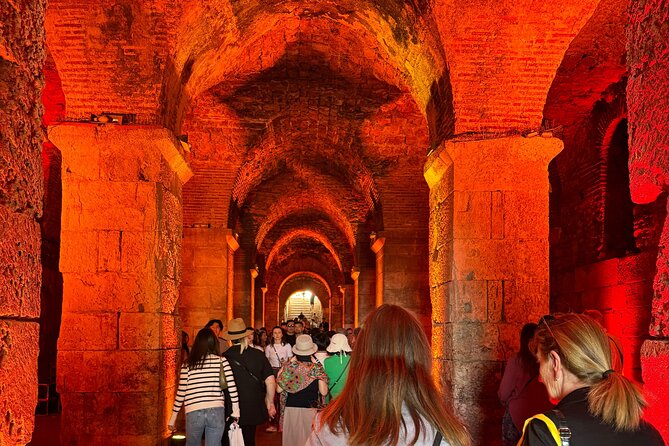
- Diocletian Palace Substructures: Underground Roman Engineering
- The Vestibulum Area: Where the Palace Feels Official
- Peristyle: The Roman Courtyard With an Egyptian Sphinx
- Golden Gate and Gregory of Nin: Legend You Can Actually Do
- People’s Square (Pjaca): The Palace That Outgrew Itself
- Fruit’s Square (Trg Brace Radic): Venetian Tower and the Milesi Palace
- The Guide Factor: What Makes This Tour Feel Effortless
- Price and Value: Why $30.17 Feels Reasonable Here
- Timing Tips: How to Get the Best Light and Least Fuss
- Should You Book This Split Walking Tour?
- FAQ
- How long is the Split Walking Tour History, Legends & Tales?
- How much does the tour cost?
- What language is the tour offered in?
- Where does the tour start and end?
- Is a guide included?
- Are museum tickets or paid admissions included?
- How many people are in a group?
- Do I need a printed ticket?
- What if the weather is bad?
- What is the cancellation policy?
Quick hits before you go
- Small group pace (max 12), so questions don’t get lost in the crowd
- Free-entry stops only—no museum tickets required
- Diocletian’s Palace, up close: substructures, vestibulum, and Peristyle
- Legends + local vibes: Gregory of Nin toe luck, Pjaca square life
- English guide with a conversation style that makes history stick
Diocletian’s Split: Why This 90-Minute Walk Works
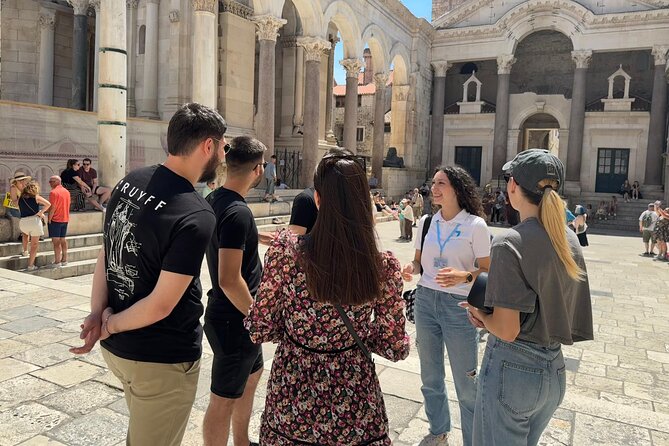
Split can feel like one long photo-stop. The difference here is that you’re not just looking—you’re learning a map. The tour is timed at about 1 hour 30 minutes, which is long enough to hit the standout parts of Diocletian’s Palace and the squares that grew around it, but short enough that you still keep energy for the rest of your day.
The price—$30.17 per person—sounds simple until you see what you get. You’re paying for a licensed guide who can explain what you’re standing in front of, right when your brain needs it. And because there are no paid museum tickets included, your money isn’t wasted on admissions you’re not using.
You can also read our reviews of more tours and experiences in Split.


Tour at a Glance: What You’re Really Paying For
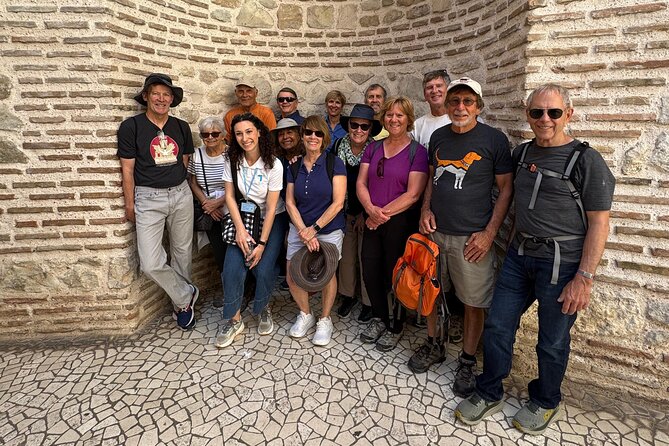
This is offered in English with a licensed tour guide, and it caps at 12 travelers. That matters more than people think. In a small group, you can ask the follow-up question that pops into your head when you notice a carved detail or a surprising placement of a door, window, or column.
You’ll also use a mobile ticket. So you can keep it all on your phone and move on with your walk instead of digging through paper.
You’ll be covering classic Split old town scenes, with stops that stay mostly within the historic core. You should feel good about comfort and participation: the tour notes that most travelers can take part, and it allows service animals. Since it runs outdoors (and includes palace corridors), it’s best when weather cooperates.
Riva Harbor: Your Orientation Before the Palace Labyrinth
You start at Obala Hrvatskog narodnog preporoda 22, on the waterfront promenade area called Riva. This is smart. Before you go underground or into palace spaces, you first see the “big picture” Split layout.
At the start, you’ll hear an intro about Diocletian—who he was, why his palace matters, and how Split formed around it. There’s also a model of Split that helps you visualize the scale. That model is the kind of thing that would normally be easy to skip. Don’t. It makes the later turns feel less random.
Time-wise, this first stop is about 15 minutes. You’ll get the context quickly, then move on.
Tip for your walking comfort: Riva is open and sunny. If you’re sensitive to heat, bring water and a light layer for shade when you can.
Diocletian Palace Substructures: Underground Roman Engineering
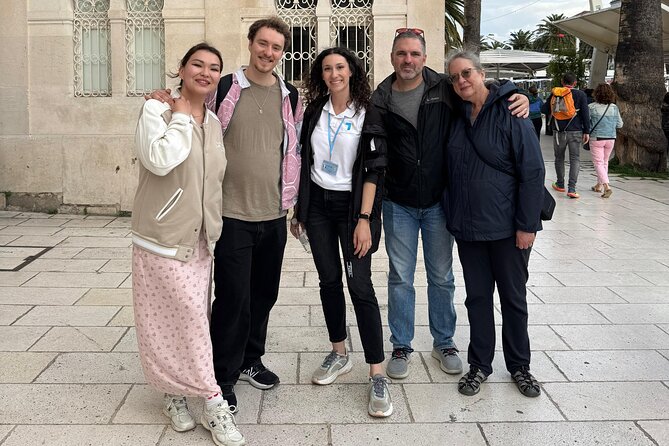
Next comes the substructures—an underground maze of corridors and rooms that supported the palace above. The best part of this segment is not just that it’s old. It’s that it shows you how Roman engineering solved practical problems like weight, stability, and space.
When you walk these underground paths, you’re imagining life in a totally different world than the one above you. The guide’s job here is huge: they help you connect what you see (stonework, layout, surviving structure) with what it likely did.
This stop is about 10 minutes, and it’s described as admission-free. Still, treat it like a real “site moment.” You’re moving through enclosed areas, so wear shoes with good grip and keep your phone handy for photos only when the group pauses.
The Vestibulum Area: Where the Palace Feels Official
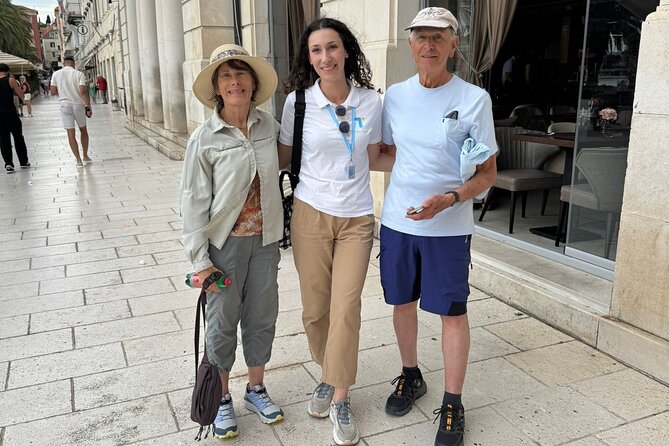
From the substructures, the route leads you toward the vestibulum—described as the grand entrance hall of Diocletian’s Palace. You’ll walk through the southern parts tied to Diocletian’s apartments, plus references to Triklinium (the dining hall) and gardens.
This is where the tour shifts from “how did it work?” to “how did it feel?” You start picking up the palace’s sense of ceremony: the idea that power wasn’t hidden—it was staged.
Another 10 minutes here. That short timing is a feature, not a bug. You’re getting the main framework so the palace stops later make sense without you needing to spend hours decoding architecture.
Watch for: the way entrances, corridors, and room transitions guide the eye. Even if you don’t study architecture, you can feel how the palace was organized.




Peristyle: The Roman Courtyard With an Egyptian Sphinx
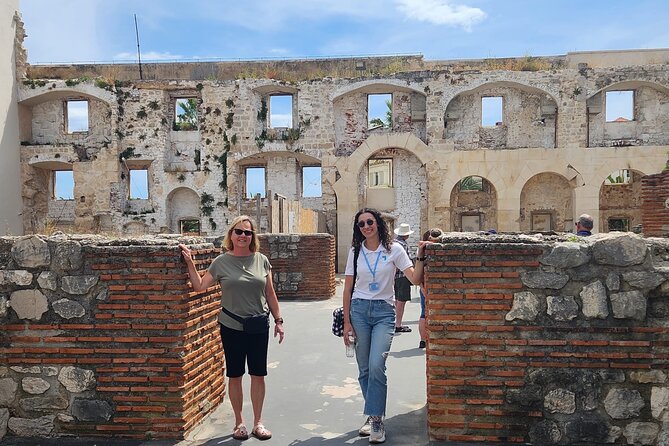
Then you reach the Peristyle, one of the most striking open-air spaces in the complex. The Peristyle is often where visitors finally exhale, because the scale and symmetry become obvious.
Here’s the standout detail: there’s a 3500-year-old sphinx described as preserved and closely watched over, with roots in Split’s longer history that reaches beyond Roman times. That’s the kind of weird-cool connection that makes your brain pay attention. One moment you’re focused on Rome; the next you’re looking at a relic that hints at wider Mediterranean movement.
This is a longer stop—about 20 minutes—which gives you time to take in the courtyard and listen for how the guide connects it to the rest of the palace layout.
If you want photos, this is your best “stand still” area. If it’s hot, aim for the shade pockets near stone edges where you can catch a breeze.
Golden Gate and Gregory of Nin: Legend You Can Actually Do

After the Peristyle, you’ll head to the Golden Gate—an entranceway that once welcomed visitors into the palace with grandeur. Entrance gates sound dramatic already, but the point of this stop is to show you how the palace managed arrival and impression.
Then comes one of Split’s most famous characters in public space: the statue of Gregory of Nin. There’s a legend tied to it: rubbing the statue’s big toe brings good luck and grants wishes. The guide points this out, so you don’t miss the moment.
This stop is about 15 minutes. It’s not a heavy information block; it’s more like a “yes, this is real life here” break. You get a dose of playful tradition and a clear reason why people keep touching the same spot on the same statue for centuries.
Quick practical note: if you do the toe-rub, wipe your hands after. You’re in a heritage site, not a germ-free lab.
People’s Square (Pjaca): The Palace That Outgrew Itself
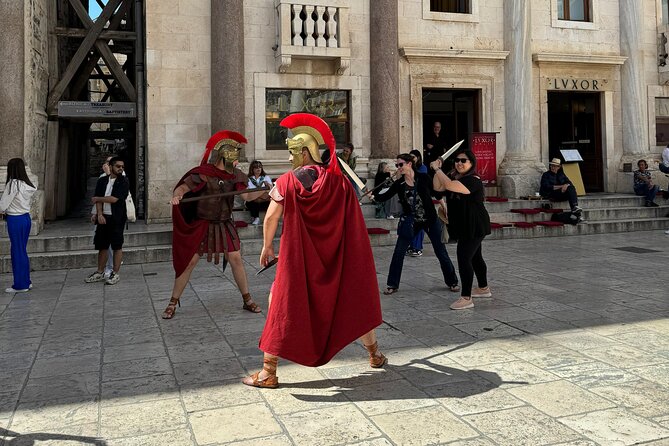
Next is Narodni Trg, known officially as Pjaca—People’s Square. This is right outside the walls of Diocletian’s Palace, and that location tells a story.
As the palace became too small for the growing population, the first developed area outside the walls appeared in the 14th century. Pjaca became a gathering space for centuries. You’ll also see the former 15th-century city hall connection described in the tour.
This stop lasts about 10 minutes, and it’s a great reset after the density of palace stone. It’s also one of the easiest places to connect your walking tour to your next steps, because you can grab a coffee and let your brain absorb what you just learned.
If you’re planning your afternoon, this square is a natural pause point.
Fruit’s Square (Trg Brace Radic): Venetian Tower and the Milesi Palace
The final main stop is Fruit’s Square, Trg Brace Radic. It’s a smaller square packed with city life—bars, restaurants, and shops—and it also hosts fairs at times.
Two big landmarks anchor this stop:
- An octagonal Venetian tower, described as a leftover of a 15th-century fortress built for defense when Split was smaller
- The Palace of the old family Milesi from the 17th century, with a spectacular Baroque facade described as one of the best examples of that style in all Dalmatia
This is about 10 minutes, but it’s the kind of stop that makes your tour feel complete. You’re no longer trapped in the Roman origin story. You’re seeing how Split kept growing, defending itself, and showing off wealth through architecture.
The square also gives you space to look up. Don’t only watch the ground. These façades reward a quick scan of details.
The Guide Factor: What Makes This Tour Feel Effortless
The tour’s standout strength is how the guide teaches. In particular, Lucija is repeatedly described as informal, personable, and deeply passionate about both ancient and modern Split. That combination is rare: some guides can recite facts, but they don’t connect them to street life. Here, you get the history and the practical mindset.
Lucija-style strengths that show up in the tour experience:
- Explains the layers of Split without rushing
- Answers questions patiently
- Adds humor and small details that make you remember what you saw
- Gives recommendations that go beyond generic sightseeing, including food ideas like pasticada and gelato spots
If you’re new to the city, this kind of guide helps you get your bearings quickly. Instead of wandering later with a half-understood palace, you’ll know what to look for.
Also, the group size helps the guide keep an easy pace. If you’re visiting with kids, one of the guide notes is that they’ve handled small travelers well—good news if your crew needs patience and attention in smaller doses.
Price and Value: Why $30.17 Feels Reasonable Here
Let’s be practical. You’re paying $30.17 for:
- 90 minutes of guided storytelling across multiple major palace-related locations
- a small-group experience (max 12)
- English interpretation
- free-entry sites only, with no paid museum time included
- a licensed guide and a route that ends back at the start
In other places, “walking tours” can be mostly vibes with a few surface facts. Here, the focus is on identifiable, meaningful components: substructures, vestibulum, Peristyle, Golden Gate, and the famous Gregory of Nin statue toe legend—plus the squares that show the city expanding beyond the palace.
So the value isn’t only the sites. It’s that your guide helps you understand what you’re seeing while you’re still there. That’s where the money goes.
Timing Tips: How to Get the Best Light and Least Fuss
The tour is roughly 1 hour 30 minutes with stop durations that add up cleanly. It includes enclosed areas (substructures) and open squares (Riva, Pjaca, Trg Brace Radic). That mix is good, but it means timing and weather matter.
A morning tour is often easier for comfort because it tends to be cooler and less crowded. That’s not a guarantee, but it’s a solid rule of thumb for Split. If you can choose, pick a time when you’re not already exhausted from a long transfer day.
Bring:
- Comfortable walking shoes
- Water
- A phone with your mobile ticket ready
If rain shows up, don’t be stubborn. This tour notes it’s weather-dependent, so you may need to choose a different date if conditions aren’t good.
Should You Book This Split Walking Tour?
Yes, if you want a fast, focused introduction to Split that actually helps you read the city. This is especially worth booking if:
- You have limited time and want the main Diocletian’s Palace story in one go
- You like history with legends and real-life tips (food and wandering plans)
- You prefer a small group pace over a big bus-tour feeling
- You don’t want to buy or deal with museum admissions during your walking day
Skip it if:
- You’re looking for a museum-heavy day with ticketed interiors and long stays
- You dislike walking through stone corridors and shaded-but-cool underground spaces
If you’re trying to choose just one early experience to set up the rest of your trip, this is a smart starter.
FAQ
How long is the Split Walking Tour History, Legends & Tales?
It runs for about 1 hour 30 minutes.
How much does the tour cost?
The price is $30.17 per person.
What language is the tour offered in?
The tour is offered in English.
Where does the tour start and end?
It starts at Obala Hrvatskog narodnog preporoda 22, 21000, Split, Croatia, and ends back at the same meeting point.
Is a guide included?
Yes. A licensed tour guide is included.
Are museum tickets or paid admissions included?
No. No admission tickets are included, and the tour does not enter any museums or paid sites.
How many people are in a group?
The maximum group size is 12 travelers.
Do I need a printed ticket?
No. You’ll use a mobile ticket.
What if the weather is bad?
This experience requires good weather. If it’s canceled due to poor weather, you’ll be offered a different date or a full refund.
What is the cancellation policy?
You can cancel up to 24 hours in advance for a full refund. Cancellation within 24 hours isn’t refunded, and changes within 24 hours aren’t accepted.