Split tells its story on foot. In Split, you’ll walk with a licensed local guide who connects the city’s standout landmark, Diocletian, to centuries of changing rulers and everyday street life. Expect smart, funny storytelling plus practical pointers for where to eat, where to linger, and how to spot the best views.
I especially like two things about this tour: the way the guide brings history to life with humor (not a lecture), and the hands-on help for enjoying Split like a local. You’ll also hear advice that goes beyond monuments, including photo spots and even small bursts of Croatian—enough to break the ice when you’re out wandering on your own.
One thing to consider: this is an evening walking tour, so you’ll want good weather and comfortable shoes. If it’s cold or wet, you may need to adjust your expectations since the experience depends on weather conditions.
In This Review
- Key highlights you’ll care about
- A 90-minute Split walk at 8:30 pm that actually feels like Split
- The history thread: Diocletian first, then the rulers that followed
- What the guide does differently (and why it matters)
- Photo-spot advice you’ll actually use later
- The food and coffee leads (and how to use them wisely)
- The vibe: small group, lots of questions, light language practice
- Where this tour fits on your Split day (or night)
- How good value looks at about $36.09
- Evening logistics that can make or break the experience
- If you like this style, you may want the guide’s other routes
- Should you book? My practical take
- FAQ
- How long is the Split walking tour?
- What is the price per person?
- What language is the tour offered in?
- Where does the tour start, and what time does it begin?
- How many people are in the group?
- Is there a licensed local guide?
- What historical periods will the guide cover?
- Is the tour only limited to Split?
- What if the weather is poor?
- Can I get a refund if I cancel?
Key highlights you’ll care about
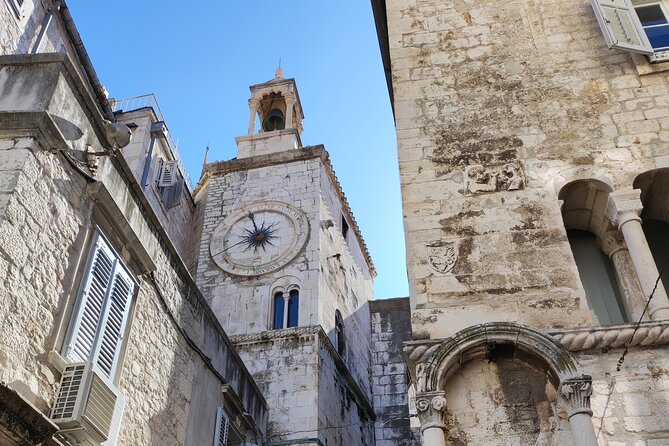
- Licensed local guide who explains history in a fun, human way
- Diocletian to later rulers: Roman, Venetian, French, Austro-Hungarian, Ottoman, and communist eras
- Photo-spot planning so you know where to stand before you arrive
- Food and coffee leads during the walk, plus suggestions for later stops
- Small group size with a cap of 15 people for easier questions and interaction
- Croatian word tips and light conversation that make the city feel more yours
A 90-minute Split walk at 8:30 pm that actually feels like Split
This tour is built for people who want to see the center of Split without getting bogged down in facts. At about 1 hour 15 minutes, you get a focused route that’s long enough to understand the “why” behind the place, but short enough to keep your evening plans flexible.
Starting at 8:30 pm also changes the feel of the city. The light tends to flatter stone walls and windows, and the evening pace makes it easier to stay relaxed while you learn. If you like your sightseeing to include real atmosphere—rather than rushing between crowded landmarks—this timing can work in your favor.
And yes, it’s walking. If you’re not into pavement time, bring decent shoes and plan for a steady pace, since the tour is designed to move from one story point to the next.
You can also read our reviews of more tours and experiences in Split.


The history thread: Diocletian first, then the rulers that followed
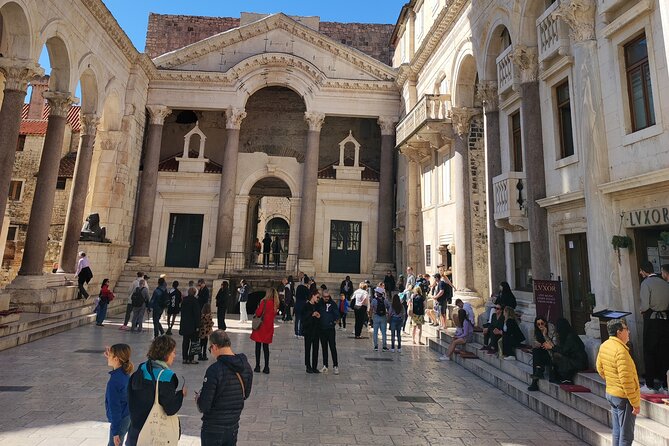
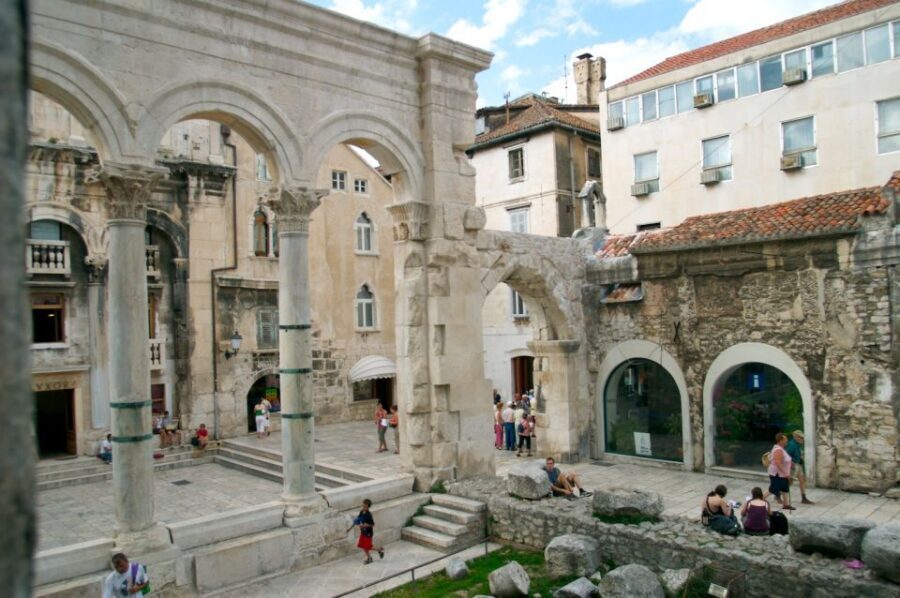
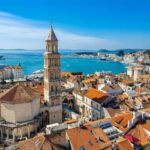
Split’s headline story is Roman. You’ll hear about the famous emperor Diocletian, and how his influence shapes the city’s bones even today. Then your guide connects that Roman foundation to later periods that left their own fingerprints on streets, architecture, and local identity.
What makes this approach useful is that it doesn’t treat history like a timeline you memorize. It frames each era as something you can still feel when you look at buildings, public spaces, and what people do day to day.
The eras you’ll hear about include:
- Venetian rule
- French rule
- Austro-Hungarian influence
- Ottoman presence
- communist years
That’s a lot of chapters for one evening, but the pacing is meant to keep it understandable. When your guide ties a past period to something you can see right now, it sticks faster.
What the guide does differently (and why it matters)
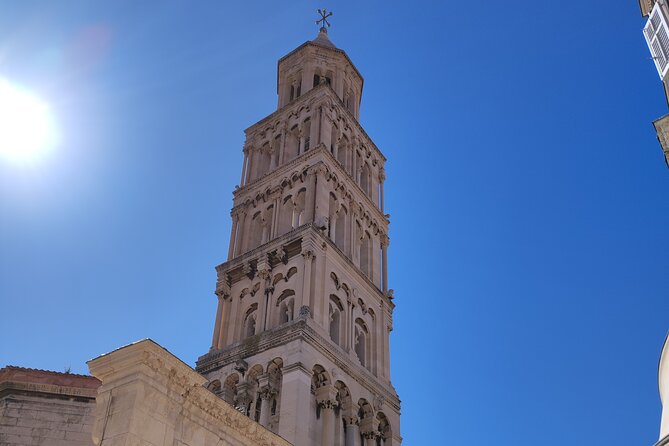
This is where the tour seems to earn its high marks. The common theme is delivery: the guides use humor, answer questions patiently, and explain things in a way that doesn’t feel like a quiz you didn’t study for.
In the feedback, the guide Mate shows up again and again. People describe him as funny, quick to respond, and someone who enjoys making the walk enjoyable. One person even said the guide didn’t cancel even when only a single booking came through, which tells you the tour operator is likely treating the experience as something they run seriously, not something they treat as optional.
From a practical standpoint, a guide who’s willing to take questions changes what you get out of the walk. You can ask what a detail means, where to go next, or how to interpret what you’re seeing. That turns Split from a set of photos into a place you understand.
Photo-spot advice you’ll actually use later
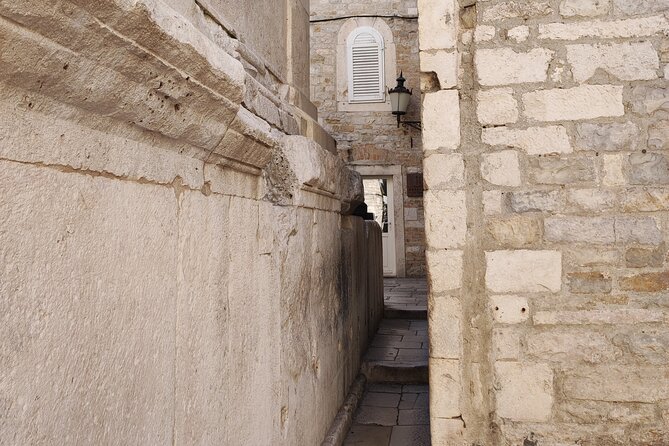
A lot of city tours point at landmarks. This one also points at the small stuff that makes photos look better—angles, viewpoint timing, and where the city frames nicely.
If you care about photos, it’s worth knowing that the walk can be guided with “stand here” clarity. In the comments, people highlight that the guide knows the best photo spots, and that he pairs the history talk with location tips you can use right away.
Even if you’re not a serious photographer, the byproduct is the same: you stop at the right places and you don’t waste time backtracking. In a compact historic core, that saves energy for actually enjoying dinner afterward.
The food and coffee leads (and how to use them wisely)
One of the most useful features here is that the guide shares advice for eating. That includes local restaurant pointers and also ice cream recommendations.
Several notes mention the guide ending (or at least steering) people toward ice cream, calling it the best in town. Another person credits a restaurant recommendation as a highlight of the trip. That’s the kind of tip that’s hard to get from a guidebook because it depends on taste, timing, and what’s actually worth your time that night.
Here’s how to use this well: don’t treat it like a command. Treat it like a short list. If you feel like eating soon after the tour, take the first suggestion that fits your mood. If not, save the other options for later when you’re hungry and walking without a plan.
The tour also notes that you can visit other nearby locations that may have an entry fee, or grab a coffee if you want. Translation: your guide may work in a small detour based on what fits your energy level.




The vibe: small group, lots of questions, light language practice
This walking tour caps at 15 travelers, which matters more than it sounds. Smaller groups move with less friction, and you’re more likely to get real answers instead of a quick one-liner and a scramble to catch up.
You’ll also get some Croatian along the way. People mention learning a couple of words, taught in a friendly way that doesn’t feel forced. Even if you only remember a handful, that’s enough to soften interactions when you’re out ordering food or asking for directions.
There’s also an emphasis on keeping things fun. One person described doing a quiz afterward (comparing knowledge from different guides), which hints at a style that sticks in your brain because it’s entertaining.
Where this tour fits on your Split day (or night)
This one works best when you want an orientation. If it’s your first time in Split, the guide’s structure helps you see the city’s major layers faster—Roman influence, later European rule, and the more recent shifts—without needing to research for hours first.
If you’ve already been to Diocletian’s area on your own, this tour can still pay off. You’ll get context that makes details feel less random. Instead of wondering why a street looks a certain way, you’ll have a better answer.
If you’re short on time, the 1 hour 15 minutes duration helps. You can fit it before dinner or afterward, depending on your appetite for walking. If you want a slower evening, plan a longer meal afterward and don’t schedule another intense activity right after.
How good value looks at about $36.09
At $36.09 per person for roughly 75 minutes, you’re paying for three things: live guidance, curated storytelling, and practical recommendations. You’re not just buying “a walk”—you’re buying someone’s ability to turn visible places into understandable meaning.
It can also be a solid value because the experience includes admission as free (as stated in the tour info). That means you’re not stacking extra ticket costs onto what’s already a guided time investment.
Also note the booking pattern: it’s commonly reserved well in advance (on average 137 days). That’s often a sign of steady demand for this style of tour—short, fun, and focused.
One more value angle: the tour can include extra small options like paid entry stops or coffee. If you already know you’ll want one or two “add-ons,” it may feel even more worthwhile because the guide can steer you efficiently.
Evening logistics that can make or break the experience
The meeting point is Obala Hrvatskog narodnog preporoda 15, 21000 Split, Croatia. The start time is 8:30 pm, and the tour ends back at the meeting point.
It’s also listed as near public transportation, so you can treat it as easy to reach without a big plan. Still, because it’s evening, I’d give yourself a little extra margin to find the correct spot and settle in before you start.
Good weather matters here. The experience requires it, and if it’s canceled due to poor conditions, you’ll get offered another date or a full refund. In real life, that means you should keep at least one flexible evening slot if you can.
If you like this style, you may want the guide’s other routes
One pattern that stands out in the feedback is the guide Mate branching into other nearby sightseeing. People mention him taking them on tours that extended beyond Split—toward places like Trogir—and even arranging a follow-up to Salona on another day.
I can’t promise those extensions are part of this specific 1 hour 15 minute walk, but it’s a useful hint: if you click with the guide’s energy, you might ask what other options exist for your dates. That can turn one good evening into a whole arc of history around the region.
Should you book? My practical take
Book this tour if you want:
- a short guided walk that makes Split easier to understand
- entertaining history tied to what you can see
- clear photo and food pointers
- a group size that keeps questions realistic
Skip it or think twice if:
- you hate walking at night
- you’re hoping for a long, museum-style deep dive
- you need a completely flexible plan regardless of weather (since it depends on conditions)
If your goal is to leave Split feeling oriented and excited—plus with a few Croatian phrases and some “where to go next” answers—this is a strong fit.
FAQ
How long is the Split walking tour?
It’s about 1 hour 15 minutes.
What is the price per person?
The price is $36.09 per person.
What language is the tour offered in?
The tour is offered in English.
Where does the tour start, and what time does it begin?
The meeting point is Obala Hrvatskog narodnog preporoda 15, 21000 Split, Croatia, and the start time is 8:30 pm.
How many people are in the group?
The maximum group size is 15 people.
Is there a licensed local guide?
Yes. The tour is described as being led by a licensed local guide.
What historical periods will the guide cover?
You’ll hear stories connected to Diocletian and also to Venetian, French, Austro-Hungarian, Ottoman, and communist reigns of the city.
Is the tour only limited to Split?
The main focus is Split. The tour info also says it’s possible to visit other locations that include a fee or to grab a cup of coffee if you’re interested.
What if the weather is poor?
The experience requires good weather. If it’s canceled due to poor weather, you’ll be offered a different date or a full refund.
Can I get a refund if I cancel?
Yes. You can cancel up to 24 hours in advance for a full refund. If you cancel less than 24 hours before the start time, the amount paid won’t be refunded.