REVIEW · ZADAR
The Ultimate Zadar Walking Tour
Book on Viator →Operated by Travel with Jure · Bookable on Viator
Some cities feel like a museum. Zadar feels like a living puzzle—Roman ruins, Venetian walls, and sound plus light by the sea. This walking route links the big symbols of Zadar into one easy evening circuit, with stops that are quick but meaningful.
I especially love the mix of Sea Organ sounds and the machine-made glow of Greeting to the Sun, so the tour isn’t just about stone. I also like that the pace is short enough to keep your brain switched on, without turning the whole evening into a history lecture.
One thing to consider: it’s mostly an evening walk and the tour depends on good weather, so plan a backup plan if clouds or rain move in.
In This Review
- Key highlights you should plan around
- Zadar’s best evening loop: Roman start to sea-sound finish
- Meeting at Five Wells Square (Trg pet bunara) and setting your bearings
- Stop 1: The Forum and the early churches you can’t miss
- Stop 2: Sea Organ (Morske Orgulje) and the sound of the coastline
- Stop 3: Greeting to the Sun and why evenings change the whole mood
- Stop 4: Cathedral of St. Anastasia (13th century, Romanesque style)
- Stop 5: Trznica Zadar market—food culture you can actually use
- Stop 6: Narodni Trg and the main-square layers
- Stop 7: St. Simon’s Church and the local connection to a baby story
- Stop 8: Five Wells Square as a Venetian statement (and why it mattered)
- Stop 9: Perivoj kraljice Jelene Madijevke and the calm finish near the sea
- Price and value: what $23.66 buys you in Zadar
- Pacing, group size, and what to wear for the 6 pm walk
- Who this tour suits best (and who might want a different plan)
- Should you book the Ultimate Zadar Walking Tour?
- FAQ
- How long is the Zadar walking tour?
- What’s the meeting point and start time?
- Where does the tour end?
- Is the tour offered in English?
- Is admission included for the main stops?
- What’s included in the price?
- Is food and drink included?
Key highlights you should plan around
- The Forum as a starting anchor: Roman foundations plus early churches right in one spot
- Sea Organ timing: built for the rhythm of waves and evening atmosphere
- Greeting to the Sun light show: a daylight-charged installation that looks best after dark
- St. Anastasia Cathedral: major Dalmatian architecture in a tight schedule
- Trznica Zadar market stop: a practical hit of local food culture plus optional tastings
- UNESCO-listed Venetian entry zone: you get real context for why Zadar survived sieges
Zadar’s best evening loop: Roman start to sea-sound finish
Start at Five Wells Square and aim for a calm, early-evening stroll. The tour runs about 1 hour 40 minutes and is designed as a straight-line walk through the historic center, finishing near the sea-side experiences—exactly what you want in Zadar, where the evening light makes everything easier to notice.
This is a mobile-ticket style tour in English, capped at 25 people. That group size matters. It keeps the walk lively but still allows questions, which is one of the reasons this kind of route works so well here.
The guide role is big: you’re not just shown landmarks. You’re taught how Zadar layers eras on top of each other—Roman, medieval, Venetian—and how each period left a visible mark you can actually spot while walking.
You can also read our reviews of more tours and experiences in Zadar.

Meeting at Five Wells Square (Trg pet bunara) and setting your bearings
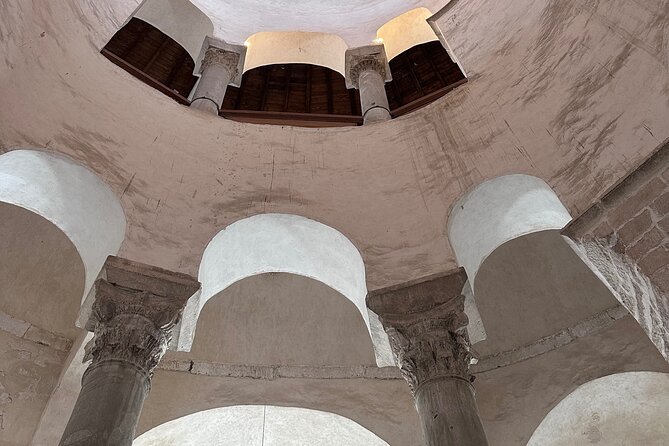
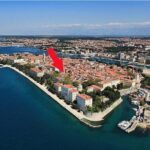
You begin at Trg pet bunara 1, a spot that’s instantly recognizable once you see it. The name alone hints at what’s coming: this is tied to one of the city’s signature Venetian entrances, a place you’ll also pass again as part of the “defense-and-identity” story.
If you arrive early, use the extra minutes to look outward along the streets you’re about to walk. Zadar’s center is compact, but the route still has little turns that make more sense once you’ve mapped the main axis in your head.
Two guides’ names come up in the tour’s experience: Jurica and Jadica. Both are described as friendly and engaged, and that matters because the tour is partly about connecting dots across centuries.
Stop 1: The Forum and the early churches you can’t miss
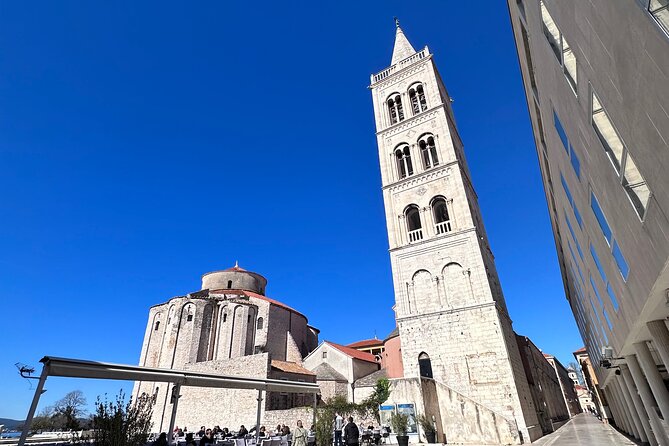
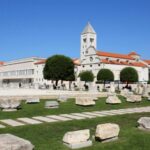
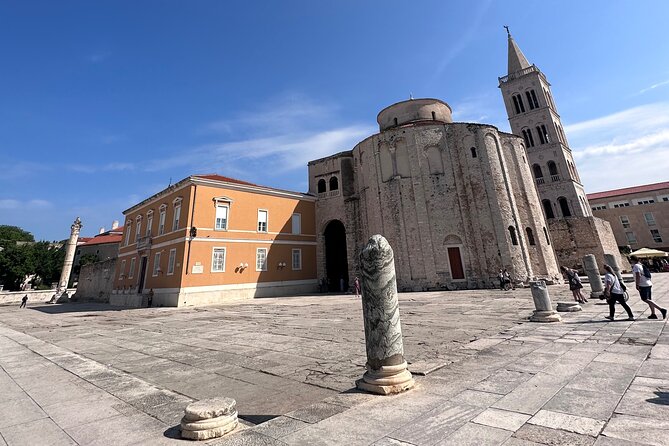
The walk opens at The Forum, the Roman area where the city as you know it today was founded. This is more than ruins on stones. It’s the foundation for why so much of Zadar’s later history sits on the same ground.
Right here, you’ll see St. Donat church (9th century) and St. Maria church (11th century). They’re close enough to compare without rushing, which is rare on walking tours. One practical benefit: you get to anchor your mental timeline before the route starts hopping between religious sites, squares, and sea installations.
Ticket note: the tour lists an admission-ticket-free stop for this area, so your money mainly goes toward guide time and the clarity you’ll get on what you’re looking at.
Stop 2: Sea Organ (Morske Orgulje) and the sound of the coastline
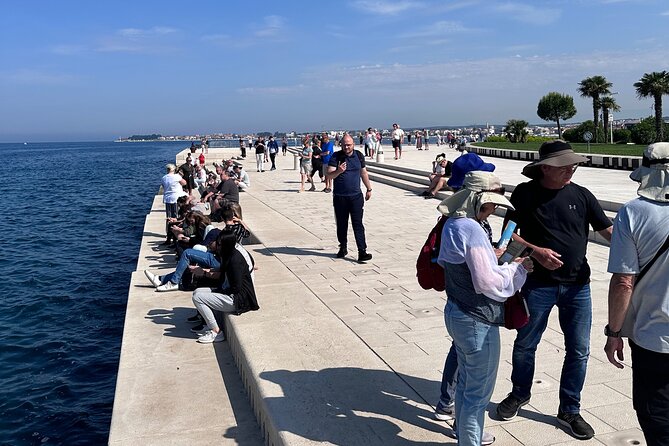
Then you move from the Roman backbone to something very modern in spirit: Sea Organ. This installation is designed to turn seawater movement into sound, so the experience is partly visual and partly atmospheric.
Here’s the trick to enjoy it: don’t just glance while walking past. Pause long enough to let your ears catch the rhythm. Even if you can’t identify every note, you’ll still get the idea—architecture engineered around the sea’s natural motion.
Again, the tour lists this as ticket-free, so it’s a high-value stop: you’re paying for a guide to place it in context, not for an entrance fee.
Stop 3: Greeting to the Sun and why evenings change the whole mood
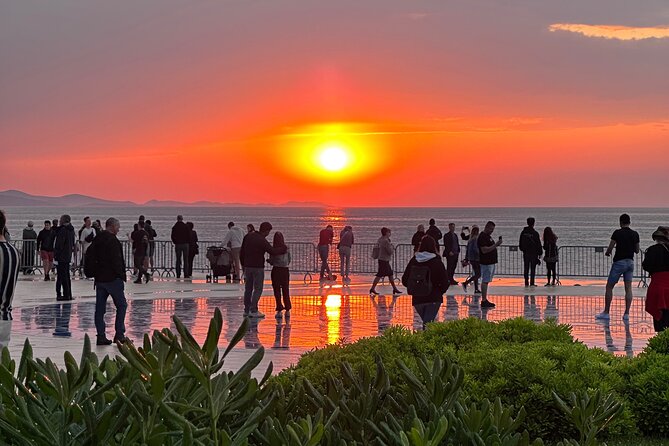
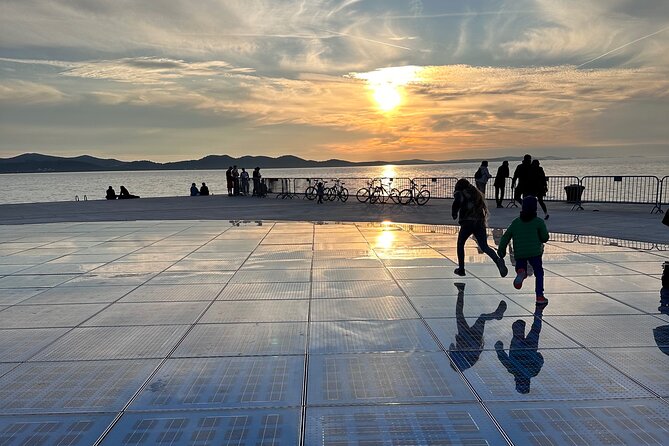
Next comes Greeting to the Sun. It collects solar energy across the day and then presents a light display at night, plus a collection of hidden symbolism you’ll only understand once someone explains what you’re seeing.
This is why the tour start time matters. A 6:00 pm departure puts you in the right zone to experience the transition from daylight context to evening atmosphere. You’ll likely feel it most once the light show begins—because the idea is time-based, not just view-based.
If you like design that blends art and function, this stop is a standout. It’s also a good mental reset after churches and forums, since the focus shifts from architecture details to how the installation thinks.






Stop 4: Cathedral of St. Anastasia (13th century, Romanesque style)
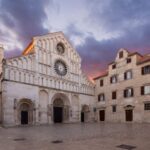
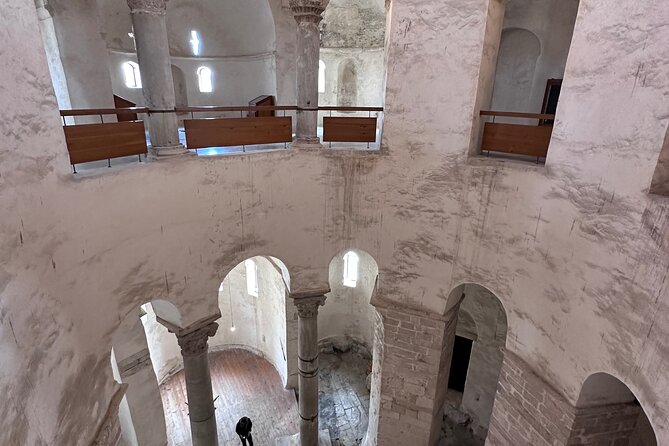
You’ll visit the Cathedral of St. Anastasia, described as the biggest church in Dalmatia and dating from the 13th century. The tour notes it’s built in Romanic style, so look for the architectural feel that comes with that era—solid forms, a sense of heaviness, and a clear medieval identity.
This stop is usually short, so the guide’s job is crucial: you want the main points fast enough that the cathedral stays special, not overwhelming. Expect time for a real look at the structure rather than a quick “in-and-out.”
Ticket note again: the tour lists ticket-free entry for this stop, which keeps your evening budget under control.
Stop 5: Trznica Zadar market—food culture you can actually use
After the cathedral, you switch to a very practical Zadar experience: Trznica Zadar, the fresh food market. This is where locals handle everyday life—fruits, vegetables, and the kind of food choices that tell you what the region is into right now.
The tour says you go near the market and you can buy fresh produce here. That’s useful advice even if you don’t plan to cook. You can grab fruit for later, or use the market as an orientation tool for what to look for in restaurants after the tour.
One more detail: you also pass by a cheese and wine tasting spot. Tasting is not included, but you’re in the right place to make a decision if your schedule allows. Food and drinks are excluded, so bring your appetite and pay only if you want it.
Stop 6: Narodni Trg and the main-square layers
The next stop is Narodni Trg, the city’s main square since the 16th century. Squares in historic centers are rarely simple. Here, it’s a place to see Renaissance monuments and to understand how Zadar’s civic life gathered around big public space.
The tour also flags a very specific church from the 11th century connected to this area. That’s the kind of clue that keeps you from treating these buildings like random backdrops. With a guide, you start noticing how dates cluster around the way the city organized itself.
This stop is ticket-free, so the value is in the story and the way you’re taught to read the square.
Stop 7: St. Simon’s Church and the local connection to a baby story
Now the tour turns deeply religious with St. Simon’s Church. The tour describes it as the holiest place in Zadar and highlights a striking story: the church contains the body of St. Simeon, who held Jesus when Jesus was a baby and announced that this child would bring light to the world.
That kind of detail changes how you look at the building. Without context, a church is just a church. With it, you understand why people treat this stop like a must-do, even if you’re not usually a “church visitor.”
The stop time is short, so keep your expectations realistic. You’re here to understand the significance fast, not to plan a long service visit.
Stop 8: Five Wells Square as a Venetian statement (and why it mattered)
You’ll come back to the Five Wells Square area as part of the city’s larger defensive story. The tour frames it as the 16th-century entrance to Zadar and calls out its importance as a Venetian monument in all Dalmatia.
It’s also connected to a UNESCO heritage site listing that includes fortification walls. The tour explanation includes why the Ottomans never managed to conquer Zadar despite attempts. That’s not just trivia. It turns the entrance structure into a symbol of survival, planning, and regional power.
If you like a city that makes history visible without being loud about it, this is the moment where the walk’s puzzle pieces start to click.
Ticket note: this stop is also listed as ticket-free, so again, you’re paying for interpretation, not access.
Stop 9: Perivoj kraljice Jelene Madijevke and the calm finish near the sea
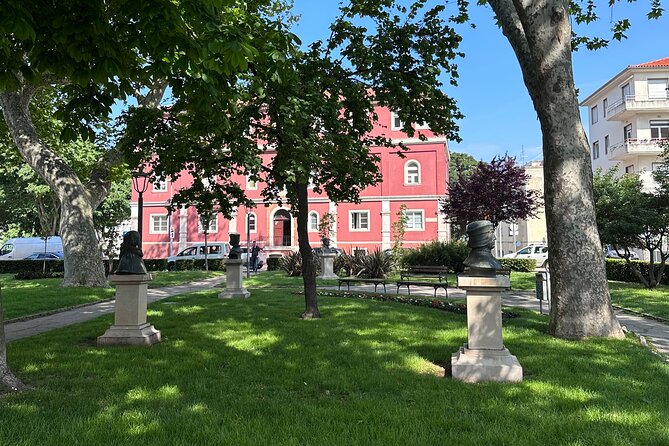
The tour wraps up at Perivoj kraljice Jelene Madijevke, a park made in the early 19th century as a central social hangout for people from Zadar. You can treat this as your transition zone—moving from “wow, sea sound” to “okay, now take a breath.”
This is where you’ll likely notice how the route ends with a softer landing. Churches and stone forums feel heavier in your head. A park finish helps your thoughts sort themselves out while you still have energy to continue exploring on your own.
The tour also references Sea Organ as the end area, and the park finish is mentioned as the wrap-up. Either way, you’ll be done on foot in a place that’s made for lingering rather than rushing.
Price and value: what $23.66 buys you in Zadar
At about $23.66 per person, this tour is priced like a practical guided walk, not a premium multi-hour production. The value comes from three things you can feel right away:
1) You get multiple major sites in roughly 100 minutes, which is hard to replicate on your own if you want good context.
2) Many stops are ticket-free according to the tour details, so you’re not stacking entrance fees.
3) The guide interaction is built into the format, so you can ask questions while you’re still standing in front of the exact building being discussed.
If you’re short on time in Zadar, this tour gives you a dense overview without turning your evening into a grind. If you have more time, it also works as a starter map—you’ll know what to return to later with a clearer sense of why you cared in the first place.
Pacing, group size, and what to wear for the 6 pm walk
You’re walking at evening pace through the old center. The total duration is about 1 hour 40 minutes, so you should expect a steady rhythm: stop, look, listen, move on.
With a maximum of 25 travelers and a professional local guide, the pace should feel organized, not chaotic. Still, it’s an outdoor walk. Wear shoes you’re comfortable standing in for short bursts at each stop.
Also, the tour requires good weather. If skies look iffy, keep a weather eye open on the day, because the alternative is a different date or a full refund if conditions force a cancelation.
Who this tour suits best (and who might want a different plan)
This is a great fit if you want Zadar’s highlights—Roman foundations, big medieval churches, Venetian architecture, and the famous sea installations—without splitting your time across multiple half-day activities.
It’s also a strong choice for people who like stories tied to place. The stops are short, but the explanations are the point. If you’re the type who likes to ask why something was built or how it survived, the interactive format works well.
You might choose a different plan if you want a longer museum-style experience or if you don’t like evening walks in the open air. The tour is built for efficiency.
Should you book the Ultimate Zadar Walking Tour?
If you have limited time and you want Zadar’s signature experiences lined up in one walk, I’d book it. The structure makes sense: it starts with Roman roots, moves through the city’s religious and civic layers, and ends with Sea Organ and the Greeting to the Sun light spectacle that fits the evening schedule.
The best reason to reserve is simple: you’re paying for a guide to connect the dots between eras you’d otherwise see as separate landmarks. If you’re curious, the route feels satisfying instead of rushed.
If weather is a concern, check conditions close to the start. Otherwise, this is an easy way to get your bearings fast in Zadar—without losing your whole evening to navigation and guesswork.
FAQ
How long is the Zadar walking tour?
The tour lasts about 1 hour 40 minutes.
What’s the meeting point and start time?
The tour starts at Trg pet bunara 1, 23000 Zadar, Croatia, at 6:00 pm.
Where does the tour end?
The tour ends near the Sea Organ area, with the wrap-up described as taking place in the park of Queen Jelena Madijevka.
Is the tour offered in English?
Yes, the tour is offered in English.
Is admission included for the main stops?
The tour details list ticket-free admission for the stops along the route, so you can focus on the guided experience rather than paying multiple entrances.
What’s included in the price?
Included items are a 100-minute walking tour with a professional local guide, an interactive format with time for questions, going past the local marketplace, and going by a cheese and wine tasting area (tastings have an extra cost).
Is food and drink included?
Food and drinks are not included, and any cheese and wine tastings are excluded from the tour price.