REVIEW · SPLIT
Top-Rated Split Game of Thrones and History City Walk – Dracarys!
Book on Viator →Bookable on Viator
Split gets weirder when dragons meet Romans. This Dracarys-style walk ties Game of Thrones filming moments to real Roman corners, so you’re not just watching scenes in your head. You also get live culture flashes along the route, turning a standard old-town stroll into a story you can walk through.
What I love most is how the guide connects the show to the exact spot you’re standing in. I especially liked the way the route builds from the palace entrance gates to deeper substructures, then ends with a sea-front wrap-up that helps you plan the rest of your day. A second big plus: the experience is built for the small-group feel, with guides using videos and even prompting questions so you’re actively engaged instead of passively following.
One thing to consider: it’s still a walking tour through an active old town, and parts of the palace experience are in darker, enclosed areas. If you’re sensitive to tight spaces or low light, you’ll want to go in with that in mind and pace yourself.
In This Review
- Key reasons this Dracarys walk works
- Dracarys meets Diocletian’s Palace: the vibe you should expect
- Price and timing: what $42.36 buys you in Split
- Golden Gate: the palace entrance and a Roman trick you can see
- Peristyle and St. Domnius: main square, mausoleum history, and a sphinx riddle
- Vestibulum: Unsullied action video and live Dalmatian singing
- Temple of Jupiter: Christian conversion and a headless sphinx guard
- Under the palace: Daenerys, chained dragons, and the substructures mood
- Meereen inside the Game of Thrones Museum and an Iron Throne photo
- City Museum of Split: messages in blood and a Split-sized rebellion
- Riva Harbor finish: where to eat, relax, and keep going
- Guides matter: why this tour feels personal in the details
- Who should book this Split Dracarys walk (and who might not)
- Should you book this Dracarys walk in Split?
- FAQ
- How long is the Split Game of Thrones and History City Walk?
- Where does the tour start and end?
- What language is the tour offered in?
- Is there a mobile ticket?
- Are any admission tickets included or free?
- How big are the groups?
- What is the cancellation policy?
Key reasons this Dracarys walk works

- Diocletian’s Palace with show-accurate context, not generic GOT talk
- Human mousetrap gate mechanics and other Roman details you’ll actually notice
- Video moments and a cappella Dalmatian songs to keep the pace lively
- Daenerys-era substructures for that under-palace Game of Thrones mood
- Iron Throne photo stop plus hands-on souvenir time
- A Riva Harbor ending with practical suggestions for where to eat and relax next
Dracarys meets Diocletian’s Palace: the vibe you should expect
This isn’t a museum-only day, and it’s not a pure fandom cosplay parade either. It’s a guided walk that uses Diocletian’s Palace as the backbone, then layers in Meereen and Seven Kingdoms storytelling like a soundtrack running alongside the architecture. You’ll move between Roman power symbolism and GOT-style “where did they film this” moments, with a guide acting like a bridge between the two worlds.
The best part is how you learn by location. You start at the palace entrance, then work through the main square and religious conversions, and later go below ground. If you’re a GOT fan, it feels like you’re following a trail. If you’re more into history, you still get plenty of “how did they build this” Roman details, plus a clear explanation of what you’re looking at.
You can also read our reviews of more tours and experiences in Split.


Price and timing: what $42.36 buys you in Split
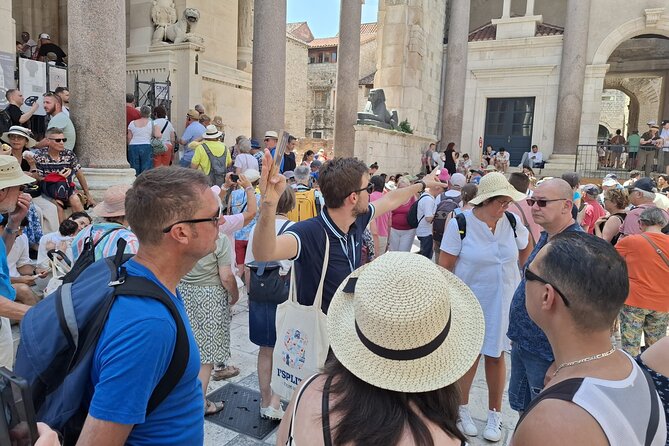
At about $42.36 per person for roughly 1 hour 40 minutes, you’re paying for guided storytelling plus a route that gives you multiple “wow” stops without eating your whole day. The pace is brisk enough to cover major sites, but not so fast that you’re constantly rushing for photos.
A key value point: the tour design includes free admission tickets for several palace and museum-related stops, while entry to the Diocletian Palace substructures is included. That matters, because it reduces the usual headache of figuring out what you must buy and what you can skip while you’re standing there with limited time.
Also worth noting: the group size is capped at 50, and the experience often feels small-group on the ground. In practice, some groups have been split into smaller clusters, which helps you hear your guide and ask questions.
Golden Gate: the palace entrance and a Roman trick you can see
Stop 1 takes you to the Golden Gate, the main entrance into Diocletian’s Palace. The site is famous for architectural storytelling: niches that once held statues of Roman emperors and a built-in double-door mechanism called the human mousetrap.
What you’ll likely enjoy here is the mental switch. Most people walk past doors and arches in historic cities. This stop makes you look at the doorway itself as a piece of engineering and security. For GOT fans, it also sets the stage for the show’s theme of power and threat—because the palace was built to control access.
A practical note: this is an early stop, so wear shoes that can handle uneven old-stone surfaces. You’ll want good traction before the route starts stacking up detail-heavy locations.
Peristyle and St. Domnius: main square, mausoleum history, and a sphinx riddle
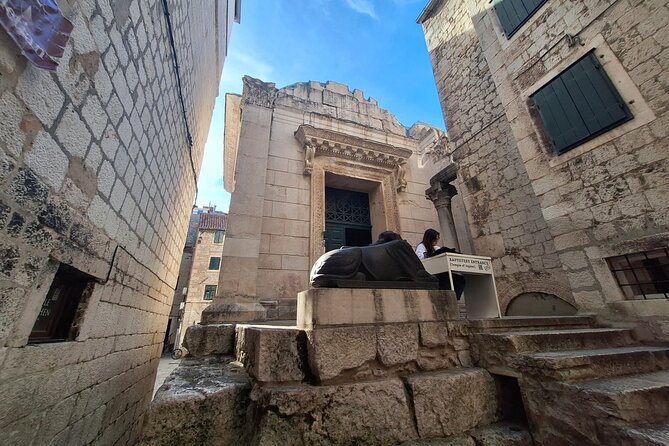
In the palace’s heart, you’ll reach the Peristyle, the main square. Here, Diocletian’s mausoleum has become the Cathedral of St. Domnius, and you’ll also encounter a 3,500-year-old sphinx that poses a riddle.
This is where the tour’s “two stories at once” approach really clicks. Roman Split isn’t just ruins—it’s a living complex where religious space, politics, and older artifacts overlap. The sphinx adds a game-like element, which makes it easier to remember after you’re back on the promenade.
The riddle detail is a nice bonus for families too. If you’re traveling with kids or anyone who likes active learning, this stop gives you something to participate in instead of only listening.
Vestibulum: Unsullied action video and live Dalmatian singing
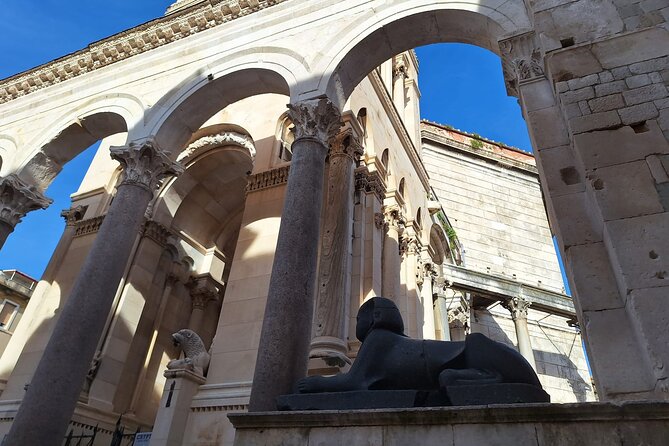
Next is the Vestibulum of Diocletian’s Palace, a stop that leans into performance. You’ll watch a video of the Unsullied battling the Sons of the Harpy, and you’ll also hear an a cappella group sing Dalmatian songs live.
This is a smart pacing move. After Roman stone and symbolic relics, you get sound—voices first, then screen-based show moments. It keeps the experience from becoming an all-lecture marathon, and it gives you an emotional rhythm that fits the GOT vibe.
If you’re the type who hates waiting around, this stop is efficient: it’s short, it’s visual, and it has an in-the-moment payoff.




Temple of Jupiter: Christian conversion and a headless sphinx guard
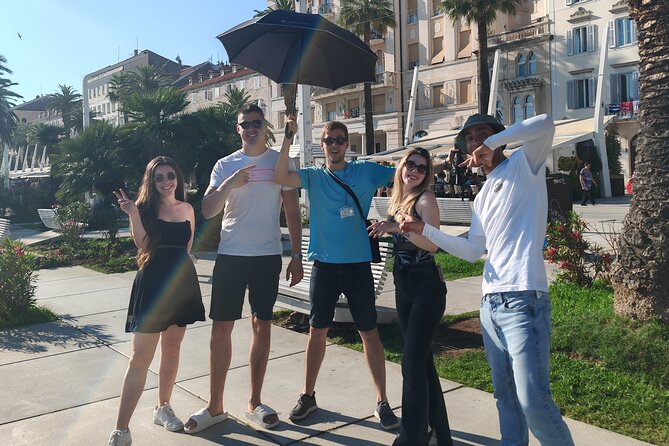
Stop 4 shifts again, this time to the Temple of Jupiter, now used as the baptistery of St. John. At the entrance, you’ll find a 3,500-year-old headless sphinx.
The conversion of sacred spaces is one of those “you’ll never unsee it” topics in Split. Here, you see how the Romans built their divine brand in stone, and later communities repurposed the space for their own religious life. The headless sphinx adds an extra layer of mystery, and it fits the show’s mood of prophecy and danger.
If you’re sensitive to religious interiors, remember this is an active sacred area. Keep your voice low, move carefully, and follow the guide’s timing so you don’t block other visitors.
Under the palace: Daenerys, chained dragons, and the substructures mood
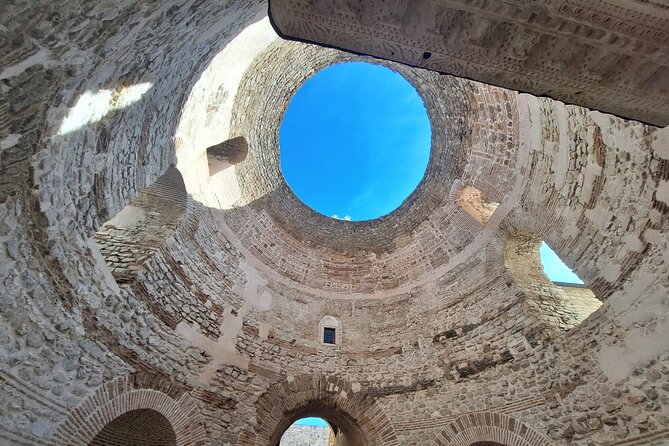
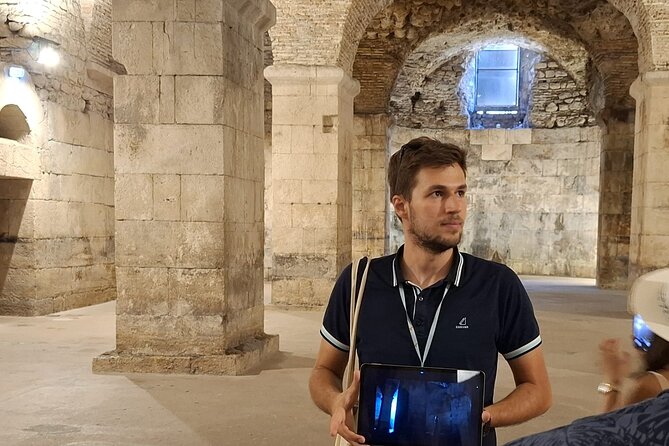
Then comes the tour’s mood turn. At Diocletian Palace Substructures, the route heads into dark, dungeon-like spaces where the story points to Daenerys’s dragons being chained and control slipping away. You’ll also hear about slaves who hid there and plotted rebellion against masters.
This is the stop that turns history into atmosphere. You’re not just learning what happened above ground—you’re getting a sense of why underground spaces mattered. In a place like Diocletian’s Palace, the architecture isn’t decorative; it shapes power dynamics.
Because it’s darker below ground, go prepared for a bit less visibility and stick close to the group. If your camera has trouble focusing in low light, you might choose photos sparingly and save most of your attention for the guide’s storytelling.
Meereen inside the Game of Thrones Museum and an Iron Throne photo

After the palace core and its underworld spaces, the tour brings you into the GOT world more directly with the Game of Thrones Museum Split. The idea here is to step into Meereen through props and scene-like displays: costumes, real-size figures, weapons, city dioramas, and set elements.
Even if you’re not a hardcore collector of show memorabilia, this stop helps you “lock in” what you saw outside. It’s like putting the show’s imagination back into your head, with physical references so your brain can connect the dots faster.
You then move to the Game of Thrones Split Fan Shop, where there’s a free photo on the Iron Throne as part of the tour. It’s a fun payoff and a practical one, since it’s also where you can pick up an original souvenir tied to Essos and Meereen.
Worth planning for: if you want the photo, position yourself early and don’t make your souvenir decision last-minute. This stop is short by design.
City Museum of Split: messages in blood and a Split-sized rebellion
Stop 7 takes you to the City Museum of Split, where the theme shifts back toward conflict. The storyline presented here centers on Meereen no longer being safe for slave masters, with dangerous messages appearing in blood on the walls, and a confrontation between authority and rebellious slaves.
This stop works best if you like story-driven interpretation. It’s less about Roman architecture details and more about narrative tone, tying the show’s themes to a “city as character” feeling. It also keeps the tour from ending too suddenly after the museum and fan shop.
If you’re someone who prefers pure history to themed exhibits, you might want to treat this as the wrap-up course of the narrative arc, not the main meal.
Riva Harbor finish: where to eat, relax, and keep going
The final stop is Riva Harbor, concluding by the sea on the promenade. You get instructions on what to see next in Split and Dalmatia, plus guidance on where to eat, which beach to visit, and how to spend quality time affordably.
This is a genuinely useful way to end. Walking tours often dump you back in the center and wish you luck. Here, you leave with a mini plan, which is especially valuable if you have only a day or two in town.
If you’re visiting in warmer months, this is also a good time to switch from “tour headspace” to “holiday headspace.” Grab a drink, keep the sea air in your lungs, and use your guide’s suggestions while the rest of the day is still open.
Guides matter: why this tour feels personal in the details
The experience often comes down to the guide. Names you’ll see associated with this walk include Marko, Tomi, Tommy, and Nina, and their styles have a common thread: they connect GOT scenes to place with clear, fast explanations and a sense of humor.
Some guides use video clips on an iPad or phone to show key moments and where those scenes filmed relative to what you’re standing on. That helps you avoid the common problem where you recognize a landmark but can’t map it to the show fast enough.
There’s also an interactive element. One style includes quizzing you on what you think happened at each location before explaining it, which keeps the group alert and makes the tour feel like a shared game. If you like learning through participation, that’s a big win.
Who should book this Split Dracarys walk (and who might not)
This works best if you fit at least one of these:
- You’re a Game of Thrones fan and want filming spots explained without losing the Roman context.
- You want a short, high-impact tour that covers major old-town areas in under two hours.
- You like guides who use videos and story cues to make history easier to remember.
It might not be the top pick if you’re only here for hardcore archaeology detail and you don’t care about GOT at all. The Roman sites are real, but the route is built to serve the show’s storyline, so the emphasis follows the fandom thread.
Should you book this Dracarys walk in Split?
If you’re thinking about booking, I’d say yes—especially if you want something different from the typical Split “see the highlights” tour. The value comes from the combination: major Diocletian’s Palace stops, a genuine stop underground, and then a GOT-focused museum and Iron Throne photo. You get a full narrative arc that ends with practical guidance by the sea.
If you’re a GOT fan, you’ll likely feel like the city became a set. If you’re more history-first, you still get clear Roman architecture context plus a memorable atmosphere shift when you go below ground. Just go in with comfortable shoes and an open mind for both timelines happening at once.
FAQ
How long is the Split Game of Thrones and History City Walk?
It runs about 1 hour 40 minutes.
Where does the tour start and end?
It starts at Golden Gate, Dioklecijanova 7, Split, and ends at Split Riva on the promenade at Obala Hrvatskog narodnog preporoda 23.
What language is the tour offered in?
The tour is offered in English.
Is there a mobile ticket?
Yes, the tour uses a mobile ticket.
Are any admission tickets included or free?
Admission tickets are listed as free for multiple stops, and Diocletian Palace Substructures is listed as included.
How big are the groups?
The tour has a maximum of 50 travelers.
What is the cancellation policy?
You can cancel for free up to 24 hours in advance for a full refund. Changes inside 24 hours aren’t accepted, and cancellations within 24 hours aren’t refunded.