REVIEW · SPLIT
Walking tour of Split old town and craft beer tasting
Book on Viator →Operated by Private Tourist Guide Croatia · Bookable on Viator
In This Review
- Split’s old stone plus cold beer
- Key highlights that make this tour worth your time
- Split at 6:00 pm: how the timing keeps it fun
- From Riva Harbor to the palace cellars: your first big context hit
- Peristyle and Diocletian’s Palace streets: power, streets, and 2,000 years of change
- The Vestibulum’s acoustics and Triklinij dining room: sounds and meals
- Mausoleum to Golden Gate: cathedral transformation and a fortress entrance
- Grgur Ninski’s statue and the old-town squares that evolved names
- Leopolds Craft Beer Bar: why the tasting feels like part of the tour
- Price and value: what $30.04 really buys you
- Who this tour suits (and who might skip it)
- Should you book this Split history and beer walk?
- FAQ
- What’s the duration of the Split old town and craft beer tour?
- What time does the tour start?
- How many people are in the group?
- Where do I meet the guide?
- Where does the tour end?
- What’s included in the price?
- Are beers included?
- Is the tour in English?
- Is it easy to find public transportation nearby?
- What are the cancellation terms?
Split’s old stone plus cold beer
Diocletian’s Palace and craft beer are the two reasons I’d pick this tour, because you get up close to UNESCO-listed walls and vaults, then you end at a microbrewery for a guided tasting; one drawback to keep in mind is that beer isn’t included in the $30.04 price, so you’ll want to budget a little extra if you’re thirsty after the last stop.
What makes it work is the pace and the size. This is a personal small-group tour capped at eight people, led by a licensed local guide (Darijo is one name that shows up in the guide mix). You’ll walk the old town in a way that helps the ruins make sense, not just look impressive.
Key highlights that make this tour worth your time

- UNESCO Diocletian’s Palace, up close: You’ll focus on the most readable parts of the palace complex.
- A real craft-beer finish: You’re not just buying a drink; you’re tasting and learning at Leopolds.
- Small-group feel: Limited to eight participants, so your guide can actually answer questions.
- Sound and story, not just sightseeing: The itinerary includes places where acoustics and daily life matter.
- Short stops, good flow: About nine central old-town moments in roughly two hours.
You can also read our reviews of more tours and experiences in Split.


Split at 6:00 pm: how the timing keeps it fun
This tour starts in the early evening, at 6:00 pm. That’s a smart slot in Split because the day’s heat usually has less control over your comfort, and you still get enough daylight to appreciate the palace architecture as you move through it.
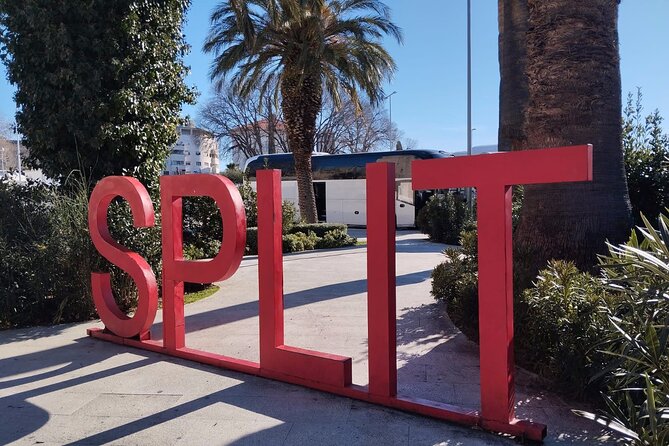
The meeting point is at the Split sign (21000, Grad, Split, Croatia), and you finish at Leopolds Craft Beer Bar (Dosud ul 5, Split). The structure is simple: you’ll spend about two hours walking through the historic center, then a dedicated stretch at the brewery for the tasting.
Group size is small (max 8), which matters more in old town sightseeing than it sounds. You don’t have to fight for a view, and you get more back-and-forth with your guide.
From Riva Harbor to the palace cellars: your first big context hit
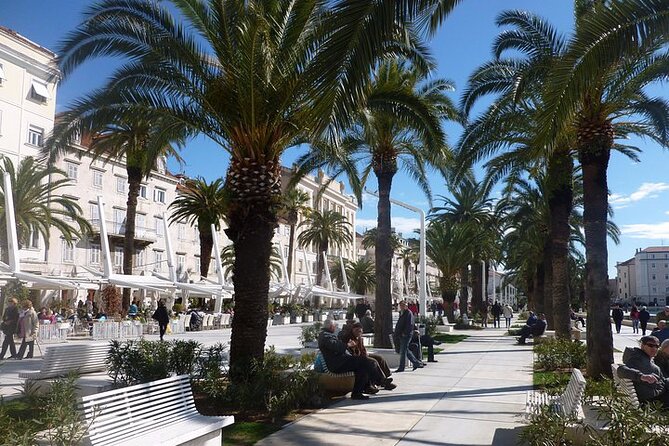
The first stop is Riva Harbor, where your guide sets the stage. You’ll hear how the promenade changed from a palace waterfront into the lively promenade locals use as a kind of daily living room. This is the warm-up you want before you start staring at stone. It connects the modern feel of Split to the “why” behind Diocletian’s Palace.
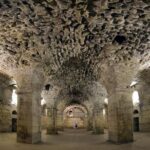
Then you shift into the core idea of the tour: you’re learning what you’re looking at. The route takes you to the palace substructures, often called the palace cellars. Even if you only see the central part, the message is clear: these vaulted areas are among the best preserved late-antique complexes worldwide.
What I like about this approach is that it’s not a rushed checklist. The guide points you toward the features that actually help you understand how the palace worked as a whole.
Peristyle and Diocletian’s Palace streets: power, streets, and 2,000 years of change
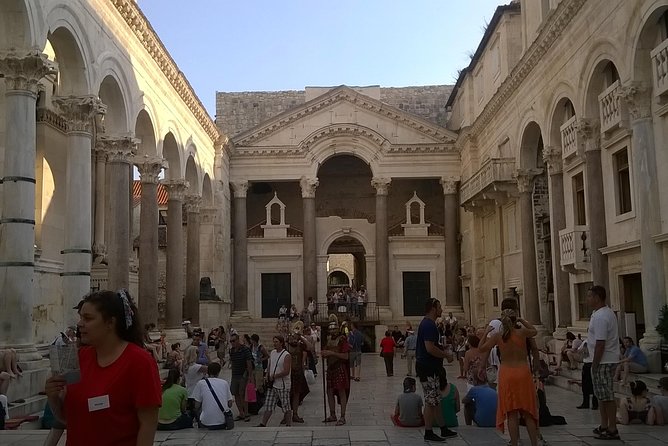
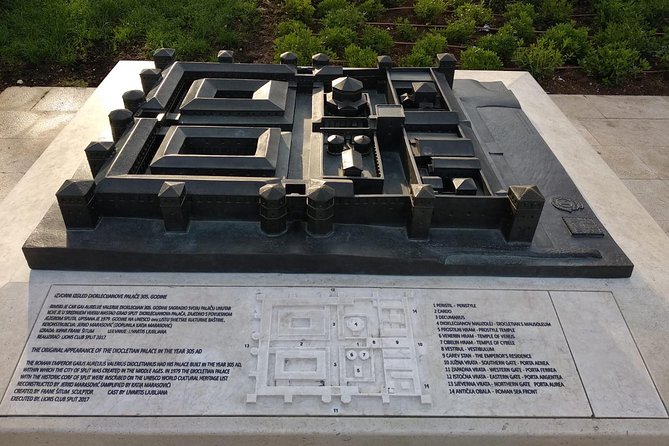
Next up is the Peristyle of Diocletian’s Palace, the grand square enclosed by columns. This is one of those places where the geometry feels designed for events. You step into the space and your guide explains what it meant when emperors were shown and worship happened under that kind of architecture.
You’ll also get the names and purpose of the palace’s main streets: Cardo and Decumanus. The key here isn’t memorizing labels. It’s understanding that these thoroughfares were altered through centuries, shaped by new architectural styles and changing needs. You leave this stop seeing the palace as a living city, not a museum display.
This portion is short—about 15 minutes—but it hits a lot of the “mental mapping” you need. That’s why this tour tends to feel more satisfying than standalone self-guided wandering.
The Vestibulum’s acoustics and Triklinij dining room: sounds and meals
A circular stop follows: the Vestibulum of Diocletian’s Palace. The main draw is how it’s built with an open ceiling and how it sounds. Your guide ties it to what the space was meant to do—acting as a kind of lobby to Diocletian’s residential quarters—and why it still performs that role for visitors today.
Even better, your guide connects the acoustics to klapa singing. These are a cappella Dalmatian groups, and the singing tradition is protected as UNESCO world heritage. If you’ve never heard klapa before, this tour is a good primer for why people care about places where voices carry.
After that, you step into Triklinij, the remains of an emperor’s dining room. Here you’ll learn how Roman-style dining worked and how the guide explains what they ate. The tour also weaves in the idea of Carpe Diem—seize the day—using the dining setting to make the message feel less like a slogan and more like what daily life could have meant.
One caution: this is a story-driven stop. If you’re the type who wants only hard architectural facts with no lifestyle interpretation, you might find the explanation more opinion-forward than you expect. Still, the goal is understanding, not just visuals.


Mausoleum to Golden Gate: cathedral transformation and a fortress entrance
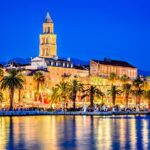
Diocletian’s complex didn’t stop at empire. You’ll also visit where the Diocletian’s Mausoleum became an impressive cathedral, including a bell tower described as elegant along the Dalmatian coast. That transformation is the kind of detail that helps you see why Split still feels layered rather than frozen in one era.
Then the route moves toward the palace’s defensive side with the Golden Gate. You’ll see how entering the palace as a military camp wasn’t meant to be easy. The tour points out the monumental gates and highlights the best preserved wall of the palace.
This section does something important: it reminds you Diocletian’s Palace was not just a residence. It was also a stronghold. That context makes the “squares and streets” you’re walking through later feel more logical.
A fun extra pops into the walk as well: a brief story about a small chocolate producer in Split winning a Guinness world record for the biggest slab of chocolate. It’s short, but it keeps the tour human and gives you a modern hook in the middle of all that ancient stone.
Grgur Ninski’s statue and the old-town squares that evolved names
After the palace core, you hit classic Split photo territory, starting with the Grgur Ninski statue. You’ll learn the sculptor’s connection (Ivan Meštrović is the name given) and the legend about touching the statue’s golden toe for a wish. It’s touristy in the best way: quick, playful, and easy to do while your guide keeps moving.
Then it’s on to Pjaca, Split’s main square in the old town. Your guide explains how the square’s name changed several times through history, and you’ll notice how that shows up in the layers of architecture around you. It’s also described as a lively place with a turbulent past, which helps you read what you’re seeing even if you’re only there for a short time.
The last square stop is Fruit’s Square (Trg Brace Radic). This is where the architecture leans into baroque style. You’ll also hear the story about how the Venetian Republic protected Split from attacks from the Ottoman Empire, plus the role of Marko Marulić, described as the father of Croatian literature.
I like closing a history walk on squares like these because it reminds you that old towns aren’t just archaeological sites. They’re still used as civic spaces—people pass through, meet, and live with the past in their view.
Leopolds Craft Beer Bar: why the tasting feels like part of the tour
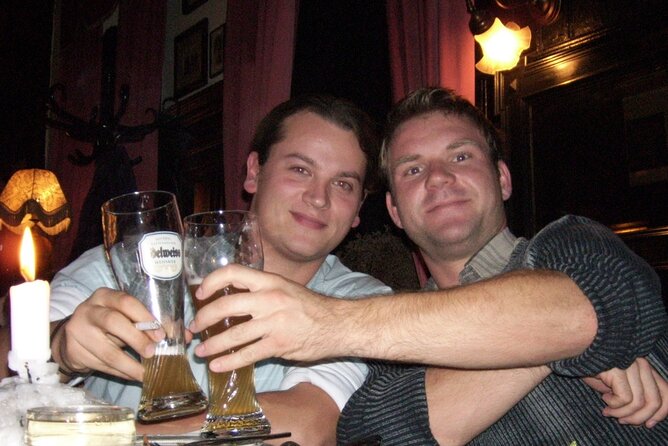
The last piece is the beer payoff at Leopolds Craft Beer Bar. This is one of Split’s top craft beer destinations, and the key detail is that the bar brews its own beer.
The tasting section is about 30 minutes. Since beers and other drinks aren’t included, you’ll be paying for anything beyond the tasting portion. Still, the value is in the guidance: your guide connects what you tasted to what makes local craft beer feel different from big global brands.
If you’re cautious about alcohol, you can still enjoy this part by pacing yourself and using it as a low-pressure end to the walk. Just know this stop is built around tasting, so it won’t feel like a silent add-on.
Price and value: what $30.04 really buys you
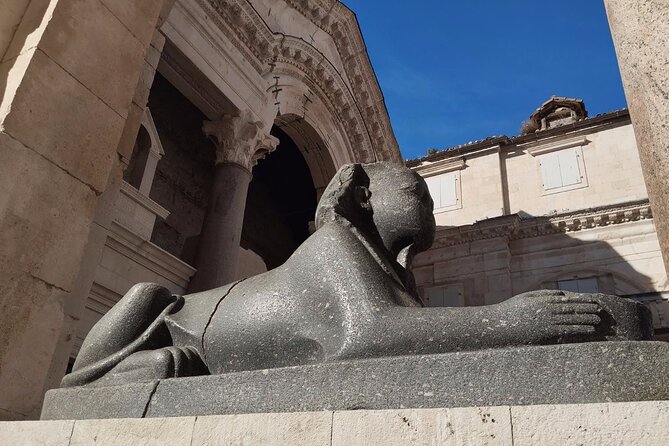
At $30.04 per person for about two hours, you’re paying for three things: a licensed local guide, guided access and interpretation of major portions of Diocletian’s Palace, and a beer-bar tasting experience.
Most of the sightseeing stops are marked as free admission within the tour flow, which helps the math. In practice, the cost is mainly for guide time and the structured experience, not for ticket fees.
The biggest value point is the way the guide ties places together. When you leave after visiting Peristyle, Vestibulum, Triklinij, the Mausoleum area, and the Golden Gate, you’ve seen a coherent system: palace power, public space, daily life, and defense. That’s hard to replicate in a casual self-walk unless you already know what you’re looking for.
The main tradeoff is the same one I mentioned at the start: beer isn’t included. So if you plan to drink more than the tasting, you’ll want to add extra spending for your evening.
Who this tour suits (and who might skip it)
This is a great fit if you want:
- A small-group guided walk that explains what Diocletian’s Palace is really showing you
- A beer stop that feels like part of the experience, not an afterthought
- An English-speaking guide and a schedule that ends at a practical location in the old town
It may be less ideal if:
- You dislike craft beer and don’t want any tasting element
- You’re looking for a long sit-down attraction time rather than a moving, story-led walk
- You don’t want to spend any extra money after the tour price (because drinks aren’t included)
Should you book this Split history and beer walk?
Yes, if you want a tight two-hour overview that actually teaches you how the palace spaces work and why the modern city feels the way it does. The UNESCO setting plus the local craft beer finish is a nice match: heavy history up front, a social reward at the end.
Book it especially if you’re only in Split for a short window and you’d rather spend your time with a guide than guessing your way through the palace streets. The small group size is the kind of detail that can turn a crowded old town into a calmer, more personal evening.
If you do book, arrive a few minutes early at the Split sign meeting spot so you don’t start sprinting through the first moments. Then go into the beer bar ready to taste, not just to look.
FAQ
What’s the duration of the Split old town and craft beer tour?
The tour lasts about 2 hours.
What time does the tour start?
The start time is 6:00 pm.
How many people are in the group?
The tour is limited to a maximum of 8 travelers.
Where do I meet the guide?
You meet at Split sign (21000, Grad, Split, Croatia).
Where does the tour end?
The tour ends at Leopolds Craft Beer Bar, Dosud ul 5, 21000, Split.
What’s included in the price?
Included are a professional licensed tour guide and sightseeing of Diocletian’s Palace (a UNESCO world heritage site). It’s also a mobile ticket experience.
Are beers included?
No. Beers and other drinks are not included.
Is the tour in English?
Yes, it’s offered in English.
Is it easy to find public transportation nearby?
Yes. The meeting area is listed as near public transportation.
What are the cancellation terms?
You can cancel for a full refund if you cancel at least 24 hours before the experience starts. If the experience is canceled because the minimum number of travelers isn’t met, you’ll be offered another date or a full refund.