REVIEW · DUBROVNIK
Wine, food and olive oil by PhD student
Book on Viator →Operated by DeliciousDubrovnik · Bookable on Viator
Four tastes, one unforgettable Old Town walk. This small-group experience mixes extra virgin olive oil, four wine pairings with lunch, and Dubrovnik Republic stories while you stroll past the city’s top landmarks at a calm, late-afternoon pace. I really like that the host is both a wine scholar (master’s-level enologist) and a PhD student in wine, so the explanations feel practical, not just salesy.
I also love the hands-on style: you start with a guided evaluation of olive oil from a licensed Olive Oil Sommelier, then move into family-run spots for fish, seafood, and meat paired with Croatian varietals. One possible drawback: the flow is fairly structured around the tastings and guide-led storytelling, so if you’re hoping for lots of back-and-forth about your personal food wishes, you may want to share that early.
In This Review
- Key takeaways before you go
- A 4pm Old Town food-walk that also teaches you how to taste
- The olive oil lesson: more than samples, it’s a tasting skill
- Wine pairing lunch: fish, seafood, and meat with local varietals
- Dessert at the final stop: the calm landing after the tastings
- Walking the Old Town while the guide ties food to power
- Off-the-beaten rooftop moments and the granary museum stop
- Ending at Rector’s Palace: politics talk in the right setting
- How much you’ll pay, and what you actually get for $205.59
- Best fit: who this tour suits (and who should choose another plan)
- What to do before you go (so it lands well)
- Should you book this Dubrovnik wine, food, and olive oil tour?
- FAQ
- Where do I meet and where does the tour end?
- How long is the Dubrovnik tour?
- What’s included in the price?
- Is wine tasting included for everyone?
- What group size should I expect?
- What happens if the weather is bad?
Key takeaways before you go
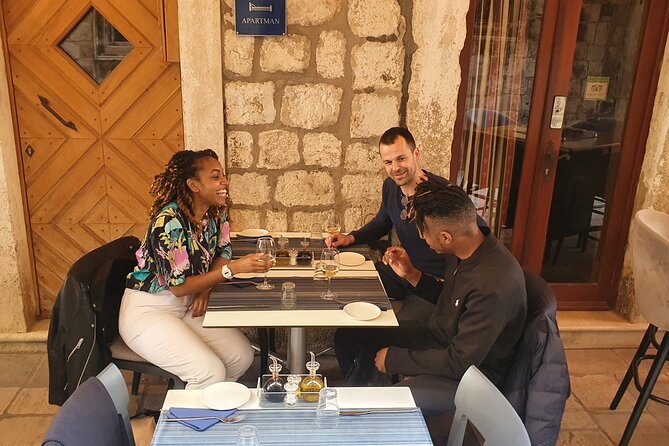
- Olive oil evaluation first: you learn what extra virgin quality actually tastes like, not just that it’s good
- Four paired courses in family places: fish, seafood, then meat, plus dessert, all with regional wines
- Dubrovnik Republic context: you connect food to history while walking between major sites
- Max 12 people: easier conversation and less time waiting at each table
- A late-afternoon start: you’ll see key sights without the crush of the highest daytime heat
A 4pm Old Town food-walk that also teaches you how to taste
This tour starts at 4:00 pm and runs about three hours. You meet at Onofrio’s Large Fountain and finish at Rector’s Palace, walking through Dubrovnik’s Old Town along routes that link big sights with quieter corners. Because it’s a walking tour with tastings built in, it feels less like a checklist and more like a guided route through how Dubrovnik eats.
The first thing I’d expect is an efficient pace. You’re not stuck in one restaurant for ages; instead, you get a sequence: short olive oil lesson, then a couple of restaurant stops for paired courses, then dessert at the end. It’s a smart format for Dubrovnik, where the Old Town is compact but daylight crowds can make long wandering exhausting.
The second thing I’d watch for is weather. The experience notes it needs good conditions. If rain or strong wind shows up, the operator may offer a different date or a full refund, so plan to keep an eye on forecasts once you book.
You can also read our reviews of more tours and experiences in Dubrovnik.
The olive oil lesson: more than samples, it’s a tasting skill
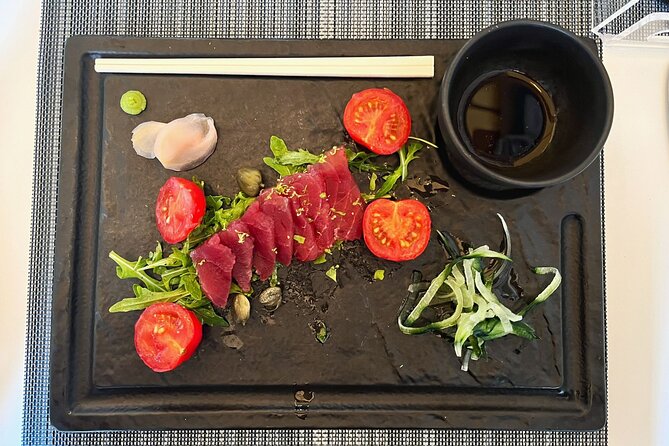
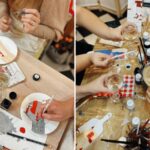
The heart of the experience begins in the Old Town at one of the family-run olive oil places. You get a 15-minute guided evaluation of extra virgin olive oil. The guide here is a licensed Olive Oil Sommelier, which matters: the goal is to show you how to recognize quality using simple cues you can repeat later.
You’ll start with two olive oil samples. Then there’s a presentation and tasting of Croatian extra virgin olive oils that have been awarded by NYIOOC. That’s a helpful credibility marker, but the real value is what you learn to taste: the main characteristics of extra virgin quality—how it should feel, smell, and taste when it’s properly made.
If you’ve ever wondered why olive oil tasting sounds fancy but results in confusion, this part is designed to fix that. Even if you don’t buy olive oil that day, you leave with a clearer mental checklist. And because you practice right away, the rest of the food stops make more sense: you start noticing how acidity, bitterness, and fruitiness balance dishes.
Wine pairing lunch: fish, seafood, and meat with local varietals
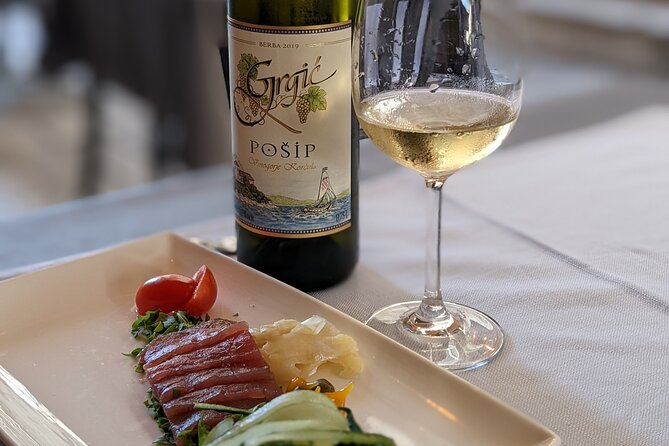
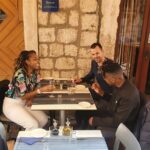
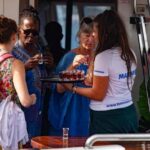
After the olive oil lesson, you head into two restaurants for wine and food pairings. The format is four wines matched with four dishes, for a total of about 60 minutes across the tastings. I like this structure because you’re not just drinking. You’re learning what changes when a specific wine meets a specific style of food.
Here’s the sample menu the tour uses:
- Starter: two samples of extra virgin olive oil (plus the NYIOOC-awarded olive oils)
- Main: fish with a Croatian white wine (noted as recognized by Decanter in 2021)
- Main: seafood with a Croatian white wine (also Decanter recognized in 2021)
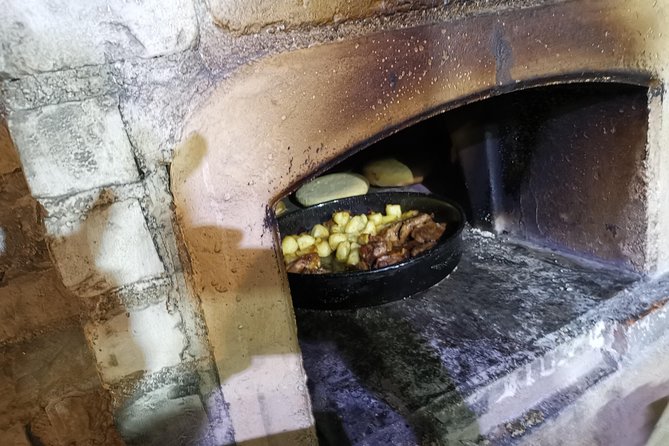
- Main: meat dish paired with a locally produced white wine (linked to Decanter recognition in 2017), made from a very old 16th-century recipe
- Main: meat dish with a red wine tied to Croatia’s most important red variety, from the oldest protected winegrowing zone near Dubrovnik
- Dessert: dessert to close the loop
A practical note: this is definitely a meat-and-seafood leaning lunch. Dubrovnik is famous for seafood, but the tour intentionally includes both fish and meat, so you’re not stuck with only one category. Portions also aren’t treated like tiny “taste tourism.” The experience description and the positive feedback point to satisfying amounts, not just nibbles.
Also, there’s a strict detail that matters for your planning: wine tasting is 18+ only. If anyone in your group is under 18, they can still take the tour, but they won’t participate in the wine tasting.
Dessert at the final stop: the calm landing after the tastings
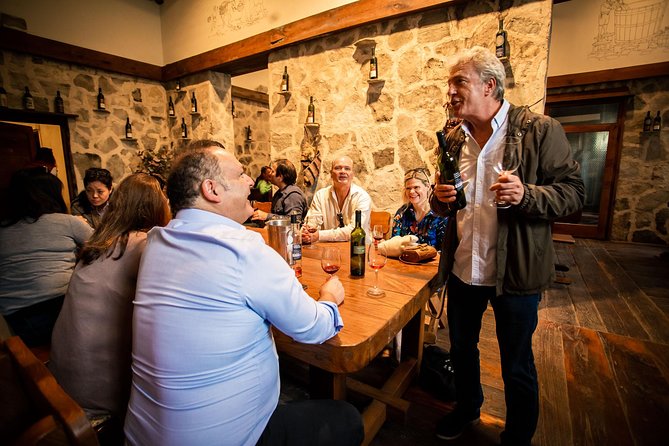
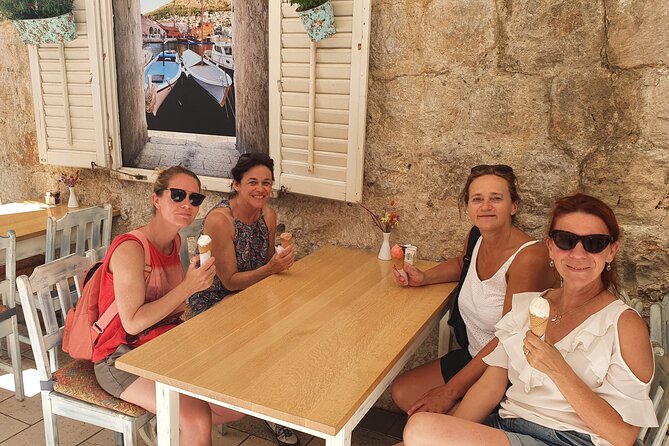
The tour ends with dessert at the last family-run place. This timing works well. By the last course you’re already “warmed up” to flavors—olive oil notes first, then wine-and-food pairings—so dessert feels like a finishing act rather than a random sweet stop.
This is one of those small things that can make or break a food tour. If dessert is served too early, it can blur flavors from the earlier tastings. Here, it comes after your main sequence, so you get a clearer transition from savory to sweet.
Walking the Old Town while the guide ties food to power

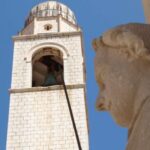
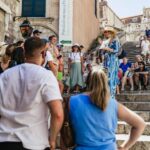
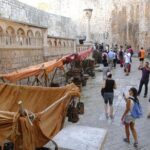
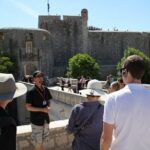
One of the most fun parts is that the food doesn’t float in a bubble. While you walk through the Old Town—passing places like Revelin fort, Ploče gate, Lazareti, a Franciscan monastery, Onofrio’s fountain, the Rupe museum, the Farmers market, and the Jesuits stairs—you get historical and cultural context.
The tour also includes a few “pause points” where the guide explains why Dubrovnik’s food culture looks the way it does. You’ll talk about the Dubrovnik Republic’s peak time and its major engineering projects. Then later you shift to politics: how the Republic’s system worked, and what tricks the aristocracy used to survive threats from stronger opponents.
Even if you’re not a history person, this angle helps. It connects the dots between trade, wealth, and why certain ingredients show up in local cooking. Food in a walled city isn’t only about taste—it’s about access.
And if you like hearing from someone who knows the city from the inside, this tour has that advantage. In the feedback for this specific experience, the guide named Dom is described as having deep local understanding and a sharp grasp of both wine and Dubrovnik’s history.
Off-the-beaten rooftop moments and the granary museum stop
The route also includes parts of the Old City that are less straight-line. You’ll get views over rooftops while walking, which gives the tasting sequence a breather. It’s a good reminder that you’re not only “doing food”—you’re also moving through the physical layout that shaped how people traded, stored, and served.
Along the way you pass a key museum: the 16th-century granary of Dubrovnik, which gives you a tangible link to the city’s food economy. Even the fact that it’s a granary is a clue. Dubrovnik wasn’t just producing flavors—it was managing supply, storage, and stability in a place shaped by walls and sea routes.
Ending at Rector’s Palace: politics talk in the right setting
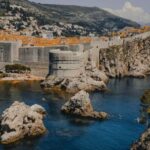
The tour finishes at Rector’s Palace, one of the strongest visual anchors in Dubrovnik. Ending with the political system discussion there makes sense. You’re standing in the center of power while you learn how the Republic stayed resilient.
This ending also adds a practical benefit. Rector’s Palace is easy to orient from, so after the final course you’re not left wondering where you are or how to get back. It’s a clean wrap for a tour that includes multiple tastings and a fair amount of walking.
How much you’ll pay, and what you actually get for $205.59
At $205.59 per person for about three hours, this doesn’t position itself as a budget “snack tour.” But it also isn’t overpriced in a careless way. You’re paying for a specific bundle:
- a small-group walking format (max 12)
- an expert guide profile (master’s-level enologist plus PhD student in wine)
- an olive oil evaluation with a licensed Olive Oil Sommelier
- lunch-like coverage: four paired dishes plus dessert
- alcoholic beverages (wines awarded in the Dubrovnik region)
When you compare that to the cost of booking tastings one at a time, plus paying for guided interpretation, the price starts to look more sensible. You’re not just buying drinks and bites. You’re buying guided tasting skill and structured sampling in multiple family-run spots.
If you’re the type who enjoys learning how to taste—rather than only eating—this is one of the better value setups in Dubrovnik. If you just want an easy meal with a view and minimal instruction, you might feel the structure is tighter than you’d prefer.
Best fit: who this tour suits (and who should choose another plan)
This tour fits you best if you want all of these:
- Food learning: you like knowing what makes a wine or olive oil taste “right”
- Small-group comfort: you prefer fewer people over a crowded group scramble
- Variety in one sitting: fish, seafood, meat, and dessert in one evening
- History with a purpose: you’re okay with political and engineering stories if they connect to food culture
It might be less perfect if you prefer a free-form experience with lots of tailoring to your personal tastes. One review flagged that the experience can feel more guide-centered than guest-centered. If that’s your worry, the fix is simple: tell the guide what you like (or avoid) at the start and ask early how you can steer attention.
What to do before you go (so it lands well)
A few practical moves can help you get the most from the tastings:
- Eat lightly before you start, but don’t show up starving. You’ll have multiple courses.
- If you’re sensitive to alcohol, pace yourself through the pairings. You’ll be doing walking too.
- Wear shoes you trust. The Old Town is uneven and the walking adds up.
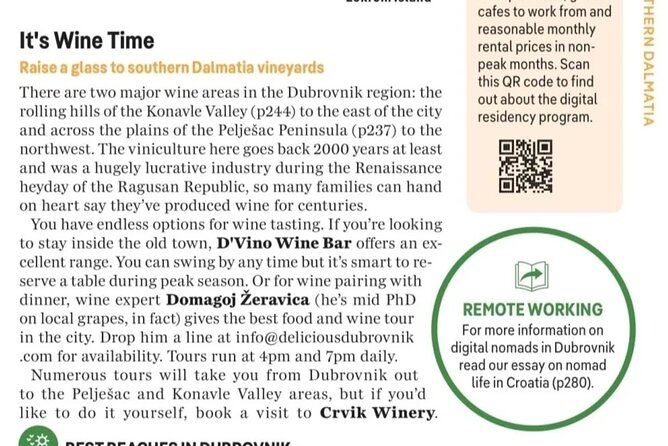
- If you’re interested in specific wines or olive oil, bring one question. In the feedback, Dom is noted for answering wine questions beyond the tour itself, which suggests the guide enjoys real curiosity.
Should you book this Dubrovnik wine, food, and olive oil tour?
I’d book it if you want a high-quality food evening that teaches you something you can carry home. The combo of olive oil tasting skill, four wine-and-food pairings, and guided context around the Dubrovnik Republic is a strong match for first-timers and repeat visitors alike.
Skip it—or at least consider another option—if you mainly want a casual meal without structured instruction, or if you’re hoping for a highly customized itinerary on the fly. The experience is designed to follow its tastings and story arc.
If you’re celebrating, it’s also a good pick. The pacing feels special, the settings are family-run, and the variety keeps it fun.
FAQ
Where do I meet and where does the tour end?
You meet at Onofrio’s Large Fountain on Poljana Paska Miličevića and the tour ends at Rector’s Palace on Ul. Pred Dvorom 3.
How long is the Dubrovnik tour?
The experience is about three hours.
What’s included in the price?
It includes a small-group walking tour with a local guide (enologist and PhD student in Wine), olive oil evaluation, four dishes made with locally produced ingredients, dessert, and award-winning wines of the Dubrovnik region.
Is wine tasting included for everyone?
Wine tasting is available to customers 18 years of age and above only.
What group size should I expect?
The tour/activity has a maximum of 12 travelers.
What happens if the weather is bad?
This experience requires good weather. If it’s canceled due to poor weather, you’ll be offered a different date or a full refund.