REVIEW · SPLIT
YOUR BEST PRIVATE TOUR – amazing Split and Diocletian’s palace
Book on Viator →Operated by Private Tour Guides Split, Hvar, Dubrovnik - Olynta Phos · Bookable on Viator
Two hours later, Split feels different. This private, crowd-smart tour shows you Diocletian’s Palace and UNESCO-listed Old Town with a guide who turns stone and street names into a clear story. I love how the route moves from the sea promenade into the Roman complex, then back out into medieval squares with real context. I also love the flexibility, since it’s your private group and the guide can shape the pacing to what you care about most. The one catch: you’re on your feet on uneven historic streets, and hot days can feel like a lot, so plan for sun and water.
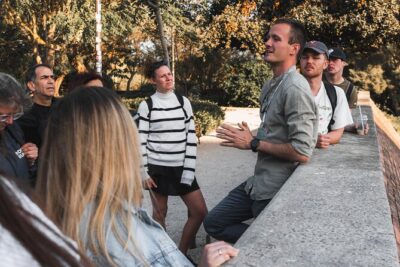
What really sells it is the guide quality. Across past tours, guides such as Matt, Stella, and Lily have been praised for clean explanations, smart pacing, and answering follow-up questions without rushing you. And since it’s private, that Q and A energy is yours, not shared with strangers. Still, remember that entrance fees are not included, so a few sites may add cost if you choose to go in.
In This Review
- Key things to know before you go
- Why an early start at Riva makes Split easier
- Riva Harbor to the palace gates: the story begins at the sea
- Inside Diocletian’s Palace: Peristyle, Vestibulum, and the cathedral setting
- The Peristyle: the central square you can actually picture
- The Vestibulum: a circular room tied to private power
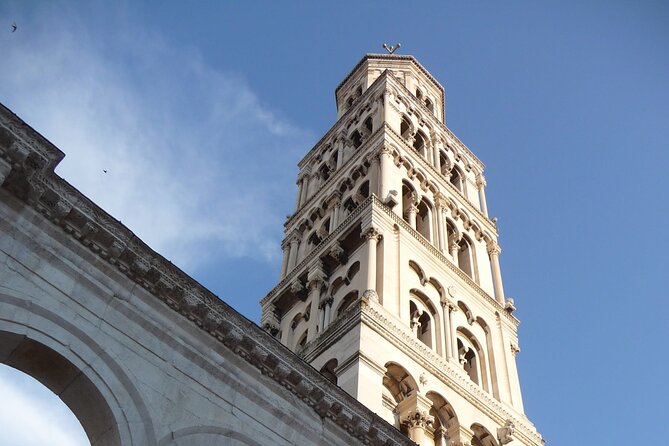
- A cathedral you can point to
- Underground Diocletian: the substructures you’ll remember
- Gates and streets: Golden Gate, Cardo and Decumanus
- From the palace into medieval Split squares
- Chocolate, Grgur Ninski, and a couple of local culture cues
- Nadalina cokolada: a sweet treat inside the palace walls
- Grgur Ninski statue by Ivan Mestrovic
- Split Synagogue and the Jewish ghetto: small, serious, and close
- Price and value: what you’re paying for at $124.34 per person
- Practical tips for booking and meeting in Split Old Town
- Should you book this private Split and Diocletian’s Palace tour?
- FAQ
- How long is the tour?
- Is this a private tour, or do I join a group?
- What language is the tour offered in?
- What is included, and what costs extra?
- Will there be a chocolate stop?
- Can I cancel for a full refund?
Key things to know before you go
Start on the water (Riva) early to beat the thick crowds
Walk the palace gates in a logical order: Golden, Silver, Southern, Bronze
See the 4th-century Roman complex plus the medieval city that grew on top of it
Go underground in the palace substructures for the emperor story, materials, and Salona context
Plan around the chocolate stop being closed on Sundays
You get a real private-group pace, not a production line with a headset tour
Why an early start at Riva makes Split easier
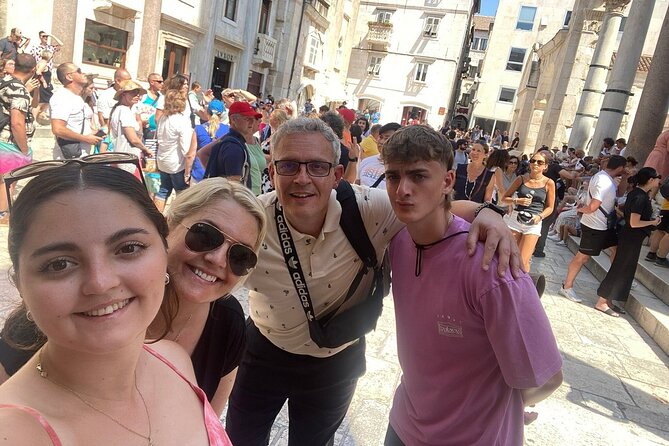
Split can get crowded fast, especially around the palace and the Old Town choke points. This tour is designed for a morning rhythm, when the light is better and you’re more likely to see the buildings without shoulder-to-shoulder pressure.
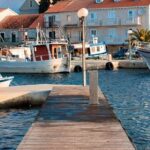
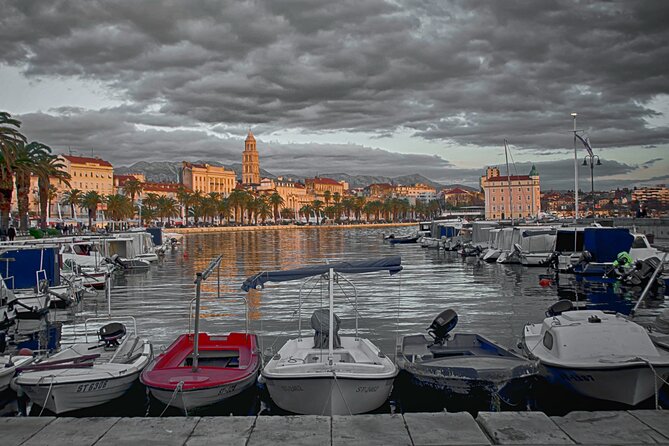
You begin at Riva Harbor, Split’s waterfront promenade. Think of it as your warm-up and orientation moment. Your guide sets the stage with Croatia and Split basics, so the palace stops don’t feel random. And since you start with a short introduction before stepping into the complex, the rest of the walk clicks quicker.
Practical upside: if you’re the kind of traveler who gets anxious when a city feels too big, this start helps you get your head around the layout early. You’ll know what you’re looking at and why it’s there.
You can also read our reviews of more tours and experiences in Split.


Riva Harbor to the palace gates: the story begins at the sea
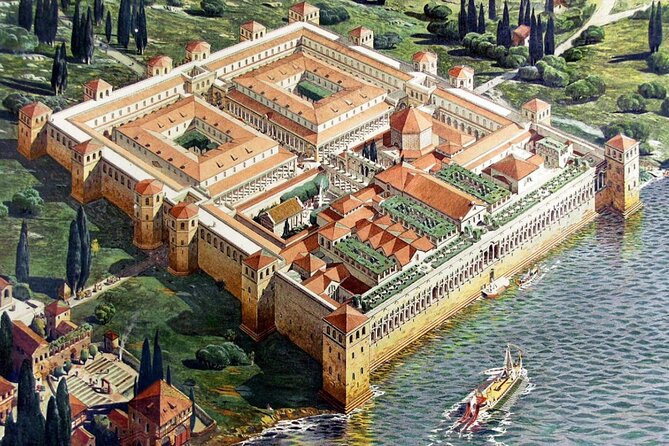
From Riva, you’re introduced to the palace as more than a landmark. You’re shown how it functioned, first as an emperor’s luxury retirement home, then as the core of a medieval city.
The guide also points you toward what to watch for as you enter:
- how Roman design shaped everyday movement
- where later medieval life built itself around older walls
- why the city’s story is layered, not replaced
The tour also leans on a gate-by-gate approach. That matters. In a place like Diocletian’s Palace, the gates aren’t just entrances, they’re clues. You’ll hear about the Golden Gate concept and Roman street alignment, and you’ll feel how people once navigated power and passage.
Inside Diocletian’s Palace: Peristyle, Vestibulum, and the cathedral setting
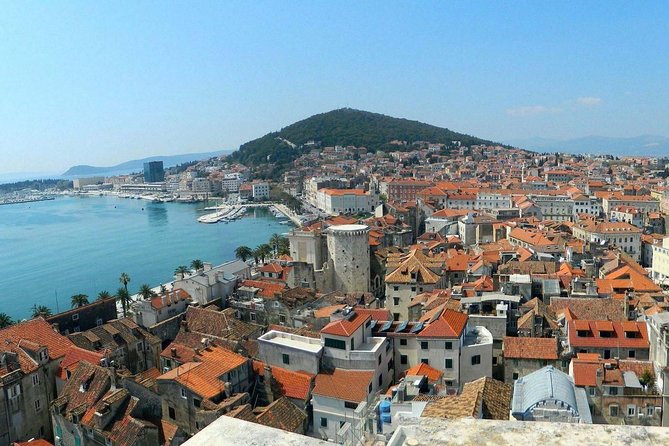
Once you cross into the palace area, the pacing is efficient but not frantic. You spend time in the key interior spaces that make the complex feel like a living city rather than a museum.
The Peristyle: the central square you can actually picture
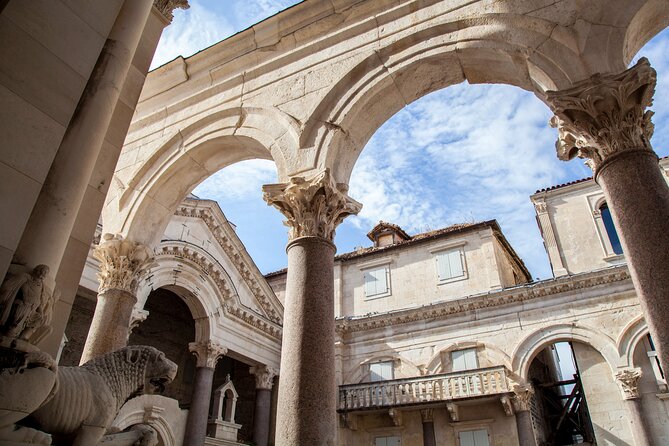
Your walk centers on the Peristyle, the palace’s central square. What I like here is that the guide uses the square to connect time periods. It’s surrounded by different architectural styles and monument types, spanning ancient Roman through medieval elements and onward into later eras. Even if you’re not an architecture nerd, the guide’s framing helps you see how the same “courtyard concept” got reused by different worlds.
The Vestibulum: a circular room tied to private power
Next comes the Vestibulum, a circular building tied to Diocletian’s private life. The tour description notes that this is a lounge-like setting, part of the route into private chambers. What’s fun is the potential for Dalmatian Klapa singing, depending on timing and opportunity. Even if that moment doesn’t happen, you’ll still get the emotional contrast of a public square versus an intimate, emperor-linked space.




A cathedral you can point to
One highlight calls out Diocletian’s Palace as the place to see the world’s oldest cathedral. Even without getting lost in precise ranking claims, you can plan to spend time in the cathedral-related area of the complex and connect it to how the palace became a medieval spiritual center.
Underground Diocletian: the substructures you’ll remember
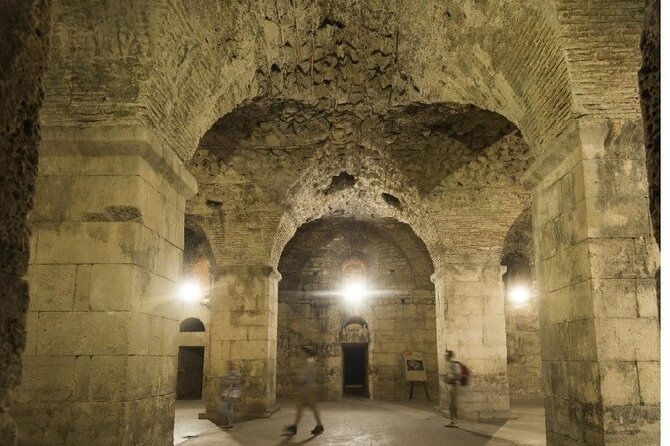
If you only did the open-air palace, you’d miss the real punch. The standout stop is the palace substructures, visited after entering through the Bronze gate.
This is the part that makes Diocletian feel human. Down below, you learn about:
- Diocletian’s rise to emperor and his rule
- his later abdication and retirement
- how the palace was built, including the architectural concept
- the use of precious stone from the island of Brac for construction
Then the guide ties it to Split’s later growth. Salona, the Roman capital town, is explained as a key reason Split developed when the region changed. The tour also explains how invaders from the north destroyed Salona and contributed to the shift that turned Diocletian’s palace into a medieval settlement.
Why this matters: it’s the difference between seeing an old building and understanding why this city exists the way it does. Underground spaces force you to confront the practical side of Roman ambition, not just the pretty facades.
Time check: this substructure visit is longer than most quick stops, so if you have limited energy that day, pace yourself before you go below.
Gates and streets: Golden Gate, Cardo and Decumanus
One of the clever things about this tour is how it teaches movement patterns. It’s not just places; it’s paths.
The Golden Gate is part of that lesson. You’ll hear about its role in Roman planning, including the idea of a so-called people trap concept. Whether you love historical architecture theories or not, it’s a useful way to think about controlled movement, security, and symbolism.
You’ll also get the street framework:
- Cardo and Decumanus as the Roman organizing lines
- the road relationship toward Salona, the Roman capital
- how those Roman lines became meaningful for later city life
This is where a guide beats a guidebook. A book can list names. A guide helps you connect names to what you’re seeing right in front of you.
From the palace into medieval Split squares
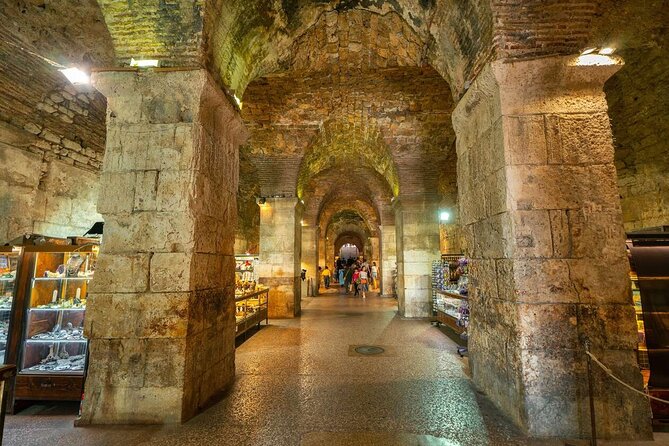
After the palace core, the tour transitions into the medieval city center. This is where your Roman training pays off, because you start seeing how “old framework, new life” plays out in real streets.
You’ll pass through squares that functioned as public anchors:
- Narodni Trg (People’s Square), with the City Hall building and surrounding palaces
- Fruit’s Square (Trg Brace Radic / Vocni trg), a former market area centered on a statue of Marko Marulic, a 15th-century Croatian poet and humanist
Then you’ll get Prokurative Square, described as a space surrounded by neo-Renaissance buildings. It’s often compared to St. Mark’s Square in Venice for its open layout and surrounding palaces. Even if you’ve never been to Venice, it gives you a quick mental model of how the square feels.
This Old Town portion is a good time to ask questions. I like to use the squares to calibrate: you can look around, point at buildings, and get the guide’s take on what matters most here and what didn’t survive.
Chocolate, Grgur Ninski, and a couple of local culture cues
Not every palace tour includes a chocolate stop. This one does, and it’s smart for a couple reasons. First, it breaks the walk without turning it into a long sit-down meal. Second, it adds a modern Split flavor to the Roman and medieval mix.
Nadalina cokolada: a sweet treat inside the palace walls
You’ll treat yourselves at Nadalina cokolada with a couple of sweet items featuring Mediterranean fruit and herbal flavors. There’s an important note: it’s closed on Sundays, so the visit will be skipped if your tour date falls on Sunday. If you’re planning a Sunday trip, don’t build your day around that stop.
Grgur Ninski statue by Ivan Mestrovic
Another quick but memorable landmark is the Grgur Ninski statue, the large figure of the 10th-century Croatian archbishop by sculptor Ivan Mestrovic. Even if the statue itself is familiar to you, it works well as a “palette cleanser” between the dense historical palace sections and the wider Old Town squares.
Split Synagogue and the Jewish ghetto: small, serious, and close
The tour includes a visit to the Split Synagogue in the 16th-century medieval Jewish ghetto.
This stop gives the walk an extra layer beyond Roman and Croatian medieval Christian themes. You’ll learn about the ghetto context and, if the site is open and you’re interested, the tour notes that this is the third oldest operating synagogue in Europe.
Tip from experience: this is a great time to lower your pace and listen closely. The setting is compact, so the guide’s explanations really land.
Price and value: what you’re paying for at $124.34 per person
At $124.34 per person, you’re paying for a private, high-touch walking format in a place where the “how to see it” part matters as much as the “what to see.”
Here’s the value equation as I see it:
- You get a licensed tour guide who organizes a flexible program rather than a rigid script.
- You get a private group, so you can stop for questions and adjust pacing.
- The route is short but packed (around 1 hour 50 minutes to 2 hours 10 minutes), which is useful if you’re on a tight Croatia schedule.
- You’ll receive a mobile ticket and the tour includes options like pickup when you’re staying in the Old Town.
Two things to factor in:
- Entrance fees are not included, so any ticketed sites you choose to enter will add to the total.
- Like most walking tours here, you’re moving on historic streets. If you’re sensitive to heat or uneven ground, plan your day around cooler morning hours.
One last value note: this tour is often booked in advance (on average about 60 days). That’s usually a good sign. It means the route timing and guide staffing aren’t random.
Practical tips for booking and meeting in Split Old Town
This tour runs as a walking experience in and around Split’s historic core. That’s ideal if you’re staying close, but it can mean logistics if you’re farther out.
Pickup works only if you’re staying in Old Town Split. If your hotel is away from the Old Town, you’ll need to meet in the Old Town. For cruise passengers, pickup is at the port at the cruise ship dock exit gate.
If you’re meeting on foot, the tour’s default meeting point is by the bronze model on the Riva, near the coastal promenade. The tour description places it about 20 meters toward the sea from the Southern Palace gate exit.
I’d also plan for basic walking comfort:
- wear supportive shoes
- bring water
- if you’re visiting in peak summer heat, start early like this tour is designed to do
Should you book this private Split and Diocletian’s Palace tour?
Yes, I think you should book it if you want a fast way to understand Split without reading a stack of books first. The biggest reason is the structure: you move from Riva into Diocletian’s Palace, go underground into the substructures, then pop back out into medieval squares. That sequence helps the city click.
You might skip it (or swap your timing) if you hate walking in heat, or if you prefer total independence with no guide direction. Also, if you’re traveling on a Sunday, know the chocolate stop will be skipped.
If your goal is a short, high-impact, guide-led first pass at Split’s Roman-to-medieval layers, this private format is a strong fit.
FAQ
How long is the tour?
It lasts about 1 hour 50 minutes to 2 hours 10 minutes.
Is this a private tour, or do I join a group?
It’s private. Only your group participates.
What language is the tour offered in?
The tour is offered in English.
What is included, and what costs extra?
You get a licensed tour guide and custom-made program organization. You’ll also have a mobile ticket and group discounts. Entrance fees are not included.
Will there be a chocolate stop?
Yes, there’s a stop at Nadalina cokolada with sweet treats, but it’s listed as closed on Sundays, so the visit will be skipped then.
Can I cancel for a full refund?
Free cancellation is available if you cancel at least 24 hours before the experience starts. If you cancel less than 24 hours before, the amount paid is not refunded.