REVIEW · ZADAR
Zadar: City and Wine Tour in Zadar with Eco Tuk Tuk
Book on Viator →Operated by Eco Tuk Tuk Zadar · Bookable on Viator
Two hours can change how you see Zadar. This eco tuk tuk tour strings together the best-known sights in the city, then ends with a local wine stop instead of just dropping you back downtown. The pace is easy, and pickup in Zadar is part of the deal, so you spend your energy enjoying the views.
I especially like how the route hits the waterfront highlights fast, including the Sea Organ and the light show at Greeting to the Sun. The other big win for me is the Degarra Winery finish: a full hour with local wines, plus the kind of relaxed tasting setup that makes the day feel complete, not rushed.
One thing to consider is that the experience needs good weather. If it’s canceled due to rain or poor conditions, you’ll be offered another date or a full refund, so try not to plan anything critical right after your tour time.
In This Review
- Key highlights you’ll care about
- Why an Eco Tuk Tuk Is Smart for Zadar
- Kolovare Beach: A Local Promenade Before Old Town
- Zadar Land City Gates: Venetian Power in One Big Arch
- Sea Organ and Greeting to the Sun: Waterfront Art You Can Feel
- Church of St. Donatus and the Roman Forum: The City’s Old Core
- Barkajoli Boat Tradition and Sfinga Sculpture: Quirky Stops With Character
- Degarra Winery Tasting: Local Wines, Food, and a Relaxed Finish
- Price and What It Buys You in 2.5 Hours
- Timing Tips: How to Get the Most From Each Stop
- Who This Tour Fits Best (And Who Might Skip It)
- Should You Book This Zadar Tuk Tuk and Wine Tour?
- FAQ
- How long is the Zadar city and wine tour?
- What is the tour price?
- Is this a private tour?
- Is pickup available?
- What language is the tour in?
- Are the main sights included without admission fees?
- What does the Degarra Winery stop include?
- Can guests under 18 participate if they can’t taste wine?
- What happens if the weather is poor?
- What is the cancellation policy?
Key highlights you’ll care about
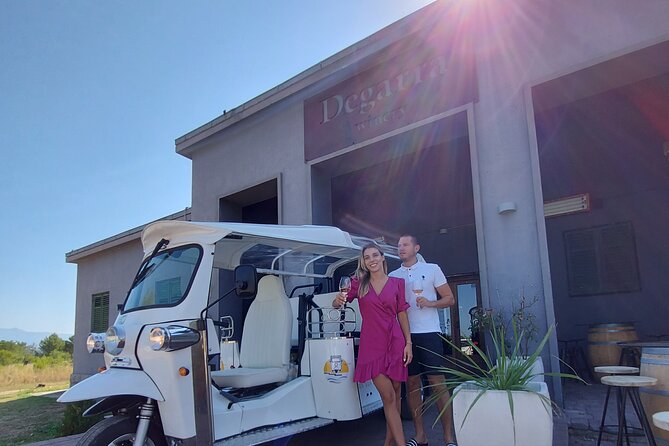
- Eco tuk tuk comfort for short distances: easy getting between old town and outlying spots without the long walking grind
- Free, high-impact stops: Land Gate, Sea Organ, Greeting to the Sun, St. Donatus, and the Forum are all included without paid admission
- Waterfront sound and light moments: Sea Organ is wave-powered, and Greeting to the Sun is a nighttime-style light display
- A local wine hour at Degarra: tastings are included and the setting is built for a slower, more social pace
- Private tour feel: only your group participates, so the guide can shape the timing around you
- Community details beyond the postcard: Kolovare Beach, Barkajoli tradition, and Sfinga add variety beyond the main sights
Why an Eco Tuk Tuk Is Smart for Zadar

Zadar’s a great city, but it can also be a lot—mostly because you’re trying to see a compact old town plus the waterfront plus a few extra neighborhood stops. The tuk tuk format helps you get your bearings fast, and it keeps the day from turning into a stair-and-stone marathon.
What I like here is the rhythm. You’re not stuck in one place long enough to get bored, but you also aren’t herded through everything in a blur. And if you’re starting from within the city, pickup and drop-off in Zadar make it painless to plan.
This tour also works well if you’re the type who wants story plus stops—someone steering you to the spots that matter, with just enough time at each one to actually absorb them.
You can also read our reviews of more tours and experiences in Zadar.

Kolovare Beach: A Local Promenade Before Old Town

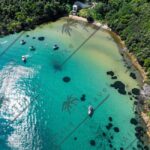
The first stop is Kolovare Beach, a popular stretch of coastline for both citizens and visitors. I like this start because it immediately grounds you in how Zadar lives beyond the historic core. You get the promenade above the water, and you can walk a little, pause for coffee in the morning mood, or think about sunset cocktails later.
Even if you’ve never heard of Kolovare, you’ll feel it: the beach isn’t trying to be a theme park. It’s more like a neighborhood shoreline that happens to be easy to reach. That makes it a good warm-up before you shift into the older, more monumental sights.
Zadar Land City Gates: Venetian Power in One Big Arch
Next comes the Land Gate (Zadar Land City Gates), the most famous entrance among the old walls. This is where you start seeing Zadar’s layers in a clear, physical way: a Venetian architect, Michele Sanmicheli, built the main structure in 1543.
It’s a dramatic gateway, with a huge triumphal arch and two side arches. I like the details around it, especially the imagery connected to the city’s patron saint, Chrysogonus. You’ll also spot the winged lion of St. Mark hovering over the central arch, which is a reminder of Venice’s long rule over Zadar.
The stop is short, but the gate is the kind of place where you can look longer without feeling like you’re wasting time. It’s also a good photo moment, since the Foša harbor sits nearby for that watery backdrop.
Sea Organ and Greeting to the Sun: Waterfront Art You Can Feel

This is the part of Zadar that tends to stop people mid-sentence. The Sea Organ is an architectural sound installation where sea waves push air through tubes under marble steps. So instead of a speaker system or a scheduled performance, you’re listening to the water do the work.
You don’t need to be a music person to enjoy it. It’s more sensory than technical. If the sea is moving, you get the effect. If it’s calmer, you still have the structure and the idea, and you’ll likely hear something different—same object, different mood.
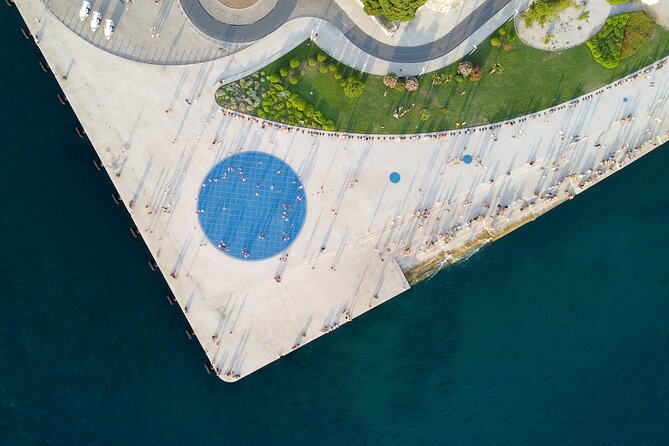
Then you’ll head to Greeting to the Sun (Pozdrav suncu). This monument is made of hundreds of multi-layered glass plates set along the stone-paved waterfront. At night, lighting elements in a circle turn on for a light show.
Practical thought: timing matters here. If your tour starts earlier, you’ll see it in daylight first and then might catch more of the lighting only if the evening setup lines up with your visit. Either way, it’s one of those places where you understand Zadar isn’t just old stone—it’s also experiments in sound and light.
Church of St. Donatus and the Roman Forum: The City’s Old Core
After the waterfront stops, you shift into classic “walk through time” territory with the Church of St. Donatus and the Forum.
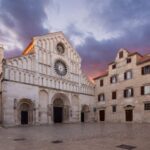
The Church of St. Donatus is named for Donatus of Zadar, and construction began in the 9th century. It’s anchored to the Roman forum area, so you’re standing in a spot where multiple eras overlap. I like this kind of context because it turns a single building into a map of the past.
Right nearby is the Forum, built between the 1st century BC and the 3rd century AD. The stop is brief, but it’s still useful. Even when you’re not reading every stone, you can grasp scale and placement—what was once a central public space, now part of the modern city fabric.
If you’ve already walked the old streets on your own, this sequence helps you catch details you might otherwise miss. If you haven’t, it gives you a clean base to understand the rest of what you’ll see later.



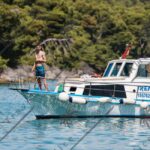
Barkajoli Boat Tradition and Sfinga Sculpture: Quirky Stops With Character

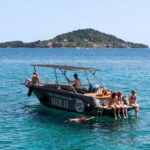
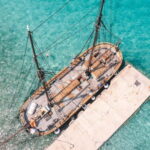
One of the more interesting inclusions is the Barkajoli tradition. From morning to late evening, Barkajoli row a little boat across the Zadar peninsula to the mainland and back. It’s a living practice, tied to local history and the idea of continuity on the water.
This is the kind of stop that gives Zadar flavor without pretending it’s a museum. You see that the sea isn’t only scenery here—it’s transportation, work, and tradition.
Then there’s Sfinga (sfinge), a sculpture in the park of Villa Attilia in the Brodarica neighborhood. Its exact year isn’t fully confirmed, but it’s assumed to have been built around 1918. That uncertainty actually adds to the charm. You’re not just ticking off a landmark; you’re noticing how stories attach to objects over time.
Both of these stops are short. But they break the pattern, which I think is key on a 2.5-hour tour. You get more variety than the typical old town-only route.
Degarra Winery Tasting: Local Wines, Food, and a Relaxed Finish
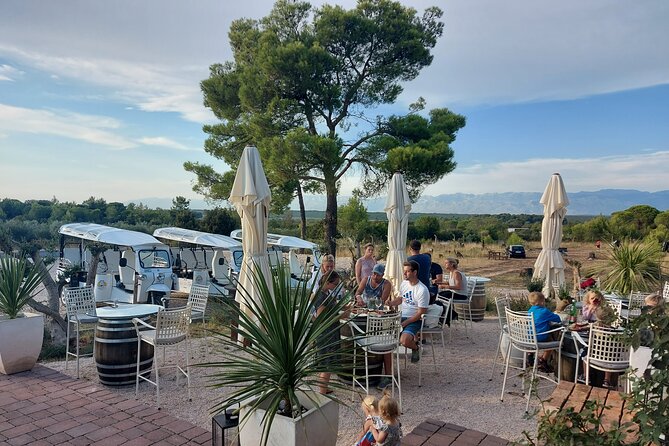
The tour’s end point is Degarra Winery, and this is where the experience turns from sightseeing into something more personal. You’ll spend about an hour here, and admission for the tasting is included.
Degarra is described as a small, young winery founded by two friends. What matters for you is the vibe: a nice bar, local service, and wines that feel connected to the region instead of imported and packaged for tourists.
In practice, this tasting tends to include three wine tastings and a charcuterie spread. I like that combination because wine alone can become a checklist. Food helps you slow down, compare flavors, and actually talk about what you’re tasting.
Also, there’s a clear rule: wine tasting isn’t available for guests under 18. If you’re traveling with younger family members, you can still enjoy the tour, but you’ll want to plan around what’s included for them at the winery stop.
If your day so far has been water, stone, and sound, this hour gives you a different kind of memory—something you can take home even if you only remember a single glass you loved.
Price and What It Buys You in 2.5 Hours
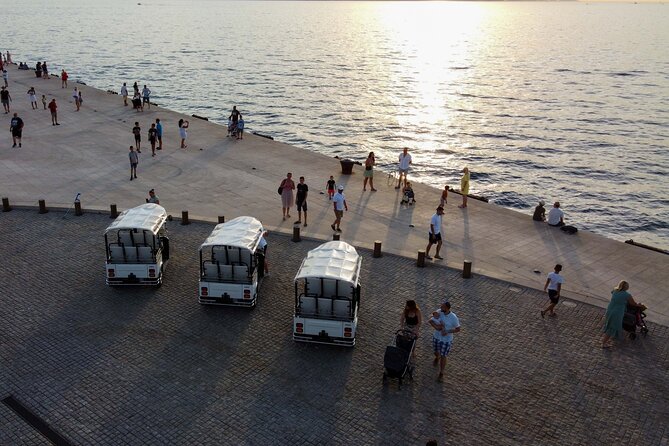
At $108.14 per person for about 2 hours 30 minutes, you’re paying for three things: transport, a guided route through key Zadar sights, and the Degarra Winery tasting.
Here’s why that can be good value:
- Many of the main city stops are free (Land Gate, Sea Organ, Greeting to the Sun, St. Donatus, the Forum), so you’re not just paying entry fees.
- The winery component is included, and the tasting is the kind of experience you’d struggle to coordinate on your own without local connections.
- Since it’s private for your group, you’re not waiting for other parties to make your schedule feel painful.
If you’re the kind of traveler who wants to see a lot without doing a ton of planning, this is the price bracket that makes sense. If you only care about one or two landmarks, you might not get full value from the tour length. But if you want a smooth overview plus a proper ending, the math usually works out.
Timing Tips: How to Get the Most From Each Stop
This is a short tour, so the “how” matters as much as the “where.”
- Aim to show up ready to move. Pickup is offered within the city, but once you’re on the route, you’ll want to stay flexible.
- Keep an eye on the waterfront timing. Greeting to the Sun’s lighting is designed for night, so if your start time is later, you’ll often get the full effect.
- If you’re planning photos, the Sea Organ and the waterfront monuments are where you’ll want your hands free and your attention up. The sound element isn’t a thing you can fully capture through a phone screen.
One small note from real-world experience: start times can shift based on the day’s operation, and that can actually help. If your tour lines up with sunset from the city viewpoint, you’ll likely appreciate the payoff.
Who This Tour Fits Best (And Who Might Skip It)
This tour is a strong fit for:
- Couples or small groups who already did some old town wandering but want a second pass that’s guided and efficient
- People who like variety: beach + walls + waterfront sound/light + a winery
- Travelers who want a private experience without spending half a day on logistics
It may not fit you as well if:
- You want to spend long hours inside churches and museums. This tour is designed for short, meaningful stops.
- You’re visiting in poor weather and hate plan changes. The operator requires good weather and will adjust with a refund or alternate date if conditions are bad.
Overall, I think it hits a sweet spot: it’s not just a drive-by. You get enough time at each highlight to remember it.
Should You Book This Zadar Tuk Tuk and Wine Tour?
If you want a smart, efficient way to see Zadar’s biggest waterfront and historic anchors, plus an included wine tasting at Degarra, this is an easy yes. The free landmark sequence lowers the risk, and the winery finish makes the tour feel like more than a sightseeing loop.
I’d book it if your schedule is tight and you’d like someone to handle the order of stops. I’d think twice only if you can’t be flexible about weather or if you only care about one or two locations.
For most visitors, though, it’s a practical way to get the best of Zadar without overplanning—and to end the day with something local you can taste.
FAQ
How long is the Zadar city and wine tour?
The tour runs about 2 hours 30 minutes.
What is the tour price?
The price is $108.14 per person.
Is this a private tour?
Yes. It’s private, so only your group participates.
Is pickup available?
Pickup and drop-off are offered within Zadar. If you’re staying outside the city, you can agree on a pick-up location accordingly.
What language is the tour in?
The tour is offered in English.
Are the main sights included without admission fees?
The stops listed for Land Gate, Sea Organ, Greeting to the Sun, Church of St. Donatus, and the Forum are marked as free.
What does the Degarra Winery stop include?
You get an hour at Degarra Winery with local wine tasting included.
Can guests under 18 participate if they can’t taste wine?
Most travelers can participate, but wine tasting is not available for guests under 18.
What happens if the weather is poor?
The experience requires good weather. If it’s canceled due to poor weather, you’ll be offered a different date or a full refund.
What is the cancellation policy?
You can cancel for a full refund up to 24 hours in advance of the experience start time. Cancellations within 24 hours aren’t refunded, based on local time.