REVIEW · ZADAR
Zadar: City Highlights Guided Walking Tour
Book on GetYourGuide →Operated by Cultourist · Bookable on GetYourGuide
Zadar’s past and present share the same walk. This 90-minute tour mixes sea-side sound art with ancient stones, and I love how the Sea Organ and the Roman Forum frame the whole experience. You’ll also get plenty of story time at the city’s key landmarks, plus photo stops that make the modern waterfront feel like part of the same history.
One thing to consider: the Cathedral of St. Anastasia stop is mainly an exterior look, since entrance isn’t included. Also, if you’re choosing a specific language, it’s smart to go in expecting that guide communication styles can vary by person.
In This Review
- Key highlights to watch for
- Land Gate and Foša Harbor: the wall route that sets the tone
- Square of Five Wells: Venetian-era water in a city-building moment
- Kalelarga and Narodni trg: a simple walk that ties old town together
- Roman Forum: the ancient civic center explained in human terms
- Cathedral of St. Anastasia: why the outside matters (and what you won’t get)
- Greeting to the Sun and Sea Organ: modern art that belongs on the same map
- Price and group value: $164 for up to 5 people
- Who should book this walking tour (and who might not love it)
- Should you book this Zadar highlights tour?
- FAQ
- FAQ
- Where do I meet for the tour?
- What’s the duration?
- How much does it cost?
- Is this a private tour?
- What languages are available?
- What will I see along the way?
- Is entrance to the Cathedral of St. Anastasia included?
- Is the tour wheelchair accessible?
- What should I wear or bring?
- Is free cancellation available?
Key highlights to watch for
- Foša harbor + Land Gate: you start right at the edge of the old city walls.
- Square of Five Wells: Venetian-era water history you can see in one stop.
- Kalelarga to Narodni trg: a walk that connects major squares without feeling rushed.
- Roman Forum: the ancient civic heart, explained in plain terms.
- St. Anastasia from the outside: a quick but meaningful architectural anchor.
- Greeting to the Sun + Sea Organ: the best modern contrast in Zadar, perfect for photos.
Land Gate and Foša Harbor: the wall route that sets the tone
The tour starts at the Land Gate (Kopnena vrata), just outside the old city walls in the Foša area. This is a great starting point because it puts you in the right mental frame fast: you’re not just “walking around,” you’re tracing how Zadar protected itself and how people once moved in and out.
From there, you head along the city walls and hear the kinds of details that make stone feel like a timeline. City walls aren’t just a backdrop in Zadar. They’re a map of priorities—where defenses were needed, where control mattered, and how the waterfront shaped daily life. I like that the guide doesn’t treat the walls as random steps. You get a sense of why this route matters before you reach the big squares.
One practical win: the start-and-stop structure keeps you oriented. You’re introduced to the old town edge first, then pushed inward toward the Roman and medieval anchors. If you’re new to Zadar, that order helps.
You can also read our reviews of more tours and experiences in Zadar.

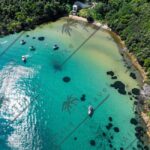
Square of Five Wells: Venetian-era water in a city-building moment

Next up is the Square of Five Wells. It’s a small place that carries a big message: water management under Venetian influence. The guide’s job here is to connect what you’re seeing to what it meant for real life—how a city organized its resources and what that says about power.
This stop is also ideal for a quick reset. You get the guided context, then you have a minute to look around on your own. Even if you’re not the type to read plaques, you’ll likely notice how the square functions as a focal point. It’s the kind of landmark that makes the old town feel intentionally planned, not just naturally grown.
If you love architecture, you’ll appreciate how smoothly Zadar layers eras. Venetian features don’t erase older ones; they sit beside them. You start to see the city as a long conversation.
Kalelarga and Narodni trg: a simple walk that ties old town together
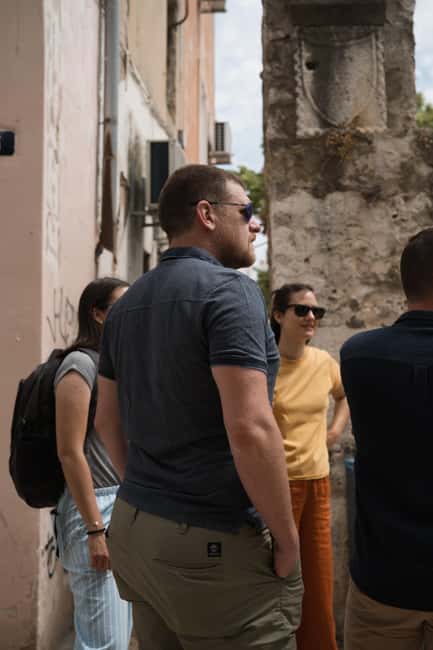
After Five Wells Square, you stroll along Kalelarga, then reach Narodni trg (People’s Square), the lively heart of the old town. This is the part where the tour turns from “point-of-interest sightseeing” into “getting your bearings.”
Kalelarga is one of those streets that works at walking speed. You can actually take it in: facades, street rhythm, and the way the squares connect. Narodni trg then feels like the natural payoff. It’s where you can pause and look across old buildings while still feeling the place in motion.
What I like about this segment is the balance. You’re not stuck in one spot for a long time. But you also don’t rush past it like a stamp-collecting checklist. The guide gives you enough structure to understand why this is the heart of the old town, then you get time to take it in at your own pace.
Photo tip: if you’re aiming for nice street-level shots, bring your camera out during the transition between Kalelarga and Narodni trg. That’s where you can capture the “walk-in-place” feeling—old stone framing everyday life.
Roman Forum: the ancient civic center explained in human terms
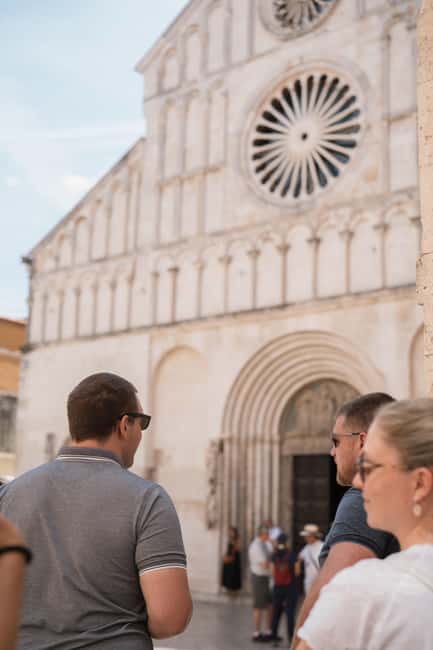
The Roman Forum stop is where Zadar’s ancient identity becomes very concrete. This was once the center of ancient life, and the guide helps you picture it as more than a ruin. You’re guided through the space with enough context to understand what kind of public energy it must have had.
The biggest value here is interpretation. Roman forums weren’t only about buildings; they were about gatherings, decisions, and community visibility. When you stand in the area, it can be hard to tell what happened where. A good guide makes the geometry of the site feel logical—where public attention likely focused, how the forum connected to the life around it, and why this location mattered.
Also, Roman Zadar doesn’t feel like a separate “Roman day” in your trip. It’s part of the same story you started when you walked the walls. The city evolves, but the public center energy keeps returning, just wearing different clothes.
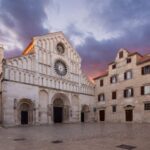
Cathedral of St. Anastasia: why the outside matters (and what you won’t get)
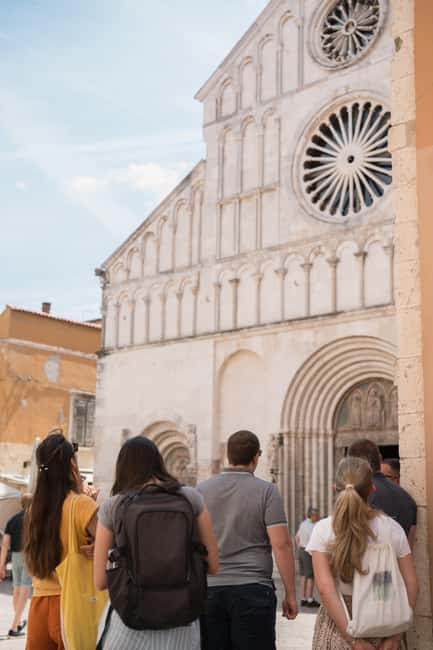
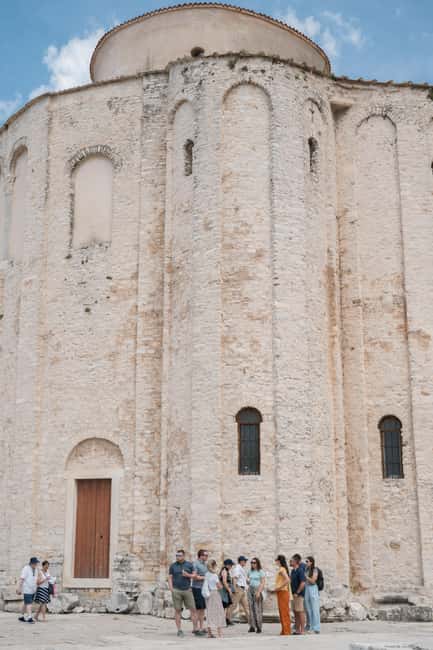
From the Roman Forum, you head to the Cathedral of St. Anastasia. The tour includes admiration from the outside, and that’s actually a useful way to see it—especially on a 90-minute schedule.
Since cathedral entrance isn’t included, don’t expect a guided interior. Instead, treat this stop as an architectural read. The outside view gives you a clean chance to notice the cathedral as a visual statement in the old town—how it anchors the surrounding streetscape and signals importance.
If you’re the kind of traveler who loves a quick “shape and style” moment, this fits. If you specifically want interior details, you’ll need to plan that separately.






Greeting to the Sun and Sea Organ: modern art that belongs on the same map
The tour ends at two of Zadar’s signature modern landmarks: the “Greeting to the Sun” light installation and the Sea Organ.
The Greeting to the Sun is your photo stop. It’s the kind of installation that encourages you to slow down and frame shots, because it’s designed for visibility and effect. Even if you’re not a tech-art person, it’s easy to understand why it’s become Zadar’s modern calling card. It visually connects you to the waterfront and shifts your perspective from centuries-old architecture to contemporary creativity.
Then you finish at the Sea Organ. This is the other half of the pairing: you’re not just looking at something; you’re hearing it. The Sea Organ produces sounds through the interaction of water and the structures built for it. It’s a rare travel moment where the city uses engineering as a kind of instrument.
I like that the tour uses these two landmarks at the end. By the time you reach them, you’ve already moved through walls, squares, and ancient space. So the modern waterfront doesn’t feel random. It feels like Zadar is still in the business of shaping how people experience the sea.
Price and group value: $164 for up to 5 people
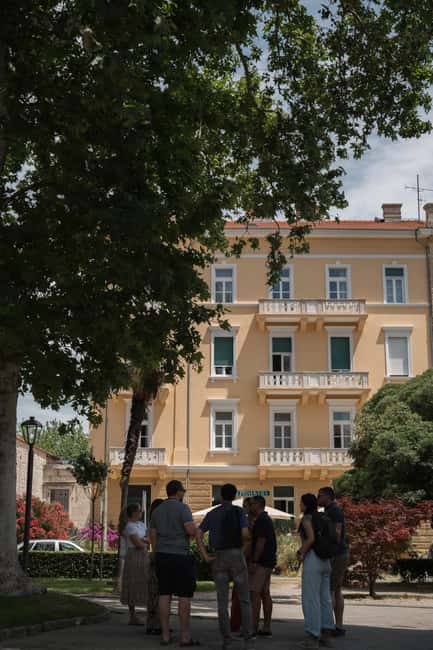
At $164 per group up to 5, this tour is priced for small groups, which is part of the value. You’re not paying per person only to sit in a large crowd. Instead, you can get the back-and-forth you want—questions, clarifications, and a guide who can adjust pacing.
It lasts 90 minutes, which is long enough to cover major landmarks without dragging. If you’re doing Zadar for the first time and want the quickest “here’s what matters” route, this duration is practical.
Guides are live and multilingual, with English, German, Italian, French, and Croatian listed. A couple of key points to keep expectations healthy:
- In one case, German was described as hard to follow, so if you’re booking in a language you’re not fully fluent in, arrive ready to use your instincts for context.
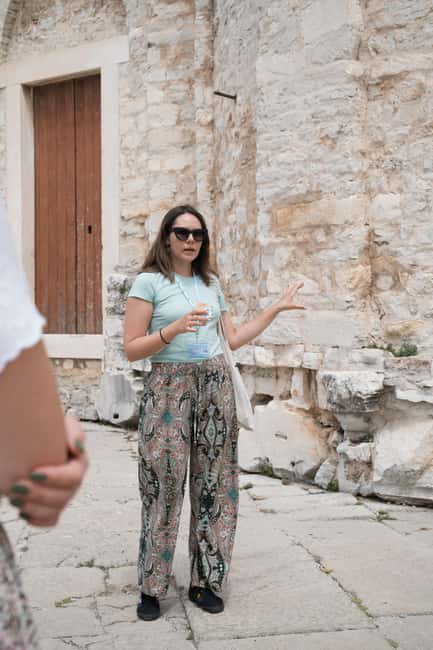
- Other experiences highlight a guide named Masa (Mascha) for thoughtful explanations and patience with questions, including answers that go a step beyond the surface.
That combination—small-group flexibility plus language options—makes it a good deal when you want real stories, not just a route.
Who should book this walking tour (and who might not love it)

This tour makes sense for:
- First-time visitors who want a curated sweep of old town highlights in under two hours
- Culture lovers who care about how different eras connect
- Anyone who enjoys photo opportunities at the Greeting to the Sun and waterfront
- Small groups of friends or family who want a more personal pace
It may be less ideal if:
- You want deep time inside museums and churches. This itinerary focuses on seeing major sites, with the cathedral stop from the outside.
- You’re hoping for a long, slow meander through side streets. The route is structured and time-boxed to stay efficient.
The best match is someone who likes walking, likes context, and wants to understand Zadar without spending your whole day relocating.
Should you book this Zadar highlights tour?

Yes, if your goal is a high-signal overview of Zadar’s old town plus its most famous modern waterfront moments. The route connects the walls, Venetian-era Five Wells Square, Narodni trg, the Roman Forum, and then lands you at the Sea Organ and Greeting to the Sun for a memorable close.
I’d book it especially if you’re traveling in a group of up to five and you want the guide to help you see patterns instead of collecting isolated sights. Just wear comfortable shoes and bring a camera, because you’ll want it at both the old town landmarks and the modern water-side finales.
FAQ
FAQ
Where do I meet for the tour?
Meet at the Land Gate (Kopnena vrata) at Foša, just outside the old city walls. It’s next to the small Foša harbor and bridge.
What’s the duration?
The tour lasts 90 minutes.
How much does it cost?
It’s $164 per group, up to 5 people.
Is this a private tour?
Yes. It’s listed as a private group.
What languages are available?
The live guide offers English, German, Italian, French, and Croatian.
What will I see along the way?
You’ll cover the Foša harbor area and city walls, Square of Five Wells, Kalelarga, Narodni trg, the Roman Forum, the exterior of Cathedral of St. Anastasia, the Greeting to the Sun installation, and the Sea Organ.
Is entrance to the Cathedral of St. Anastasia included?
No. The tour includes viewing the cathedral from the outside only.
Is the tour wheelchair accessible?
Yes, it’s listed as wheelchair accessible.
What should I wear or bring?
Wear comfortable walking shoes and bring a camera for photo opportunities.
Is free cancellation available?
Yes. You can cancel up to 24 hours in advance for a full refund.