REVIEW · ZADAR
Zadar City Tour 90min Walk
Book on Viator →Operated by ZADAR CITY TOUR · Bookable on Viator
Zadar’s history fits on one walk. In about 1 hour 30 minutes, this English-language small-group tour threads together the waterfront installations and the Old Town layers (Roman, medieval, Venetian) without wasting your time. I especially like the way the guide connects the dots, and I also like the chance to pick up local tastes along the way if the stops line up.
Just know the pace is brisk and several major sights are view-only: you’ll see spots like the Cathedral of St. Anastasia and St. Donatus from the outside, and the tour doesn’t include entrance fees. There are also no toilet breaks or transfer service built in, and the provider says the experience requires good weather—so plan accordingly.
In This Review
- Key highlights worth planning around
- Why this Zadar walking tour works in 90 minutes
- Meeting at the Land Gate or Sun Greeting: get your start time right
- Greeting to the Sun and the Sea Organ: Zadar’s waterfront “wow” stops
- Stop: Greeting to the Sun (2008)
- Stop: Sea Organ (2005)
- Cathedral of St. Anastasia, the Roman Forum, and Stup srama
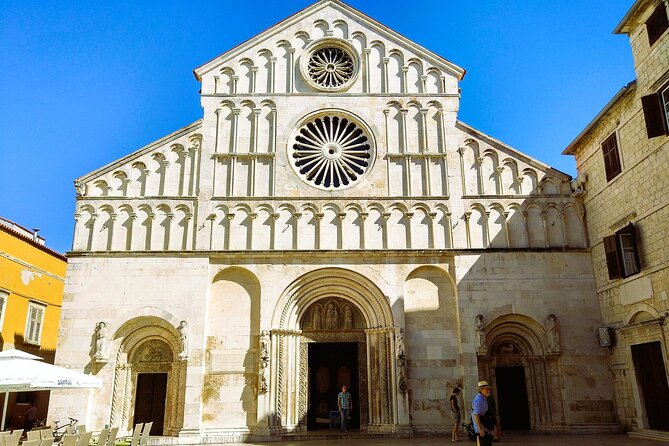
- Stop: Cathedral of St. Anastasia
- Stop: The Forum (1st century BC)
- Stop: Stup srama (Pillar of Shame)
- St. Donatus and the monastery zone: view-only stops that still matter
- Stop: Church of St. Donatus
- Stop: Benedictine Monastery of St. Maria
- Narodni trg and Venice Republic street power
- Stop: People’s Square (Narodni trg)
- Stop: City Guard (16th century)
- Stop: Gradska loža (16th century city hall)
- Kalelarga and the New Gate: where the streets tell the story
- Five Wells and the Land Gate: finishing strong
- Stop: Five Wells
- Land Gate (18:30 start)
- The possible free extras: Maraskino, cheese, and medieval church chances
- Your guide’s style: Dorja/Doria, Danja, and what to expect
- Practical value: what you pay for (and what you’ll still need to plan)
- Who this tour fits best
- Should you book the Zadar City Tour 90min Walk?
- FAQ
- How long is the Zadar City Tour 90min Walk?
- What does the tour cost?
- What language is the tour offered in?
- How big is the group?
- Which stops are free, and which have no entrance included?
- Is the Greeting to the Sun included for every tour time?
- Does the tour include tastings or church entrance fees?
- What’s not included in the tour?
- What should I know about weather and refunds?
Key highlights worth planning around
- Sea Organ (2005) and the piano-key promenade: a famously unusual sound installation you can experience close-up.
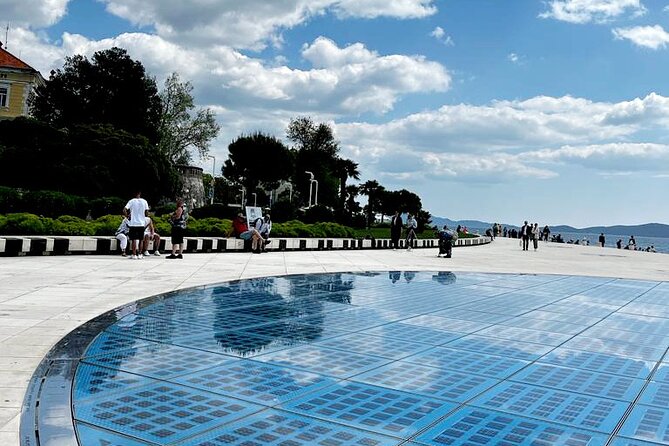
- Greeting to the Sun (2008) in solar panels: solar-system artwork set right in the ground.
- Roman Forum + Stup srama (Pillar of Shame): two stops that make medieval history feel physical.
- Venetian-era squares and buildings: Narodni trg and Gradska loža are quick, striking, and easy to spot.
- Optional free extras: a possible medieval church entrance and/or Maraskino and cheese tastings depending on the route that day.
Why this Zadar walking tour works in 90 minutes
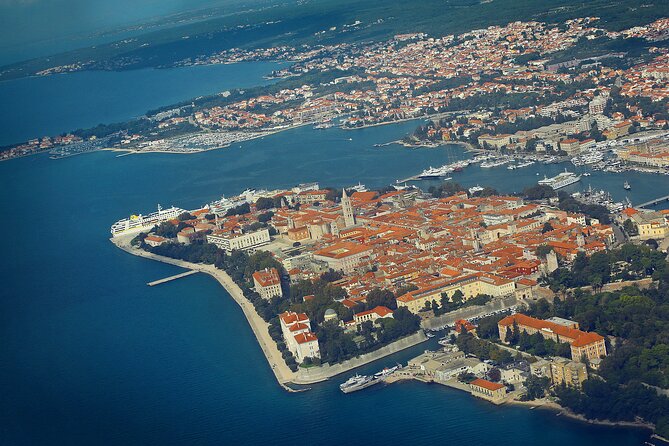
This is a classic “get your bearings fast” Zadar plan. You cover a lot of ground on foot, but it doesn’t feel like a nonstop march through random plaques. The tour is designed around the kind of highlights that help you understand why Zadar looks the way it does today: coast first, then the historic core, then the Roman-and-Venice leftovers that still shape the streetscape.
The price—$26.43 per person—is fairly reasonable for what you get: guided time in English, a group capped at 15 travelers, and multiple free-to-view landmarks. If you’re in Zadar for just a day or two, this kind of guided “spine” makes the rest of your self-guided wandering much easier. And because it’s a small group, you’re less likely to get lost in the shuffle.
The trade-off is that the tour is short by design. If you want to spend long minutes inside every church (or if you need a lot of breaks), this won’t match your style. Think of it as orientation plus storytelling, not a slow museum day.
You can also read our reviews of more tours and experiences in Zadar.

Meeting at the Land Gate or Sun Greeting: get your start time right
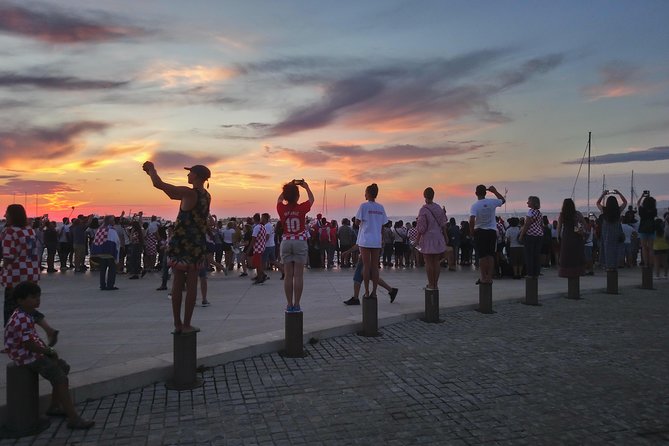
Your biggest planning trick is choosing the right departure. The tour runs on two different schedules that change what you’ll see.
- The 11 AM tour excludes the Land Gate.
- The 18:30 PM tour starts at the Land Gate and excludes the Sea Organs.
On the evening schedule, your guide waits in front of the Land Gate next to the bikes, which makes it easier to spot them when you arrive. If you’re trying to see both major waterfront installations (Sea Organ and Greeting to the Sun), you may need to pick the date and time carefully based on what’s included for that specific departure.
Either way, the walk is built so you get useful context as you move, not after you’ve already missed the meaning of what you’re looking at.
Greeting to the Sun and the Sea Organ: Zadar’s waterfront “wow” stops
Zadar has a talent for making modern ideas feel part of the city—not stuck in a museum corner.
Stop: Greeting to the Sun (2008)
This one is easy to find but still cool enough to make you pause. It’s a major public installation created in 2008, representing the solar system using solar panels set into the ground. The setup is free, and your stop is short, so you’ll get a quick look plus the story behind why it became such a well-known piece of public art.
One practical tip: if you’re photographing, do it early at this stop. Later on, you’ll be in tighter clusters of old streets where it’s harder to get clean shots without blocking people.
Stop: Sea Organ (2005)
Then comes the more famous “sound” installation: the Sea Organ from 2005. It’s designed like a piano keyboard on the promenade, and the sea helps make it sing. It’s also a free stop, but note again: it’s not included on the evening tour.
Even if you’re not the type to chase installations, this stop usually works because it’s different. It connects the coastline to the city’s identity in a way that a typical landmark just can’t.




Cathedral of St. Anastasia, the Roman Forum, and Stup srama

Once you leave the waterfront mood, the tour shifts into layers of older Zadar—Roman foundations, then medieval meaning, then the way those eras collide in the same street view.
Stop: Cathedral of St. Anastasia
This is Zadar’s biggest Romanesque church, and it’s a must-see from the outside. The stop is about the setting and the significance; the tour doesn’t include entrance here. That can sound like a drawback, but for many people it actually helps. You get the story and you can keep walking without adding time buffers for tickets.
Stop: The Forum (1st century BC)
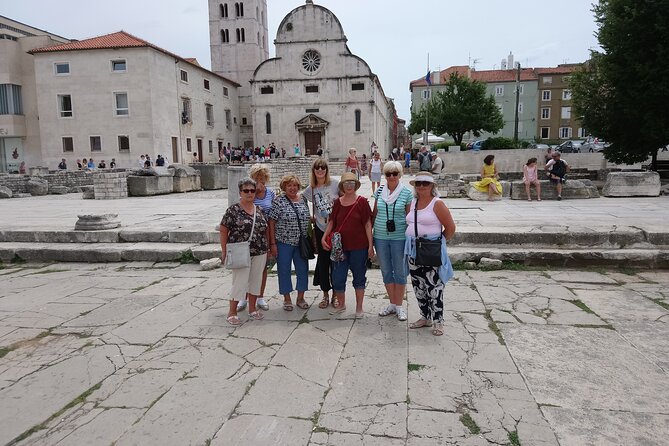
The Roman Forum stop is short, but it’s valuable because it gives you a time anchor. The tour frames it as an ancient Roman Forum from the 1st century BC, and that matters when you’re later looking at the rest of the Old Town. Seeing the Forum while the guide explains the Roman footprint makes the city feel less like “pretty old buildings” and more like an actual plan laid down centuries ago.
Stop: Stup srama (Pillar of Shame)
This stop is quick—just minutes—but it’s one of the most memorable on the walk. Stup srama is one of two big Roman columns that survived, then later became known as the Pillar of Shame during the Middle Ages. The fact that it’s still there today turns history from an idea into something you can point at.
If you like when a tour makes you feel the physical presence of the past, this is the kind of stop that delivers.
St. Donatus and the monastery zone: view-only stops that still matter
Not every big religious building here is a “go inside” moment on this tour. That’s partly why the itinerary keeps moving, and it’s something you should expect going in.
Stop: Church of St. Donatus
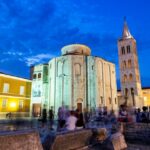
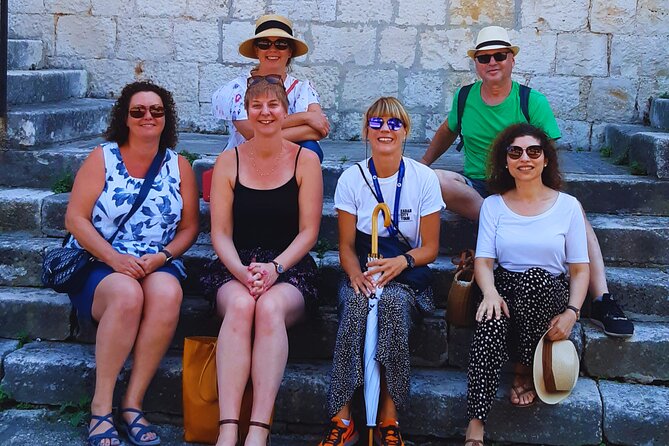
You’ll see this 9th-century desacralized church built as a huge rotunda in a pre-Romanesque style. There’s no entrance included on this stop, so your time is spent on the exterior form and the reason it’s famous.
Even without entering, it helps to have someone explain the rotunda idea while you’re standing near it. The building’s shape becomes easier to understand when you’re not trying to interpret it from memory later.
Stop: Benedictine Monastery of St. Maria
This is the feminine Benedictine convent of St. Mary from the 11th century, with a Renaissance church. Again, the tour doesn’t include an entrance. You’ll get the key context, and you keep moving.
If you’re someone who always wants to go inside, this may feel like you’re skipping the best part. If you’re someone who wants the guided overview first, it’s a good trade: you save time and you still learn why these places were important.
Narodni trg and Venice Republic street power
This part of the tour is where the city starts to feel “designed.” You go from isolated monuments into the everyday geometry of Old Town.
Stop: People’s Square (Narodni trg)
Narodni trg is a place you’ll likely pass even after your tour ends. The stop focuses on what surrounds it, including the City Loggia and the City Guard from medieval times. It’s also where the tour makes the Venetian connection feel practical rather than abstract.
Stop: City Guard (16th century)
The tour also highlights the 16th-century City Guard. Like many of the stops here, there’s no entrance included, so the value is in recognizing what you’re looking at and learning why it dates to the Venice Republic government era.
Stop: Gradska loža (16th century city hall)
Next is Gradska loža, the 16th-century City Hall built during the Venice Republic period. It’s another view-only stop that still lands well because it’s clear and photogenic in a short time.
Kalelarga and the New Gate: where the streets tell the story
Two quick segments in the tour connect the old street plan and the newer urban layers.
Kalelarga is described as the biggest street on the peninsula, used to be the main Roman Decumanus. When you hear that while walking the street, it stops being just a shopping corridor and becomes a route with a past.
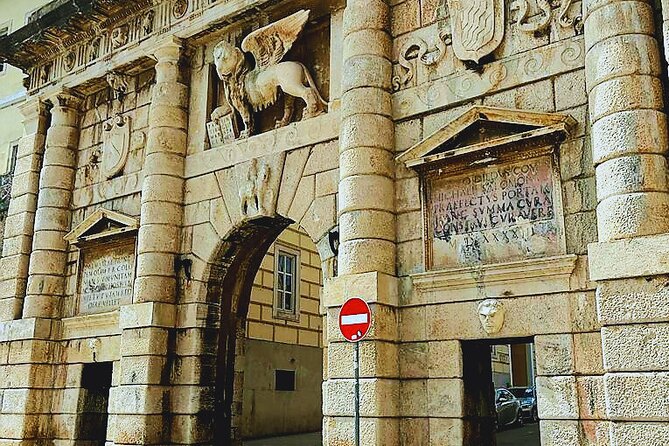
Then you’ll see the New Gate visible from People’s Square. The tour notes it as the last gate built in 1931. That’s a small detail, but it’s a useful reminder: Zadar’s story doesn’t stop at antiquity or medieval times. The city keeps adding layers.
Five Wells and the Land Gate: finishing strong
Not every departure includes the same extras, so here’s how the last pieces work.
Stop: Five Wells
Five Wells is free to view, but it’s not included on the morning tour. Still, if your schedule includes it, it’s worth the few minutes. Stops like this work well on a walking tour because they’re short, clear, and easy to remember later when you’re planning where to wander on your own.
Land Gate (18:30 start)
For the evening departure, you start at the Land Gate, described as a huge Venice Republic Land Gate built in the form of a triumphal arch. Your guide meets you outside at this location near the bikes. Starting here gives you a strong “threshold” moment: you begin with the gate story and then move inward into squares, churches, and Roman remnants.
The possible free extras: Maraskino, cheese, and medieval church chances
One of the most practical reasons to book a guided walk is not only what you see, but how it helps you interact with the city after the tour.
This tour includes the possibility of free extras on the way, such as:
- a possible free entrance to a medieval church, or
- Maraskino/cheese tastings
In the reviews, I saw this type of stop repeatedly connected with shops offering local cheese and liquor samples, including Maraska. That matters because it turns the “Old Town is just scenery” feeling into something more sensory. Even if the tasting isn’t offered on every departure, the concept is the same: you’re not only learning about the region—you’re getting a taste of the products people actually buy.
If you have a tight schedule, these optional stops can feel like value boosters. If you don’t care about food and drink, that’s fine too; the core of the tour is still the landmarks.
Your guide’s style: Dorja/Doria, Danja, and what to expect
The guide is a big part of why people rate this tour so highly. In the feedback, the guides are praised for clear English, solid historical context, and for answering questions instead of rushing people along.
Names you may encounter include Dorja (also written as Dorija and Doria in different notes) and Danja when an associate leads. A common theme is that the guide connects Roman times through to more recent conflicts, then ties it back to what you can see right now in Zadar.
There are also a couple of honest warning signs:
- One review mentioned a style that felt more like lecturing than a conversation.
- Another mentioned an associate being a bit hard to hear on busy streets.
My practical advice: at the start, set your expectation. If you want questions and back-and-forth, say it early. Guides can adjust how they pace their explanations when they know the group needs a different format.
Practical value: what you pay for (and what you’ll still need to plan)
Here’s the value equation in plain terms.
What you pay for:
- Guided time over the city’s most important Old Town sights
- English service
- Free-to-view stops (many key installations and landmarks)
- Small group size (max 15)
- A mobile ticket
What you should plan around:
- Several major churches are view-only with no entrance included
- No toilet breaks are listed
- No transfer service is provided
- Animals aren’t allowed
- It’s not recommended if you have mobility issues
This is the kind of tour where good shoes matter. The walking is part of the experience, and you’ll be moving between stops quickly enough that slip-resistant footwear is a smart move.
Also, the provider says the experience requires good weather. That doesn’t mean cancel at the first cloud—one review describes a torrential rain day handled well—but it does mean you should have flexibility.
Who this tour fits best
You’ll likely love it if you:
- want a high-impact Old Town overview in a short visit
- enjoy architecture and the way different periods overlap
- like story-based guidance more than a checklist of facts
- appreciate small-group attention (max 15)
You might skip or choose something else if you:
- need lots of entrances and long indoor time
- have mobility limitations that make walking hard
- strongly prefer a conversational guide style over a structured explanation
Should you book the Zadar City Tour 90min Walk?
Yes—if you want Zadar to make sense quickly. This is a solid value for the price, mostly because it doesn’t just point at famous spots. It helps you connect the waterfront installations to the Roman layout, then to the medieval and Venetian layers that shape what you see around Narodni trg and beyond. The small-group size helps, and the guide quality seems to be the biggest driver of satisfaction.
Book with the right expectation: you’ll see a lot, but not everything is an entrance. If that trade works for you, you’ll leave with a clearer mental map and better instincts for where to wander next.
If your priority is specifically Sea Organ or the Land Gate architecture, double-check the departure time so you don’t show up expecting something that isn’t on your schedule.
FAQ
How long is the Zadar City Tour 90min Walk?
It lasts about 1 hour 30 minutes.
What does the tour cost?
The price is $26.43 per person.
What language is the tour offered in?
The tour is offered in English.
How big is the group?
The maximum group size is 15 travelers.
Which stops are free, and which have no entrance included?
Many stops are free to view, including the Forum, Stup srama, Narodni trg, and Gradska loža. Some major buildings like the Cathedral of St. Anastasia, the Church of St. Donatus, and the Benedictine Monastery of St. Maria are listed as view-only with no entrance included.
Is the Greeting to the Sun included for every tour time?
The Greeting to the Sun is part of the walk, listed as a free stop. The Sea Organ is specifically noted as not included on the evening tour, and the Land Gate is noted as excluded from the morning tour.
Does the tour include tastings or church entrance fees?
The tour includes possible free extras on the way, such as a medieval church entrance and/or Maraskino and cheese tastings. Entrance/tastings are not guaranteed for every stop, but the option is part of what’s included.
What’s not included in the tour?
Toilet breaks and transfer service are not included.
What should I know about weather and refunds?
The experience requires good weather, and free cancellation is available up to 24 hours in advance for a full refund.