Zadar’s waterfront has a secret soundtrack. This Zadar City Tour strings together the city’s biggest sights in about two hours, with a certified local guide who explains what you’re looking at and why it matters. I especially liked the smart stop order and the way the guide keeps the story clear instead of turning it into a lecture.
What you get is a focused walk through icons people come to Zadar for: the Sea Organ at the start and then major landmarks like the Roman Forum and the churches right in the old core. The time pressure is real, but it works in your favor because you see a lot without feeling like you’re stuck waiting around.
One thing to plan for: several stops have admission fees that are not included, like the Cathedral of St. Anastasia and the Church of St. Donatus. If you’re trying to keep the budget super tight, factor in those additional tickets.
In This Review
- Key highlights that make this tour work
- A Two-Hour Zadar Walking Loop: What You Actually See
- Stop 1: Sea Organ on the Waterfront
- Stop 2: Cathedral of St. Anastasia (What to Notice in 20 Minutes)
- Stop 3: Church of St. Donatus and Its Acoustics
- Stop 4: Roman Forum (The Free Stop That Feels Big)
- Stop 5: St. Simon’s Church and a Rare Relic
- Stop 6: St. Mary’s Church and Monastery + Gold and Silver Church Art
- Price and Value: Is $48.50 Worth It?
- Timing and Pace: How to Make the 2 Hours Feel Longer
- What Fits Best: Who Should Book This?
- Booking Sense Check: Should You Book This Zadar City Tour?
- FAQ
- How long is the Zadar City Tour?
- How much does the Zadar City Tour cost?
- What language is the tour offered in?
- Where do we meet, and where does the tour end?
- Is the tour admission included for every stop?
- What’s included with the tour?
- Can I cancel for free?
Key highlights that make this tour work
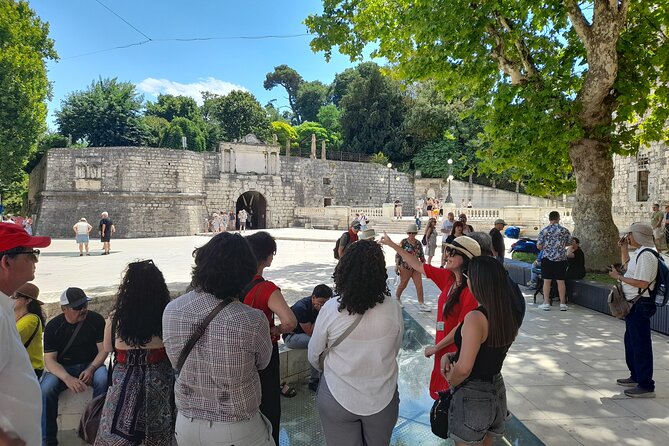
- Wind-powered Sea Organ: built to turn waves and air into sound, and it sets the tone for the whole walk
- Certified local guide: you get practical context fast, not just photo-stop instructions
- A tight historic route: you hit the main old-town sites in about two hours
- Mix of free and ticketed stops: Sea Organ and Roman Forum are free, while major churches are often extra
- Small group size: capped at 15 people, so it stays manageable
A Two-Hour Zadar Walking Loop: What You Actually See
This is a compact, easy-to-follow city walk centered on Zadar’s best-known monuments. The tour runs about 2 hours and is designed for first-timers who want a clear overview without spending the whole day bouncing between individual ticket lines and bus schedules.
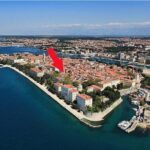
You start in the morning at 10:30 am at the Greeting to the Sun on Istarska obala (23000 Zadar). You’ll finish at Trg pet bunara, which is on the peninsula area. The route is built so your eyes keep landing on big-name Zadar sites one after another, which is exactly what helps when you’re trying to understand how the old town fits together.
There’s also a mobile ticket, which is a small but real convenience. And because it’s offered in English with a certified local guide, you’ll get more out of the buildings and monuments than you would by wandering on your own with a map.
You can also read our reviews of more tours and experiences in Zadar.


Stop 1: Sea Organ on the Waterfront
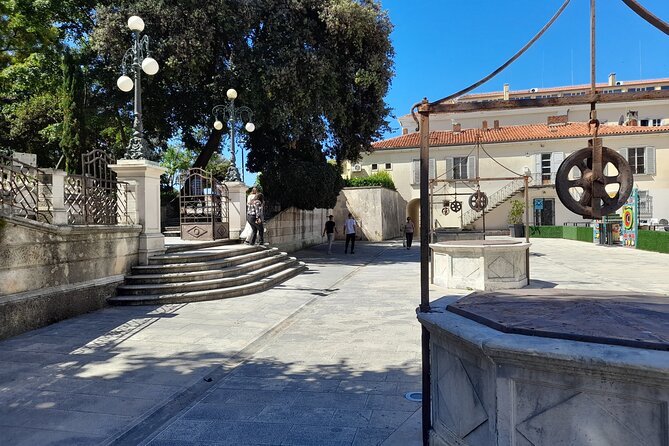
The tour begins at the Sea Organ, one of the most talked-about monuments in Zadar because it literally works with the sea. This is not a statue you look at and forget. It’s a sound instrument powered by wind and waves, made to turn natural energy into music you can hear right there along the shore.
Even with only about 20 minutes at this stop, you’re set up well for the rest of the tour. It’s a strong opening because it gives you a quick feel for Zadar’s character: playful, modern, and still deeply connected to place. The timing here is useful too. You start with something dynamic, so you’re less likely to treat the next sights like a checklist.
Practical note: the Sea Organ is marked as free. So right away, you’re getting value without an entrance fee hanging over your head.
Stop 2: Cathedral of St. Anastasia (What to Notice in 20 Minutes)
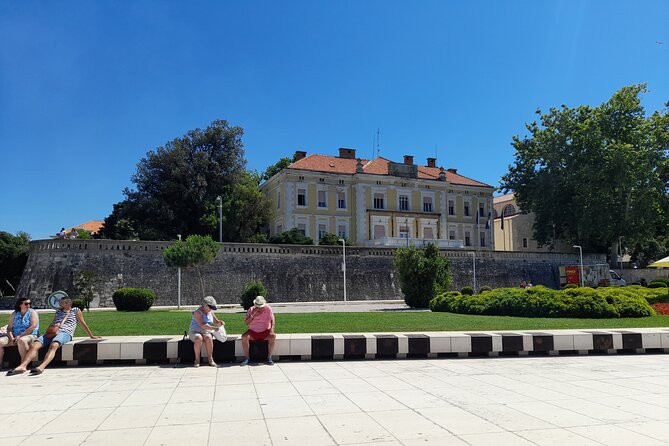
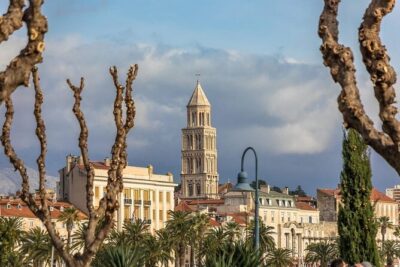
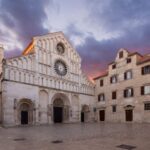
Next up is the Cathedral of St. Anastasia, described as the biggest cathedral in Dalmatia and dated to the 12th century. That matters because it sets expectations: this is not a tiny chapel moment. It’s a major Romanesque structure, and the interior is the big draw.
You get about 20 minutes, and that’s a good match for a cathedral visit. In a short window, focus your energy on the interior scale and the Romanesque feel rather than trying to read every label. If you want the most out of the time, use the guide’s cues to decide what to look for first.
One budget detail: admission is listed as not included. So even though the exterior is impressive, you’ll likely want to decide in advance if the interior ticket is worth it for you.
Stop 3: Church of St. Donatus and Its Acoustics
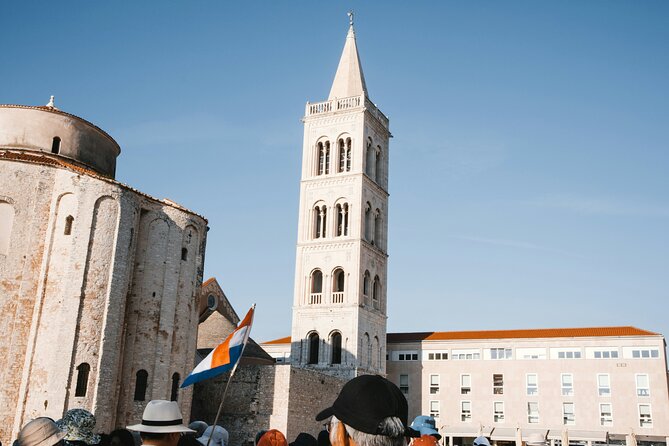
The Church of St. Donatus is one of Zadar’s symbol sites, known for a preromanesque shape that looks unusual compared with most churches you’ll see elsewhere. It’s also famous for acoustics, which is why this stop isn’t just about architecture. It’s about how the space behaves.
Expect around 10 minutes here, which is short—so you’ll want to keep your visit focused. I suggest you take a quick moment to look for the overall form from outside first, then listen for what the guide points out about the acoustics if they mention it. With a guided format, you’re basically getting a mini orientation to make that short visit feel complete.
Admission is also not included at this stop. If you’re deciding where to spend extra money during the tour, this is one of the places many people choose because it’s so visually distinctive.
Stop 4: Roman Forum (The Free Stop That Feels Big)
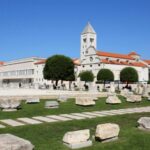
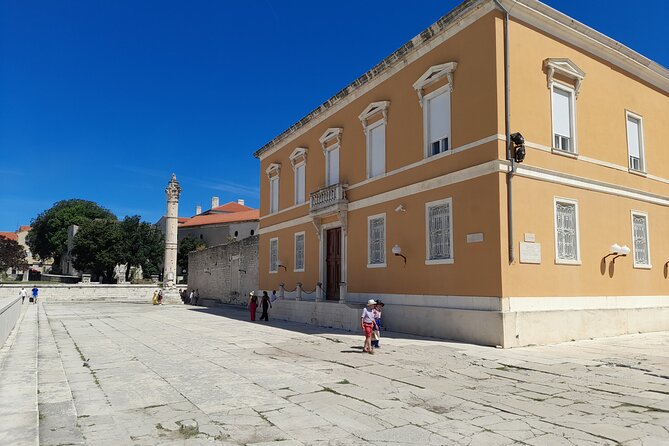
Then you hit the Roman Forum, described as the largest forum built on the eastern side of the Adriatic. You’ll get about 20 minutes here, and this is one of the easiest stops to enjoy without worrying about tickets because admission is listed as free.
The Roman Forum stop is valuable for a simple reason: it helps you connect the dots. You see the city’s Roman layers, and that makes the later church stops feel less random. Even if you’re not a hardcore Roman history person, standing in the forum area gives you a sense of how the city’s public life might have been organized.
This is also the kind of location where your guide’s explanations can do a lot in a short time. In 20 minutes, you won’t memorize dates, but you can understand the purpose of the space—how the forum worked as a central part of daily life.





Stop 5: St. Simon’s Church and a Rare Relic

Next is St. Simon’s Church, where the body of St. Simon is kept. The description calls it one of the most prized artifacts in the Christian world. That kind of wording can sound dramatic, but in this case it signals a real focus for the visit: this is a church stop with a specific religious centerpiece.
You have about 20 minutes, and admission is listed as free, which makes this stop a strong value moment in the tour mix. If you’re the type of visitor who likes to understand what makes a church important beyond design, this is a good match. The relic connection gives the building context, so you’re not only judging it by photos and details you can’t quite grasp in a quick glance.
Stop 6: St. Mary’s Church and Monastery + Gold and Silver Church Art
The last stop is St. Mary’s Church and Monastery. This is where the tour shifts from landmark-famous buildings to a more specific cultural experience: the Gold and Silver Church Art exhibition inside the monastery.
You’ll spend about 30 minutes here, which is the longest stop on the itinerary. That extra time makes sense because this kind of exhibit works best at a slower pace—when you’re not rushed through a single highlight.
The exhibition is supervised by Benedictine nuns, which is a detail worth remembering. It adds a sense of care and continuity to the setting. And even though this stop’s admission is listed as not included, you’re still likely to feel you got your money’s worth compared with shorter, more repeatable photo stops.
Price and Value: Is $48.50 Worth It?
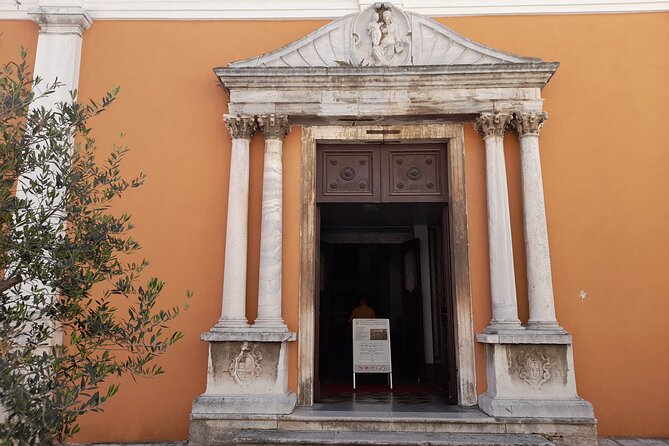
At $48.50 per person, you’re paying for three main things: a certified local guide, a structured route, and coverage of multiple major sights in roughly two hours.
Here’s how that value math tends to work for most people:
- You get several key landmarks back-to-back, which reduces the friction of planning and helps you see the old town efficiently.
- The guide role is meaningful because many of these sites become more rewarding when you understand what you’re looking at.
- Not all entrances are included. Some stops are clearly free (Sea Organ, Roman Forum, St. Simon’s Church), while others are listed as not included (Cathedral of St. Anastasia, Church of St. Donatus, St. Mary’s Church and Monastery).
So, the real question is your personal balance: if you like guided structure and you plan to pay for at least one of the ticketed interiors, the price usually feels fair. If you want every door to be included, this may feel pricier than you’d like, because three major stops note admissions not included.
Timing and Pace: How to Make the 2 Hours Feel Longer
A two-hour tour can either feel perfect or too rushed, depending on how you travel. This one is built with short stop durations—often around 10 to 20 minutes—plus one longer finish at the monastery/exhibition.
That means you should come ready to move. Don’t plan a leisurely stroll pace while you’re with the group. Instead, treat it like a guided highlight reel with time for quick looking and short questions.
If you’re the kind of visitor who likes to take slow photos and read every plaque, you might want to do a bit of solo time afterward at the stops that interested you most. The tour ends at Trg pet bunara, a natural place to keep exploring since it’s right on the peninsula area.
What Fits Best: Who Should Book This?
This is a strong choice if you:
- want a quick orientation to central Zadar without building your own route
- like guided explanations, especially for historic buildings and sacred sites
- enjoy mixing free monuments with a couple of paid interiors
It may feel less ideal if you:
- only want free entrances and don’t plan to pay additional ticket costs
- prefer spending long stretches in one church without moving on
- need a very slow pace for comfort, since stops are short by design
Good news: the tour indicates that most travelers can participate, and it allows service animals. It’s also listed as near public transportation, which matters if you’re combining it with other plans the same day.
Booking Sense Check: Should You Book This Zadar City Tour?
If you want an efficient, well-structured introduction to Zadar’s most famous sites, I’d book it. The combination of the Sea Organ, the major church stops, the Roman Forum, and the monastery art exhibition gives you a wide slice of what makes Zadar feel like a real place rather than just a postcard stop.
I’d pay attention to admissions though. Since several high-interest interiors are marked as not included, you’ll get the best outcome if you’re already willing to add a couple of tickets. If that’s your style, this tour’s $48.50 price starts to look like a bargain for the time and guidance you get.
FAQ
How long is the Zadar City Tour?
The tour lasts about 2 hours.
How much does the Zadar City Tour cost?
The price is $48.50 per person.
What language is the tour offered in?
The tour is offered in English.
Where do we meet, and where does the tour end?
You meet at Greeting to the Sun on Istarska obala, 23000 Zadar, and the tour ends at Trg pet bunara, 23000 Zadar.
Is the tour admission included for every stop?
No. Sea Organ, Roman Forum, and St. Simon’s Church are listed as free, while the Cathedral of St. Anastasia, the Church of St. Donatus, and St. Mary’s Church and Monastery are listed as admission not included.
What’s included with the tour?
It includes a certified local guide and a mobile ticket.
Can I cancel for free?
Yes. You can cancel for a full refund if you cancel at least 24 hours before the experience start time.